Frank Beard, ZZ Top’s Hard-Shuffling Drummer, Dead at 77
The tireless drummer anchored the Texas band on hits like “La Grange" and “Tush" throughout its five-decade run Frank Beard in Macon, Georgia in 1974 Frank Beard, the longtime,…
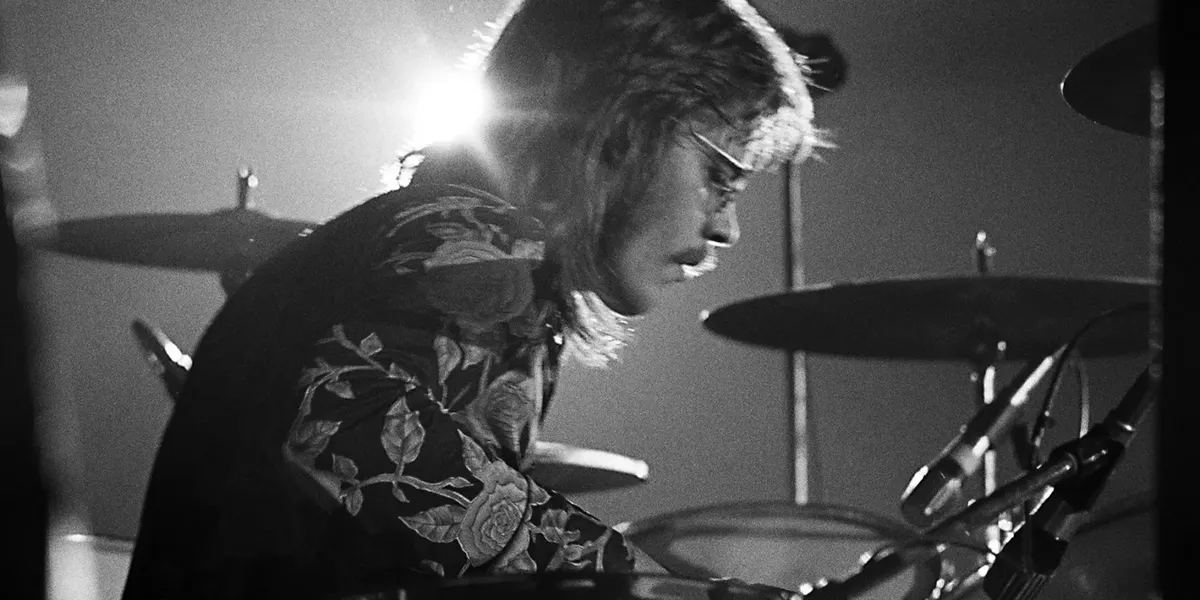
The tireless drummer anchored the Texas band on hits like “La Grange" and “Tush" throughout its five-decade run
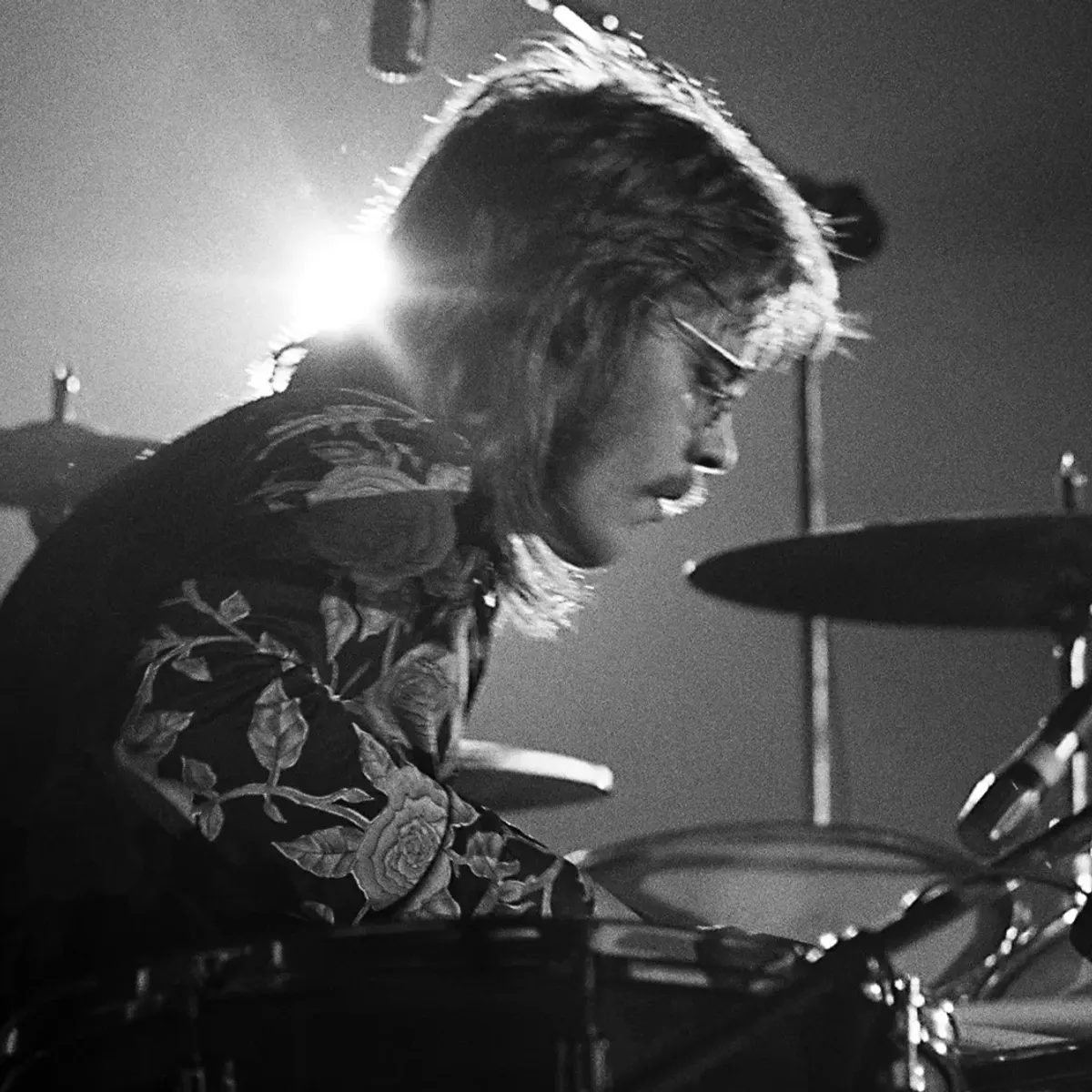
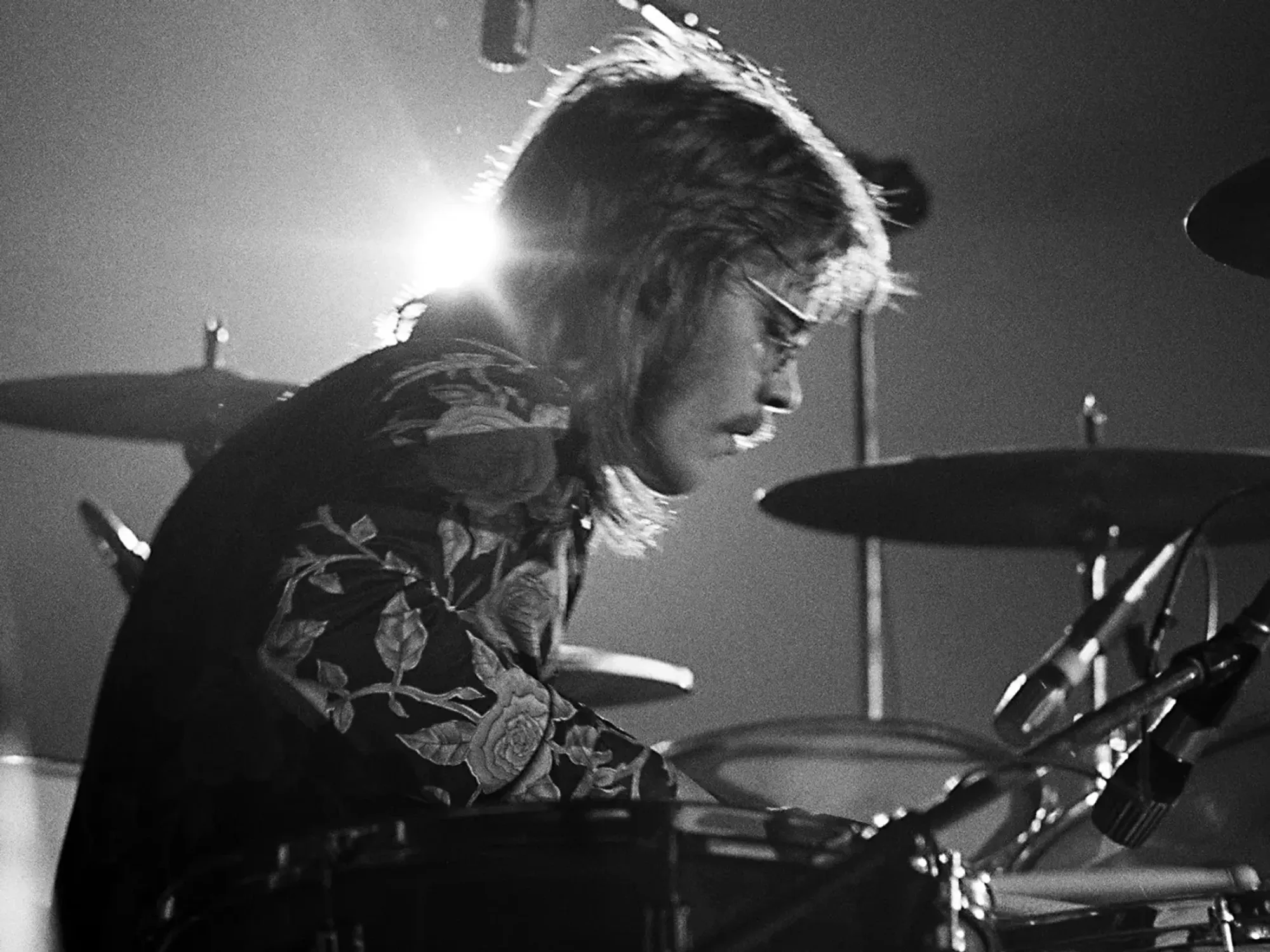
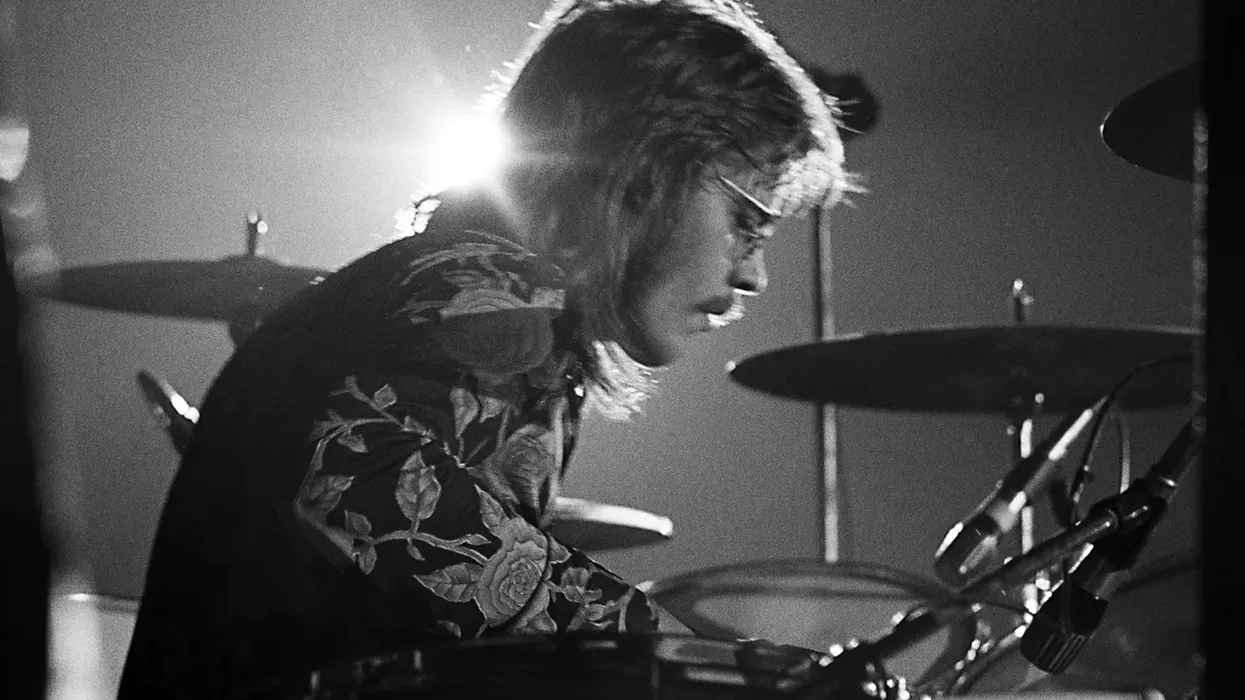
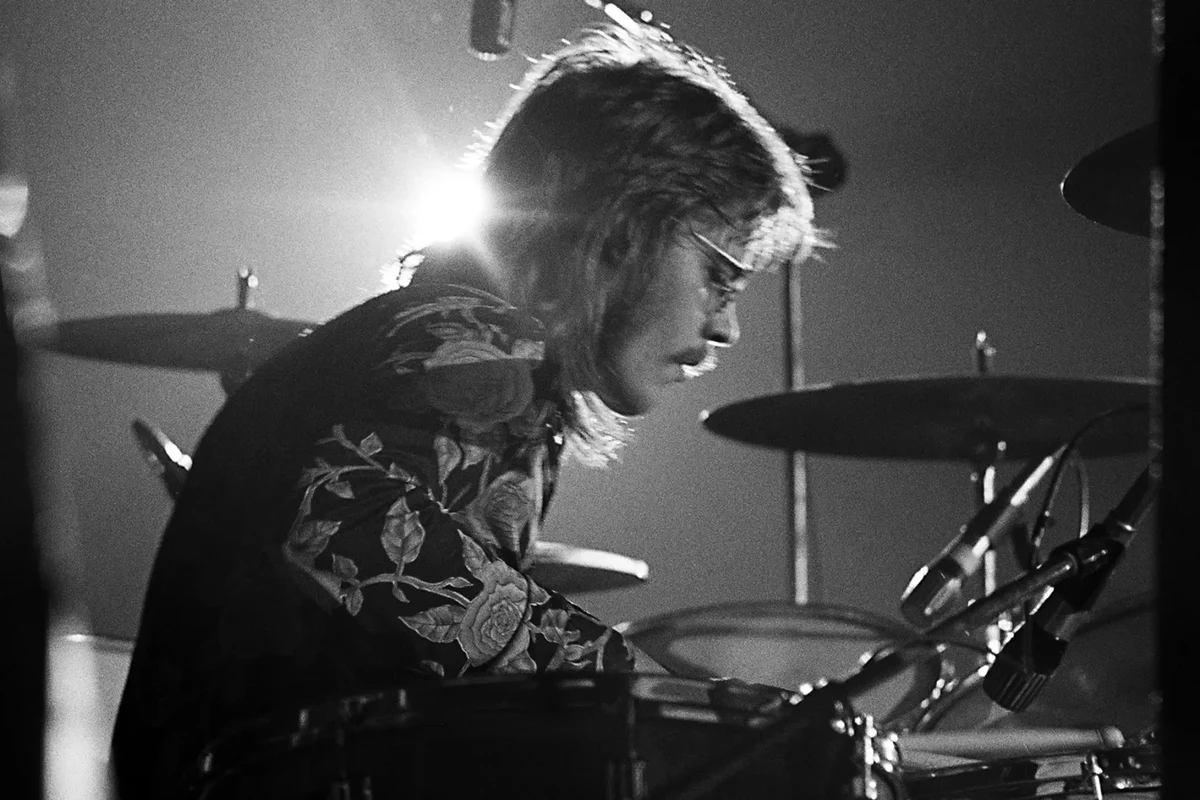
Frank Beard in Macon, Georgia in 1974
Frank Beard, the longtime, hard-shuffling drummer for Texas rock greats ZZ Top, died on Monday. He was 77.
Bob Merlis, the band’s representative, confirmed the news, saying Beard died while in hospice care, surrounded by family, at his ranch in Richmond, Texas. An exact cause of death was not given.
ZZ Top also announced that it would cancel its scheduled show tonight (Aug. 18) in Salt Lake City and its gig on Wednesday (Aug. 19) in Colorado Springs. The band’s current tour will resume this weekend in Austin.
Beard had faced several serious health issues over the years. In 2002, he missed some shows after undergoing an emergency appendectomy, while in 2025 he “temporarily†stepped away due to unspecified health issues. Earlier this month, ZZ Top abruptly canceled a performance at the Hollywood Bowl in Los Angeles, citing “insurmountable obstaclesâ€; it was later revealed that Beard’s health was the cause, though again no specifics were given.
Though not technically a founding member, Beard was ZZ Top’s longtime and definitive drummer. He linked up with guitarist-singer Billy Gibbons after ZZ Top released their debut single, “Salt Lick†(featuring drummer Dan Mitchell), and was responsible for bringing in bassist Dusty Hill.
While so much of ZZ Top’s aura centered on their hooks, their riffs, and their facial hair, the beardless Beard was the band’s indispensable anchor. He was a master of the Texas shuffle, an inch-perfect, steady-rocking drum groove that held down ZZ Top’s signature blues rock boogie on classic hits like “Tush†and “La Grange.â€
Beard’s playing was precise and tireless. In the 2019 documentary, ZZ Top: That Little Ol’ Band from Texas, he recalled the first time he and Gibbons played together: “I was jacked up on speed,†Beard cracked, “so I made him jam for about eight hours ’til his tongue just fell out.â€
Gibbons added of the experience: “It didn’t take 30 minutes, it didn’t take 30 seconds — I knew that Frank Beard had the kind of chops that I was looking for. He played fiercely. He played with determination.â€
Beard was born June 11, 1949, in the small town of Frankston, Texas. He got his start playing in bands in high school and eventually became a fixture in the Dallas music scene, where he met Hill. The two played together in several groups during the Sixties, including the Warlocks, American Blues, and even the infamous fake version of the Zombies that toured after the actual English psych rock group disbanded.
Beard’s career nearly stalled out after he got his girlfriend pregnant; the couple got married, began to raise their child, and spent some time living with Beard’s parents. But after moving his family to Houston, Beard was introduced to Gibbons, then playing in a group called the Moving Sidewalks. Beard soon joined the group, brought in Hill, and the band changed their name to ZZ Top.
Under the guidance of manager and producer Bill Ham, ZZ Top spent their early years gigging constantly wherever they could. While their 1971 debut, ZZ Top’s First Album, failed to chart or spawn any noteworthy singles, the group steadily developed a reputation on the road. Speaking with Rolling Stone in 1984, Beard credited Ham for cleverly booking ZZ Top support gigs on tours with headliners that weren’t likely to leave an impression.
“When we were second on the bill, he would always get us on a tour with a band that was through — that was fixin’ to break up and just doin’ a money tour,†Beard said. “And we’d get out there and just kick their ass. We did Mott the Hoople that way, Alice Cooper, Deep Purple. They were through, and they didn’t care who knew it, so people would remember us.â€
ZZ Top finally broke through themselves in the mid-Seventies. Their 1974 album, Tres Hombres, cracked the Top 10 of the Billboard 200 albums chart, earned gold certification from the RIAA, and featured the indelible “La Grange.†Their 1975 follow-up, Fandango!, did just as well on the strength of ZZ Top’s first Top 20 single, “Tush.†But despite this budding success, ZZ Top seemed to confound the rock press, who tended to dismiss them or lump them in with other Southern rock bands.
“That was back to that thing of, ‘You gotta go to California, you gotta go to New York,’†Beard said in the 2019 documentary. “And we refused to do that.â€
After the release of another 1976 album, Tejas, ZZ Top went on a brief hiatus, in part so Beard could get sober. In That Little Ol’ Band from Texas, Beard acknowledged spending much of the money he earned during this time on drugs, particularly pills, cocaine, and heroin.
“All the money I pissed off, that’s a regret,†he said. “I sold my original Ludwig kit to buy drugs with it. Relationships I fucked up … In the back of my mind, I knew I needed to kick heroin. I needed to stop doing cocaine. I had done it all, and I couldn’t go any further.â€
ZZ Top returned in 1979, inking a new deal with Warner Bros Records and releasing their sixth album, Degüello. The LP hit Number 24 on the Billboard 200 and kicked off a wildly successful run that saw the band enjoying a prolonged commercial peak through the Eighties and early Nineties. During that time, ZZ Top dropped multiplatinum albums like 1983’s Eliminator, 1985’s Afterburner, and 1990’s Recycler; notched Top 10 singles like “Legs†and “Sleeping Bagâ€; and even became MTV fixtures thanks to memorable videos for “Gimme All Your Lovin’,†and “Sharp Dressed Man.â€
Over the coming decades, ZZ Top continued to record and tour. They were inducted into the Rock & Roll Hall of Fame in 2004, and in 2012 they released La Futura, which would turn out to be their last album with Hill, who died in 2021. Gibbons and Beard continued to tour without Hill, though Beard’s health issues occasionally forced him off the road.
Outside of music, Beard owned and operated a ranch in Richmond, Texas, and maintained a love of golfing and car racing. He and his wife, Debbie, had twin boys, while also helped to raise Beard’s daughter from a previous marriage.
Speaking of the 50-plus years he enjoyed alongside his ZZ Top bandmates in That Little Ol’ Band from Texas, Beard said, “I would say, for me, I have found the people that I want to play with. And I was able to do that at a very early age. I’m still satisfied with them. I’m satisfied with Dusty and I’m satisfied with Billy.†He then quipped: “With these two guys, I’ve never wanted to quit, and I’ve never wanted to get fired.â€
Australia's most legendary rock band has hit Canada and is pursuing their trek out east. AC/DC fans will have a new way to celebrate the band’s return up North, with an official PWR/UP pop-up experience set to accompany every Canadian stop on the group’s 2026 stadium tour.
The temporary spaces will open in Montréal, Toronto and Winnipeg, offering fans a chance to immerse themselves in the AC/DC world before heading to the stadium. The pop-ups will feature limited-edition merchandise, collectibles, themed food and drinks, photo opportunities and tour-inspired displays.
The experience will also give fans access to exclusive city merchandise ahead of its wider release. Limited quantities of official event shirts and posters will be available at each location one day before they go on sale online or at the concert venue.
There will be plenty of opportunities to win prizes, including concert tickets, merchandise packages and VIP items. A replica Angus Young guitar will also travel between the pop-up locations, where fans can enter for a chance to win it. The guitar will later be signed by Young in Philadelphia before being awarded to one eligible entrant. Each city will also host a PWR/UP preview event before opening to the public. One hundred fans will be selected at random in each market to attend alongside media and invited guests, with attendees receiving a special gift.
The band started their Canada tour in Edmonton before making their way to Vancouver last week. The PWR/UP tour continues in the next few weeks in the Bible belt, before making its way back to Montréal in September, with their pop-up taking place at mythical venue Foufounes Électriques on September 11-12. On September 15 and 16, they'll set up shop at the Steam Whistle brewery and Winnipeg, MB on September 19 and 20 and The Pyramid.
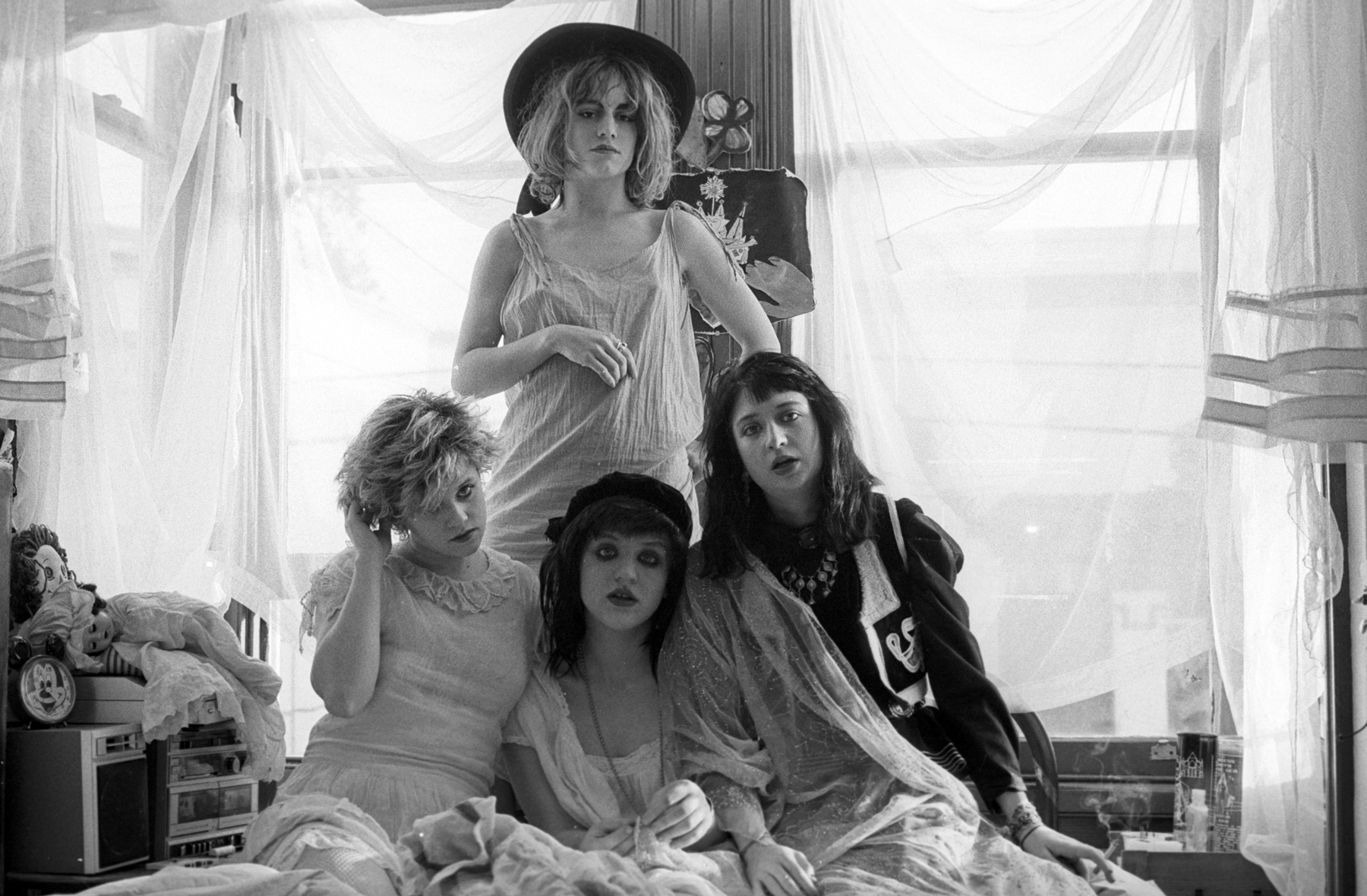
Courtney Love and Jennifer Finch were instant friends from the moment they met in the early Eighties, and remained close until Finch’s untimely death at age 59 in July. Before Finch joined the influential punk-metal band L7 and long before Love formed Hole, the women made music together in a band called Sugar Babydoll (or Sugar Babylon, depending on the year) alongside future Babes in Toyland frontwoman Kat Bjelland. They remained close as their careers took off, which is a difficult prospect for touring musicians.
The friends supported each other throughout the years. When Love’s husband, Kurt Cobain, died in 1994, Finch was her rock. And in June, when Love learned that Finch had been diagnosed with brain cancer, she traveled to be by her side and support her until the end.
Finch chronicled her friendship with Love in a memoir, “Shooting Up and Making Out: A Memoir of My Life in LA and L7,†which she co-wrote with Jeff Alulis and completed shortly before her death. It will be released via Da Capo on Jan. 19.
Here, Love pays tribute to her friend who shaped her life in her own words.
I hitchhiked to Hollywood from San Francisco in 1983. I wanted to go to Hollywood more than anything.
I met Jennifer at her father’s home. I’m a feral person. Growing up in foster care didn’t give me much likability or infrastructure for knowing how to relate to people. She had all that, and she covered for me. I’d only met three other people who liked me at that point in life. Jennifer was the most important.
Jennifer took to me immediately, and she never stopped protecting me from the summer of 1983 onwards. When you come to Hollywood and have no means, Jennifer’s house always had a couch. Her dad always had cheese and Cap’n Crunch. A safe couch. And she always had records. We spent thousands of hours listening to them and learning them.
That house is the closest thing to a home I’ll ever have.
I’d come from Dublin, England, Portland, and New Zealand. My musical taste ran from [the Birthday Party’s] Drunk on the Pope’s Blood to U2 and Echo and the Bunnymen. This new SST hardcore scared me, but she made me see the wit in it. The George Clinton in the Chili Peppers, which I still find funny, and the depth.
She dragged me to shows. There wasn’t a day she didn’t stand by the strange girl from up north. We had guitars and taught each other to play. The Runaways were our Sex Pistols.
She introduced me to Pat Smear. Without a doubt, Pat is who I told Kurt he should ask to be in Nirvana when he was depressed that his bandmates made him sad. He wanted a happy bandmate. I called Pat.
In 1988, when nobody in L.A. would have wagered on me, Jennifer cosigned me to Flea. Flea said yes, and we had the Chili Peppers’ rehearsal space, which is why there is Hole.
In my 62 years, I can think of nobody more loyal or honourable. A true friend, who also gave me the security of having one house where I was safe.
It’s worth noting that she was clean and sober for 37 years [at the time of her death]. She joined L7 in 1986 and helped make it the force it became, doing all that grunge without once getting high.
Jennifer was a teenage terror. She ran the tables on all the Dogtown Betties and all the Hollywood street girls. She was queen boss. She ruled the roost of the teenage gangs. Back then, the LAPD more than once tossed us into dumpsters or shoved us around. She was fearless with them.
When Kurt died, Jennifer was the general in Seattle. She guarded my door like an armed soldier. She confronted and stopped Kurt’s managers and a suit from trying to leave our house with a Flipper album and a Bunnymen album. The joke was on that guy. Clearly not a Kurt lover.
Kurt adored Jennifer, and she was one of the few people he spoke to a few times a week. She got me through that horrible month and didn’t leave my side.
On June 10, when I entered that house, I saw terror and entrapment drowning in her eyes. For five weeks, my only job was to help make sure she had the best possible end-of-life care, until July 18.
There are people here who stood up and showed real heroism.
There were no means, no money, and no access to the men I know with power, but my manager said, “Who cares if there’s no money? She was in one of the most important bands ever.†That gave my heart the dignity Jennifer deserved.
When it was finally undeniable that she was dying, my job was to make sure she was surrounded by love in a safe place, while her medical team kept her comfortable.
Jennifer Precious Finch was 10,000 levels of funny. She could not have written her chaotic ending better herself.
More than 100 people were fighting to get in, arguing that they were on the list as if it were a club, because she had more than 100 passionate friends who would hock their houses for her. There were bouncers rotating at the door, people arguing about playlists and almost fist-fighting, duvets from the Chateau Marmont, a Sikh saint with his crystal xylophone, robes and slippers, Apple Pan and Roscoe’s Chicken and Waffles. The tired, the sick, the hungry, the famous and tons of ex-boyfriends, all regretting their wrongs. She loved it. Everyone remembering her with love and sobbing.
At 4 in the morning, when her body shut down and the medical staff said it was time, I heard someone say, “But we ordered breakfast for 8, and Flea’s coming at 9.â€
I laughed.
It was an Andy Kaufman, Carrie Fisher exit. It was Steve Jobs saying, “Oh wow,†as he saw whatever was on the other side and left all of us guessing until it’s our turn.
It was funny as hell. Chaotic, like her. Going out in the world’s most glamorous hospital wing — the Billy Wilder wing where Elizabeth Taylor died — named after the director of Marilyn’s best movie [Some Like It Hot] and, consequently, the best movie about an all-girl band ever, with the greatest last line in cinema history: “Nobody’s perfect.â€
Waiting for craft services, our favourite trumpet player and her medical team keeping her comfortable is the most Jennifer Finch thing ever.
And you can take that to the bank.
Becky drove up from San Diego without a ticket.
She parked near the Teragram Ballroom in downtown Los Angeles at 1:03 p.m. on Tuesday, ran to Target, and was back in front of the venue by 2:34 p.m. — nearly six hours before doors, in 90-degree heat, for a show she hadn’t managed to buy her way into. She’d spent weeks watching resale prices climb on this sellout.
“This is disgusting,†the 37-year-old scoffed.
She got scammed. She came anyway, and spent the afternoon handing out water and Nerds Gummy Clusters to the strangers baking from the heat beside her.
Frank, 52, paid $375 on StubHub for a ticket that was never delivered. He was in line too, hoping for a miracle at will call.
By late afternoon, the queue had wrapped from West 7th Street onto Hartford Avenue. Attendees wore polka dot outfits, a few hats with hot-dog noses, and their ages ranged from toddler to retiree. They were all waiting for Khn and Klek de Poitrine — better known as Angine de Poitrine, a two-piece of thirtysomethings from Saguenay, Quebec who perform as 333-year-old aliens and have become, perhaps, the most in-demand live music act on the planet.
According to StubHub, Los Angeles is the band’s single strongest market worldwide, accounting for roughly a fifth of all resale tickets sold across their 47-date global tour. That’s double the share of the next closest city. These two Teragram nights ranked first and second in demand on the entire run. Compared to the 137 other events the venue has hosted over the past 12 months, they moved about 1,100 percent more resale tickets per show.
For a room that holds 625 people. On a weeknight.
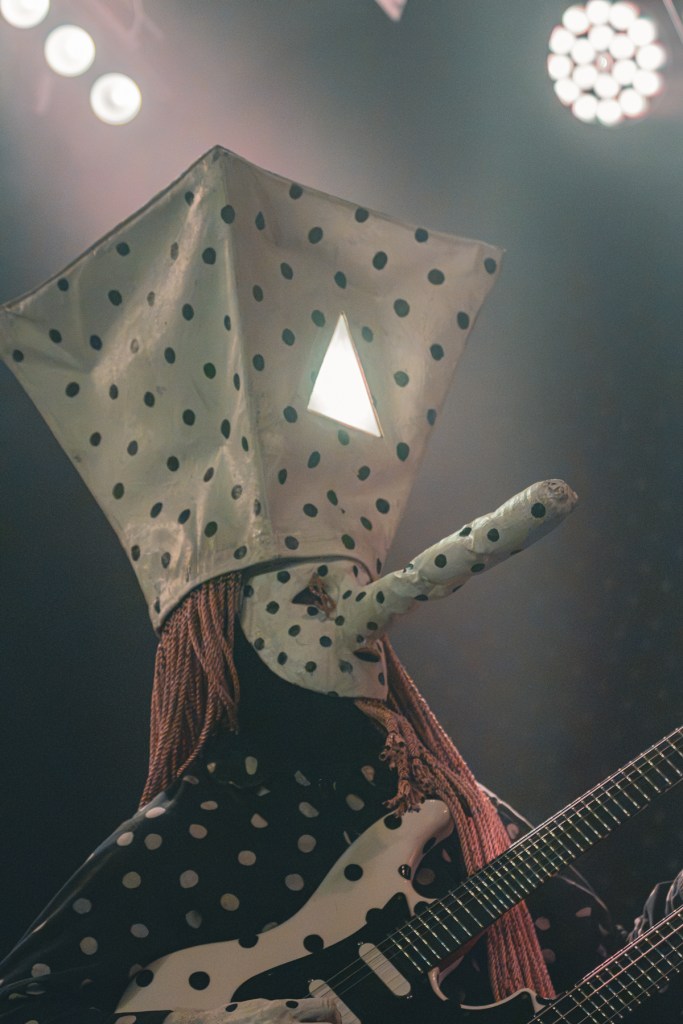
What everyone came to hear is microtonal math rock. Khn plays a custom double-neck guitar-bass with twice the usual number of frets on each side, looping the two halves together in real time with foot pedals. Klek plays drums in time signatures that would bedevil a seasoned rhythm section. Nothing is pre-recorded. Every layer is built live, in costume, with limited visibility.
The outfits get the attention. Khn’s golden braids spilling out from beneath an inverted pyramid, Klek looking like the medieval lovechild of Dr. Bunsen Honeydew and Beaker, both of them covered in black and white spots — on their clothes and their limbs — and adorned with golden triangles.
Their manager, Sébastien Collin, compares the experience to picking which Christmas present to open.
“The wrap made you choose the gift, but it’s not a gimmick,†he says. “There’s real music inside.â€
Martin, a working musician standing third in line, described his own unwrapping. A friend had been badgering him for weeks to watch the band’s KEXP session. He finally pressed play on his phone.
“Within 10 seconds I’m like, ‘What is this garbage?’â€
Two seconds later: “My life has just changed.â€
He’s not alone. The KEXP video — one take, recorded at the Trans Musicales festival in Rennes, France, last December and posted on Feb. 5 — has surpassed 18 million views on YouTube. The comments section runs some 73,000 entries deep, with people talking themselves out of contempt in real time.
But the story doesn’t start there.
By the time they went viral, Angine de Poitrine had already taken French Canada. In the summer of 2025, they played 25 shows around Quebec, repeatedly drawing overflow crowds to festival side stages that proved too small for them. They sold more than 5,000 tickets to an April 2026 tour of the province before Christmas, including consecutive sellouts at Montreal’s Club Soda.
Meanwhile, record stores couldn’t keep their first album in stock. When Vol. II was available on vinyl worldwide in June, two months after its digital release, the band pulled it from their own website so only shops could sell it. Some stayed open until midnight to do so.
Their first American show came on July 31 at the Newport Jazz Festival. Since then, they’ve played back-to-back sellouts in Denver and had crowds at Field of Vision, King Gizzard and the Lizard Wizard’s Colorado festival, chanting “Ho-ly shit!†in unison.
Those chants surfaced again inside the Teragram, after a hectic “Yor Zarad†that opened the night’s first mosh pit like a vortex on the dancefloor. So did the inflatable dice that had been bouncing around the crowd at Field of Vision over the weekend.
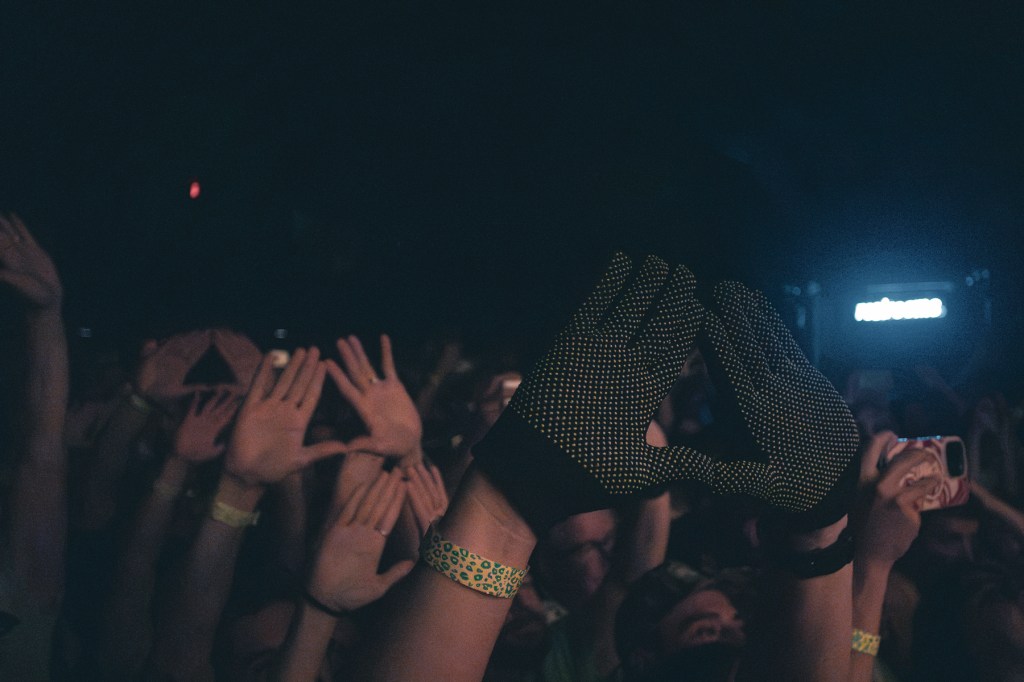
Before the set, fans crowded the stage to watch the pair assemble their own gear, still masked but not yet in full costume. Whenever Khn and Klek raised their hands into triangles, everyone on the floor raised triangles back. When they squatted during “Tamebsz,†the floor squatted. When they waved their arms through “Fabienk†— the song whose near-intelligible vocal sounds like “See-bas-tieeeeen,†a nod to their manager — the crowd waved and chanted his name. Every sip they took through tubes rigged to their water bottles, engineered for drinking through their masks, drew pleas from fans in the front rows for a splash.
Becky and Frank were among them. They would both go home happy (Becky even got her money back), as would 600 or so of their newest and sweatiest friends.
Some were already chattering about hitting Angine de Poitrine’s two nights at the Wiltern in December.
Those shows? Sold out, too.
Boston hardcore band Haywire celebrated their signing to Roadrunner Records last weekend not just by opening up the pit at Sound and Fury fest, but by showering it with $5,000 in cash. On Wednesday, they announced their debut album on their new label, I Don’t Wanna Say Goodbye, out Oct 2nd. The first single — and official music video — “Interstate Love Affair†is out now.
The visuals kick off with the band making it rain at the festival, then launches into the kind of raucous antics inherent in early 2000s MTV videos: firecrackers, trashing hotels, sentient amps, the works. The video perfectly captures Haywire’s ethos: fun-as-fuck hardcore, pure and simply.
Since forming in 2023, Haywire has quickly become enmeshed in the hardcore scene, playing a 96-date tour across 50 states in 100 days in 2024. They’re also set to open for Turnstile and the Circle Jerks this fall, but can also be found playing under bridges for free. As of this month, they have more than 250 future shows planned.
As prolific as they are on stage as off, the band has dropped five records over the course of three years, their most recent being 2024’s Conditioned for Demolition. Their upcoming album was produced by Citizen’s Mat Kerekes and mixed by Taylor Young, and includes cameos from members of NOTHING and the Aggrolites.
Duane Davis on trial in Las Vegas, Nevada, on Aug. 17, 2026.
A former gang member who says he worked “under the table†security for Suge Knight during Death Row Records‘ heyday testified Tuesday he knew “everybody that was there†the night Tupac Shakur was fatally shot in Las Vegas — but he’s not naming names.
Taking the witness stand on the second day of Duane “Keffe D†Davis’ murder trial in Clark County, Nevada, James “Mob James†McDonald told jurors he was working at Knight’s Vegas nightclub, Club 662, when he learned Shakur and Knight had been wounded in a drive-by shooting on Sept. 7, 1996.
McDonald, a member of the Mob Piru Bloods, made it clear he was testifying against his will under a court order. He grew visibly exasperated when Davis’ defense lawyer, Michael Sanft, pressed him on cross-examination about what he heard in the aftermath of the shooting.
“Are you sure you want me to answer that?†McDonald replied, according to the trial livestream from CourtTV. “I don’t want to send him to prison, even though we don’t like each other,†he said, referring to Davis. “You’re asking me questions that can hurt him. … You’re asking something that’s gonna hurt this dude.â€
McDonald said he was only willing to speak generally about how, after the shooting, a “gang war†erupted between the Mob Piru Bloods, affiliated with Knight, and the South Side Compton Crips, of which Davis was a high-ranking member.
“Do you know who it was that was there?†Sanft pressed, referring to alleged eyewitnesses who eventually traveled back to Compton.
“I know everybody that was there,†McDonald shot back. When Sanft again asked him to get specific, McDonald appeared stunned and seemed to address Davis, seated in a black suit and tie at the defense table
“Talk to your lawyer, man. This dude is tripping,†McDonald said. “I’m not gonna explain that. I can’t answer that.â€
McDonald said he left gang life and is now raising his grandchildren. He said he only agreed to testify because he didn’t want to go on the run to avoid his subpoena. After the shooting, he said, “it wasn’t a problem for people to find out what happened. No problem at all.†He said Orlando “Baby Lane†Anderson, whom prosecutors allege fired the shots that killed Shakur as Davis allegedly watched from the front seat, quickly became a target for retaliation. (Prosecutors claim Davis, who is Anderson’s uncle, procured the weapon and directed the shooting.)
“When we got back to Compton, it was a gang war. People were getting hurt. People were looking for certain individuals,†he said. “Orlando, and certain other people, were being sought, because people wanted to kill them.â€
After McDonald was excused, Knight’s official head of security at the time, Reggie Wright Jr., took the witness stand and said he also was at Club 662 the night of the shooting. He identified McDonald’s brother, Alton “Buntry†McDonald, as one of the members of Shakur’s and Knight’s entourage who was present when the men attended a Mike Tyson boxing match at the MGM Grand earlier that night. After the bout, Shakur got in a fight with Anderson inside the casino that was captured on surveillance video, prosecutors allege.
Wright, who was a sworn Compton police officer in the early 1990s, reviewed the video from the witness stand and said he recognized McDonald’s brother, Alton, as one of the entourage members who also took part in the altercation. He further identified another member of Knight’s private security, Roger “Neckbone†Williams, as taking part in the melee.
Davis, 63, has pleaded not guilty to one count of murder with use of a deadly weapon. He’s been in custody since his arrest in September 2023. Prosecutors claim he was a leader of the South Side Compton Crips when he allegedly orchestrated the deadly drive-by shooting.
In his opening statement Monday, Clark County Deputy District Attorney Binu Palal said Davis obtained the .40-caliber Glock used in the attack and was riding in the front passenger seat of a white Cadillac with Anderson and two other men when Anderson allegedly opened fire.
Palal told jurors that Davis later confessed to his role when he gave a “secret 2008 interview†to authorities in connection with a California drug case that could have sent him to prison for life. Davis subsequently repeated key details in public interviews and his 2019 memoir, Compton Street Legend, Palal said. Jurors heard portions of the 2008 recording Monday, including Davis describing how the Cadillac made a U-turn before he handed off the gun because he didn’t have a clear shot from his position.
“If [Shakur] would have been on my side, I would have blasted,†Davis said in the recording.
Palal said the shooting was clear retaliation for the MGM Grand brawl, the latest incident in a simmering East Coast-West Coast feud pitting Knight’s record label against Sean Combs‘ Bad Boy Records in New York. The prosecutor said Davis had agreed to provide “unofficial security†for Combs and his artists when they traveled to the West Coast, particularly to prevent problems with the Mob Piru Bloods, who were affiliated with Death Row.
Asked about the rivalry Tuesday, McDonald said the Crips and Bloods in Compton were peaceful before Bad Boy and Death Row started trading barbs. “When the two record companies got into it, Bad Boy went to Keffe D, and Suge came to us. So that intertwined everything, and we had issues,†he said.
Wright testified Tuesday that he was at the 1996 Soul Train Awards in Los Angeles with Death Row artists and witnessed someone in the Bad Boy entourage allegedly brandish a gun during a tense confrontation. He claimed Davis was there.
“I believe he was with them, but I don’t believe he was the one with the gun,†Wright testified as Davis shook his head at the defense table.
Palal said Monday there was “no question†the beating of Anderson “required†a response. In his opening statement, Sanft disputed that claim, arguing that Davis’ statements taking responsibility were fabricated for entertainment and, ultimately, financial gain. He also questioned why authorities did not charge Davis after the 2008 interview and said investigators made no meaningful effort to corroborate his account.
“It’s because they knew he was full of crap,†Sanft told the jury.
The defense lawyer said prosecutors couldn’t even prove Davis was in Las Vegas that night, claiming they had no receipts, credit card records, or photographs placing Davis at the MGM Grand despite his claim in his book that he attended the Tyson fight. Davis also had claimed Bad Boy Records CEO Sean Combs had once offered $1 million to have Knight and Shakur killed. Combs has denied the allegation. Davis said he was never paid.
The first witnesses at the trial included former Las Vegas police officer Garry Dale, who said he rode in the ambulance with Shakur and repeatedly asked who had shot him. According to Dale, Shakur refused to identify anyone and said, “No, we’ll take care of it.â€
Former homicide detective Brent Becker testified that visiting gang investigators from Compton quickly identified Anderson from video of the MGM Grand fight, making him an early suspect. Becker also said Knight came in for questioning three nights after the shooting but claimed he could not identify anyone involved.
“I thought he lied to us,†Becker testified.
Images from the story

End of article