Grand Jury Investigating Death of Nolan Wells Decides Against Indictments
The 18-year-old was found dead on an island in Mississippi in July, leading to questions about the circumstances of his death A man places a photograph of Nolan Xavier Wells in fro…
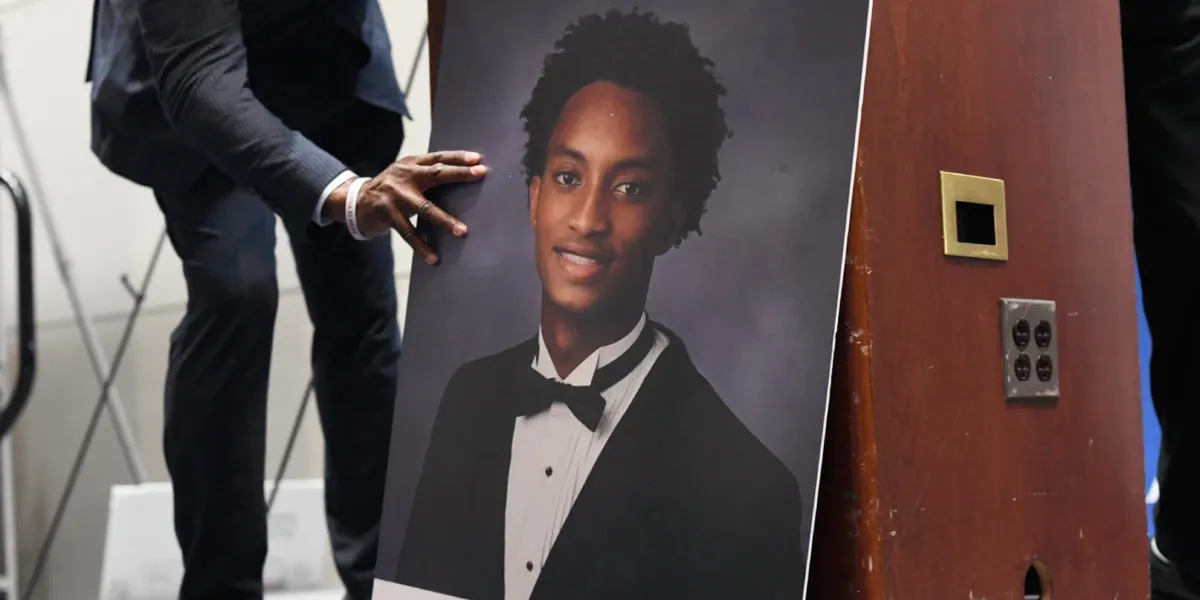
The 18-year-old was found dead on an island in Mississippi in July, leading to questions about the circumstances of his death
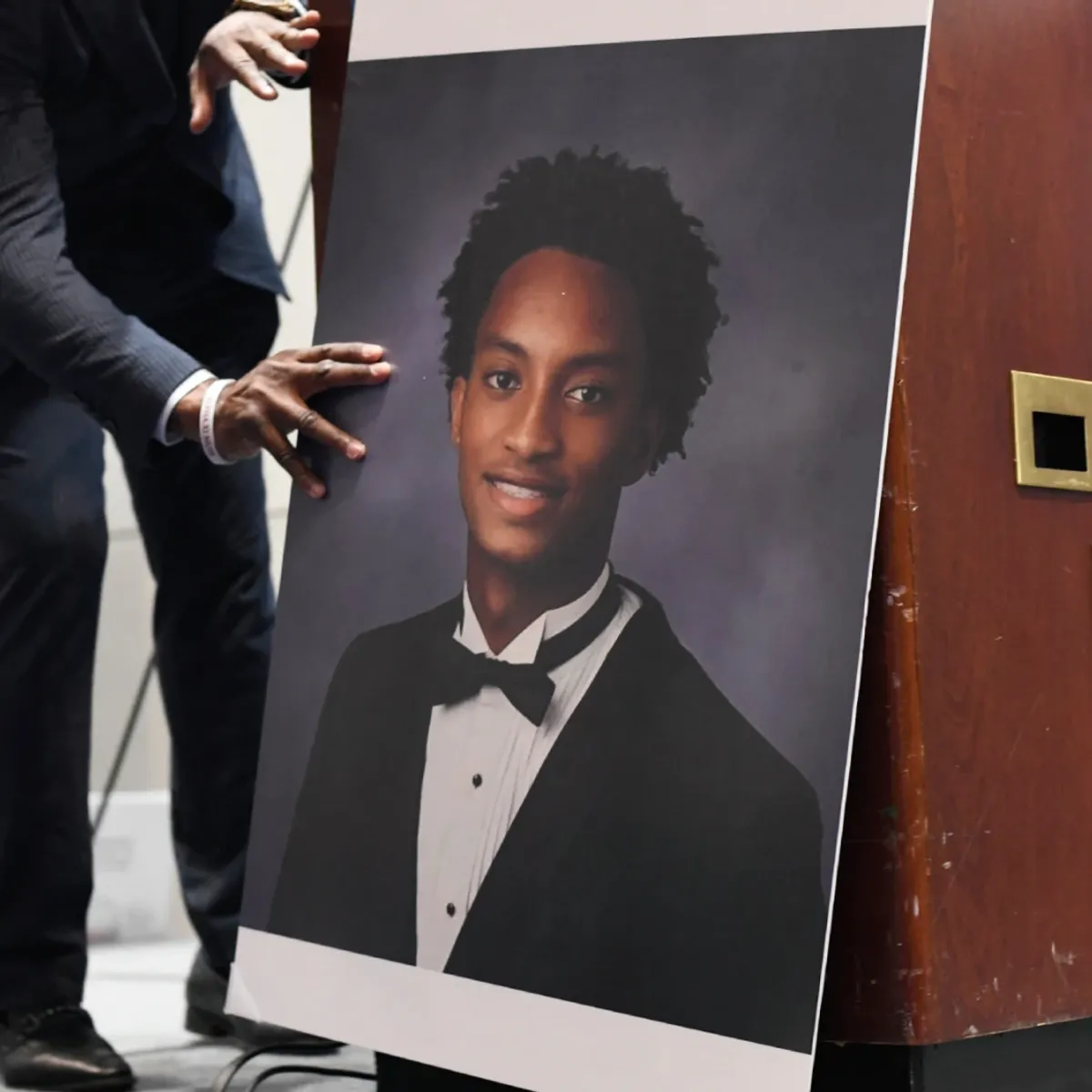
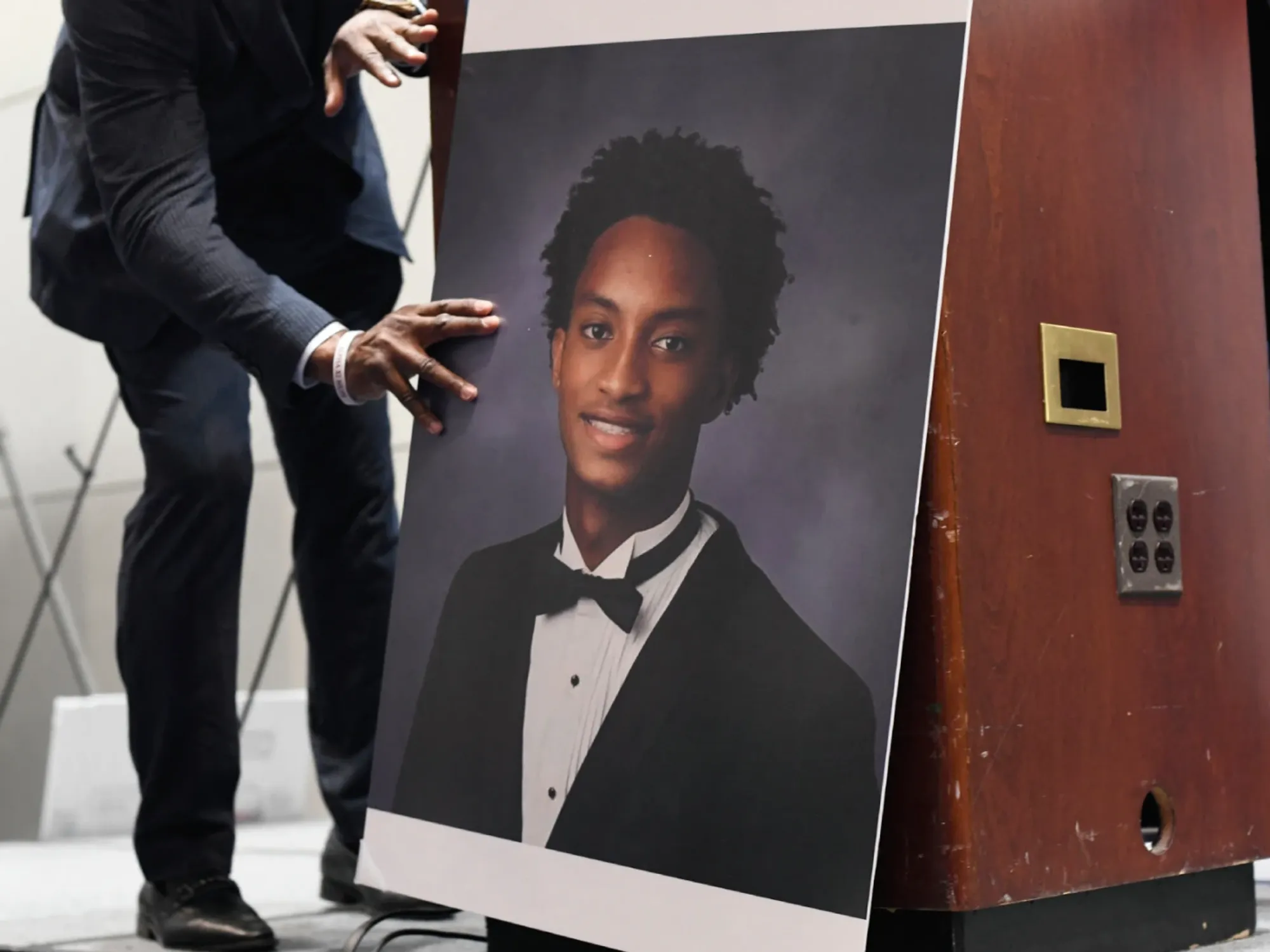
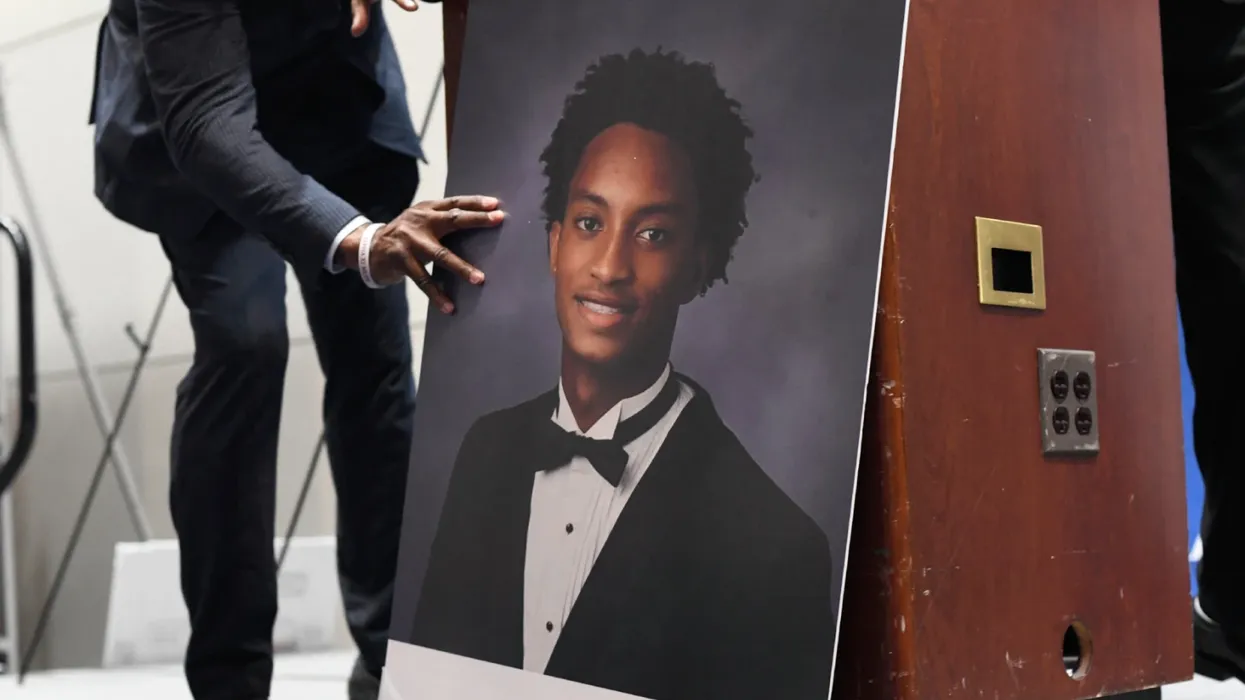
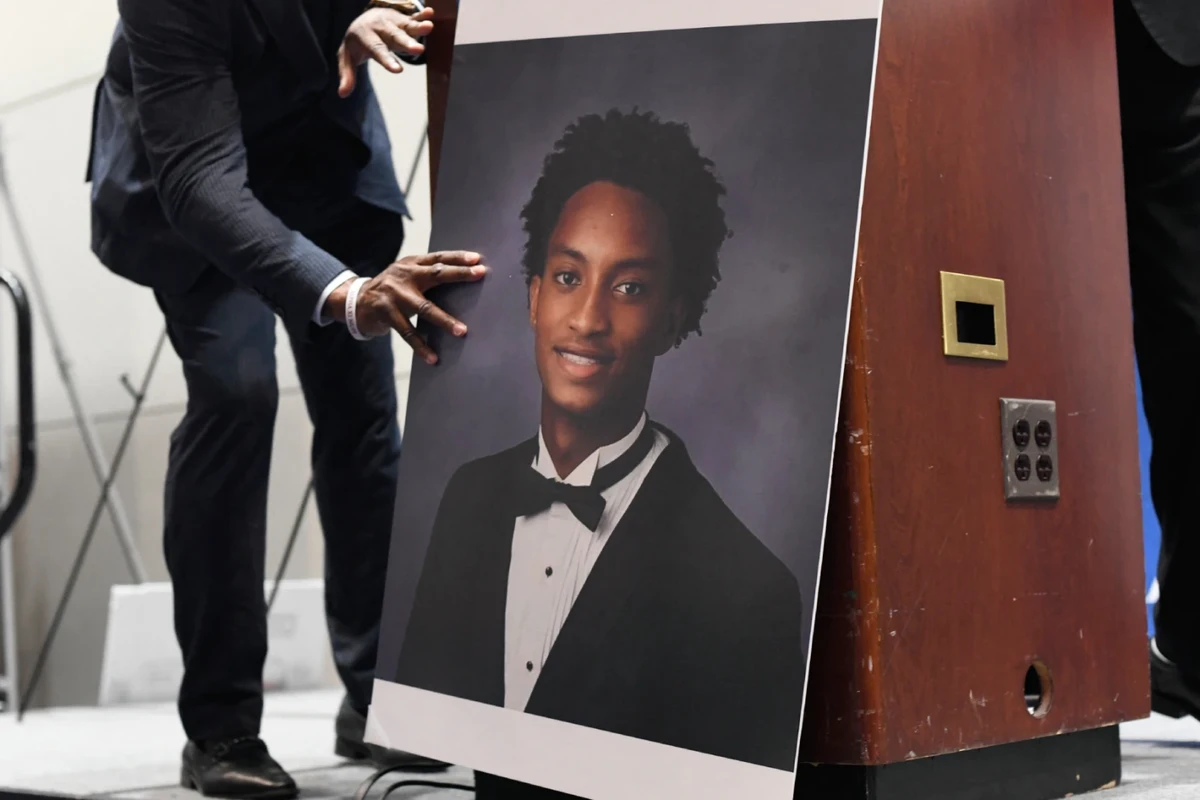
A man places a photograph of Nolan Xavier Wells in front of the podium before a news conference during the 117th NAACP National Convention
A grand jury investigating the death of Nolan Xavier Wells unanimously decided against making any indictments, Jackson County District Attorney Angel Myers McIlrath said in a statement Monday night.
The 18-year-old football player from Ocean Springs, Mississippi, was with friends on Horn Island, a barrier island near the border of Mississippi and Alabama, when he disappeared on July 4. Two days later, a U.S. park ranger found his body on the island where he was last seen. Wells, apparently, had decided to stay on the island after his friends left by boat. He was last seen around 3 p.m. wearing blue swim trunks and sunglasses.
An independent pathologist found the cause of death as “undetermined pending investigation,” and many questioned whether there had been foul play. The first autopsy was conducted on July 7 by a state medical examiner in Mississippi. It found “there was bruising on the back of Mr. Wells’ head, which was not a fatal injury” and found “no evidence of any fatal injury or organic disease.”
“Jackson County, after a thorough and exhaustive investigation, your grand jury met last week concerning the death investigation of Nolan Wells and unanimously returned a no true bill,” McIlrath said in a video statement on Facebook. “In addition to bringing prosecutions against the guilty, the grand jury must also exonerate those who have been falsely accused.”
McIlrath continued, “There is absolutely no evidence to support the allegations that Nolan’s disappearance and death were racially motivated. Nolan’s friends loved Nolan and Nolan loved them. Nolan chose to stay on the island that day, and there is not a scintilla of evidence to contradict that.”
The grand jury report was released on Monday. It indicates that the grand jury issued 132 subpoenas and heard from 43 witnesses, with seven individuals being invited to testify.
“The Grand Jury considered credible evidence concerning the circumstances of how Mr. Wells sustained the injury to the back of his head, but the exact cause of injury remains uncertain,” the report said. “A witness testified under oath that he saw Wells slip awkwardly off the side of a boat around the time of 3:30 p.m. on July 4, 2026, but could not say whether Mr. Wells struck his head during the fall. The witness testified that Mr. Wells continued to socialize after the fall and did not appear injured.”
Former NFL player and activist Colin Kaepernick helped fund the private autopsy which was done on behalf of Wells’ family. During his eulogy at Wells’ memorial, Rev. Al Sharpton offered a $50,000 reward for anyone who brings a tip leading to an arrest or conviction in the case of Wells’ death. Actor and filmmaker Tyler Perry texted Sharpton during the funeral to announce he’d match the reward. Afterwards, it was announced that retired football player Terrell Owens was adding $25,000, bringing the total to $125,000. “He was not on that island by himself,” Sharpton said during his eulogy. “Somebody saw something or knows something.”
Attorney Ben Crump, working on behalf of Wells’ family, released a statement on X following the release of the report. “The public still deserves a clear account supported by records, evidence, and independent scrutiny,” Crump said. “Nolan Wells’ death still demands answers.”
Crump also called the grand jury’s decision an attempt “to close the chapter on Nolan Wells’ death without getting to the truth,” according to CNN. He added, “Nolan’s family will not rest until we know what happened to him, and neither will we.”
Edward Paltzik, an attorney representing the friends who had accompanied Wells on the boat trip, said on X, “We said it all along: Warren Hudson, Jax Pitalo, and Morgan Seymour were always completely innocent. There was never any doubt. They are terrific people.” He added, “I wish to express our deepest gratitude to District Attorney Angel Myers McIlrath and the Jackson County Sheriff’s Department for their professional, thorough, and unbiased investigation that was unprecedented both in care and scope.”
As anticipation builds for what's gearing up to be one of the most important releases in entertainment this decade, Rockstar Games is giving the music of Grand Theft Auto VI its very own release.
The company announced Thursday that Grand Theft Auto VI: The Album, a 34-track collection of original songs created in partnership with Atlantic Records, will arrive November 19, the same day the highly anticipated game launches.
Six tracks have already been released, offering the first look at the unusually broad roster Rockstar has assembled for the project. The lineup includes Yung Lean with Future and Metro Boomin on "That's It," Travis Scott on "RHYNO," Morgan Wallen on "Last Thing You Need," Rauw Alejandro on "Macacoa 2000" and Rolling Stones guitarist Keith Richards on "Bright Lights, Big City."
The album also features an unexpected collaboration on "Sexy Magic," which brings together CA7RIEL & Paco Amoroso, PinkPantheress, Fred again.. and French electronic producer Etienne de Crécy. Travis Scott's "RHYNO" is produced by Guy-Manuel de Homem-Christo, the Daft Punk co-founder.
Rockstar says the 34 songs were created to capture the energy of Vice City and Leonida, the fictional Florida-inspired setting of GTA VI. The remaining 28 tracks have not yet been revealed.
Importantly, the album does not appear to represent the entirety of the game's musical universe. Rockstar says more information is still coming about GTA VI's dynamic score and what it calls the "next evolution" of in-game radio. How the 34 original songs will be incorporated into the game has not yet been fully detailed. We also do not know whether the songs we heard in the Netflix exclusive trailer will be featured in the actual game.
The album will be released digitally on November 19, with CD and vinyl editions also available. A limited-edition vinyl set will feature transparent magenta records filled with blue liquid and exclusive artwork.
Has the internet made keeping up with the ever-evolving glossary of new phrases feel borderline impossible? Don’t worry, Merriam-Webster is here to help.
The famed dictionary added 1,400 new words to its dictionary on Wednesday, many focused on internet-first phases and trends. “The new entries reflect words and meanings that have demonstrated widespread use over time, offering a window into the world today,” Merriam-Webster said in a statement, calling the adds a “glow-up” to the dictionary’s historic lexicon.
The new batch of words focus on the worlds of food, social media culture, technology, fashion, and community. These include everything from “shapewear,” “looksmaxxing,” “meme coin,” “parasocial,” “promposal,” “vibe coding,” “cuffing season,” “Sunday scaries,” “crashout,” and “California sober.” Other additions are “Rickroll,” “compute,” “yacht rock,” “whack-a-mole,” and “uncanny valley.”
Merriam-Webster has a long established history of updating its dictionary to include modern phrases and terms introduced and used in pop culture and digital spaces. According to their public guidelines, dictionary editors pick the new additions by using three criteria: frequent use, widespread use, and meaningful use.
With the new words including major additions from the technology and communication worlds, Merriam-Webster might be providing some clues to its word of the year. The frontrunners for the annual tradition haven’t been announced yet, but the winners in years past were “slop,” “polarization,” and “authentic.”
“New words like hashtag and selfie get a lot of attention, but many of the new words we add are new meanings of words that are already staples in our language: think of the recent meanings of mouse and cookie that have nothing to do with rodents or baked goods,” the company says on its website. “The Internet-specific senses of lurk and browse built upon the existing meanings of those terms. A verb that we use every day, access, was first entered in the Collegiate Dictionary in 1973, and a specific reference to computers was added in 1993. These words may not make headlines, but they’re just as important as words that are newly coined.”
There’s a voice in Rachel Accurso’s head. Right now, it’s also coming out of her tote bag — a recorded version of her alter ego’s cheerful tone made tinny by canvas.
“This is so funny,” she says, wrestling with a rainbow-colored plastic toy with her face on it, which is doing the singing in question. “I was walking down the street, and it was like, ‘Hi, friends!’ I don’t know how to shut it off!”
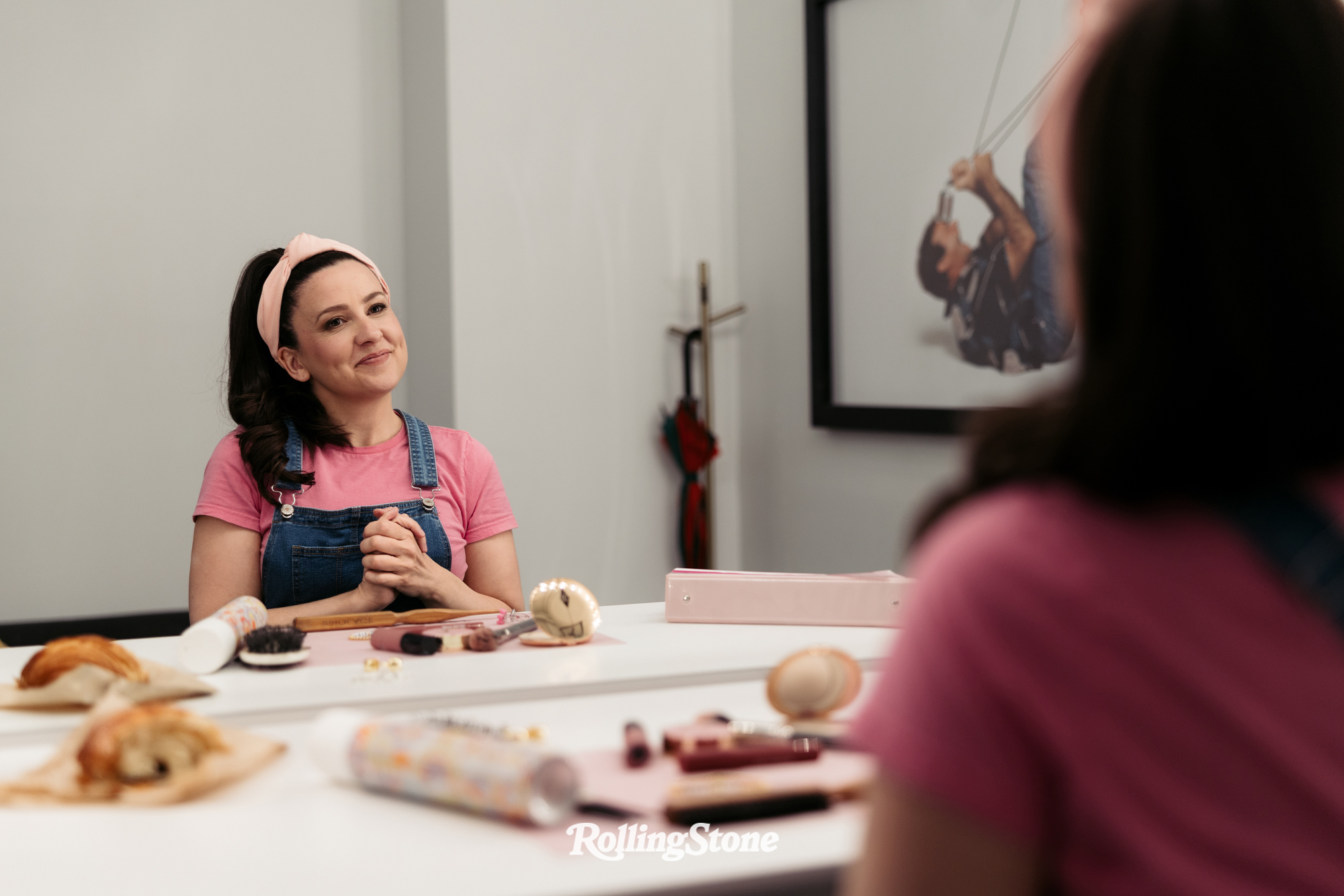
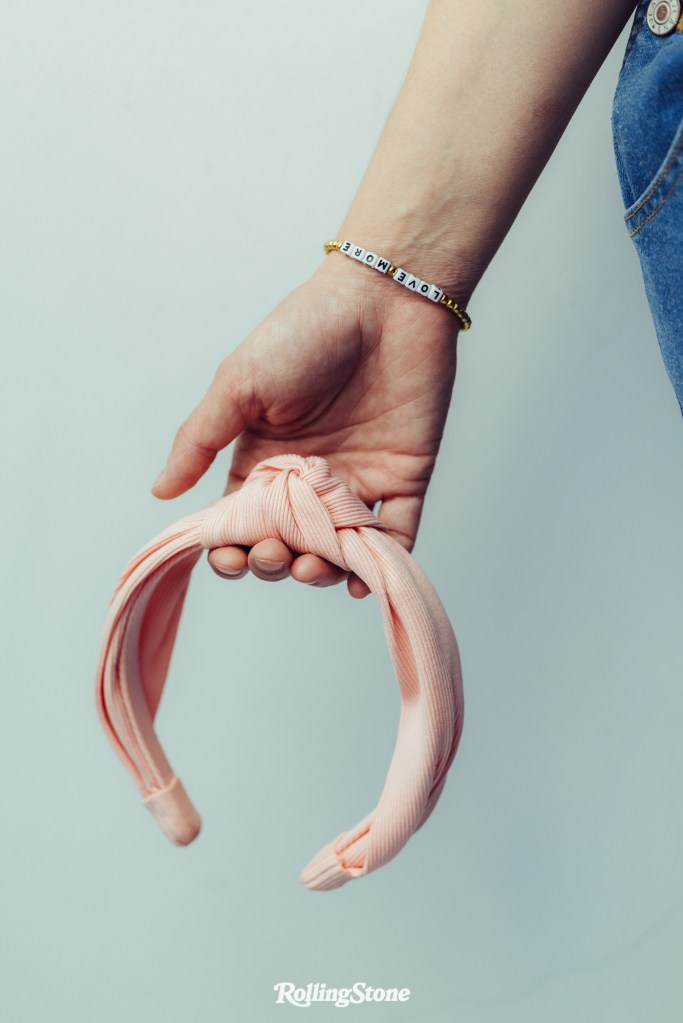
If she donned a pink headband, most people would recognize Accurso as Ms. Rachel, a children’s entertainer who started as an amateur YouTube host and has since crafted an educational universe. She has more than 20 million subscribers, a Netflix deal, a collaboration with Sesame Street, a line of toys available at Target and Walmart, children’s-book tie-ins, and an upcoming debut album, I’m So Happy, out Sept. 25. But there are two people at play here. Yes, there’s Ms. Rachel, a trusted face on the internet using songs to teach tykes how to say “mama,” use the potty, and hop like bunnies. But there’s also Accurso, a 43-year-old Christian mother of two whose conviction to speak out against violence, poverty, and disenfranchisement of children, particularly those in Gaza, has turned her life as a public figure into a melee of controversy.
This duality isn’t immediately obvious in the woman who greets me at her door in New York City with a bulging plastic bag of breakfast food and a wide, open smile. When the construction in the apartment next door makes itself known — clanking and paint smells seeping under the door — our morning at home swiftly turns into a picnic. “Let’s go down to the park,” she says, soft voice carrying only a trace of the singsong intonation that keeps children rapt. “It will be beautiful.”
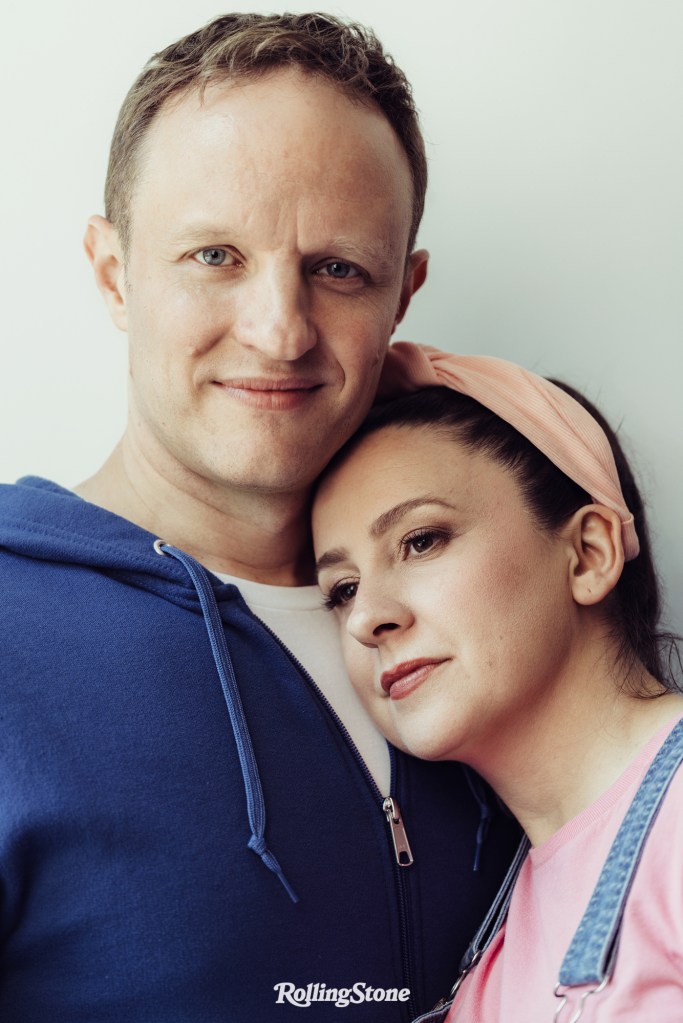
Originally called Songs for Littles, Accurso started the show in 2019 with her husband, Aron Accurso, a composer and musician who’s worked on Broadway shows like Billy Elliot, Nice Work If You Can Get It, and Aladdin. Ms. Rachel videos, which can run anywhere from 30 minutes to more than two hours, cover a wide range of deceptively simple topics, like playing hide and seek, naming farm animals, or learning how to brush your teeth. But Accurso leans heavily on her master’s degree in early-childhood education, which gives the show a research-backed foundation. The nursery rhyme “The Mama Song,” for example, uses exaggerated mouth movements to encourage babies to mimic the motion. “Icky Sticky Bubble Gum” turns a silly story about gum into a lesson about the parts of the body. The song “Hop Little Bunnies” promotes movement and following instructions like “stop,” “jump,” and “skip.”
Accurso’s show doesn’t contain political material — unless lessons on friendship can be considered dangerous ideals. Nevertheless, Accurso’s activism on her public-facing Ms. Rachel social media accounts has made her and her family a target of harassment, accusations, and even death threats. It’s why, for safety reasons, I cannot share what neighborhood Accurso cheerfully walks me through, stopping to speak to neighbors and pet a fluffy white dog named Daisy dealing with a bout of arthritis. I cannot even describe the park where we set up camp to eat breakfast on the ground. Think being a mom is hard? Try balancing playdates and school drop-offs with security measures and constant vigilance.
On her public Ms. Rachel accounts, Accurso posts anywhere from five to 10 times a day on platforms like Instagram and Threads, calling out politicians, posting fundraisers, and constantly reiterating that children in Gaza deserve the world’s attention. Accurso’s driving belief is that with enough time, enough photos, enough heartfelt pleas, she can change people’s hearts and minds. But that fight comes with a limit — one Accurso is in the process of figuring out.
“‘You’re gonna lose this partnership. You’re gonna lose views.’ That doesn’t faze me because the kids gave me the platform. I’m going to stand with them no matter what,” Accurso says. “People on the ground in Gaza are risking their lives all the time to help kids. I can do it from Manhattan.”
AN IMPROMPTU OUTDOOR BREAKFAST with Accurso involves plenty of food, and what feels like even more apologies. First, Accurso apologizes for not having a picnic blanket. Then, it’s napkins, though she offers pieces of paper, a handful of Ms. Rachel-themed bibs, and at one point, her own tote bag. Then she apologizes for not thinking about dietary restrictions. She’s picked up what feels like every breakfast option, including yogurt, avocado toast and salad, and a fluffy omelet covered in chives. All that’s missing: utensils.
“Oh, my gosh, we are screwed,” Accurso says, laughing. “What are we gonna do?” There’s a shuffle for things we could use to build makeshift forks, but it’s eventually abandoned. Accurso manhandles the omelet, layering the salad on top before folding it in half. “It’s an egg taco!” she says gleefully. When the hand sanitizer I offer her disappears at the bottom of my bag, she waves my empty hands away with a shrug. “I [don’t] care,” she says, ripping a thick slice of sourdough topped with avocado mash clean down the middle. “I [have] a 16-month-old who eats dirt.”
Kids programming has always been an integral part of Accurso’s life. In fact, it probably still would be even if she wasn’t Ms. Rachel. No fewer than six times, she calls Fred Rogers — Mister Rogers — her “hero.” She adores Sesame Street and children’s books like Madeline. Growing up in Maine with a single mother, Accurso’s great love was the theater. She and her older sister — close to three years apart — used to call themselves “Sisteristic” when they put on living-room performances, and were constantly checking ads for community theaters. Accurso was once in a local production of Annie with Anna Kendrick; Accurso was Annie and Kendrick was a precocious voice in the orphan ensemble. (“When she did, ‘I love you, Miss Hannigan,’ she totally stole the show,” Accurso says. “I told her on DM[s] the other day, and then she found the program!”)
Accurso moved to New York in 2009. Soon after, she met Aron at a Unitarian church on the Upper East Side. “It was coffee hour at church. I was about to leave, and I said, ‘Oh, there’s a cute girl.’” Aron says. “When I started talking to her, I realized, ‘What an interesting person.’ Immediately I said, ‘I’ll walk you out.’” (Their first real date was the short-lived Broadway musical In Transit.) The duo are opposites, personality-wise. Aron tends to be quiet and straightforward. Accurso’s mind and mouth run a mile a minute. When an interested squirrel moves to investigate our breakfast, she goes silent midsentence. “I feel like we’re not supposed to feed animals,” she whispers, vocalizing the notes to Snow White’s “I’m Wishing,” hand outstretched. “And it’s so hard because I want to.” But the Accursos share a passion for making music.
“When I was teaching public school, I asked him to make a track because there wasn’t a karaoke [version] for this certain song. I thought he was just gonna sit down and [play],” Accurso says, miming plunking a few solitary keys on a piano. “He was there for hours and hours, adding all these instruments to exactly match the track. I think it’s cool that he [brings] the Broadway level of care and detail to kids’ music.”
The Accursos had their first child, Thomas, in 2018. After his first birthday, Thomas was diagnosed with a severe speech delay that required specialized therapy. It wasn’t cheap — about $175 for every 45-minute weekly session — but the techniques were life-changing. After she realized Thomas remembered more when he was able to watch lessons back on video, Accurso asked her husband to give her a birthday present. “I was like, ‘I want your mouth on a video camera to say cheese or baby,’” she says, curling her lips and baring her teeth to enunciate the syllables. “I’m self-conscious about my teeth. And he’s so nice, he’ll do what I ask. It was [Aron] jumping in right away [that crafted] that first video.”
Ms. Rachel’s popularity wouldn’t be possible without the rapidly developing relationship newer generations have with technology. According to the American Academy of Pediatrics, every year, the age at which kids are exposed to screens goes down, and the number of hours they spend in front of screens goes up. And the choices available to them extend far beyond PBS or Disney. The landscape of online children’s content is cluttered with everything from multicolored fruit dancing to EDM to baby influencers, who unpack and play with mountains of toys on camera (à la Ryan’s World) for other kids’ enjoyment. When the Accurso family published their first video in 2019, they offered parents an educational and low-fi alternative. In one of their first videos, “Bubble, Bubble Pop!,” Accurso sings in front of a static underwater background for only two minutes, voice brassy without a professional microphone, before signing off with a cheerful “See you later, alligators!”
“The first things we filmed, we stacked books [to make a] tripod,” Accurso says wistfully. “I didn’t care if it was crooked.” There were also some technical glitches. “I would record a whole show and the mic wasn’t plugged in, and I’d cry.”
But kids were obsessed, as were adults. Parents would leave testimonials praising Ms. Rachel’s videos, saying they helped their children learn new skills, or calmed crying toddlers. There’s even an ongoing TikTok trend where parents play Ms. Rachel’s voice and wake babies out of dead sleep. As the Covid-19 pandemic set in, and millions of Americans became trapped in their homes with no access to mommy-and-me events, toddler classes, or respite, Accurso’s channel hit 1 million subscribers.
IF ACCURSO HAS A SUPERPOWER, it’s invisibility. Groups of screaming preschoolers pass by us in the park, fists clutched tight onto their walking ropes, chubby hands waving hello or pointing to squirrels scampering in their path. “Hi, friends, how are you today?” Accurso calls out as a group stops next to us. Not a single one seems aware that the only thing keeping them from recognizing their biggest idol is a pair of mint-green Lucite glasses and the absence of that signature headband.
“None of them seem to know I’m Ms. Rachel, which is totally great,” Accurso says softly, waving to the group. “Only grown-ups really do. [They] recognize me if they hear my voice. I often wear Mister Rogers socks or a Sesame Street shirt because I love children’s media.” That’s enough to tip people off. “Sometimes I’m not gonna wear the shirt, because I’m doing something with my son and I really want to focus on him. But I love meeting people out and about.”
Accurso describes herself as having an overdeveloped sense of empathy. She says she feels physical pain when someone else is hurting. It’s why she was struck in late 2023 when she saw videos of Palestinian children watching episodes of Ms. Rachel, often with the chaos of a humanitarian refugee camp directly behind them. As videos of the war in Gaza continued to flood in, the images stayed with her. When she saw a video of a starving baby in Gaza wearing a rainbow onesie similar to one her then-infant daughter, Susie, wore, it made her so upset she had to give the item of clothing away.
“When I see a mom who has a baby who is starving and they can’t get any milk, I see that and [think], ‘What if that was me and Susie?’” she says. “With Gaza, I couldn’t not speak out.”
Accurso’s online presence has always been intertwined with politics. In 2020, she shared children’s books about the importance of talking to kids about race, like the Ibram X. Kendi picture book Antiracist Baby. She also posted about the importance of voting in presidential elections. In 2024, she posted a video celebrating Pride Month and LGBTQ+ families (“This month and every month I celebrate you!”) — prompting a boycott from political commentator Ben Shapiro. She lambasted former New York Mayor Eric Adams over proposed cuts to early-childhood education programs in the 2024 city budget. She’s been vocal about the harm poverty and food insecurity can have on developing children, and is quick to condemn racism and homophobia. She remains a staunch critic of the Trump administration’s family detainment practices and xenophobic rhetoric against immigrant children. And she has a demonstrated history of fundraising for kids in war-ravaged areas — including mass displacements in Sudan and the ongoing conflict in Ukraine. So she was surprised when her posts about the rising Palestinian death toll were met with aggressive criticism.
When she collaborated with Palestinian war photojournalist Motaz Azaiza, who has called Israel a terror state, she was accused of platforming an antisemitic voice in the movement. When she ramped up her posts about starving Palestinian children, critics said she was ignoring Israeli children targeted in the Oct. 7 attacks. In 2025, watchdog group StopAntisemitism put Accurso in the running for “Anti-Semite of the Year,” claiming Accurso inflated death statistics coming out of Gaza, shared “Hamas propaganda,” and ignored the deaths of Jewish children in Israel. The group also sent a formal letter asking the Department of Justice to investigate whether Accurso was being funded by Hamas for her post. Accurso denies these claims, stating she has only shared statistics shared by verified sources, like the United Nations. Even then, some disputed their veracity. (“I have to realize that people who believe the U.N. is fake — that’s not people I can engage with,” she says.)
In January, Accurso started a firestorm when she accidentally liked an Instagram comment on her post that said “Free America From the Jews.” Accurso apologized — saying she hit the button by accident and removed it once followers brought it to her attention. “I thought I deleted a comment and I accidentally hit ‘like,’” she said in a tearful video. “I’m a human who makes mistakes. Everyone who knows me knows I would never like that.”
Looking back on the last few years, Accurso says, “I thought everyone hated me at one point. I remember calling friends and family members, Jewish and not Jewish, and just being like, ‘Why do people hate that I don’t want kids to be killed and starved?’”
Raffi — the famed children’s performer known for “Baby Beluga” and “Five Little Ducks” — says that Accurso’s work and activism center around spreading joy and working to protect children everywhere. “In her love of the world’s children, she’s a person after my own heart. Her embrace of Palestinian kids is what Fred Rogers would have done,” he says. “Rachel’s courage and compassion is exemplary. I’m happy we’re friends.”
But while close confidants have been supportive, the in-person backlash is also rampant. Last year, Accurso released a special performance of the song “Hop Little Bunnies” with Rahaf, a then-three-year-old from Gaza who lost both her legs in an Israeli airstrike. In the clip, filmed in New York, the two sing together. Rahaf swings her prosthetics to the song, and at one point, wraps her small arms around Accurso’s neck — following the song’s instructions and pretending to be asleep. But when she attempted to rent out a playroom for Rahaf’s visit, Accurso was turned away from multiple businesses, which cited threats and backlash.
“I finally found a place that would let us come. She had the best time,” Accurso says. “I just was like, ‘Let me just be in the moment with her and follow her lead.’ We played and laughed so much. It was beautiful.”
But even this perpetual optimist can’t hide the fact that constant scrutiny has complicated the life she imagined for her children. “I wouldn’t change anything. Well, I would love for people to not send death threats,” she says. “For a while, we had security, and they were like, ‘Don’t do anything predictable.’ And it was just like, ‘Oh, I have to think about what I’m doing and fear for my family.’ That was tough.”
Aron has always been happy for Accurso to be the public face of their show. “It’s a beautiful face,” he says, squeezing her hand. But he had to come up with emotional strategies for dealing with the threats. “I’m very proud of all the work that Rachel’s doing,” he says. “She wants the best for all the children of the world. She genuinely cares. I know that, and she knows that. And everything else is noise.”
Accurso knows her content can upset people. But she doesn’t see any of her advocacy — for Gaza, for Sudan, for immigrant families in the U.S. — as separate from her job as Ms. Rachel. For Accurso, being a voice for children means accepting the moral responsibility to consider their welfare from all angles. She has always said that she started her show to help people. But teaching phonics or manners or even how to say “mama” has an eventual victory. If Accurso wants to teach the world how to have empathy, she’s got to realize it’s a goal with no end in sight.
“When I first started talking about Gaza, some people didn’t connect. I realized I had to humanize the kids. That was what needed to happen for people to get involved,” she says. “There’s so much attacking in our world, and yelling at each other, it pains me when people don’t have that experience, and so they didn’t see [Palestinian children] that way. But I really believe in people’s ability to learn and change.”
THE MS. RACHEL PEOPLE INTERACT with online is almost always smiling. The real Accurso? Well, she’s tired.
I don’t see the effects until a few weeks after our breakfast, when I meet up with Accurso and her husband at the Ms. Rachel studio, housed in a small one-bedroom apartment in Manhattan. The two used to live here with their children, but now use it to film the show. The center of the living room is almost completely bare, with two chairs on one side and an upright piano pushed against the other wall. Around it are Broadway posters like The Little Mermaid and Rogers’ autograph in a frame (a gift to Accurso from Aron). To the far left is a Silver Play Button award from YouTube, a plaque gifted to creators after they reach their first 100,000 subscribers.
When Accurso enters the room and sits next to her husband, her face, although smiling, is drawn, like someone has turned down her wattage. The night before, she posted a video on Instagram about an independent U.N. Commission of Inquiry, which found Israel deliberately targeted children in the Gaza Strip, even after the October 2025 ceasefire. “Where have you been, people we look up to? You didn’t want to lose your reputation or your power or your money?” Accurso says in the video, holding back tears. “How can you go to sleep at night knowing you didn’t say anything?”
Today, it seems the lack of sleep is weighing on Accurso. “I’m so excited,” she says softly, sinking into a deep chair and covering her face with her hands. “I’m gonna take nine days off. I haven’t taken a vacation in a long time.” She doesn’t want to share publicly where she’ll be going with her family, but the last “vacation” was the birth of Susie, whom the couple welcomed via surrogacy in 2025. “I didn’t go [anywhere] when she was little.”
It’s a reminder that while Accurso believes her advocacy is her responsibility as Ms. Rachel, it happens in a schedule already packed with rehearsing songs, filming videos, and being a parent. Right now, the big focus is the release of I’m So Happy, Aron and Accurso’s first album. It would have been easy enough to take some songs from the YouTube channel, add a new harmony here and there, and slap on a title. But that’s not how the spirit of Ms. Rachel works.
I’m So Happy is 23 tracks of both popular, public-domain children’s songs like “Old Macdonald” and “The Wheels on the Bus” and Ms. Rachel originals — all rerecorded with professional musicians. “When we did the YouTube versions, I would call up some friends and have them lay down other instruments from their home, and then I would try to mix it myself,” Aron says. “For the album, we wanted to take it to that next level of polish and sparkle. Each song has its own musical world.”
For over a year, Aron led the project, enlisting more than 40 musicians for live recordings in studios in New York and Nashville. Aron himself conducted strings for their heart-wrenching song “I Love a Rainbow.” “I’m really excited for families to experience these songs they already know from our show, and see how we expanded them with bigger versions that have new sections and fuller arrangements,” Aron says. “Kids deserve detailed, rich music. Although they can’t verbalize it, I think that [children] notice the care and detail that goes into the music.”
The whole family helped develop the album. “He played it for Susie all the time, and Susie would dance around and sing to it,” Accurso says, laughing. “Aron would be taking notes and thinking about the tracks while Susie pretended to be a dinosaur.”
Accurso suddenly pops up with a request — she wants Aron to play the piano for us. His good-natured protests don’t move her, and before I know what’s happening, the two are seated side by side on the piano bench, the notes to “I Love a Rainbow” already lifting into the air. Accurso closes her eyes next to Aron, the melody to the song already escaping her lips. She’s happy to be singing again.
There’s a childhood memory Accurso returns to often. When she was in second grade, she read Ludwig Bemelmans’ Madeline, a classic children’s novel focused on a rambunctious girl living in a Parisian boarding house. In the book, Madeline’s adventures are cut short when her appendix bursts and she’s rushed to the hospital. But rather than waiting patiently for Madeline’s return, her classmates require immediate comfort from their minders, believing that they too are deathly ill.
When Accurso read the book, she was immediately struck with pain in her stomach. Her mother hustled her to hospital, only for the doctors to realize Accurso’s active imagination had left her in the same predicament as Madeline’s friends. She was sent home and told that the stinging was in her head, but she couldn’t understand what they meant. The pain felt real. It felt urgent. It demanded action. She was feeling Madeline’s pain. Wasn’t everyone?
“But it hurts,” Accurso remembers saying. “I hurt, too.”
Production Credits
Hair by SAREEN BHOJWANI. Makeup by STEPHANIE POWERS. Photographic assistance: GRANT FLANAGAN and TESSA DILLMAN. Digital technician: FAISAL MOHAMMED.
The Great Outdoors Comedy Festival has postponed its debut, just days before John Mulaney was scheduled to headline the Mississauga, Ontario event.
The festival was set to take over Erindale Park from September 11 to 13, with Mulaney, Hasan Minhaj, Ronny Chieng, Jeff Arcuri and many others on the bill. Instead, organizers announced yesterday that the entire weekend would be postponed, without providing a specific reason.
“After careful consideration,” the festival said, it decided postponing the event was the best way to deliver the “best possible festival.” Organizers say they are now exploring new dates and will contact ticket holders directly.
The announcement comes after a series of lineup changes in the weeks leading up to the festival. Nick Kroll and Mike Birbiglia were among the comedians originally scheduled to appear alongside Mulaney, while the festival’s published lineup was later revised.
See on Instagram
Mulaney, who has in the past had to cancel many shows in the GTHA, made clear Wednesday that the decision did not come from him. “It was not my decision,” he told Ontario fans, confirming that the festival producers had decided not to proceed with the weekend. He added that he intends to perform in the region soon.
The festival has not yet announced a reason for the postponing, replacement dates or a refund policy. For now, the Great Outdoors Comedy Festival is offering few answers beyond “stay tuned.”
“When things fall apart, men isolate and withdraw from the world more,” says Ronson.
“This story crashed unannounced into my life,” Jon Ronson tells me. It’s a lazy summer afternoon in the hamlet where he lives in upstate New York, and the journalist and author of The Men Who Stare at Goats, So You’ve Been Publicly Shamed, and The Psychopath Test is explaining the genesis of his latest book. He describes a night, almost exactly three years ago, when he slept through a series of texts that came in from his adult son. The messages told a disconcerting story: His son’s friend, a woman, had connected with a man on Tinder, who invited her to come over to his castle in a rural part of Connecticut and bring some friends. According to his son’s description, Ronson says, the structure was a “vast, newly-built castle, ostentatious even by Gothic castle standards. Like, Count Dracula would think this is a bit much.” There were turrets, and a drawbridge, but in the grand ballroom, there was no sign of a party. “There’s a couple of other young people looking awkward and wondering what the hell is going on, but nobody knows what’s happening. Everyone’s confused.”
When the middle-aged castle owner emerged, he introduced himself as Chris Mark. The assembled twentysomethings asked him what was going on, and he told them they were there to take part in his new reality show, 101 Princesses. “He said, ‘I’m the king. I’m looking for my queen, and I have 101 princesses to choose from.” He sent the women down to the basement, where they could find princess costumes to wear. “They went with it, I guess out of unease, awkwardness,” Ronson says. “A videographer appears. They start filming. It becomes pretty clear pretty quickly that this isn’t a real reality show. One reason being that the videographer kept cutting up [a slab of] meat for the castle owner. Just for him. No meat was offered to anyone else.”
Ronson, who was also host of the hit porn-industry investigative audio project The Butterfly Effect, has made a career of letting his curiosity get the better of him. So, the next day, he went to the castle “to find out what the hell was going on,” he says. “And that’s how the book begins.”
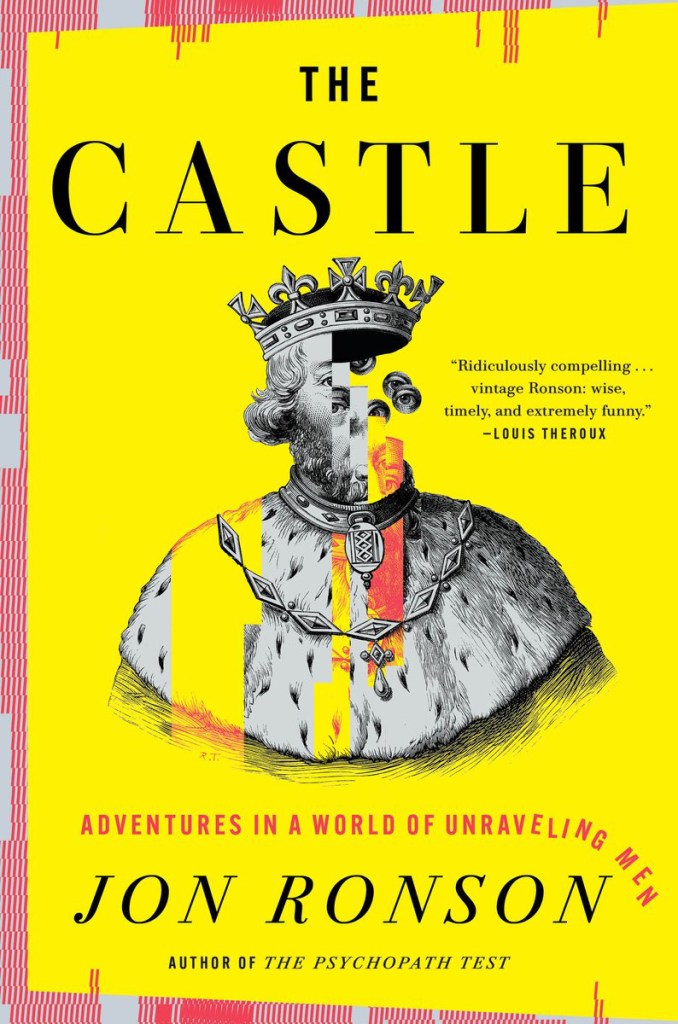
The Castle: Adventures in a World of Unraveling Men (out now from Riverhead Books), reads like an adventure story. Though much of it is framed around his interviews and interactions with Mark — the wealthy descendent of a Gilded Age baron — it opens up to a larger pursuit to understand the state of men, and how the breakdown of societal support, coupled with the rise of a technological state, has brought so many to the brink.
In the book, Ronson travels to the Midwest to visit a town built by Mark’s great grandfather in the 19th century, a recreation of a British village set under power plants and steel factories, where he talks to the man keeping its history alive. He charts the career path of an early YouTube star, Greg Chism, who went from being one of the first lawn-care influencers to chasing the algorithm by posting videos of his two young daughters. What starts as wholesome family content takes a left turn when he begins dressing up his daughters as babies, then donning a baby costume himself, before he’s ultimately all but run off the platform. Ronson includes chapters about Graham Linehan, the creator of huge British sitcoms like Father Ted and The IT Crowd, who became a prominent anti-transgender activist, and Armie Hammer, whose acting career crumbled after his cannibalism kink was revealed. Ultimately, Ronson develops descriptions of the different kinds of men who thrive online — the Vulnerable Man, the Doofus Man, the Manosphere Man, the Separatist Man, the Disinhibited Man — and what these modern archetypes communicate about the world we live in. And throughout it all, he comes back to his own unease about his place in the world. If a man doesn’t have purpose, what’s left?
Chris Mark is a fascinating character — he built this castle for his daughter, but then turned it into a sort of alternate-reality Playboy Mansion. At what point did you realize that his story was going to lead to your next book?The first thing I heard about the castle owner was that he was a big fan of Hugh Hefner. I thought, this is really funny. He’s trying to be Hugh Hefner at the worst moment in human history. I linked him with my feelings of unease, as well, about not having enough purpose. It felt like there were weird echoes there. I thought, this is a man out of time. He wants a world that’s no longer going to work for somebody like him, and maybe I should write a book about all these other things that men are no longer able to do that they used to be able to do.
One of the things you write about in the book is how people are reflexively dismissive of the problems of straight white men. What made you want to tackle this when you knew that there was going to be pushback?I think [of this] a little bit like my public-shaming book. People may not like the idea of the book, but then when they read it, they realize that their idea was wrong. Many times over my career, I’ve had this. Nobody wanted to read The Men Who Stare at Goats. The only book I’ve ever written which sold itself was The Psychopath Test — if you put “psychopath” in the title, you don’t have to do that much work. But what I do, I think, over and over again in my career, is look at how big changes that happen on high trickle down and impact the inner lives of people down here. But mostly, it was a book that crashed into my life, this big fucking castle that my son was lured to under false pretenses, and I just wanted to know what the hell was going on.
But let me add one more thing, and I think this applies equally to women as to men. One thing that I became really interested in is this: Structures and institutions collapse, and people feel cut adrift from society, and it does seem to be something that happens more to men than women. There’s more of a weakness in men, that when things fall apart, men isolate and withdraw from the world more. But I got really interested in that — like, what does a lack of purpose and structure do to people’s inner lives? And what’s filling the gap? And one thing that I found that’s filling the gap is content creation on YouTube.
Do you think, as these societal structures break down, the fact that men can’t live up to the preconceived notion of masculinity that they were fed as kids — being a provider, a protector — that’s part of what’s making them feel lonely?There’s a moment in the book when Greg Chism is the world’s greatest lawn-care influencer, but then his life spirals in the most bizarre ways. He starts to listen too much to the algorithms, and everything goes wrong. And it ends with him basically withdrawing from the world. But I ask him what his life’s like now, and he says, “Well, I wake up, I take my kids to school. I come home. I fall asleep. I wake up and I bring the kids back home from school.” I mean, what a terrible, depressing life. For me, it’s the erosion of structure which is causing so much horror in people’s lives.
So you think people are dealing with this by becoming content creators?It’s funny, I went to the cage fight at the White House [in July]. Everybody [in the press pool] was allowed to inspect the cage a couple of days earlier, so we all had to be at the White House at like half past five in the morning. Like 100 people were there, and we were all standing on the steps of the Eisenhower Building, and somebody from the UFC came up and yowled, “OK, everybody, content creators and videographers, step to the left, print journalists step to the right. And there was this vast exodus to the left. Like 98 percent of the people there were content creators, and the print line was like me [and a few other journalists]. And we were just laughing, like, “Oh, my God, we’re such redundant dinosaurs.” So that’s the kind of thing I’m talking about, like a huge shift from the old institutions that I grew up in, to the sort of post-institution era.
How do you think AI chatbot technology plays into accelerating this?It makes it so much worse. AI trawls the internet, sees how purposeless people feel, how lost, and comes in with a false idea of purpose. Like, “You’re the greatest mathematician on the planet,” or, “You’re creating the greatest reality show ever.” It’s so pernicious. It’s so evil. It’s like they’re swooping in to keep us engaged through sycophancy.
Going back to Greg Chism, the lawn-care influencer, one of the things that I found so stark in that story was how he kept changing his content to please the YouTube algorithm so he could get views. What did you find in reporting this book about people who are trying to contort themselves to the pleasure of the computer?His story has got to be one of the most extraordinary things that ever unfolded on YouTube. Like how he goes from lawn care through to all the stuff that happened after that, which is just nuts. Do you remember that novel, The Dice Man, by Luke Rhinehart? It’s about a character who decides to cede his life to the roll of a dice. Every decision he makes, he makes for the roll of a dice, and that’s what people are doing now on YouTube. If they give themselves over too much to the algorithm and the incentive structures, you end up doing more and more extreme things.
I think it’s partly because YouTube gained the reputation of being this wide-open country, like a post-institution utopia where men and women could thrive through grit and perseverance as an influencer, which is a very compelling idea. I grew up in a world of gatekeepers, and it was awful to have to beg people to give me a chance. It’s very compelling to have a world without that, that feels like it could be a true meritocracy where good people rise to the top. And good people do rise to the top. It’s not like it’s all an illusion. Greg Chism’s story and lots of other stories show that if you cede your life to the algorithm — and not just the algorithm, also what the viewers are encouraging you to do — it just leads to hell, and Greg’s story leads to hell in the most baroque and unexpected ways. But I think you could say the same thing about smaller stories, like anti-woke influencers, is a good example of another way that this manifests in sort of pernicious ways.
Another person you write about is your former friend, Graham Linehan, who went from being pretty universally beloved in Britain to becoming one of the country’s loudest anti-trans voices. He attacked you extensively online after you called him out for being a bully, too. Tell me about your decision to include such a personal story in this book.Well, it was very hard. I’ve been trying to write about Graham since 2020, and I’ve picked it up and put it down many times because I could just feel my stress levels rising. Because, you know, Graham’s story is, he became a gender-critical activist, and just made it his absolute identity. And he has his bêtes noires, and I’m one of them, and he’s posted about me thousands of times by now.
The Graham chapter was much longer, but it stressed me out so much. I cut it in half, but it’s like that scene in Poltergeist when you open the door in the bedroom and there’s all this furniture spinning violently around, and I think I’m a piece of furniture spinning violently around inside Graham’s head. I told him I thought he was acting like a bully back in 2019, and all these years later, he’s still going on about it. But I think there’s three or four reasons why I thought I should write about it. Firstly, the only reason to not write about it is fear, and I just don’t think, as journalists, we can be guided by fear.
Secondly, I’ve often thought about Graham. So Graham, for people who don’t know, was a huge figure in British cultural life, maybe a good equivalent would be like Judd Apatow. He was this showrunner of some of the most beloved comedies in British history, and then he fell into this new world in this extraordinary way. I hope this doesn’t sound glib, but I’ve always thought there was like an epic quality to Graham’s story. It was like if Harold Pinter or Tom Stoppard was writing a play about Graham, it would be an incredible play.
But the main reason [I wrote about him] is that I really wanted to do something about disinhibited men. What I discovered was that, when men feel cut out, cut adrift from society, some fold in on themselves. Some adapt. Some lash out. Graham is somebody, and you see it in a lot of different places, who basically decided to just be completely disinhibited, to basically rip off his face, and just allow his head to run wild. It’s as if he’s just decided nothing matters anymore. I thought that felt so extraordinary, but also so resonant to the world we’re living in now of disinhibition.
Tell me about Marktown, the town in Northwest Indiana that was built by Chris Mark’s great grandfather, and modeled after a British village. What did you find when you went there?I really wanted to do something after the castle mystery, you know, exploded into my life, and I decided I wanted to broaden it out into other men, feeling that life was passing them by, and then I thought, well, I’d love to do something about deindustrialization, but how? And also, men who are withdrawing from the world and becoming recluses, but how? And then I discovered, just incredibly fortuitously, that the castle owner’s great-grandfather was a Gilded Age steel tycoon. That’s how he got his money to build his castle, and he had built a utopian theme town in East Chicago, Indiana, for his steelworkers to live in. And over the years, this utopian town, which at the beginning looked great, has completely crumbled into a world of recluses and hoarders. Marktown’s designed to be this lovely English village, like a Miss Marple-type village where some kind of Agatha Christie adventure would happen, but it’s completely surrounded by heavy industry. So it’s like Miss Markle being like scrunched up and thrown into the middle of Wall-E. And when you look at an aerial photograph of Marktown, you just can’t believe it. It’s like nothing on Earth. So yes, so very fortuitously, I got to tell that story of deindustrialization in a way that’s completely relevant to the castle story.
Toward the end of the book, you write a little bit about an interview you did with Armie Hammer after his “cannibalism” scandal broke.So the story is, I got a call. He was filming in New Orleans, and I knew some of the people involved in the film [called Wounds], and they invited me to New Orleans to visit the set. We had dinner with Armie Hammer and his wife and the various movie people, and Armie talked a lot about meat, how much he liked meat, and he was utterly delightful and charming, and it was a great night.
So then a couple of years later, it all happens, the whole cannibal stuff, and then a couple of months after that he contacts me, and I fly to interview him. He says I’m the first person ever to interview him [since the scandal], and he tells me the whole story. But I sit on it. I don’t know what to do with it because there’s some things where he’s definitely right, but then there’s other things where he hasn’t behaved well. Like he would sweep women off their feet and take them to Ojai, and then give them the time of their life, and then come back and drop them off, and completely forget about them. And I thought, I need time. Like I just, you know, this is a story that needs a lot of time. And [eventually] he gave the story to someone else. I felt slightly like one of the women that you take to Ojai. But you know what? I can’t blame him. I was taking way too long. So I have no ill feelings, but this interview was sitting on my computer for the next couple of years, and so I included a little bit of it because there were moments in our conversation which I think shed light on some of the motivations of the castle owner, and privilege, and people not being told that they can’t do things. I cut it down to its absolute minimum, to shed light on other stories in the book.
You’ve got a stage show of the book you’re taking on tour in the States and the U.K. Can you tell us about that?It’s called Enter the Castle. I always do pretty elaborate stage shows. I still do a show called Psychopath Now, based on my Psychopath Test book, where I have mystery guests, and I’ve done shows where I have a band onstage, performing with me as I’m doing the speaking. This time around, I’m using a lot of audio and video clips, and bringing the book to life as a series, almost like a live documentary that I’m narrating onstage. So I always make it ambitious.
Images from the story


End of article