Canada's Biggest Movie Theater Chain Might Be Going Up For Sale
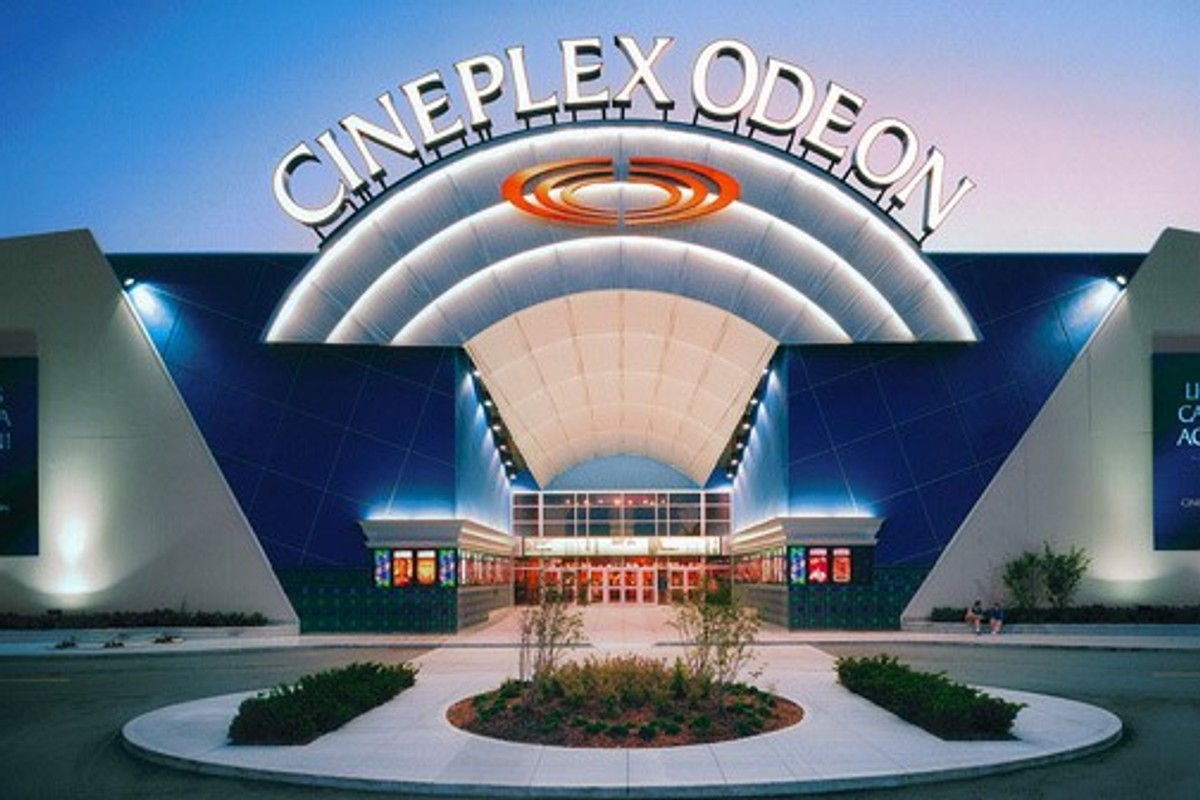
Cineplex announced that it is examining several options, and a potential sale is one of them. Canada's biggest movie theater chain, Cineplex, announced Wednesday that its board has…
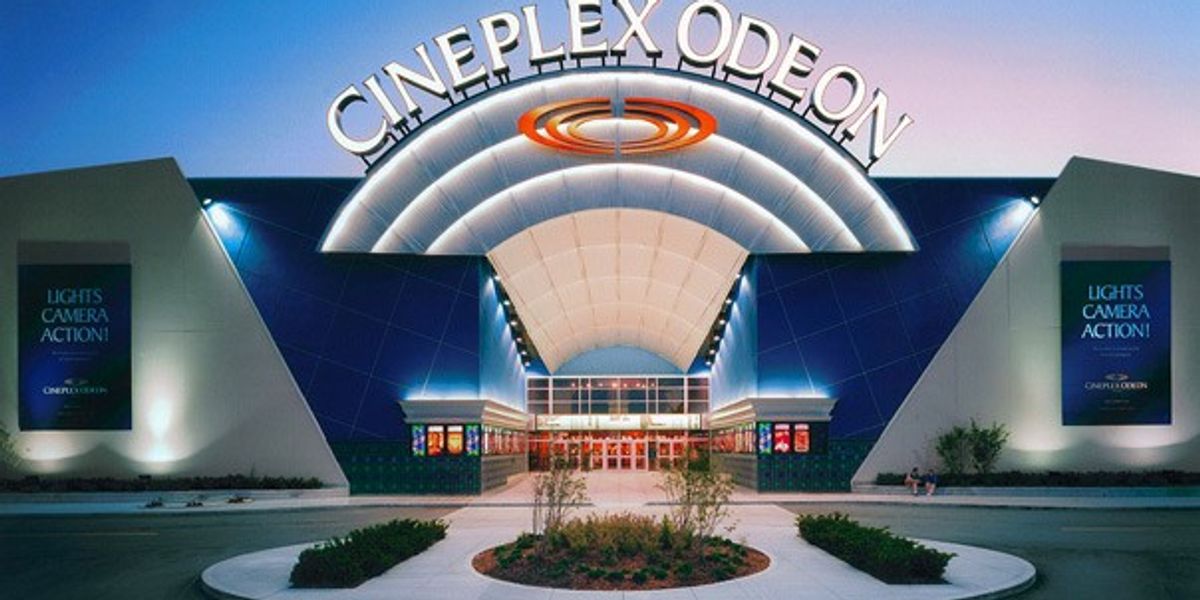
Cineplex announced that it is examining several options, and a potential sale is one of them.
Canada's biggest movie theater chain, Cineplex, announced Wednesday that its board has launched a strategic review that will examine a range of options for the company, including a potential sale. No deal has been reached, and the company stressed that the review could ultimately end without a transaction.
The announcement comes with the announcement of Bill Walker as Cineplex’s new CEO. Walker takes over from Ellis Jacob, who is retiring after more than two decades at the company. Jacob will remain involved as a special adviser to the board through the end of 2026.
Walker spent nine years as CEO of Landmark Cinemas and helped lead that chain through its 2017 sale to Belgian exhibitor Kinepolis. He subsequently remained at the helm of Landmark under its new ownership.
Cineplex is coming off a strong stretch at the box office. The company reported its highest-ever monthly box office in August, following record second-quarter revenue.
Cineplex has also been the subject of takeover speculation before. In 2019, it had agreed to a roughly $2.8-billion acquisition by Cineworld, but that deal collapsed during the COVID-19 pandemic. Cineplex later won a $1.24-billion damages award in court, though the company has said it does not expect to recover the full amount.
Despite repeated calls from the actors of the show, fans just can't seem to avoid turning their love of Heated Rivalry into creepy, parasocial behaviour.
With production on the way for the second season of the smash Crave hit, Hudson Williams’ girlfriend Katelyn Larson is asking Heated Rivalry fans to leave their curiosity out of her profession.
Larson, a Vancouver-area tattoo artist who has been dating Williams for several years, addressed what she described as recent boundary-crossing behaviour at her studio in an Instagram Story on Sept. 22. According to Larson, some fans have been booking tattoo appointments because of her connection to the hit hockey drama, then using those appointments to ask her coworkers personal questions about her and Williams.
“Booking an appointment with me or anyone else purely because of the connection to the show crosses a huge territory,” Larson wrote, calling the questions “hugely uncomfortable for everyone.”
She made a distinction between fans who discovered her work through Heated Rivalry and those treating the studio as a backdoor into Williams’ personal life. Following her or another artist because they genuinely like their tattoos, she said, is completely fine. Booking an appointment solely because of the show, however, is not.
Larson has largely stayed away from the spotlight, a preference Williams has acknowledged in interviews. “She’s not trying to be out there or be perceived,” he told ETalk Canada in March.
Williams plays Shane Hollander in the series, opposite Connor Storrie’s Ilya Rozanov. Their characters’ secret romance turned the Canadian production into a breakout hit, while the chemistry between the two actors helped fuel a massive online fandom.
The actor has also faced other uncomfortable encounters with fans, including a confrontation with autograph seekers earlier this year. Heated Rivalry is currently filming its second season in Canada, with the next chapter expected to arrive on HBO Max and Crave in April 2027.
You wouldn’t think a simple three-word phrase could be so compelling, so menacing, so locked and loaded for generating humiliation. But every time Chris Hansen casually uttered, “Have a seat” to whomever was loitering inside a typical American house, located in a typical American suburb, with a typical American police force waited outside to bust the person, you felt a chill go through your bones. To Catch a Predator began as a Dateline NBC segment and evolved — metastasized? — into a brand that gave birth to a cottage industry. The idea was simple: lure online pedophiles lurking in chat rooms to an in-person encounter with a decoy. Confront them when they show up. Roll cameras and broadcast the public shaming to the nation. “There used to be a pillory in every town,” the host declares. “Now there’s a television in every home.”
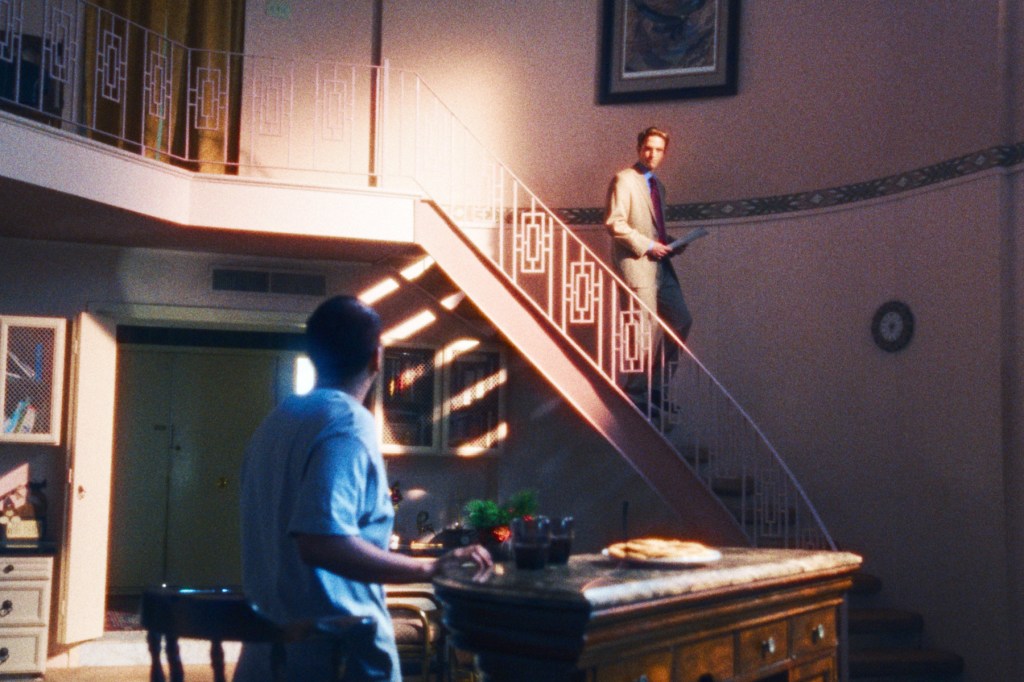
That sentiment is spoken by Robert Pattinson‘s version of Hansen in Primetime, though who knows if the real Hansen felt compelled to articulate that notion on the way to celebrity. Or, for that matter, whether the grandfather of the Reality-Vigilante-TV Industrial Complex ever felt the level of fear and self-loathing that radiates off the star’s human-flop-sweat of a portrayal. Regardless, it’s a great buried-lede of a line, one of several that pops out in filmmaker Lance Oppenheim’s dramatization of To Catch a Predator‘s rise and moral free-fall. Oppenheim cut his teeth making documentaries that he’s described as “stranger than ‘stranger than fiction,'” casting his lens on sperm donors (Spermworld), retirement communities (Some Kind of Heaven, The Paradise Next Door), and power struggles among cosplayers (Ren Faire). Uncomfortability is his comfort zone, and he’s picked an oddly perfect subject for his first narrative feature: manufactured nonfiction that presented as righteousness and doubled as queasy entertainment. To answer the eternal TCAP question: Yes, he sees how this looks. And he’d like you to take a long, hard look at how and why this show imprinted on our collective imagination, for better or worse.
This isn’t the first time in recent years that To Catch a Predator has been put in the hot seat — Robert Osit’s excellent documentary Predators examined the phenomenon from a number of viewpoints, and let Hansen speak for himself. Primetime takes a different tack, focusing on the show’s opportunity to level up as it’s hitting the peak of its popularity and giving Pattinson a stage on which to rage. Performance is the throughline in more ways than one. When we meet Hansen, he’s trying out variations of the “gotcha” moments he’ll soon spring on one of the perps; the way Pattinson pronounces the word “lubricant” as if he’s savoring each syllable immediately sets the tone. The actor has specialized in live-action gargoyles in his post-Twilight period, and the gent is in his element here. This Hansen feels like a twitchy, touchy embodiment of true-crime ambition. Pattinson has the passive-aggressive cadence and trolling thunder of the real thing down pat, with more than a bit of fairy-tale troll thrown in for good measure. (You can understand why the actual TCAP host has, shall we say, a complicated relationship with this project.)
The show is already on its way to being a runaway hit when network head Jeff Zucker — played by Jeff Zucker, because he was available so why not? — dangles a golden carrot in front of Hansen and his perpetually gum-snapping producer Andie Bender (Merrit Wever, pure perfection). He wants to give To Catch a Predator a primetime slot on Sunday, against ABC’s Lost. Hansen is over the moon. The level-up may not shut up that smug Stone Phillips (Bill Heck), who coos that he’ll watch “from Afghanistan,” where he’s about to do real reporting on a war. But finally, the host thinks, his baby will get the kudos it deserves. The caveat is that TCAP has to start catching bigger fish. What they really need, Hansen thinks, is a whale.
Primetime gives you a gallery of showbiz grotesques and True Crime Inc. archetypes, from the way-too-into-it researcher (Matthew Maher) to the executive (Jessica Hecht) trying to poach Bender for a copycat series on a competing network. What the audience needs is a surrogate, which the movie delivers in the form of Dam Plumb (Licorice Pizza‘s Skylar Gisando). He’s an aspiring actor that auditions for a mystery gig, i.e. a 13-year-old boy used to entice pervs and creeps for these televised sting operations. “Decoy Dan,” as Hansen dubs him, isn’t sure about any of this, especially after he’s thrown in the deep end of the pool on his first day. But hey, work is work. The devil on his shoulder, Bender, keeps giving him the thumbs up. The angel on the other side, in the form of a fellow decoy with a conscience — what’s up, Phoebe Bridgers! — warns him that this will indeed take a toll on his soul. Meanwhile, a father figure who does not have the young man’s best interests at heart keeps saying he’s a superhero. When that metaphorical whale surfaces in Murphy, TX, the scene is set for a disaster.
Folks who are up on their To Catch a Predator history know what happens next, and it isn’t pretty. Primetime takes its sweet time in settling on a specific tone for the story it wants to tell: It’s not a satire, but it’s close. It’s not a straight bio-drama, but it’s close. It’s not a horror movie, but it’s really, really close. That last act finally fully commits to the third option, and you feel like Oppenheim and co. are mounting a full-court press against whatever subtlety that might be loitering on the periphery. Going for baroque is the only way to truly capture what the movie is about, however. TCAP shouldn’t be held for all of our collective sins as a society, of course. But in terms of where we’re at right now — the performative righteousness, the obsession over fame, the need to turn the worst aspects of humanity into the best entertainment money can buy — well, you can see how this looks, right? Primetime recounts how this show didn’t create a sense of collective bloodlust, it just rode a wave that was already there. Then it tells us we’re free to go, knowing what awaits us right outside the front door.
Norm: The Tale of Norm Macdonald. Norm Macdonald in Norm: The Tale of Norm Macdonald.
Norm: The Tale of Norm Macdonald, a new documentary directed by Judd Apatow, will look at the late comedian’s life and career. The trailer for the film, which hits Netflix on Oct. 16, compiles some of Macdonald’s best jokes (“When I was a kid I walked in on my parents having sex,” he says in one scene, “It was the most embarrassing half hour of my life”) along with clips of Macdonald talking with Sarah Silverman, Jim Carrey, Adam Sandler, and David Letterman, among others. The clip shows Macdonald discussing his firing from Saturday Night Live, where he hosted Weekend Update, to appearances in movies and samples of his standup comedy.
Unlike documentaries that feature retrospective talking-head interviews with people looking back on a subject, Apatow compiled Norm using “archival footage, personal photos, and rare home videos contributed by fans and friends,” according to Netflix, so Macdonald ostensibly could tell his story in his own voice.
The doc is one of four documentaries about comedians that the streamer has coming in October. The late Bob Saget co-directed Who Is Martin Mull?, out Oct. 7, about Mull, the actor and comedian who died in 2024, with Neil Berkeley. It features recollections from Steve Martin, Tom Waits, and David Alan Grier, among others. Apatow and Berkeley teamed up to co-direct Paralyzed by Hope: The Maria Bamford Story, which traces Bamford’s Minnesota origins to fame in L.A. and comes out Oct. 23. And SCTV: The Greatest Show You’ve Never Heard Of, directed by Jason Hehir, tells the story of the cult Canadian sketch show that launched the careers of Catherine O’Hara, Eugene Levy, Rick Moranis, Martin Short, and others. It hits Netflix on Oct. 30.
George Lucas and Mellody Hobson’s massive Lucas Museum of Narrative Art — the building designed by architect Ma Yansong that comprises 300,000 square feet and a 13-acre campus — has finally landed in Los Angeles, more than 16 years after they first conceived an enclave dedicated to visual storytelling.
Located in the city’s Exposition Park, adjacent to Lucas’ alma mater, University of Southern California, it opens Tuesday after earlier plans to open in San Francisco and Chicago fell through. After visiting its ultimate locale, its dazzling display of some 1,300 artifacts (the permanent collection houses more than 40,000 works) within 30 galleries feels perfectly at home.
“This has been a long haul,” Lucas, who along with his spouse Hobson has invested more than $1 billion into the project, admitted during a press preview ahead of its opening. He called himself a “contrarian” and added, “I’m fascinated by doing things people say can’t be done.”
Still, he said, the opening was a celebration to honor illustrators of stories, specifically myths as he looked to connect the thread that makes his museum different. “In the beginning, especially for a few thousand years, that was the only way you could tell a story, was with pictures.
“A picture is very powerful, and the stories are very powerful, and you combine them together, and those two elements create a society,” he added. “And that’s why I wanted to build this, because narrative art creates a group of people with a common belief system, and that common belief system allows them to work together, not kill each other, and do things that one person can’t do.”
There is a lot to take in. The undulating space unfolds like a labyrinth where it’s easy to get lost for hours, seemingly by design, while wandering the impressive collection. And while the through-line is “visual storytelling,” it can feel like there’s no curatorial rhyme or reason to what’s on view. Round one corner and a life-sized Cowardly Lion from Wizard of Oz greets you, round another and there’s a stunning self-portrait of Frida Kahlo from 1940 and elsewhere a photo of her taken in 1931; a collection of Banksy is displayed near a golf cart armed with torpedoes and guns appearing to mock Trump, complete with a bucket of KFC fried chicken and a hamburger sitting on the seat. What it lacks in cohesion, however, also attributes to its charm — it’s filled with childlike whimsy, wonder, and inspiration despite it feeling a bit disjointed.
Several galleries are dedicated to Illustrator icons such as Norman Rockwell, Jessie Willcox Smith, and Frank Frazetta. Other sections are grouped by topics, like Manga, Children’s Stories, Graphic Stories, Romance, Science Fiction, Love and Community, and Work. Pop culture figures ranging from Batman to Snoopy to an alien from Close Encounters of the Third Kind all make appearances.
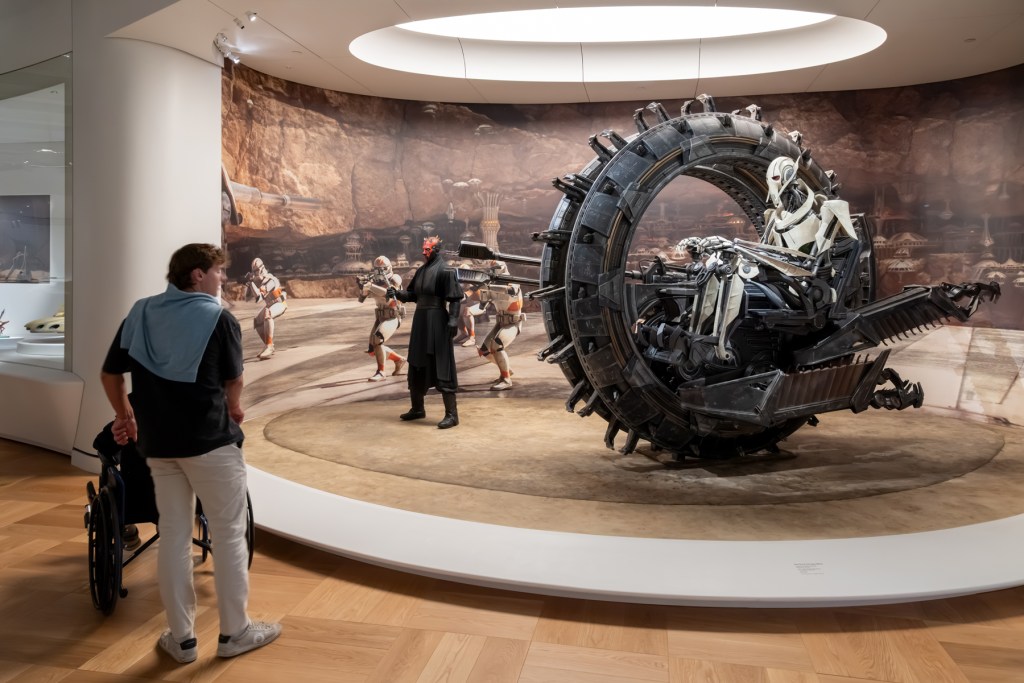
Of course, central to Lucas’ legacy is Star Wars, and while the museum dedicates less than 10 percent of its space to the franchise, fans will find comfort from familiar characters. There are models of R2-D2 and C-3P0, alongside Darth Vader and a Stormtrooper. Wax figures of key characters are also scattered throughout. There are seven full-sized vehicles, which appeared on film, on display. Luke Skywalker’s landspeeder from the first film is among them.
Music aficionados will discover some works of interest scattered throughout the museum, with paintings depicting musicians from various eras, but the photography gallery is a must-visit. There, portraits of Louis Armstrong, Richard Avedon’s large-scale portrait of the Beatles from 1967, and Iaian MacMillan’s famous Abbey Road cover from 1969 are interspersed with powerful moments in history captured on film, like the 1968 Olympics Black power salute taken by John Dominis.
There are breathtaking views to take in around the museum as well, with level four boasting viewpoints from the north, south, and eastern sides of the building. At the center of the space and above the public plaza, a giant oculus provides more natural light. The Skywalker Grill on level 5 gives a rooftop vantage to patrons and despite its ultra-sleek looks, it eschews a multi-course menu exclusivity that could’ve easily been the choice in such a gorgeous room. Inside, large booths create intimate spaces within its cherrywood-wrapped walls. Its outdoor terrace features a sweeping panoramic view of the L.A. skyline, including the Hollywood sign.
There’s artwork to discover outside the museum’s walls if you take a jaunt through the sprawling gardens designed by landscaper Mia Lehrer. It’s where you can encounter Princess Leia strangling Jabba the Hutt with a chain among the featured bronze statues.
The “temple to the people’s art” as Lucas has called his namesake museum also houses two theaters and a library. Tickets to the museum are $25, with those under 18, active-duty military, and residents within the museum’s zip code admitted for free. The Park and gardens, store, Skywalker Grill, and café do not require a ticket to access.
Hayden Panettiere
Hayden Panettiere died from the toxic effects of fentanyl and other drugs, with the Greenville County Coroner’s Office also ruling the actress’ death an accident.
Along with fentanyl, the coroner found traces of Alprazolam (more commonly known as Xanax), the muscle relaxant Methocarbamol, and Quetiapine, which is mainly used to treat schizophrenia and bipolar disorder, but can be used to treat depression. The statement from the coroner’s office — released over a month after Panettiere died unexpectedly at the age of 36 — reiterated that an autopsy found no signs of trauma that would have contributed to her death.
At the time of her death, police confirmed that they responded to a Greenville, South Carolina residence on August 16 after reports of “an unresponsive female.” “Upon arrival, medical assistance was administered; however, the individual, later identified as Hayden Panettiere, was pronounced deceased at the scene.” In dispatch audio obtained by People, officials on the call were heard discussing an “overdose” and “cardiac arrest.”
An investigation into Panettiere’s death was opened, though police said, “a preliminary investigation has not indicated any signs of foul play or suspicious circumstances.”
While the coroner’s statement provides new details about Panettiere’s death, the official investigation into it remains ongoing. The Greenville Police Department has been leading the ongoing investigation, reportedly with assistance from the Drug Enforcement Administration. A spokesperson for the Greenville Police Department did not immediately return a request for comment on the status of the case.
“It is with profound sadness that we share the tragic passing of our beloved Hayden. She was an incredible light and a force of nature who brought immeasurable love and joy to all who knew her — and to the millions who watched her onscreen,” said her father, Skip Panettiere, in a statement to Rolling Stone provided by the actress’ representative. “We ask for privacy as our family takes time to process this unimaginable loss.”
Panettiere was known for her broad-ranging film and television roles in Remember the Titans, Raising Helen, Scream 4, Ice Princess, and I Love You, Beth Cooper. Her true breakout role came in 2006, when she played cheerleader Claire Bennet on the NBC sci-fi series Heroes for four seasons, but her star hit an all-time high as Juliette Barnes in the series Nashville from 2012 to 2018.
During that period, Panettiere admitted that she struggled with postpartum depression after the birth of her daughter Kaya Evdokia Klitschko, her only child with Ukrainian champion boxer Wladimir Klitschko, in 2014. She later revealed that she suffered from severe postpartum depression, substance abuse, and anxiety.
In her 2026 memoir This Is Me: A Reckoning, she admitted to drinking heavily in order to cope. She recalled waking up shaking and would need either a bottle of alcohol to get through the day or opioids to help her not drink. She wrote that a doctor told her she’d “be dead within five years” if she didn’t stop drinking. “The first thing I’d thought of when I woke up was alcohol,” she wrote. “Not my child, not my job, and not the rest of my life. I needed a drink to function — at 6 a.m.”
Images from the story



End of article