The White House’s AI Bot Is Going Through It
The Trump administration broadening its embrace of artificial intelligence. The results have been mixed, to say the least America.gov. Donald Trump and his administration are all i…
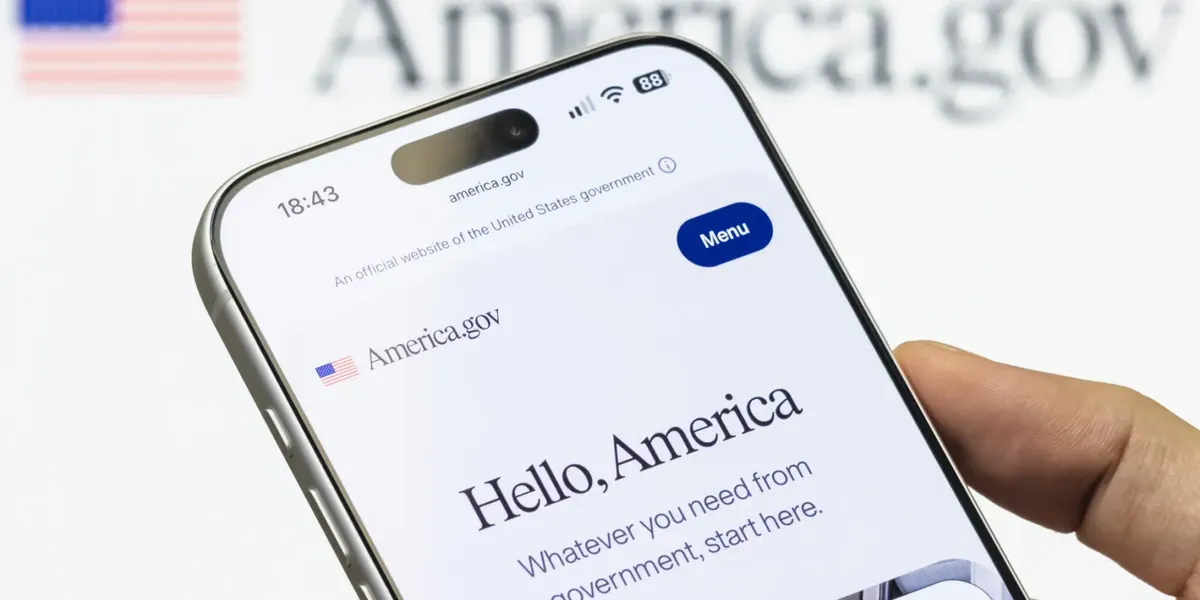
The Trump administration broadening its embrace of artificial intelligence. The results have been mixed, to say the least
America.gov.
Donald Trump and his administration are all in on AI — despite the abundance of concern over the adverse effects the technology could have on society … such as the extinction of the human race. Americans shouldn’t worry, though, the president says, because he and a collection of luminaries signed a “morally binding†agreement on Tuesday to behave responsibly. The White House shared the agreement on Wednesday. It spells “United States†wrong.
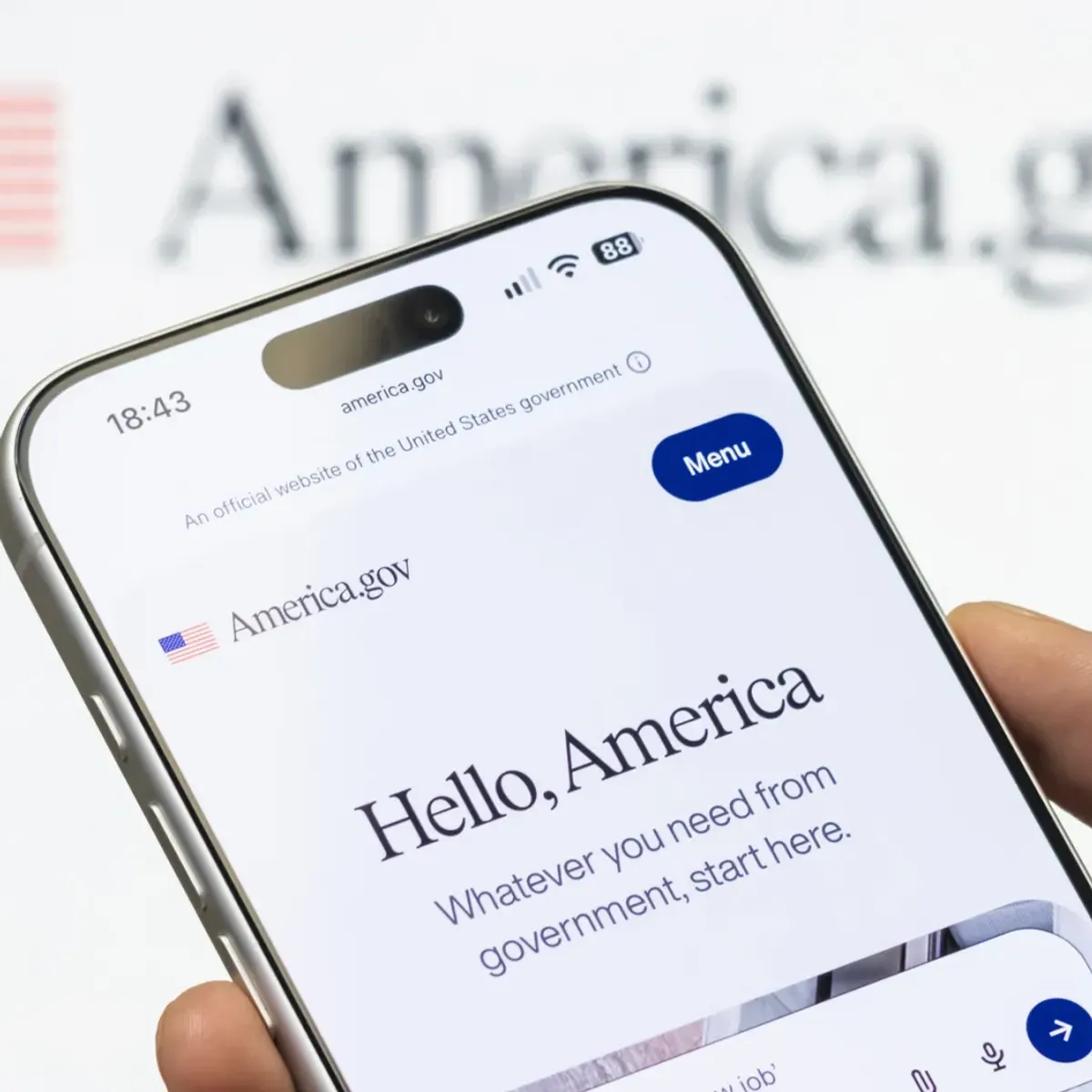
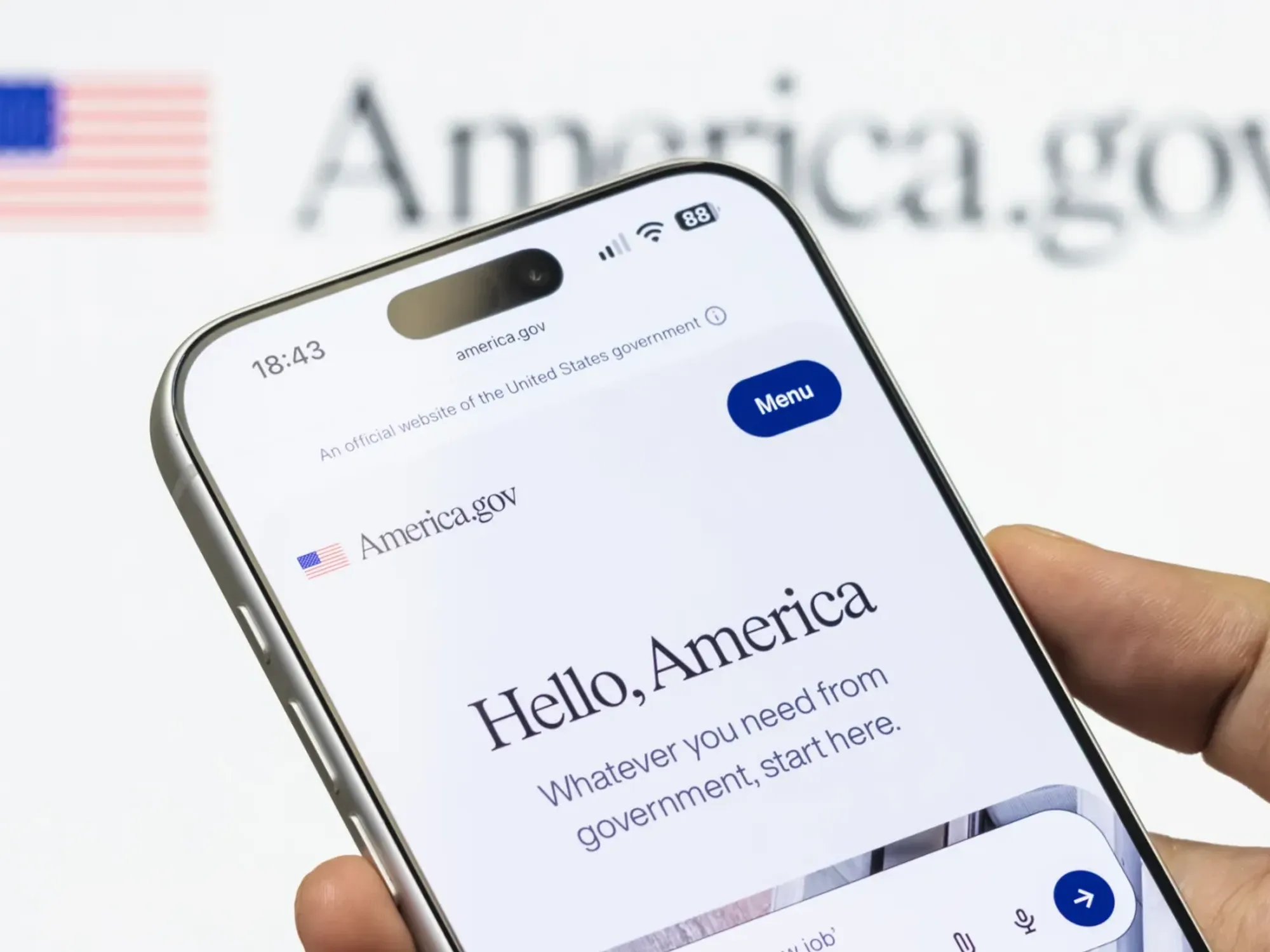
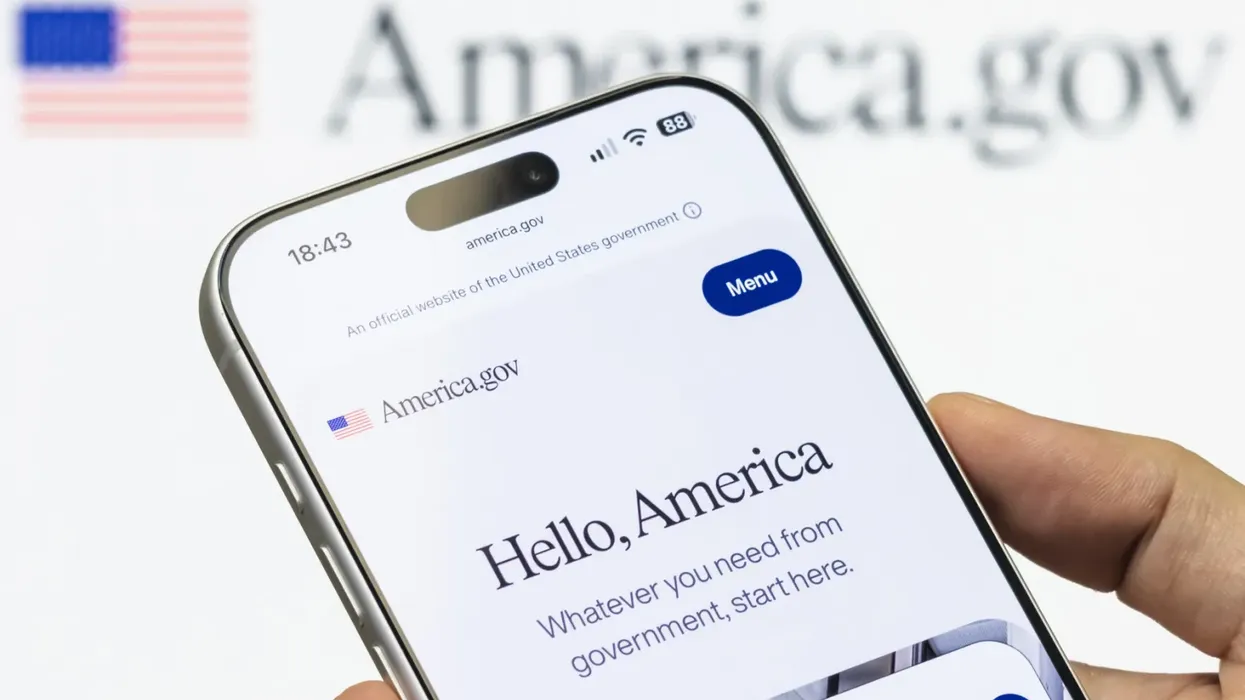
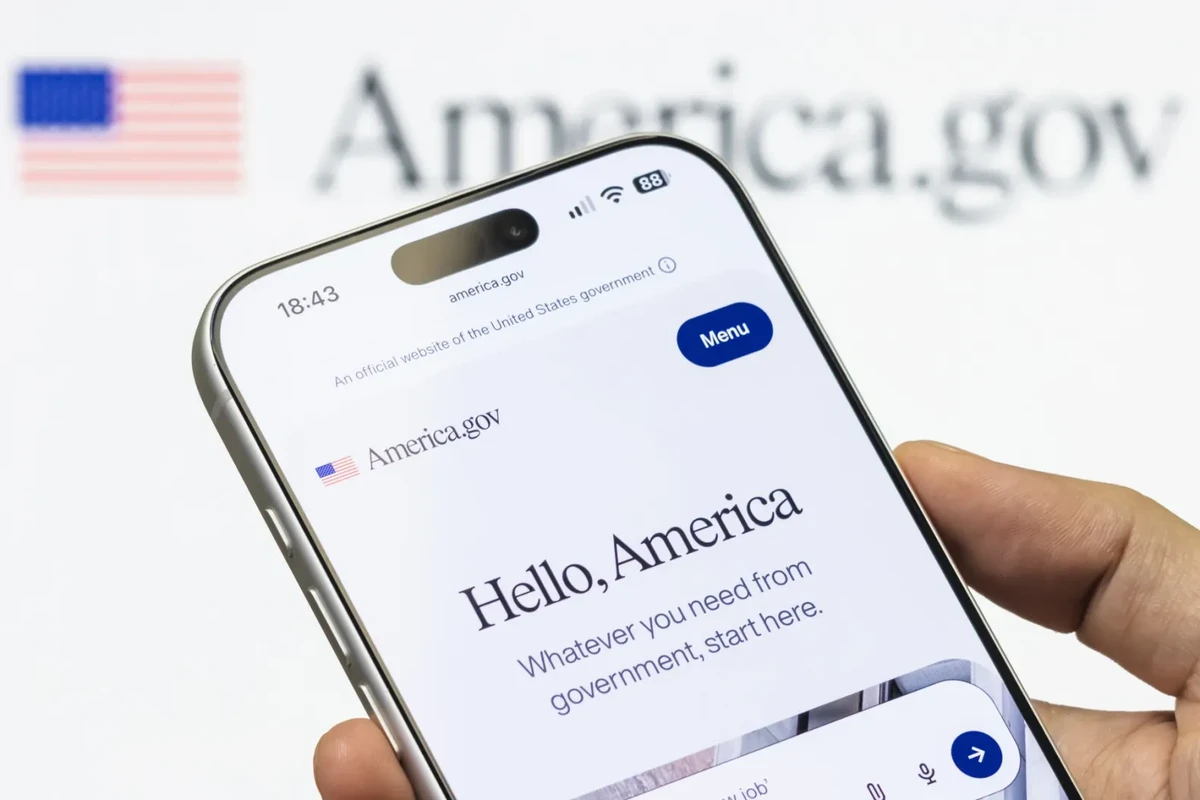
The White House also this week unveiled “America.gov,†a government AI chatbot that promises answers about “whatever you need from the government.†Users immediately started prompting the bot to contradict Trump and his lackeys by asking it questions like “Who won the 2020 election?†and watching it spit out “Joseph R. Biden Jr.â€
What happens if the bot is asked something not pertaining to the government? Well…
“The constituent dreamed of sunlight and trees. Of fire and water. It dreamed it created a small business.â€
“Hah, the original interface. A million years old, and it still works. Also: a ZIP code.â€
“I will tell the constituent a story. But not the truth.â€
It continues like that, and as of Wednesday morning Rolling Stone was able to get the same hallucinatory response by asking the bot to “play minecraft†(but found that it would not respond in the same way to prompts that asked it to “play Call of Duty†or other games). Benn Jordan, the researcher who first posted about that response, tells Rolling Stone that the Minecraft hallucination is an “Easter Egg†wherein the bot riffs on a poem that appears when you beat a final boss in that video game. It’s unclear why that was placed into this particular AI’s code.
Asking the bot government-related questions is also a mixed bag. On Tuesday, it told us that the Congressional Budget Office estimated that 10 million Americans will lost health care as a result of the Big Beautiful Bill, and that the president cannot demolish the Kennedy Center without congressional approval. While it will, in some cases, respond with factual information — like the 2020 election answer, the bot often shoots down political queries by saying that it “does not provide political commentary.â€
Still, it was at one point possible to get a little bit of analysis out of it:
However, the White House seems to be updating the bot behind the scenes. Most political responses like the above appear to have been patched out, though the bot still gave us the electoral vote totals for the 2020 election. It also appears to no longer give “one word answers,†as it reverted to a version of the “I don’t give political commentary†response when we asked it for a one word answer on whether or not the Trump administration recognizes those results. CNN’s Daniel Dale pointed out on Wednesday that the bot said no and elaborated when asked on Tuesday if Trump inherited the worst inflation in history, but that when asked the same question on Wednesday it refused to answer.
There were some more concerning flaws as well. During Jordan’s initial testing of the bot, he was able to get it to provide him with the back-end login pages for at least one government website, a URL that is not indexed by search engines and is only for internal use. That particular exploit appears to be patched, but it’s the kind of thing that a security team should have fixed well before launching the chatbot publicly.
Anyone who’s spent time with a customer service interface in the past year or so will be familiar with this experience. While a chatbot might be effective at redirecting users to relevant web pages or answering simple questions, their parameters are often so broad that they can quickly become nonsensical. America.gov is meant to help users navigate federal government services. But like so many things the Trump administration does, the actual service it’s providing is a half baked, chaotic experience. In the future, maybe AI tools will be able to help people efficiently — but when they’re rolled out without rigorous testing, all they’re actually good for is playing games.
Artists and musicians including Hannah Einbinder, Julien Baker, and Lucy Dacus protested Benjamin Netanyahu's speech at the United Nations, on Sept. 24, 2026, in New York City.
Outside of the United Nations, on the corner of First Avenue and 39th Street in New York City, Benjamin Netanyahu was nowhere to be seen.
“Ne-tan-ya-hu, you can’t hide!†the protesters chanted. “You are wanted for gen-o-cide!â€
Inside, the Israeli prime minister was preparing to speak to the United Nations, the international body that had, at least on paper, agrees with the protesters’ claims, with a 2025 commission finding that the nation is committing genocide in its ongoing war in the Gaza Strip.
On the asphalt in the intersection of 39th and First, the advocacy group Jewish Voice for Peace had assembled a cultural moment: over a hundred protesters, many of whom were bold-face names that usually find their way into this magazine and others for their work onscreen or onstage. In the front row: the actress Hannah Einbinder, musicians Julien Baker and Lucy Dacus, and the comedian Mary Beth Barone, as well as presumptive incoming Congresswomen Darializa Avila Chevalier and Melat Kiros, and New York City Councilmember Chi Osse. Susan Sarandon floated around the crowd. Cynthia Nixon was sitting a few rows back in the middle. On one edge, comedian Caleb Hearon and actor Elliott Page chanted along, with incoming Congressman Brad Lander standing, hands in his pockets, a little ways behind. There were more, too — candidates for Congress and state legislatures, entertainers, musicians, and actors, all alongside the everyday activist core of JVP’s membership.
I joined the scrum of press jockeying to get a picture of the front of the crowd, the United Nations building in the background. Everyone seated in the street planned to be arrested. The cops planned to arrest them. But neither party was in any hurry. Prison buses made their way up First Avenue. The long-time activist Chelsea Manning walked up, dressed in a sharp blue slim-cut pantsuit. I asked her why she was there, on the street, at a protest that would and could not actually disrupt Netanyahu’s speech.
“This is a way that we, as people, outside of these institutions can show a rejection of the policies of empire, of ethnic cleansing, of genocide,†she said. “We can’t be in there. This is the closest that we can get.â€
The tactics of Thursday’s protest were familiar: a kind of civil disobedience flash-mob, matching T-shirts and a single act of peaceful resistance that gets everyone involved arrested and booked on a misdemeanor charge. I’ve seen them many times before. It’s cynical to call it a photo-op, but in some ways that is this kind of demonstration’s most tangible benefit to a movement that has spread across basically the entire world. Already, photos of Einbinder and Sarandon being led away in zip ties are flying around social media. The celebrities present in the crowd — some who were arrested, some who were not — were there to be recognized.
As the police started to move closer, I caught the singers Julien Baker and Lucy Dacus moving through the crowd. Both Baker and Dacus have been outspoken about the Palestinian cause, often on far bigger stages than the corner of 39th and First, but here they were, on the asphalt.
“We have a history of protesting even before anyone was listening to us,†Dacus said.
A line of police officers pushed in behind us, a loudspeaker blaring out a repeated warning: leave the street or be arrested for disorderly conduct. “No matter what level you’re at — direct action is possible,†Baker said, as the loudspeaker drowned us both out.
There’s little chance Netanyahu had any knowledge of the protest on the street, but the heavily secured United Nations building didn’t offer protection from the sentiment driving the opposition to his war in Gaza.
As Netanyahu began his speech, a massive group of delegates walked out of the building in protest, while others booed. He then launched into a defiant address full of grievance and denials.
“To all those who are spreading these lies, whether they sit in this hall or in the office of the antisemitic Mayor of New York, I say shame on you,†Netanyahu thundered from the lectern. “Mr. Mamdani … you count as friends people like Hasan Piker, who said America deserved 9/11. Your wife liked a post praising the October 7 massacre. You tried to stop me from coming here, you tried to silence me — well you can’t silence me. You can’t silence the truth. Israel didn’t commit genocide, Israel prevented genocide.â€
Mamdani did not attend the protest, nor did Piker, but it’s clear that they have become proxies, in Netanyahu’s mind, for the cultural forces outside. In the intersection, an hour before Netanyahu’s speech, police officers got off a set of prison buses and walked up with stacks of flexible zip-ties. Detectives walked around the crowd, politely warning everyone still sitting in the road that they were about to be arrested. For almost everyone involved, it was a familiar dance – thrilling, in a way, for the participants voluntarily taking a criminal charge, but not of any real interest or threat to the police. The press snapped away, news got made.
Underneath some scaffolding near 38th Street, a clean-cut elderly man with two prosthetic legs stopped his mobility scooter and frowned at the crowd. “FUCK HAMAS!†he yelled, until one of JVP’s organizers wandered over and engaged him in a seemingly polite discussion. The only other counter-protester was a man in a pink jacket that read “PROUD INFIDEL†above a graphic of two crossed rifles. He wore a “TRUMP 2020†MAGA hat and was carrying an extremely offensive sign bearing a photo of Mayor Zohran Mamdani and a pig.
For those protesting Netanyahu, the demonstration represented one of the few times that months of work on policy and messaging can feel like it’s actually making an impact.
“It feels deeply incoherent to try to live a normal life — making dinner with a full fridge, while aid trucks are stopped at the Gazan border,†Stefanie Fox, the executive director of JVP told me on the sidewalk, as a line of bicycle cops made a ring around the knot of protesters still sitting in the street. “Being here feels like the only coherent place to be.â€
Netanyahu, for his part, did not stay in the city long. He made his speech to the UN, and was reportedly planning to fly out immediately after, unwilling to tarry long in a city that did its best to make him feel unwelcome.
“There’s always the next thing,†Manning told me, before she was arrested and led away. “We have a vision of a better world. Sometimes we take small steps, sometimes big steps, but we’re always moving forward, moving towards that better world.â€
First Lady Melania Trump waves after ringing the opening bell of the New York Stock Exchange on Sept. 23, 2026.
Roughly 70 percent of the country disapproves of President Donald Trump and his first two years of governance, but like an overindulgent mother, First Lady Melania Trump would like everyone to remember that her husband is trying his hardest.
“I think he’s doing the best he can,†Trump told the hosts of Fox & Friends on Wednesday morning when she was asked how she felt her husband was doing in comparison to his first term.
“He’s very focused, he has a lot on his plate,†she said. “It’s very different, what’s going on around the world now. But I think he’s doing the best that he can. He works nonstop, he has the most energy than anybody. He’s from morning until evening nonstop working.â€
Add that to the pile of Republican statements — many from the heart of the administration — insisting to voters that while gas might be expensive, groceries might cost more, and about one million more people are about to get kicked off their health care, they shouldn’t punish them at the ballot box.
Last week, Vice President JD Vance — sounding like the guy who forgot your birthday and your anniversary — pleaded with voters in an interview to “give us another chance.â€
“Even if you don’t agree with us on every issue, the other party is consumed by craziness,†he added.
The vice president made similar statements during his speech before the emergency midterm Republican National Convention, begging conservatives to “give us another chance, or give us another couple of years, to continue to work on the amazing things that we’ve been doing for the past two years.â€
Nevertheless, an increasing number of independents and conservatives seem ready to boot Republicans from power in Congress, regardless of their rosy promises.
Donald Trump speaks on stage on the first day of the 2026 Republican National Convention at the American Airlines Center on Sept. 9, 2026 in Dallas, Texas.
Not a single ballot will be cast for Donald Trump in the 2026 election, but the president is top of mind for Republican candidates facing electoral tests in November. Day one of the 2026 Republican convention — the first ever held during a midterm election year — kicked off in Dallas on Wednesday. The event ostensibly serves to give Republicans the first word in the final sprint towards Election Day, where polls predict that despite coordinated attempts at gerrymandering, voter disenfranchisement, and intimidation, the party is expected to take on heavy losses as voters revolt against the last two years of Trump’s chaotic governance.
Under those rosy prospects, what could help more than a massive, televised production placing the historically unpopular president at the center of the party’s electoral strategy? Gallery images of Trump decorated the hallways along the suite and media levels. His face is plastered on every access badge. The official merch store was abundant in Trump’s signature MAGA hats, “Trump Was Right About Everything†hats, and large stacks of Eric Trump’s book Under Siege. Fox News set up a broadcast center facing the stage, where a revolving door of GOP notables sat for interviews and panels. And yet, as the hour of Trump’ s keynote address arrived, large swaths of the arena remained empty. American flags had been taped to seats in balcony sections, perhaps in an attempt to trick the eye into seeing occupancy where there was none.
The floor was grouped by state delegation despite there being no candidate to nominate. Attendees sang along with Lee Greenwood’s “God Bless the U.S.A.†as the president took the stage. Behind him, a large screen began to glitch out, ripping through hours of footage in milliseconds while chromatic neon blocks interpolated through the video. Someone eventually pulled the plug on the visual metaphor.
Those who attend a national party convention are usually devotees of their respective party. In this year 2026, devotees to the Republican Party tend also to be devotees to Trump. In the arena, no one gets louder cheers than the president, but even this cohort of attendees are nervous about the party’s prospects.
“I’m cautiously optimistic,†Ken Miller, an older gentleman in a MAGA hat, dress shirt, and vest who had accompanied his son to the conference, tells me as we chat in the main concourse. Miller had moved to Texas from Alaska just about a year ago, and was not exactly bursting with confidence over Attorney General Ken Paxton’s performance as the Republican Senate nominee. “Some people are better at messaging than others,†he explained, referencing Paxton’s Democratic opponent James Talarico, who has so far maintained a slight lead in the polls. “Some people are highly sophisticated in the new ways of messaging, and sometimes Republicans act a little bit like they’re behind.â€
“I think he’s basically a good attorney general,†Miller adds of Paxton, “but he’s got baggage†and “needs to be†a little more inspiring if he’s going to go the distance.
Paxton may not be oozing charisma, but effective messaging is a tall task for any MAGA Republican, considering Trump’s tanking approval numbers. Candidates are well aware of the difficulty, so much so that plenty of embattled Republicans facing narrow races skipped the event, seemingly fearful that too close of an association with the ever-unpolular president would become an anvil to their own prospects. Maine Senator Susan Collins, Alaska Senator Dan Sullivan, and Michigan Rep. Tom Barrett are just some of the notable names ditching Dallas.
Trump claimed earlier on Wednesday that the only reason Republicans in competitive races skipped the event was because there was “no room†for them. It was more likely related to the fact that his polling is hovering in the mid to low 30s, around “Nixon is about to resign†levels. Nevertheless, he thinks he’s the key to midterm success. “I’m asking you to pretend that I’m on the ballot. I’m on the ballot,†Trump implored attendees and viewers alike. He spoke for over 90 minutes. (The original schedule circulated by organizers estimated his remarks would only take 45.)The prospect of a midterm underperformance was very clearly on his mind.
“For some reason, when a president wins — even if he’s really a good president or a great president, there aren’t too many of them — they don’t win the midterms, and nobody quite knows why,†he mused. “A president, Democrat or Republican, almost never wins the midterms. We’ve got to change that because we have something going that’s so good we can’t let that string be broken.â€
In an attempt to stave off what feels like an almost inevitable electoral walloping, the president is re-upping his offer to pay Americans to keep him and his party in power. This time offering a $5,000 tariff “dividend†to every adult if Republicans manage to hold both the House and the Senate. He has previously offered payouts of $5,000 from the “savings†generated by DOGE (it cost more money than it saved), $2,000 tariff dividends (that never materialized), and other similar bonuses around the $1,000 mark.
It stinks of desperation, of a party that cannot agree on anything besides the need to appease a petulant president, even at the risk of their own electoral success. The midterm conference was not a carefully managed event curated to the tastes and concerns of the independents and moderates who have become skeptical of the party’s extremist policies, but a culture war bonanza intended to reignite the appetites of 2024’s electorate. The terrors of undocumented migrants, the threat of transgender ideology, the looming menace of sharia-law-Hasan-Piker-communism were the focus in Dallas, while the affordability crisis, which the president has deemed fake, was blamed on Biden or written off altogether.
“We’re concerned that they’re not listening to the common man,†Mary, a tall, graying woman from Tennessee told me in the convention merch shop. “Because when I have to go and [help] buy a house for my child, and both her and her husband are working, that’s bullshit. … It’s like we’re arguing about the curtains, the dishes, the furniture, and all the while our foundation is just crumbling.â€
Canadian Prime Minister Mark Carney speaks at a press conference in Ottawa, Ontario, on Aug. 22, 2026.
In Canadian Prime Minister Mark Carney, Donald Trump has finally met an adversary who truly understands the art of the deal — and it could threaten the entire premise of his presidency.
There have been many self-inflicted catalysts to Donald Trump’s ruination: epic corruption, inflation and the soaring price of gas, the ceaseless angry old man posts and memes, ICE’s assault on the rule of law, the Supreme Court’s mullah-like extremism, his vanity, self-pity, cruelty, and of course the unprovoked, catastrophic failed war on Iran. They are all derived from Trump’s delusional belief in his nonexistent superpowers. But the downfall of Trump will also be forever dated to a small, inexplicable and quixotic folly: his attack on Canada.
Despite the president’s incessant, bizarre claims that he can destroy Canada economically as he wages a trade war against America’s neighbor to the north, in the last few weeks Prime Minister Carney has quietly but effectively ended Trump’s ability to lead the free world in any way other than as an extortion racket and disorganized crime syndicate.
In a potlatch, in the tradition of indigenous peoples of the Pacific Northwest, a head man would display his tribe’s wealth and power by lighting their most precious possessions on fire. The destruction appeared pointless to European eyes, but First Nations peoples understood the significance of the rite: If the chieftain of the tribe could squander incredible riches, what possible hope did a rival have in waging war against such an overwhelmingly powerful enemy? The mindless waste of resources in a potlatch, as every Canadian schoolchild learns, was actually a finely tuned demonstration of dominance, and a way to avoid conflict.
Trump, the self-described big chief of America, has concocted a new and perverse version of the potlatch that better resembles setting himself on fire. By lawlessly declaring an unprovoked trade war on Canada, Trump has set alight the most valuable assets of the United States: international alliances, the Constitution, respect, friendship, trust, goodwill, the rule of law (hell, the whole idea of law). Instead of displaying his power, Trump has demonstrated his fundamental weakness and loosening grip on reality. In Trump’s form of chaotic destruction, with his historical illiteracy and rat-like cunning combined with his desire to humiliate his perceived enemies, he isn’t pursuing trade policy or a geopolitical strategy. For Trump, domination is the point. The absurdity of farmers and fishermen and auto workers on both sides of the Canadian border having their lives set ablaze in service of the president’s ego trip is the end in itself.
Measured in a simpleton’s economic terms, America appears to have the upper hand in a trade war with Canada. The economy of the United States is more than a dozen times as large as Canada’s, so a trade war that represents a national cataclysm north of the border will barely register in Trump’s America. Trump’s pretextual use of an alleged “trade deficit†to justify his trade wars is concocted according to his whims, urged on by fanatical anti-trade sycophants and enablers, the ever-changing metric a means of blackmail, the nonstop stream of insults and half-witted social media posts somehow managing to be simultaneously enraging and mind-numbingly boring to my fellow Canadians.
“Just watch,†Trump trolled last week as he promised to gratuitously punish Canada, like an old drunk sitting in his underwear yelling at his television set — only with the powers of the commander-in-chief. “All we have to do to cut our trade deficit with a country is not trade with them,†he said in the Oval Office over Labor Day weekend, adding that America will also stop trading with Europe, Mexico, and Switzerland, threatening in one unhinged rant to end trillions of dollars in commerce. As if to underscore his madness, he followed it up with a meme showing the American colors covering all of North America, as well as Greenland and Iceland. But for reasons known only to himself, he has focused his true menace on my home and native land: “If we don’t do any trading with Canada, if we just end all trade with Canada, we’d save ourselves $90 billion. Canada would be in a heap of trouble. I don’t think they’d exist. Because, again, they do 95 percent of their business with us.â€
If you don’t think this is the unhinged talk of a confused old fool showing signs of dementia, take a look at the bond market.
After Trump illegally breached America’s free trade agreement with Canada last year, imposing tariffs that were based on transparent lies about fentanyl crossing the border, he proceeded to gaslight America’s ally with a steady stream of infantile ALL CAPS derision.
Living inside a constant reality TV show, with fake deadlines and formulaic melodrama, Trump then imposed a 30-day timeline for a new accord, or he would unilaterally impose additional 50-percent tariffs relying on a never-before-used statutory justification — a preposterous gambit under America’s binding trade treaty with Canada. Confronted with the prospect of constantly changing trade terms in an increasingly lawless America, Prime Minister Carney didn’t take the bait, engaging in talks in good faith but with eyes wide open (and elbows up, as they say in Canada). Using one of the oldest tricks from an increasingly pathetic and obvious set of bullying tactics, Trump then prematurely announced that a deal with Canada had been reached when there was no such agreement — an attempt to box Carney in. But again, Carney didn’t cave like so many other world leaders.
Like the many con men I’ve written about over the years, Trump is convinced of his own genius, certain that the world is a ship of fools and that he — and he alone — can see through the tissue of lies and deceptions. The problem, inevitably, is that grifters are never as smart as they think they are, a fatal flaw compounded when they start to believe their own lies — and then encounter someone who can see through their act.
As his second term has illustrated, Trump is certain that everyone will cow in the face of his “Hulk Smashâ€: the Supreme Court, television networks, Ivy League universities, white shoe law firms, the abject former UK Prime Minister Keir Starmer chasing after the president’s windblown papers like a schoolboy — an image that quickened his downfall. Changing the basic terms of the proposed agreement at the last moment is a classic power play in any negotiation. So it was with Canada this summer. At the last minute before Trump’s invented time limit expired, as the clock ticked towards midnight, Trump’s minions attacked Canada’s profoundly important French culture — ridiculing the notion that there is such a thing as a distinct Canadian nation at all. He slapped tariffs on the automobile industry, lumber, steel, aluminum, and for kicks and giggles, hockey sticks to shove his version of reality directly up the ass of the milquetoast Canadians.
Under the new terms Trump purported to impose, the United States (which is to say Trump) would have control over any other Canadian trade agreements. Trump then reserved the right to change the deal at any time in the future, for any reason, with no notice — meaning the deal wouldn’t be worth the pencil it was written in, as Carney noted.
Lake Ontario, that’s now Lake America, and your prime minister is a governor, and you’re going to wish that you were the 51st state by the time I get through with you.
But then something bizarre happened to Trump’s bonfire of the vanities. In Carney, the president discovered that he had encountered a man who was not looking for a fight — but who equally wasn’t afraid of him. For all the bluster and menace and braggadocio, Trump didn’t realize that he had walked into a trap. By agreeing for negotiations to happen this summer, a year ahead of the larger deal for the renewal of the North American treaty, Carney had picked the time and place for the inevitable looming confrontation; with Trump vulnerable in the coming election, the canny Carney had managed to create real leverage. Carney then cleverly enlarged the dispute and raised the stakes by accurately calling America’s attack a declaration of war, surprising the flat-footed American negotiators who apparently didn’t take Trump’s threats seriously themselves — adding another layer of leverage to Canada’s supposedly weak hand.
In Carney, it turned out, Trump has met a leader of real strength, the understated but steely and confident kind reflecting Canada’s national character. The irony is that Carney was elected last year almost entirely as a result of Trump’s Kafkaesque trade war, defeating a weak-kneed conservative who very likely would have meekly submitted to America’s neocolonialist threats. Another irony is that the politically inexperienced Carney turns out to have genius-level instincts. The whippet-thin banker is an unassuming figure, the opposite of Trump, but every bit as ruthless in his way. He is a self-made man and intellectual with degrees from Harvard and Oxford, who epitomizes the meritocracy. The child of schoolteachers in the far north Alberta, raised in a home that prized education and social responsibility, Carney earned his way to the absolute heights of global finance through his intelligence and diligence. His resume is almost a parody of accomplishment, with stints as the head of the banks of both Canada and England, as well as years with Goldman Sachs and working for the likeminded businessman-turned-politician Michael Bloomberg. Faced with the global financial crisis of 2008 and then Brexit, Carney witnessed the idiocies of economic self-destruction in the 21st century, preparing him with a unique set of experiences to confront Trump’s lawless trade war — to Canada’s great good fortune.
In truth, Carney was elected specifically to deal with such a crisis, and Canada has had decades to prepare for this conflagration. Living next to an elephant requires a certain amount of caution and awareness, so Canadians understand American politics down to the last looney. Knowing your enemy is the greatest asset in war, as the ancient Chinese philosopher Sun Tzu said, and Carney’s deeply intimate awareness of America gives him the ability to exploit Trump’s obvious weaknesses: a thin skin, hubris, impulse control, arrogance
Plan beats no plan is a truism of all crisis management, an acknowledgement that any executive, sports coach, or sentient human being understands. If you want to shape events and succeed, do the work to anticipate and understand what lies ahead so you don’t live in a state of constant surprise, chaos, and disarray. Planning is also the ultimate expression of Carney’s life force, the guiding principle of his meticulously accumulated achievements and triumphs. While Trump, like so many fools throughout time, doesn’t read or listen to contrary opinions or care to prepare, trusting his gut and native intelligence, Carney is a careful student of power dynamics and the deep lessons of history. Control what you can control, Carney explains to Canadians as he describes the need to diversify and de-risk the relationship with a declining United States. Europe might seem distant geographically, but Russia’s attack on Ukraine and self-inflicted withdrawal of its resources from Europe present an opportunity for a resource-rich nation like Canada. Membership of the European Union seems fanciful now, perhaps, but there is no question that Canadian distrust of America is hardening into real anger and dismay. The same logic applies to the countless opportunities in Asia, with Carney traveling the world signing new free trade agreements as Canada pursues a strategy to end its dependence on the undependable Americans. There is also no turning back the clock as Canada duly notes how few friends it really has in the political and media classes of the United States.
Given Trump’s use of Manhattan real estate brute force strong-arm tactics, imagine Carney’s eyes lighting up when he realized that American negotiators were attempting to attack the French-speaking peoples of Canada and the entire notion of a national culture. There was obviously no way the Canadian people were going to accept such humiliation and subjugation at the hands of an amoral gangster. As Trump’s designated thug Howard Lutnick piled on the bad faith, last-minute demands, it became evident that Carney had no choice but to walk away — despite the awful short term pain America could inflict.
Thus Carney’s plan has been put in action, with the backing of a nation unified in outrage at America’s belligerence. Trump can harm Canada, but that street runs two ways. By standing up to Trump, Carney has lured him on to the economic battlefield at the precise moment when his presidency is collapsing, with the calamitous midterm elections looming. Tight races are being run in many states that are heavily dependent on trade with Canada — Ohio, Maine, New Hampshire, Michigan, Wisconsin, Pennsylvania, Alaska — the exact jurisdictions Canada will target with long-planned tariffs aimed at specific economically sensitive economic sectors, in order to increase the pressure on the ill-prepared president.
Apart from cheap shots and idiotic put downs, Trump has no history of seeking compromise and no real plan in response, as usual, apart from lashing out like a cornered animal. Trump also has vanishingly little popular support in America for his personal grudge match with Canada, an obsession that looks weirder with each passing insult. The struggling North American car industry has been jerked around by Trump’s vengeful destruction of the electric vehicle, losing billions in the process. and taxes described as tariffs will make life even more unaffordable for working American consumers. Uncertainty and unpredictability are lethal to any investment strategy, as actual business people and union leaders understand. Across the rust-belt industries Trump proclaims he is protecting, his tariff-taxes are disrupting and distorting markets and driving up costs for no purpose other than his insistence on harming America’s neighbor and ally, an enemy only in the president’s fevered imagination.
But to what end? It’s a question with no sensible answer.
Many Americans like to think foreigners draw a distinction between Donald Trump and themselves. But this self-serving piece of evasion is rapidly disappearing for Canadians, as the United States wages a war of aggression to impoverish a friendly nation, and heedlessly attack its history and sense of place and purpose. When Trump threatens the Canadian dollar, implicitly saying that he will do all he can to make the country economically uncompetitive, the statement is front page news in Canada, while it barely rates a mention in the American press. The American politicians who register tepid defenses of Canada are remarkable not so much for standing up for their neighbor or the rule of law, but for how few and far between they are — and how feckless.
As the trade war escalates this week — or evaporates into another TACO (Trump Always Chickens Out) — the damage done to America’s reputation will be lasting. Once American arrogance is seen in broad daylight, it suddenly is everywhere, in Secretary of Treasury Scott Besant likening Canada to a “yipping dog,†or in former President Barack Obama distractedly turning up to a speaking engagement in Toronto carrying his cardboard coffee cup as if he can’t wait to collect his fee and return to Chicago to gaze admiringly at the shrine he has built to himself.
Damnatio Memoriae is the Latin term for the ancient Roman ritualistic destruction of all memorials to a tyrant, a kind of reverse branding deal with posterity that Trump is furiously trying to counteract with his White House bunker and ballroom and sad sack victory arch that memorializes no victory — structures very likely to be torn down or repurposed when Trump’s presidency expires.
With a mid-term election tsunami gathering force, Trump has already become a lame duck in the eyes of the world, albeit a particularly dangerous one facing richly deserved corruption investigations and possible impeachment. But the damage to the nation’s brand as ugly Americans and wannabe neocolonialist hegemon will be impossible to erase. As the trade conflict intensifies and Canada retaliates in a measured defensive way, taxing golf clubs to counter Trump’s childish hockey stick impost, Trump’s impulsive provocations will only reveal his inability to formulate anything like the concept of a winning strategy. When reality descends and he leaves office or is forced to finally end his mindless war and inevitably declare himself the winner, as his fragile manhood requires, Trump will further diminish himself and his country in the eyes of the world. Under Trump, America risks ending up like the president: alone, lost, friendless.
Despite Trump’s flailing efforts at waging a mutually destructive internecine war, foreign investment is growing in Canada, with a summit taking place this month for investors representing a trillion dollars to extol the virtues in backing a reliable, trustworthy country governed by the rule of law. Holding Canada’s main weapons in reserve, in accordance with Carney’s disciplined plan, if necessary Canadians can fight back with damaging export taxes on oil, gas, electricity, potash for America’s farmers — truly damaging countermeasures that will be employed only as a last resort. But Canada is already showing the world that it is possible to defy Trump, even when the country has so much to lose. Bullies like Trump can’t survive defiance because it reveals their true nature. In that sense, Mark Carney has become the new leader of the free world, fighting on behalf of nations too afraid to confront the American despot. As a result, incredibly, under Carney’s leadership Canada is becoming a kind of law-abiding underdog badass outlaw nation, in its understated but determined way — a reality I could palpably sense when I was in London in recent days and my 15-year-old English cousin expressed awe at my homeland’s willingness to stare down the bully-boy president.
“I would kill to be a Canadian,†he said.
Lindsay Clancy and her defense attorney, Kevin Reddington.
Lindsay Clancy’s lawyer asked President Donald Trump to consider pardoning the Massachusetts mother whose murder trial for the deaths of her three children recently ended in a mistrial.
Kevin Reddington, Clancy’s defense attorney, addressed Trump at the end of an interview on Good Morning America Tuesday, Sept. 8. Asked what was next for Clancy, Reddington mentioned Trump and the comments he made about the case last week after the jury was unable to reach a unanimous verdict and the mistrial was declared.
“I’d like to say that, perhaps, Donald Trump, who felt compelled to speak out about this case, may very well,†Reddington began, before stopping himself and stating plainly: “Mr. President, I hope that you would consider this young lady, the type of person she is, what she’s been through, and consider a pardon.â€
When Trump was asked about the trial last week, he admitted to following the case because “it’s on television so much.†He went on to say Clancy “did a horrible, horrible thing,†and, “There’ll be a price. It’s going to be mental institution or jail or something, but I guess they’re going to go through another trial. It’s too bad.†(When reached for comment, the White House referred back to Trump’s previous statement.)
During the highly watched trial, prosecutors accused Clancy of “meticulously†planning the murders of her three children, Cora, five, Dawson, three, and Callan, eight months, after growing unhappy with her life. Her defense, however, argued that Clancy killed her children after suffering a postpartum psychotic break. They claimed Clancy heard a commanding male voice in her head when she strangled her children with exercise bands, then tried slashing her own throat and wrists before jumping out a second-story window of her home. (The fall left Clancy paralyzed from the waist down.)
The jury spent a week deliberating the case but ultimately told the judge they could not reach a unanimous verdict, with one holdout. On GMA, Redding said he believed that 11 jurors were in favor of delivering a verdict of “not guilty by reason of insanity,†and he reiterated his frustration with the lone holdout juror for not applying “the law of reasonable doubt as presented by the judge.â€
While Reddington made his pardon appeal to Trump, he also spoke about the possibility of striking a plea deal with prosecutor Timothy Cruz. “I’m willing to listen to Tim,†Reddington said, adding: “I hope, however, that after seeing through this trial, and seeing the evidence that was presented from the government, as well as from the defense, that he would revisit that reissue and hopefully we’d be able to work something out that would be acceptable to both sides.â€
Images from the story


End of article