Lindsay Lohan Is Filming a New Netflix Rom-Com in Toronto
The 'Mean Girls' star is shooting 'Return to You' in the city through November, with a 2027 Netflix release planned. Lindsay Lohan on Nov. 18, 2024 in New York City. Lindsay Lohan …

The 'Mean Girls' star is shooting 'Return to You' in the city through November, with a 2027 Netflix release planned.
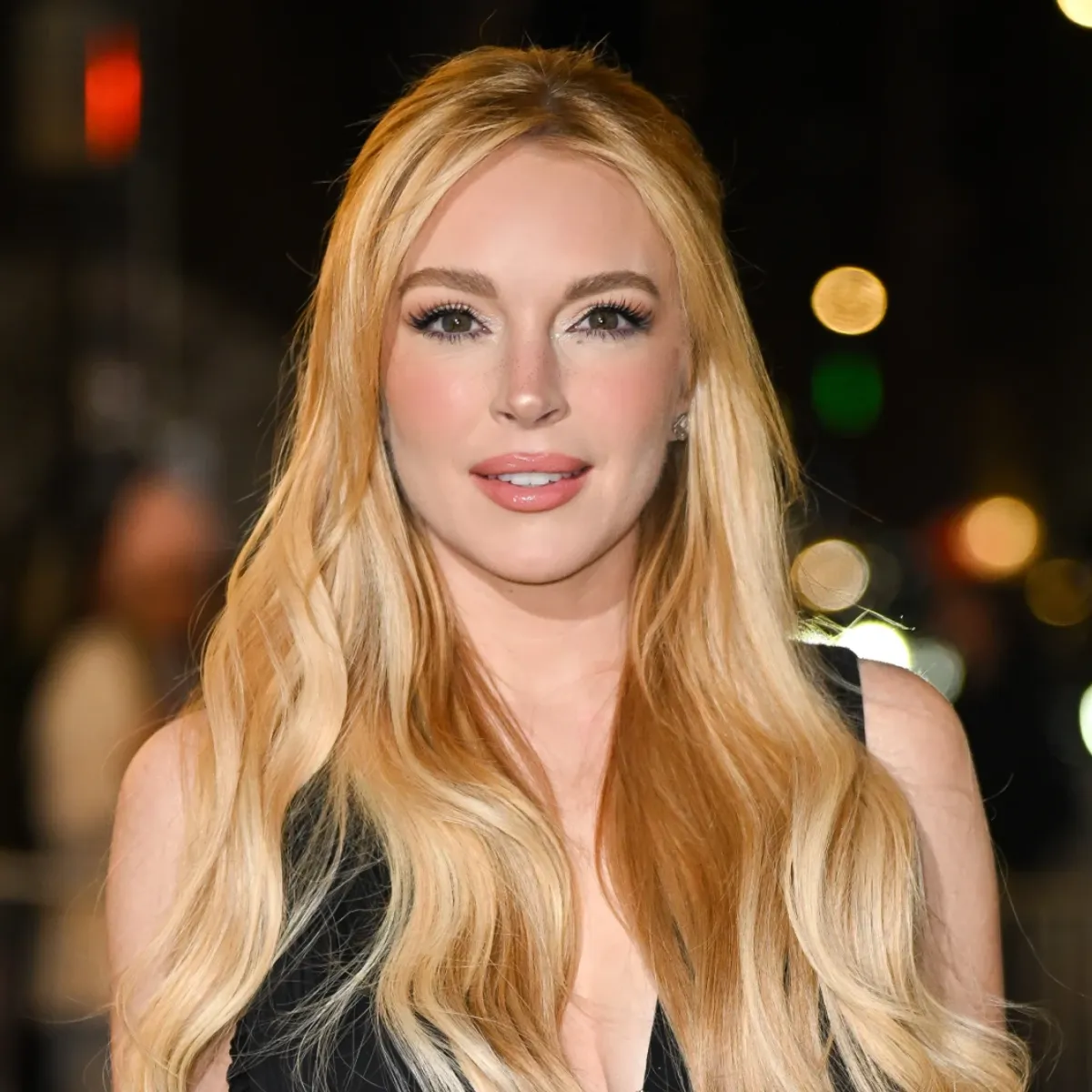
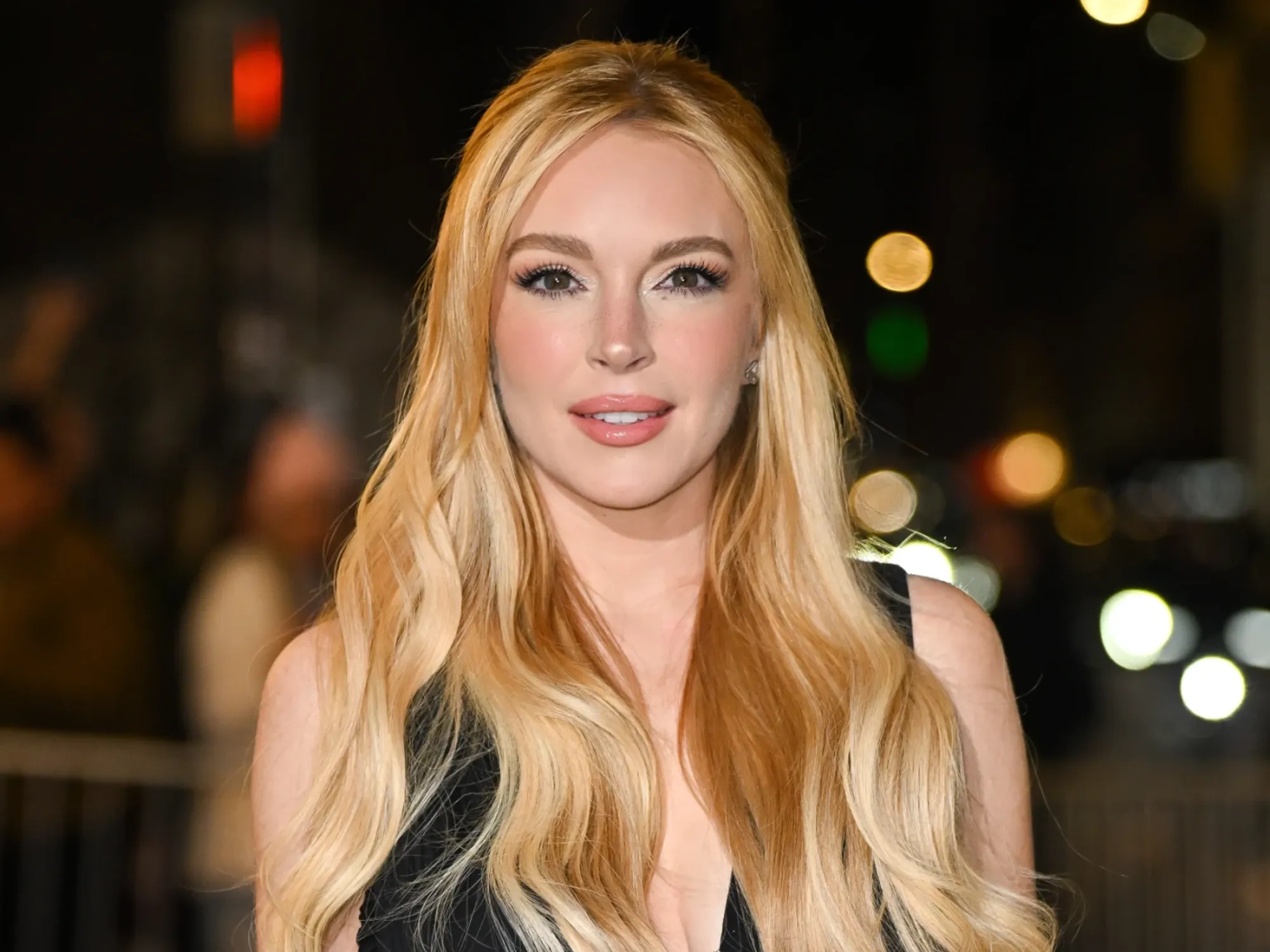
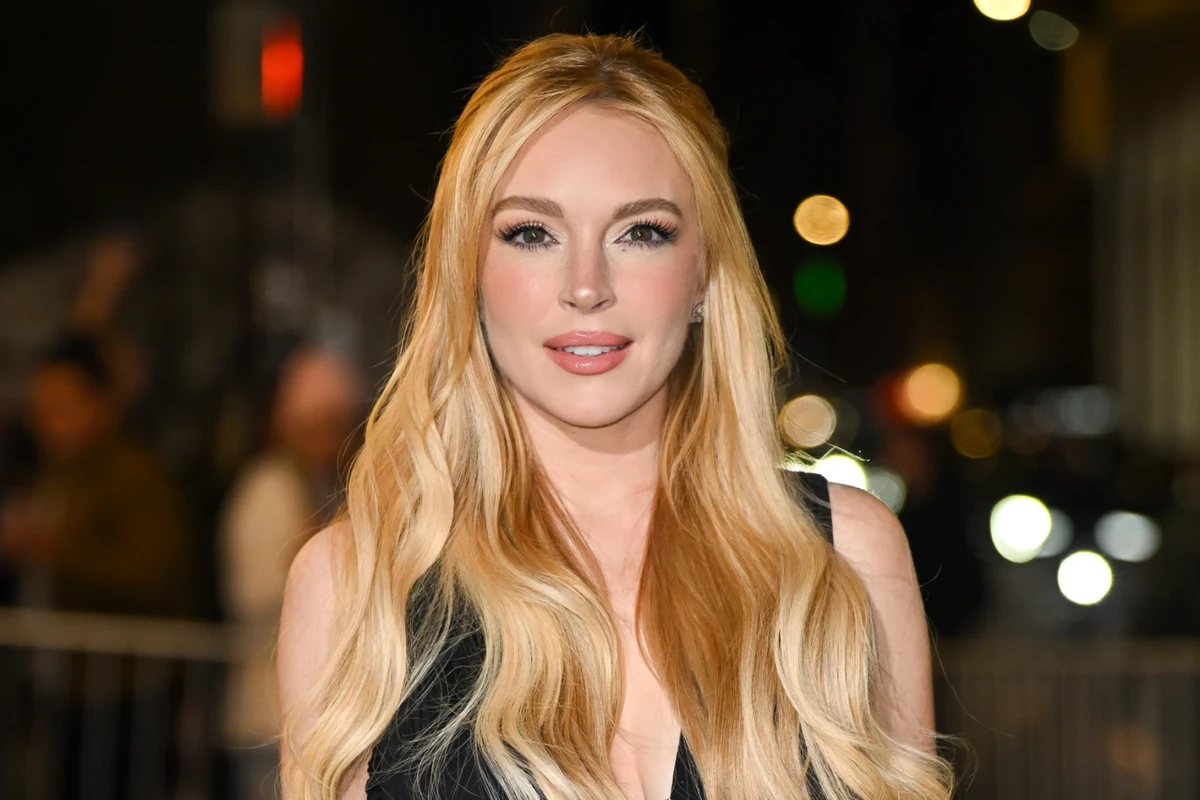
Lindsay Lohan on Nov. 18, 2024 in New York City.
Lindsay Lohan is currently spending the fall in Toronto, where the Mean Girls star is filming a new Netflix romantic comedy.
Lohan has been spotted shooting Return to You, a new film where she stars opposite Henry Golding that is expected to land on Netflix in 2027. Production began in Toronto in late September and is scheduled to continue through November 10. She was photographed filming outside an office building in Toronto earlier this month.
The film takes place in 2008 and follows a powerful but lonely attorney played by Lohan. After mistakenly receiving a DVD recorded by a terminally ill woman for her husband, the lawyer follows clues contained on the disc in an attempt to track down its intended recipient. Golding plays the woman’s husband.
The project also brings Lohan back together with director Mark Waters, who previously directed her in Freaky Friday and Mean Girls. Waters has since directed several Netflix films, including He’s All That, Mother of the Bride and La Dolce Villa. Lohan also serves as a producer for Return to You. The actress starred in Netflix’s Falling for Christmas, Irish Wish and Our Little Secret as well as Freakier Friday, the 2025 sequel to Freaky Friday.
The actress is no stranger to Toronto, as Mean Girls was famously filmed in and around the GTA. Netflix has not announced an exact premiere date for Return to You, but the film is currently expected to arrive sometime in 2027
John Oliver on ‘Last Week Tonight’
Great news, late-night fans: John Oliver is yet again in possession of a jock strap worn by Russell Crowe for Cinderella Man. The jock strap has been acquired by the Last Week Tonight show host several times and has a long history as a sort-of joke and sort-of charitable item.
Oliver initially bought the undergarment in 2018 during an auction Crowe dubbed “The Art of the Divorce,” which involved the actor selling more than 200 items in the wake of his divorce from Danielle Spencer. Last Week Tonight purchased it for $7,000 and eventually donated it to the last remaining Blockbuster Video store in Anchorage, Alaska, in an effort to boost their business. Crowe said he donated the profits to the Australia Zoo, which said it would use the money to fund the “John Oliver Koala Chlamydia Ward.”
After the Blockbuster Video shop closed that same year, the jockstrap made its way back to Oliver. He reunited it with Crowe in a segment on Last Week Tonight. In 2025, Last Week Tonight put it up auction again to help raise funds for public TV and radio stations. This time it was bought for $21,000 from an anonymous buyer. It went up for auction yet again in August, where someone paid $10,000 to acquire the jock strap. That someone was apparently Oliver.
“I’m pretty confident the historical legacy of this show will be a few hundred thousand dollars for food banks, a koala chlamydia ward, and whatever the fuck is going on with Russell Crowe’s jockstrap right now,” Oliver said on Sunday night’s episode of Last Week Tonight. “Because, quick update, after we auctioned the jockstrap off at the end of last year in aid of public media, it was apparently put up for auction again in August, where, I’m happy to tell you it sold for $10,000. And the reason I know that is, of course we fucking bought it back. Of course, we did.”
Oliver added, speaking directly to the jock strap, “I cannot wait to find out where you’re gonna go next.” Crowe has yet to comment.
Michael J. Fox has been promoted to Companion of the Order of Canada, one of the country’s highest civilian honours, recognizing his decades of work advocating for Parkinson’s disease research.
The Edmonton-born actor received the honour at a ceremony at Rideau Hall in Ottawa on Friday. Fox was previously appointed an Officer of the Order of Canada in 2010.
The latest honour recognizes Fox’s contributions to Parkinson’s advocacy and his efforts to advance research into the disease. After being diagnosed with Parkinson’s at age 29, Fox went public with his diagnosis in 1998 and founded the Michael J. Fox Foundation for Parkinson’s Research in 2000.
The foundation has since become one of the largest nonprofit funders of Parkinson’s research, directing more than $3 billion toward research programs and initiatives. In a recent interview with People, he acknowledged that Parkinson’s has become more difficult to live with over the years while continuing to focus on research as a source of hope.
“We’re getting close,” Fox said of the possibility of finding a cure, adding that he is continuing to put his efforts toward advancing Parkinson’s research.
The actor has also spoken about the importance of accepting the realities of Parkinson’s without allowing the diagnosis to define his life. Fox stepped back from regular acting work in 2020 as the effects of Parkinson’s made performing more difficult, but he has continued to take occasional roles, including a recent appearance on Apple TV+’s Shrinking.
A scene from 'Cameron Winter at Carnegie Hall.'
Most folks were not at Woodstock, Altamont, or Wattstax. Many of us were not a gleam in our parents’ eyes when Monterey Pop took place. We didn’t attend Bob Dylan’s numerous performances at the Newport Folk Festival in the 1960s, and we were not lucky enough to catch the Talking Heads do a four-night stand at the Pantages Theater in Hollywood in 1983. For every person that was at the Fillmore on Thanksgiving 1976, watching the Band give a massive farewell show, there are hundreds of thousands who have never set foot in the storied venue.
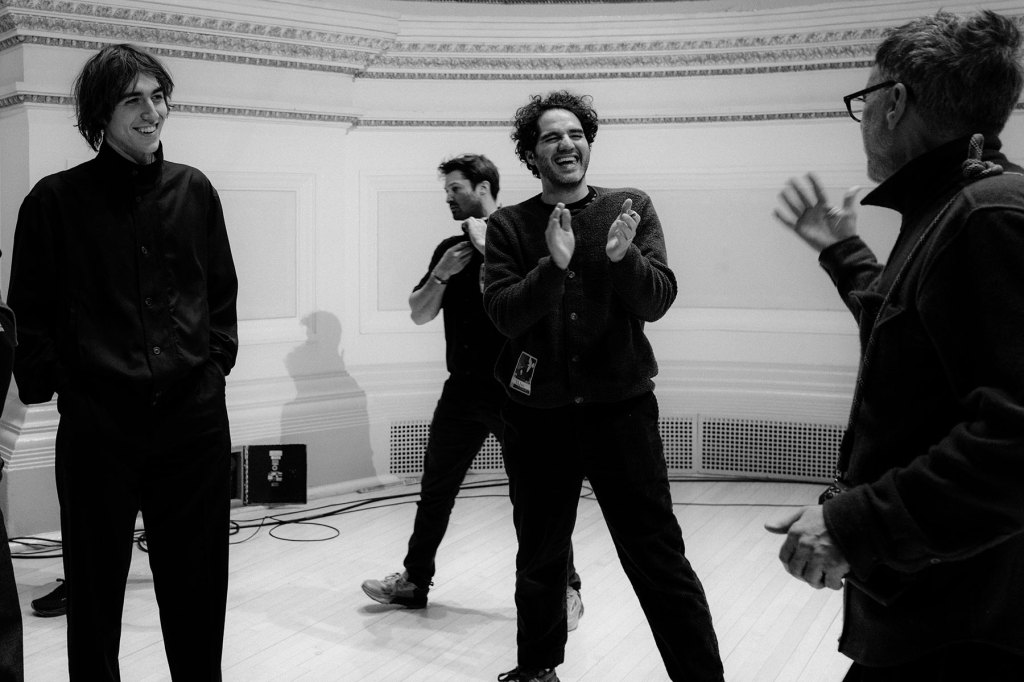
But we know these legendary events and performances like the back of our proverbial hands, thanks to the movies. Someone was smart enough, savvy enough, or simply lucky enough to have cameras rolling and boom mics at the ready when history was being made, one flaming Fender Stratocaster or boombox-accompanying “Psycho Killer” at a time. There were online comments galore about Paul Thomas Anderson and Benny Safdie sightings at Cameron Winter‘s show at Carnegie Hall in December of last year, and how both of these namebrand auteurs were running around with Panavision rigs on their shoulders. Thus, folks had a hunch that some sort of visual chronicle of a landmark show would make its way in to the world at some point. You figured it would be special. Even knowing who was pounding the keys and who was calling the shots, however, you might not have guessed it would be something so sublime as to make you so teary and euphoric.
Cameron Winter at Carnegie Hall is, in many ways, as simple and straightforward as its title, a document of the Geese frontman’s solo gig at a venue that’s played host to everyone from Benny Goodman to the Beatles, Lenny Bruce, and Robert Zimmerman. Anderson’s understanding of how to meld sound and vision in a way that’s ultra-cinematic is a given (we still think about that “Dirty Work” needledrop in One Battle After Another on a weekly basis), and he’s cut his teeth on enough short- to medium-form music videos for Radiohead, Joanna Newsom, Fiona Apple, and Haim to know how to use visual ideas to harmonize with a song. The filmmaker is also fluent in the language of Vintage Music Docs 101, which is why his movie kicks off with well-dressed patrons grinning into the camera, tickets being procured and scanned, and an establishing shot of a building that takes up a whole midtown Manhattan corner and requires practice, practice, practice to tread on its boards. There will be rapturous audience reaction shots.
Winter’s show was little — “little” — more than a man, a piano, and two-taped-together microphones. That’s what is in PTA & Co’s viewfinders. That’s what shows up onscreen. Songs like “It All Fell in the River,” “The Rolling Stones,” and the exquisitely titled “Cancer of the Skull” don’t require being goosed with high-concept ballyhoo, especially not in the stark presentations Winter gives them here. But like all great concert films, Anderson’s portrait understands both how to capture a performance and how to elevate it. And while Cameron Winter at Carnegie Hall does give you various best-seat-in-the-house viewpoints, it’s the cuts to wide shots that frame the singer in a lone spotlight and the intimate close-ups of the musician hunched over a Steinway, channeling poetry and pain, that makes it transcendental.
It’s not just a point-and-shoot affair. There’s a slightly jarring moment where viewers find themselves backstage, the doors open from the wings, and you ride shotgun as someone brings out a camera mid-song. Then you watch the rest of the number perched on the other side of the instrument, Winter deep into his own playing, eyes shut, his baritone occasionally breaking. A few shaky handheld moves suggests PTA, Safdie (who does double duty as cameraman and producer), and their cohorts have graduated from the D.A. Pennebaker School of Direct Cinema, Music Division, with honors. There’s one shot that puts you directly under Winter in medias yowl, as light flares stream from the ceiling and across his face, that will take your breath away. But showing off or gussying things up is the last thing on Anderson’s mind; high concepts aren’t listed on the program. The director knows what he’s got in Winter as a subject, a performer, a piano man who feels like a zero-dollar man. That’s more than enough to grace a 35mm strip of celluloid and a soundtrack.
So many people point to Stop Making Sense as the benchmark for how to transform a live performance into something more than an ephemeral moment happening in front of a lens. Anderson is a self-confessed Jonathan Demme superfan — as all cinephiles worth their salt should be — and can probably recite cut-for-cut sequences from that Talking Heads movie by memory. The real touchstone here, however, is a different Demme production: his music video for New Order’s “The Perfect Kiss.” Four people in a room, playing together, cameras catching all of their wordless communication, their concentration and their intensity in full focus. Some shots dwell on the band member’s hands working their instruments. Others are literally in their faces. It’s a celebration of the humans who are making this music.
Anderson, like his hero, is a humanist at heart, and you get the sense watching Cameron Winter at Carnegie Hall that he’s fascinated and slightly in awe of the 23-year-old human gracefully tickling ivories and singing stream-of-consciousness doggerel with a weariness beyond his tender young age. That act of baring himself is worthy of being preserved for posterity. As PTA himself might declare, it’s great music made by a great new artist. What the fuck else do you need, man?!
For the record, Mr. Anderson did not say that when he took the stage, along with Winter, to present the documentary’s world premiere at the New York Film Festival. Both he and his subject thanked the festival director Dennis Lim; Winter thanked “Andrew” (as in Carnegie). Neither of them felt the need to say much beyond expressing their gratitude, with Anderson wisecracking “You don’t talk so much” to his nearly silent partner staring up at the screen behind him. You could have heard a moth flap its wings during the movie itself, with the crowd greeting every song with hushed reverence. At one point, the audience tentatively started clapping then quickly quieted back down. There was a sense that we were being taken to church by this movie, as much as the attendees of that concert must have felt watching Winter play. Anderson’s collaboration with this gifted young man nails the one thing that every great concert movie tries gift to those who could not be their for the original moment. It does not just put you inside the theater. It makes you feel like you’re inside the music.
Viral Microdrama Rags 2 Richmond is stepping onto a bigger stage.
Following its inaugural market screening at the Toronto International Film Festival this month, the Richmond, B.C.-set musical comedy is offering a first glimpse at itsfeature-length debut, exclusively on Rolling Stone Canada.
Set in 2005, the film follows Nathan, an aspiring singer who enters an Asian male beauty pageant hoping it might offer his way into show business, pulling him into a world of competition, performance and pop ambition. Jonathan Wong returns as Nathan alongside Jennifer Tong (Fakes), Shannon Kook (The Conjuring: Last Rites) and Hong Kong screen veterans Eric Tsang(Infernal Affairs) and Nancy Sit (God of Cookery), with TJ Gavel directing from a screenplay by Wong, Patrick Do and Aaron Sprecher.
The film's executive producers include Paul Telner, Head of Programming at Viral Nation, Kevin Healey, producer of the Die Hart franchise and former Co-Head of HartBeat Studios, and Benny Luo, founder of NextShark.
There is a real world behind the story, too. Wong, Justina Shih and Simon Yin developed Rags 2 Richmond from their experiences around Asian beauty pageants and talent competitions across North America and Asia, drawing in particular from a circuit with longstanding ties to Richmond. It is a corner of entertainment culture that has rarely made its way onto North American screens, despite pageants historically offering contestants a route into music, television and film across parts of Asia.
The feature was actually the idea before Rags 2 Richmond became a vertical series. With the team initially struggling to communicate the concept through traditional development channels, they made a short-form version as proof that the story could find an audience, releasing 28 episodes in late 2024. More than nine million Instagram views followed within the first month, giving the project the momentum to return to the feature-length format its creators had originally imagined.
Dominic Kwow / Sea to Sky Media
Music has been inseparable from the story throughout that journey, with the feature carrying a twelve-track original soundtrack co-produced by Wong and Tat Tong, VP of A&R and Creative at Warner Chappell Music APAC. Its Y2K-inspired sound leans naturally into Nathan’s own in-movie pursuit of pop stardom, while music connected to Rags 2 Richmond has already travelled outside
Canada in the real world, with Wong becoming the first solo act from Hong Kong to ever perform on South Korea’s MBC Show! Music Core.
See on Instagram
The film’s arrival at TIFF also comes as Rags 2 Richmond begins moving into another format. Viral Nation and Media Trifecta are developing an unscripted competition series inspired by the pageant world behind the franchise, bringing together contestants who will be tested on everything from performance and presentation to the kind of showmanship required on the pageant stage, before culminating in a live finale. The format was introduced to buyers at the Access Canada Summit during TIFF’s inaugural market.
It marks a considerable evolution for a project that was still being tested through one-to-two-minute episodes less than two years ago, but its point of view has remained remarkably specific throughout. Richmond is still Richmond, the music remains integral to the story and the pageant culture that inspired it is no longer simply the backdrop, but the world around which *Rags 2 Richmond* continues to grow.
Watch the exclusive first look at Rags 2 Richmond above.
Nathan Fielder and Elizabeth Holmes in a scene from 'You Can See Everything'
In 2023, Elizabeth Holmes was going to prison. The eccentric founder of the blood-test startup Theranos had become a poster girl for everything that was wrong with Silicon Valley hero worship and the media’s elevation of self-made billionaires and tech disrupters. Accused of defrauding investors over claims that her company had invented a test that would screen for a variety of diseases with a single drop of blood (see: this now iconic photo), Holmes had been found guilty in both the courts of law and public opinion. The True-Crime Industrial Complex had a field day: endless magazine articles, op-ed screeds, multi-episode podcasts, an Alex Gibney documentary, an award-winning limited series on a streaming service. You remember the story and the brouhaha.
Holmes had kept an extremely low profile in the years leading up to her 2018 conviction, though she’d married budding entrepreneur Billy Evans in 2017 and become the mother of two children. She’d stopped talking to the press and prepared to serve her time. Then, right before her sentence was about to begin, Holmes and Evans approached A24 about the possibility of doing a documentary about their life leading up to her incarceration. That was odd enough on its own. It soon got odder. Soon after the meeting, the film company took a phone call from a filmmaker who’d heard that the couple had expressed interest in a doc. His curiosity as to why they’d do this was overwhelming. Could he talk to them and potentially pitch himself for the gig? The prospective man behind the camera: Nathan Fielder.
There are stranger, more shocking things that exist in this world than You Can See Everything, the end result of Fielder and co-director Lance Oppenheim’s embedded reporting-slash-wild ride with Holmes and her husband. Or so we’ve been told, at least. It’s hard to imagine anything more twisty, turn-y, and totally gobsmacking that’s been unleashed on audiences in recent memory. Made virtually in secret — even its existence was extremely classified up to the minute an unannounced screening at Telluride took place — this seamless hybrid of high-concept nonfiction, manufactured scenarios, and 100 percent pure, uncut WTF-itude feels completely singular even when compared to both Fielder and Oppenheim’s respective past works. It received its official public unveiling Wednesday night at the New York Film Festival. It may take those who were present years to process what they’d just seen.
“The reason Liz has been turned into a monster is because no one knows who she is,” Evans says at the outset, as Holmes sits quietly behind him, nursing their newborn. It’s 45 days before she will become an inmate in a federal prison, and she wants to spend as much time with her family as possible. But by letting filmmakers document their everyday life as parents, spouses, and residents of San Diego’s Del Mar beach community, the hope is that Holmes can be humanized instead of vilified. The fact that the couple are attempting to kickstart what Evans dubs “Theranos 2.0” and get investors onboard a new business venture is, one assumes, entirely beside the point. “We’re getting the band back together,” he says, with unfettered venture-capitalist glee. “We’re committed to the cause.” Um, what band? What cause?
They eventually ask Fielder to move into their seaside rental, at which point you expect the Nathan for You creator to engineer some sort of gonzo craziness, or perhaps construct a fake Starbucks in their guest room. Instead, he becomes the voice of reason. Fielder keeps asking questions, some gently prodding and other aggressively forthright. Why pick me for this project? How much remorse do you feel? You do realize that what you did was immoral and illegal, right? Oh, wait, you don’t? You still believe your Theranos “inventions” actually work? The ones that earned you a public pillorying and a prison sentence?
The man behind The Rehearsal has long been a trickster, and his onscreen persona has colonized the place where uncomfortable silences lead to cringe-comic gold, and occasionally pathos. There are an abundance of those moments, to be sure — an attempt to explain Abbott and Costello’s “Who’s on First?” routine and the slipperiness of language is a stunning example of why Fielder’s ability to stretch awkward exchanges past their breaking point approaches the level of genius. Ditto an attempt to watch The Dropout, the Hulu miniseries that won Amanda Seyfried a Golden Globe for portraying Holmes, with the couple. (It does not go well.) But he exhibits sympathy for his subject, and a genuine attempt to understand her mindset. Despite Holmes’ well-documented personality tics and all those armchair-psychologist diagnoses on social media, Fielder seems to bond with her, and vice versa. Seems is the operative word here. You’re never totally sure whether she’s faking it so real, or he’s faking it so realer. The tension behind that uncertainty is the movie’s prime currency.
By the time the family relocates to Texas, where Holmes will call a federal prison home for the next 10 years or so, and the countdown to jail time hits zero, You Can See Everything has gone from being a peek at image rehabilitation into a portrait of pathologies several times over. Holmes seems unable to grasp that she’s done anything wrong, or why she’s so disliked, or even the notion that her business was viewed as a scam. Evans appears overprotective and entitled at best, and opportunistic and controlling at worst. Some 90 minutes in, Holmes enters the penitentiary, and Fielder sits in his car, sunglasses and baseball cap, watching her go. You expect the end credits to roll, but the movie has only hit its halfway point. It’s about to take a major swerve.
The story picks up two years later, with Holmes still behind bars, Fielder questioning what took place over that month he lived with them, and to what extent her husband might have been exploiting her notoriety for personal gain. Evans, for his part, doesn’t seem that interested in continuing the doc but also doesn’t want to let things go; there’s a struggle going on between the interviewer and interviewee regarding the ownership of this project, especially as the latter’s new business venture is about to launch. Fielder smells a rat. He feels like he needs to investigate what’s really going on.
At which point You Can See Everything explodes and transforms into something else entirely — a weird melding of melodrama, detective story, heist film, historical time capsule, and meta-commentary on the ongoing Grifter, USA zeitgeist of the 2020s. Fielder exercises his talent for re-creations. Things are said on-camera that can’t be unsaid. Your mind is blown, diligently reassembled, then re-blown. The metaphor of a magic trick is trotted out early on, and by the film’s conclusion, you are generally unsure whether you’ve been watching nothing more than a pair of master illusionists saw a lady in half. There’s no “ta-da!”, there’s simply a “what did I just watch?” sense of shock and awe.
Here’s what you do know: Fielder has now cemented his reputation as a master builder of line-blurring works. Oppenheim — a longtime documentarian with a penchant for making weird vérité with a human pulse — is having a hell of a moment, with the one-two-punch release of the To Catch a Predator origin-story drama Primetime and this extraordinary take on celebrity and infamy practically back to back. And the only thing that America seems to love more than a comeback story is a con-artist fairy tale. The film’s title comes from a promise that Holmes makes to Fielder about this endeavor; she’s so serious about total transparency that she texts him the same phrase minutes later. You Can See Everything makes good on the irony behind that pledge. As for viewers, you will likely have no idea what you have just seen, besides that it’s simply, unabashedly, unashamedly brilliant.
Images from the story

End of article