The Chicks: Taking the Long Way
0.0 0.0 Reader Score No score yet, be the first to add. 0.0 Genre: Folk/Country Label: Open Wide / Columbia Nashville Release Date: 2006 Dan Wilson wanted to write a song called “U…
0.0
0.0
Reader Score
No score yet, be the first to add.
0.0
Genre:
Folk/Country
Label:
Open Wide / Columbia Nashville
Release Date:
2006
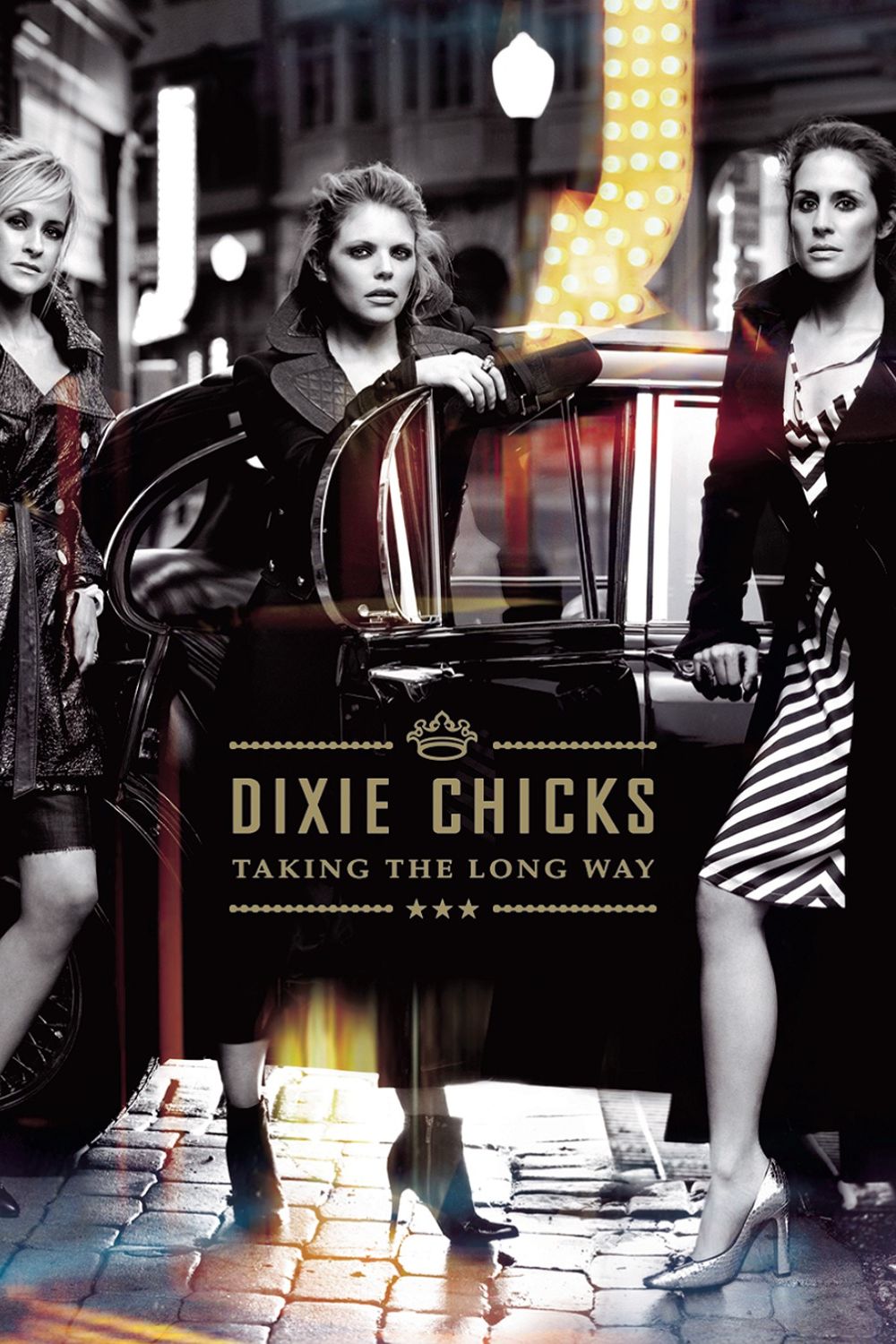
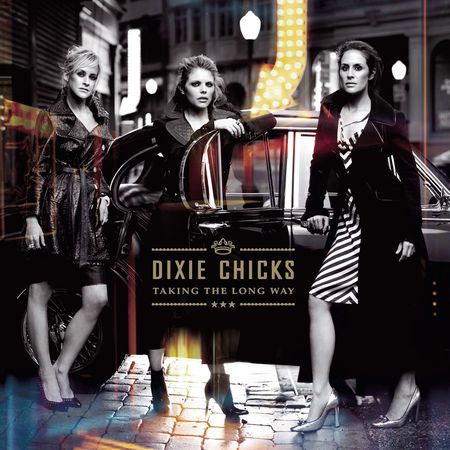
Dan Wilson wanted to write a song called “Undivided.” It was 2005, and the Semisonic singer had been working with the Chicks on what would become their fourth album as a trio, Taking the Long Way. For Natalie Maines, Martie Maguire, and Emily Strayer, everything was riding on this record, their first since Maines had walked onstage at a show in London, days before the United States’ invasion of Iraq, and said that the band was “ashamed” that the president was from Texas. In the years since, they had been blacklisted from country radio, subjected to “Dixie demolition derbies” of their CDs, and ostracized by peers.
Wilson suggested that “Undivided” could serve dual meanings: On one hand, it would speak to the way that the American people could be stronger together, if the right and the left put aside political differences and joined hands. On the other, it spoke to the fact that Maines, Maguire, and Strayer, during the single most trying period of their personal and professional lives, had refused to let outsiders come between them. “Natalie thought about it for a second and said, ‘Does that mean, in the song, I would have to forgive the people who did that to us?’” recalls Wilson in Shut Up and Sing, Barbara Kopple’s essential documentary of the maelstrom around the band at the time. Wilson explained that it probably would. “And she said: ‘Nope!’”
No score yet, be the first to add.
0.0
It was a prescient choice. Taking the Long Way is a swan song for a bitterly fractured America beyond niceties and empathy, a country that’s only come into clearer view in the 20 years since the album’s release. It endures precisely because of the band’s unwillingness to make amends—or, more realistically, their understanding that they were singing to a world beyond easy reconciliation. It’s the Chicks’ most trenchant full-length statement—the result of the band co-writing every song on a record for the first time—but not always a triumphant one. For all its graceful moments, Taking the Long Way is also at turns ugly, vindictive, and aggrieved: Ostracism liberated the Chicks as much as it damaged them.
Twenty years later, the Chicks are marking the anniversary of Taking the Long Way with a modest tour and equally modest deluxe reissue, featuring a handful of demos and outtakes of mixed quality. More crucially, the anniversary brings what feels like a prophetic album back into view at a moment of unnerving relevance. Songs that were occasionally deemed solipsistic upon their release feel more potent than ever at a time in which neighborly empathy has been supplanted by suspicion and anger, and when it feels like partisan politics is at its most toxic.
In hindsight, the Chicks—the Dixie Chicks until the band changed its name in 2020—were practically engineered to stand in opposition to the country establishment. “Wide Open Spaces,” the title track from their 1998 debut, is about a young woman’s desire to leave home and explore the world on her own terms; it sums up the band’s worldview in a single song. In contrast to the “beers, babes, and my backyard” attitude of a lot of mainstream country music in the ’90s and 2000s (and now), Maines, Strayer, and Maguire wanted women to live their own lives and live for themselves. (I think of a lyric on “Cowboy Take Me Away,” one of their greatest love songs: “I wanna be the only one for miles and miles,” Maines sings, “Except for maybe you.” Maybe.) Their defining hits chastised men for trying to shrink the lives of great women; on “Goodbye Earl,” they made a dive bar anthem from a story about a woman who kills her husband and starts a business with her best friend. When I think about the Chicks, I think about a clip from a filmed-for-TV concert they played in Washington: The trio, clad in head-to-toe sparkles, beam out into an audience that seems composed entirely of young women, singing back every word of “Wide Open Spaces.”
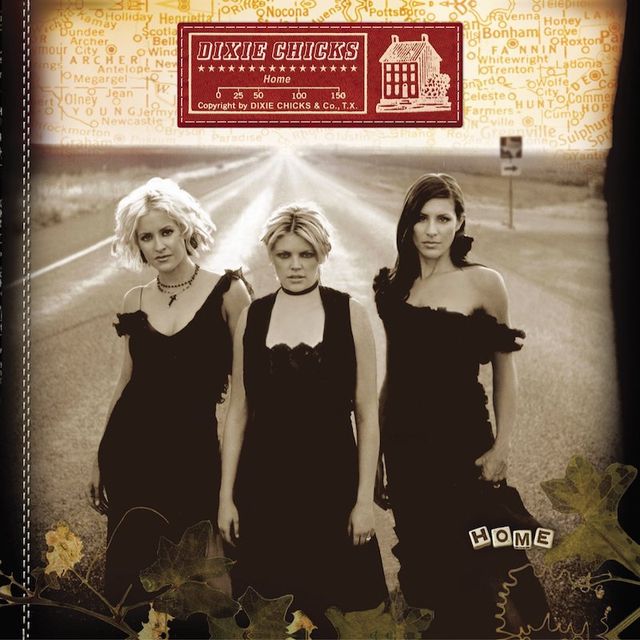
The Chicks got away with it initially because they were pedigreed from the start: Sisters Maguire and Strayer had been playing fiddle and banjo, respectively, since their childhood in Dallas, and by their early 20s were renowned players on the Texas bluegrass circuit. Lubbock-born Maines was the daughter of Lloyd Maines, a legendary pedal steel player and producer, and attended Berklee on a full vocal scholarship. Wide Open Spaces was an instant hit, but it was eclipsed a year later by Fly, which became the first album by a country group to debut at No. 1 on the Billboard 200. So strong was the Chicks’ commercial pull that their 2002 album Home—a trend-averse acoustic bluegrass album essentially recorded in secret—became a gargantuan hit, with two of its songs reaching the Top 10 of the Billboard Hot 100. One of those songs, “Long Time Gone,” was a raucous bluegrass jam about how shitty everything else on country radio was. But the respect the band had earned from the country firmament felt, at best, grudging. “They were so fresh and exciting,” one radio programmer told a journalist, around the time the band’s music was being pulled from the airwaves. “But they have a tendency to test the depth of the water with both feet."
The third single from Home was “Travelin’ Soldier,” a gorgeous ballad about a young woman finding out that her love has been killed in Vietnam. It was climbing the charts in early 2003, right as Maines, introducing the song onstage at London’s Shepherd’s Bush Empire, told the crowd: “Just so you know, we’re on the good side with y’all. We do not want this war, this violence, and we’re ashamed that the President of the United States is from Texas.” A version of the seemingly innocuous comment made its way into a tepid 300-word review of the show in The Guardian; press wires picked it up, and within days, the Chicks had been disavowed by practically the entire country music industry and much of the country.
Their hits, buoyed by radio, began falling down the charts—despite the clear premise of “Travelin' Soldier,” listeners still thought they hated the troops. Maines issued an apology two days later, explaining that, as a mother, she strongly wished against any bloodshed. Bush responded about a month later, once the Chicks were well and truly off the radio, saying that the band “shouldn’t have their feelings hurt just because some people don’t want to buy their records when they speak out,” and that “freedom is a two-way street.” (“‘Feelings hurt?’ What a dumb fuck,” Maines spits in Shut Up and Sing as she reads the statement, before looking directly at Bush through the camera: “You’re a dumb fuck!”)
The band was shocked that, as Strayer put it in an interview with Playboy, “country radio could eat their own so quickly.” They were caught at the center of two culture wars, each feeding the other: By stoking the Chicks’ battle with the right, country could ensure its continued presence on the national stage during a time when its biggest stars were moving into pure pop—even if that meant sacrificing the genre’s greatest bid for popular relevance. “[Country radio] thought they were losing Faith and Shania… We were waving the country flag,” said Strayer. “[The controversy] put country music on the front page and they were kind of enjoying the limelight. They were doing it for their own purposes—not out of principle against what we said, but because it was good entertainment.”
Taking the Long Way, more than anger or defiance, zeroes in on the sting of being ousted from your own home. At the time, Maines blustered about how she always felt more connected to liberal celebrities like Rosie O’Donnell than the country stars who turned their noses up at her at the CMAs, but her lyrics tell a different story. On the elegiac waltz “Bitter End,” it sounds like she’s addressing the peers and industry who cast the Chicks aside when they became radioactive: “You had a good time drinking all of our wine after the show/We all rode the wave of that crazy parade/Oh, where’d you go?” There was no love lost between the Chicks and the industry, but they loved their success and they loved country music, and Taking the Long Way’s Rick Rubin-aided expansion into pop and rock, in addition to pure country songs like “Bitter End,” feels as much like a personal decision as it was a commercial one, given that country radio was unlikely to play whatever they put out next.
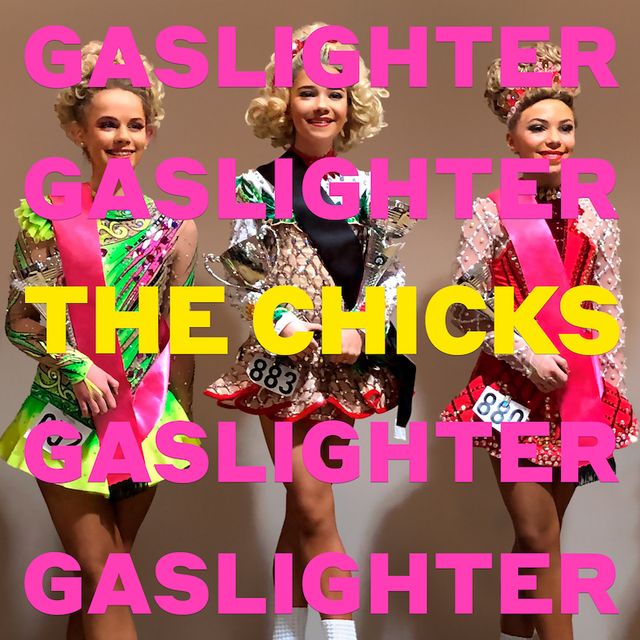
The most rock-forward song on the album, “Lubbock or Leave It,” is also one of its most righteously angry. Written about the backlash Maines received from those in her Texas hometown, it’s the most scorched-earth song the Chicks ever wrote, until, perhaps, their incandescently furious 2020 comeback record, Gaslighter. Toward the song’s end, Maines addresses Buddy Holly, another Lubbock native whom locals cast aside. “I hear they hate me now/Just like they hated you,” she sings. “Maybe when I’m dead and gone/I’m gonna get a statue too.” You can hear the smirk as she sings: If there is a defining quality to the songs on Taking the Long Way, it is this clarified, pragmatic, and sometimes extraordinarily cynical sensibility, which totally supplants the wide-eyed feeling of their earlier music. The Chicks were barely in their mid 30s when they made Taking the Long Way, but the three years prior had shown them, emphatically, that kindness and forgiveness were finite resources.
But they always had each other. Prior to “the incident,” as Maines took to calling her Bush comments, the sisters had been relatively placid foils to Maines’ anarchic loudmouth; although they held liberal views, they certainly weren’t ones to rock the boat. In the Hollywood film version of the Chicks’ career, maybe the pressure after “the incident” would have been too much for Maguire and Strayer; maybe hearing about all the criticism their family was receiving back home would’ve caused them to pack it in and leave the group.
In real life, as depicted in Shut Up and Sing, “the incident” became something of a radicalizing moment for both sisters. In one particularly brutal scene, Maguire sobs as she talks about all the hatred Maines specifically has had to endure. In an interview with The Daily Telegraph around the album, Strayer compared what they’d been through to McCarthyism, calling America “unrecognizable.” In that Playboy interview, Maguire explained that “the incident” had given her a wake-up call. “The thing that made me really open my eyes to who I was, and be proud of myself and my principles, was that I was willing to lose everything for what I knew was right,” she said. “In the past, I had tried to micromanage everything to ensure that this career was going to last forever… I was willing to put that on the line. I just didn’t care at all. The light just went on.”
It’s only right that Taking the Long Way opens with a paean to sisterhood. “The Long Way Around” is the Chicks’ origin story by way of Tom Petty’s “Learning to Fly”: A corny and totally irresistible song about finding your tribe and spending your life with them. The vivid, funny detail in “The Long Way Around” makes you wish that the Chicks had written more of their own songs on past albums: Maines sings about the “pink RV with stars on the ceiling” that the band toured in early on, meeting “the queen of whatever,” getting into spats with people she was ostensibly supposed to respect. (Hearing Maines sing, “Six strong hands on the steering wheel!” gets me choked up and fired up in equal measure.) “The Long Way Around” is one of the only songs on Taking the Long Way that directly addresses the relationship between the Chicks. But Maguire and Strayer are felt as loudly as Maines across the record, through their gorgeous harmonies, but also fiddle and banjo and, sometimes, sitar and accordion. (Perhaps one of the greatest tragedies of the Chicks’ cancelation is that Strayer has only rarely been acknowledged as one of the greatest country players of all time.)
Maguire and Strayer co-wrote every song on Taking the Long Way along with Maines. “So Hard,” one of the record’s most affecting songs, is explicitly about their experience: Its chorus, “It’s so hard when it doesn’t come easy/It’s so hard when it doesn’t come fast,” was inspired by both sisters’ struggles to conceive and subsequent IVF treatments. Strayer said that the band questioned “how to make infertility palatable as a subject,” but “So Hard” is quintessential Chicks: frank, emotional, and perceptive about the realities of women’s lives in a way rarely heard in popular music.
“So Hard” has a relatability that, admittedly, a lot of Taking the Long Way doesn’t, in comparison to the band’s past work. (It is certainly empowering to hear Maines rally against the losers in Lubbock, but I can’t say I’ve ever experienced anything that put me in Buddy Holly’s shoes.) Even so, the band were adept at making the vagaries of fame sound universal when they wanted to. The rootsy “Everybody Knows,” co-written with Jayhawk Gary Louris, captures the caged-animal feeling of being in the public eye. But it also taps into that age-old country trope of realizing you have history with everyone in your community: “Stepping out, everyone can see my face/All the things I can’t erase from my life/Everybody knows,” Maines sings, sounding weary and wounded in equal measure.
The fallout from “the incident” lasted years, but it crested in summer 2003, during the Chicks’ U.S. tour in support of Home. They had returned to America as pariahs, and although many of their fans agreed or didn’t care about Maines’ criticism of Bush, there was a subset who had previously bought tickets and, angry about the band’s political leanings, picketed the shows or attended wearing anti-Chicks shirts. The band laughed off most of the hate until an ominous message arrived ahead of a show in Dallas, the sisters’ hometown: “Natalie Maines will be shot dead, Sunday, July 6th, in Dallas, Texas.”
The FBI and the Texas Rangers beefed up security at the venue, and the band played the show without incident. But the death threat marked a definitive endpoint: How could the Chicks ever feel at home again in country music, when its gatekeepers had stoked furor to the point of outright threats on their lives? On Home, Maines had hoped for “more love/To flow in between us/To take us and hold us/And lift us above” in lieu of violence and war. The Chicks were learning, in real time, that not everyone deserved such grace.
So, instead of “Undivided,” the Chicks and Wilson wrote “Not Ready to Make Nice.” In its demo version, included on the 20th-anniversary reissue, the song is emotional and politely affecting. Maines’ voice sounds great, and Maguire’s grand viola break after the bridge adds requisite drama. But it also feels gentle and yielding; when Maines sings that she’s “not ready to back down,” it sounds more like plea than threat.
The finished product is gutting. If there is a more cathartic song, I don’t know it. It’s hard to articulate what makes the song great without also making it sound kind of goofy, because it’s far more than the sum of its parts: A backing band that includes Chad Smith dialing everything to 11, Matt Sweeney, Wilson, and Louris; an orchestra to beef up Maguire’s cutting viola; Maines’ most urgent, emotive vocal performance ever. “Not Ready to Make Nice” is so visceral and so arresting that it’s hard to remember that it was a radio hit: Time seems to stop as Maines barrels through the song’s dizzying bridge. Sometimes, maybe once in every eight plays, the track scans as pure camp to me. But really, how are you going to write a song about fearing you’ll be shot onstage and not give it such a glossy maximalist treatment? It is a once-in-a-lifetime song for a once-in-a-lifetime experience.
“Not Ready to Make Nice” won the Chicks a new, more mainstream audience, peaking at No. 4 on the Hot 100. Taking the Long Way and “Not Ready to Make Nice” swept the subsequent Grammys, too, although the Chicks were hardly welcome back at the CMAs. It would have been a triumphant story if not for the fact that their career remained decimated. After Taking the Long Way, the Chicks effectively retired: Although they sold out a Canadian tour with unprecedented speed, they were still struggling to sell tickets in many of the American cities where they used to pack out arenas. It would be a decade before they toured domestically again, and another four years after that before they released another album. The band’s outspokenness became a cautionary tale: Taylor Swift has said that her resistance to political speech is the direct result of being told, as a young artist, not to blow up her career like they did.
But if you’re on the way out—and you know you’re on the way out—why not go in a blaze of glory? Taking the Long Way is a harsher, wilder beast than any of the Chicks’ other records, and it takes bigger swings both lyrically and musically. It’s their best album if you’re not a country purist, and it’s also a musical catch-22: “The incident” made the Chicks more confident, brazen writers, and it unlocked what felt like a new avenue for their artistry; if not for that, they might have had the commercial support to continue exploring that path. Gaslighter, released 14 years later, unveiled a band that was older, wiser, and bitchier; it would have been exciting to see that transformation occur in real time. Still, Taking the Long Way earned the band’s retreat from the public eye. The Chicks became a cautionary tale, sure—but, as with everything else, they did it on their own terms.
0.0
0.0
Images from the story


End of article