Selma Blair Arrested After ‘Medical Emergency’ Led to Physical Altercation on Flight
The actress has been detained following the alleged assault of multiple flight attendants and additional erratic behavior on a Delta flight from LAX to JFK Selma Blair at Variety P…

The actress has been detained following the alleged assault of multiple flight attendants and additional erratic behavior on a Delta flight from LAX to JFK
Selma Blair at Variety Power of Women LA 2026 Presented by Lifetime held at The Beverly Hills Hotel on September 23, 2026 in Beverly Hills, California.
Selma Blair has been detained following the alleged assault of multiple flight attendants and additional erratic behavior exhibited on an inbound Delta Airlines flight from Los Angeles International Airport to John F. Kennedy airport on Sunday evening.
The Port Authority Police Department responded to reports about a physically abusive passenger on the flight following its gate arrival. Blair was taken into custody and transported to a local hospital. In a statement, representatives for Blair attributed the incident to a “medical emergency.â€
“Selma experienced a medical emergency that led to the alleged conduct,†a rep said in a statement to Rolling Stone. “Upon landing, she received immediate medical attention and is currently in stable condition.â€
During the altercation, which is currently being investigated by the Federal Bureau of Investigation, two flight attendants reported injuries, while another was transported to the hospital. Blair also reportedly attempted to open the aircraft door while aboard the flight and was subsequently restrained.
In a statement to Rolling Stone, a Delta spokesperson shared, “Delta has zero tolerance for unruly or unlawful behavior, as the safety of our customers and crew always comes first.†The airline confirmed the flight from LAX landed at JFK ahead of schedule with no additional impacts, at which time law enforcement responded to reports of the altercation.
Blair was last removed from a flight in 2016 after causing a disturbance she attributed at the time to having mixed alcohol with medication, which caused her to black out and behave erratically. “I take this very seriously, and I apologize to all of the passengers and crew that I disturbed and am thankful to all of the people who helped me in the aftermath,†she said. “I am a flawed human being who makes mistakes and am filled with shame over this incident. I am truly very sorry.â€
Jeremy Allen White and Mikey Madison in 'The Social Reckoning.'
Social media is bad. The addictive nature of being on those apps falls somewhere between cigarettes and crack cocaine. The billionaires that run the companies behind these platforms do not have the public’s best interests at heart. 21st-century corporate culture is a combination of a cult and a crime syndicate. Profit trumps civic responsibility. The bottom line is more important than the truth, regardless of whether you can handle the truth or not.
Maybe you’ve heard all of these things before. It’s good to have occasional reminders, however, which is where Aaron Sorkin comes in. The screenwriter/director/showrunner has been here before, having crafted stories involving the failings of institutions, optimists tilting at windmills out of necessity, and Facebook in particular. The Social Network (2010) remains a stone-cold masterpiece, an origin story about how an idea born from an Ivy League misfit turned into a gamechanger. It was a David vs. Goliath story, with the main character — real-life nerd-king Mark Zuckerberg — playing both parts. David Fincher’s rigorous direction and Jesse Eisenberg’s performance deserved their flowers. Sorkin’s script deserved its Oscar.
A lot’s happened since then, and the idea of Sorkin returning to that piñata with bat in hand would ideally be cause for salivating. Especially since the politically outspoken cineaste, now doing double duty as both writer and director, has a hell of a subject teed up for hits: “The Facebook Files,†a series of 2021 Wall Street Journal articles that exposed negligence and malfeasance on the company’s part in regards to peddling misinformation, ignoring potential safety concerns, and giving hate groups a stage on which to recruit and rage.
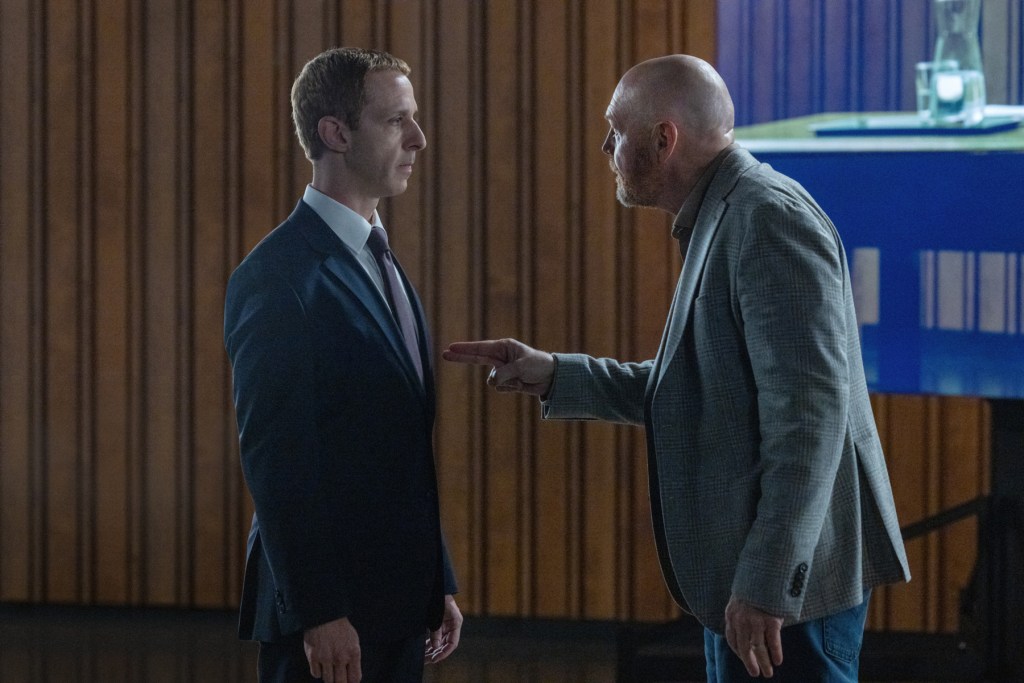
On one side, you had investigative journalist Jeffrey Horwitz (Jeffrey Allen White) and true believer-turned-whistleblower Frances Haugen (Mikey Madison), meeting in secret, chasing down leads, smuggling out classified intel. On the other, Zuckerberg (Jeremy Strong) as self-appointed tech-bro emperor, imperiously declaring he could do whatever he wanted while crouching behind the shield of free-speech advocacy. The result was a blow against the bad guys. You can’t make this shit up, because you don’t need to.
The Social Reckoning isn’t a sequel to Sorkin’s earlier work so much as a revisiting of old Silicon Valley battlegrounds and taking stock of the new casualties. It’s a drama about the importance of journalism and people being willing to speak out, now more than ever, as well as a showcase for Method-acting immersion and a 21st century screwball comedy dripping with that particular dialect known as Sorkinese. The man loves a rat-a-tat-tat rapport that echoes back to the days of cinematic dames, dopes, and swells, and as with his TV shows (Sports Night, The West Wing, The Newsroom), he’s locked and loaded this latest film with dialogue designed for volleying at high-speed velocity. Whether that fits with the rest of the story he’s trying to tell is irrelevant, because Sorkin’s gonna Sorkin. Therein lies both the feature and the bug.
Because the very thing that distinguishes his work — that gives it an old-school zip and the pleasurable sensation of witnessing righteous people doing righteous things, one verbose speech at a time — has a way of reducing heroes and villains to mouthpieces. There are times when you’re watching a compelling two-hander that dips and swerves into 1970s conspiracy-thriller territory, with White and Madison surfing the narrative’s forward momentum and playing off each other nicely. The duo pair surprisingly well, especially when The Bear star’s casual delivery offsets Madison’s ability to go from 0 to 60mph, and vice versa. You can see what the movie wants to be in those moments, a sort of All the Zuckerberg’s Men, and you feel yourself leaning in as they uncover one rancid statistic after another about Facebook’s less-than-rigid approach to civic integrity, its emphasis on Meaningful Social Interactions (MSI) that prioritizes “outrage-bait,†and its dismantling of guardrails. Hurwitz is technically a tech reporter, but he identifies covering Facebook as a “political beat.†He — and the movie — see the bigger picture from the outset.
And then there are moments when you feel like Sorkin is simply setting down a soapbox and making his characters deliver diatribes, conversational detours, trivia-night tidbits, snappy answers to stupid questions, and his own personal bloviating while standing on it. You can feel yourself recoiling. Actors love Sorkin scripts because the man loves language, as well as the spark that happens when patter allows performers go toe to toe. Yet the sudden swerves from shoe-leather cinema to “Say, Joe, whaddaya know?†back-and-forths and outright speechifying are jarring, to say the least. There are time-outs for rants and banter about Frank Capra movies and Golden Age MGM musicals. One retort in regards to mansplaining should have been left on the cutting room’s floor. These do not humanize the men and women doggedly pursuing truth and justice onscreen. They simply turn them into Sorkin-lite avatars. White and Madison do some graceful heavy lifting here. They also deserve better.
Meanwhile, who’s that over there, twiddling his mustache while tying damsels to railroad tracks? It’s Jeremy Strong, giving us a Zuckerberg that’s one part megalomaniacal villain and one part tech-billionaire automaton. The actor plays the Facebook founder like an alien — The Mark Who Fell to Earth — and while the intensity and mimicry is impressive (that voice!), you see the effort more than you see the engagement. Strong is no slouch when it comes to portraying IRL men of power driven by they less-than-better angels — his Roy Cohn in The Apprentice is a stunner — but he too becomes collateral damage in the tsunami of populist straw-man arguments that make up the bulk of Sorkin’s telling-snark-to-power. Not even some excellent foils, one cool and collected (Sinners‘ Wunmi Mosaku) and the other hot and sputtering (Bill Burr, a standout), give you the sense that the movie views its antagonist as anything more than an opportunity to shriek “Zuck you!â€
“Everyone deserves a voice,†Horwitz says. “Not everyone deserves a microphone.†Sorkin’s voice has been his recipe for success and his weapon of choice, raised in defense of the little man, compassion, and common sense. Those elements are all present in The Social Reckoning. So is an abundance of sentimentality, a handful of supporting characters that are little more than wisecrack bots, and a final shot that’s so cringeworthy it will haunt you for weeks. Don’t get us started about the Jan. 6 recreations. It’s a compilation of the best and the worst of Sorkin, bellowed into a microphone that’s giving off a tad too much feedback.
Douglas in New York on Sept. 15
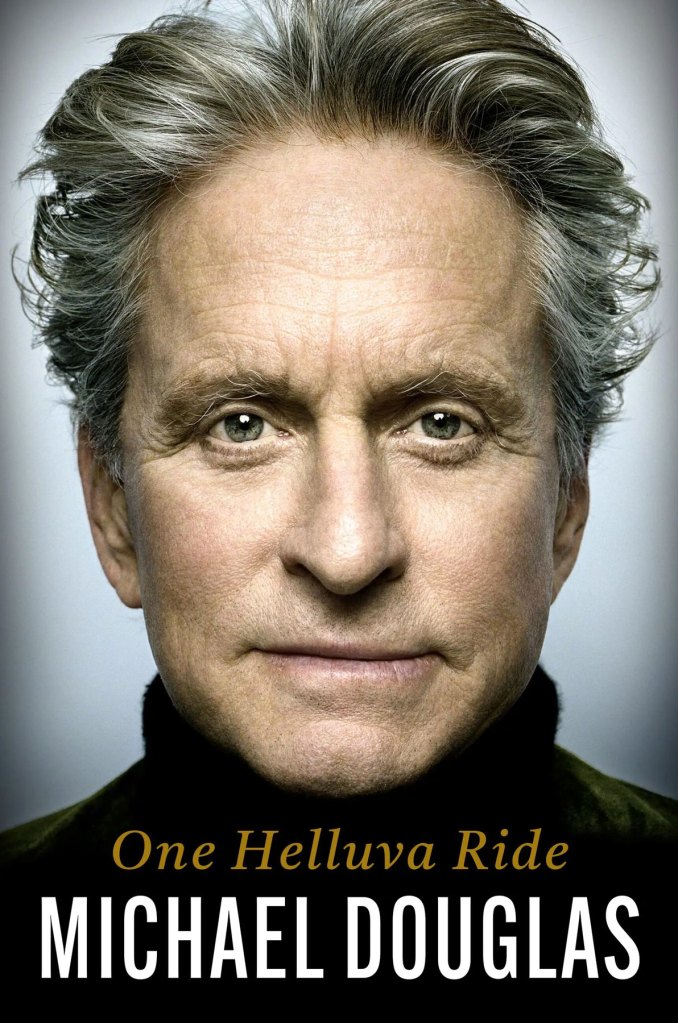
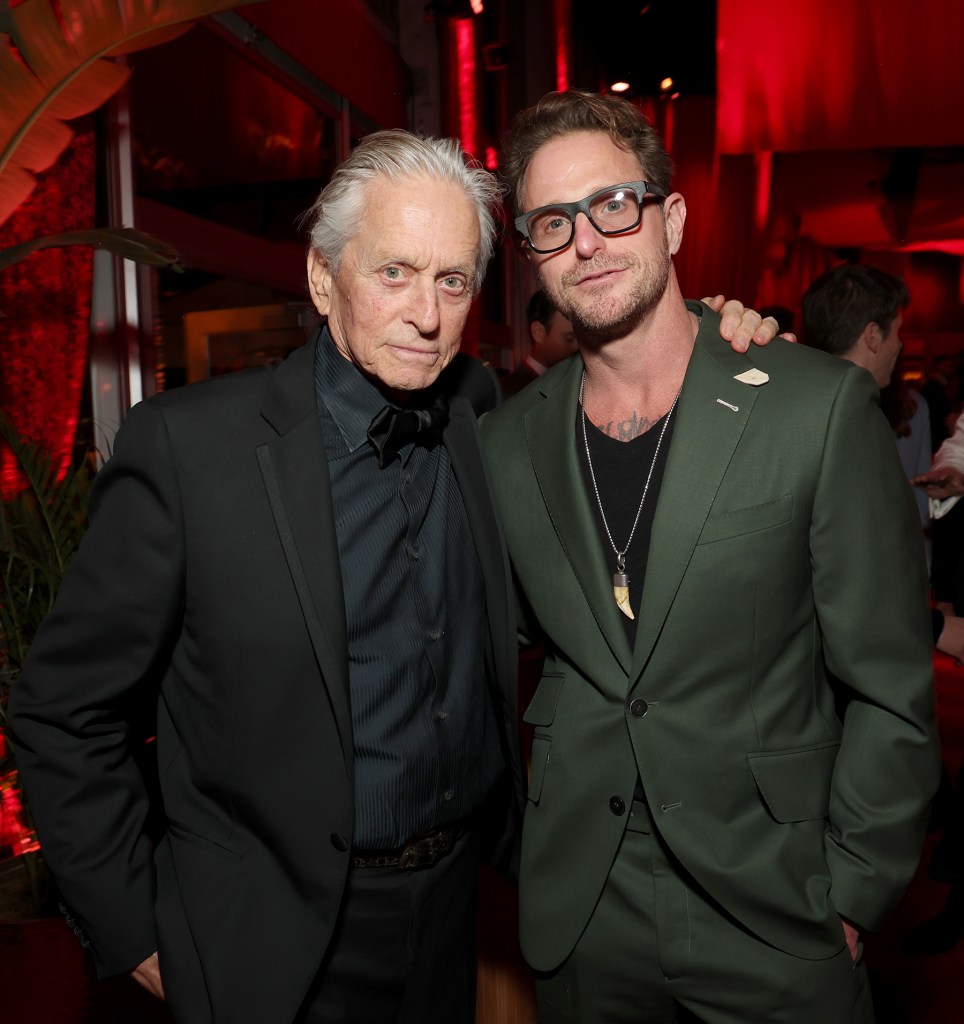
Michael Douglas, firmly in his smooth silver-fox era, has opened the door into secret compartments of his life. Douglas, 82, has just published an incredibly dishy, wildly entertaining, at times both hilarious and painful new memoir, One Helluva Ride. It’s a tale that spans generations of Hollywood royalty, from his father Kirk’s rise to stardom to his own run of classic films as both producer and actor: One Flew Over the Cuckoo’s Nest (1975), The China Syndrome (1979), Romancing the Stone (1984), Wall Street (1987), Fatal Attraction (1987), Basic Instinct (1992), and Falling Down (1993), to name some of the biggest. Written with Shane Salerno, the book is one of those rare memoirs that both entertains and sheds light on a lost world of Hollywood of glamour and decadence, with lots of sex and drugs and even some rock & roll.
To discuss all this, Douglas has invited me into his palatial apartment overlooking New York City’s Central Park, one of several homes he owns and enjoys. He’s a welcoming and gracious host, no servants or assistants bustling about. Just Douglas padding around in his socks, still as slim, handsome, and charming as ever. Douglas makes me a coffee, and we sit down in a living room with a view of his two Oscars, an Emmy, and other awards. Between Douglas and his wife Catherine Zeta-Jones, the trophy case is so large it fills up a corner of the massive living room.
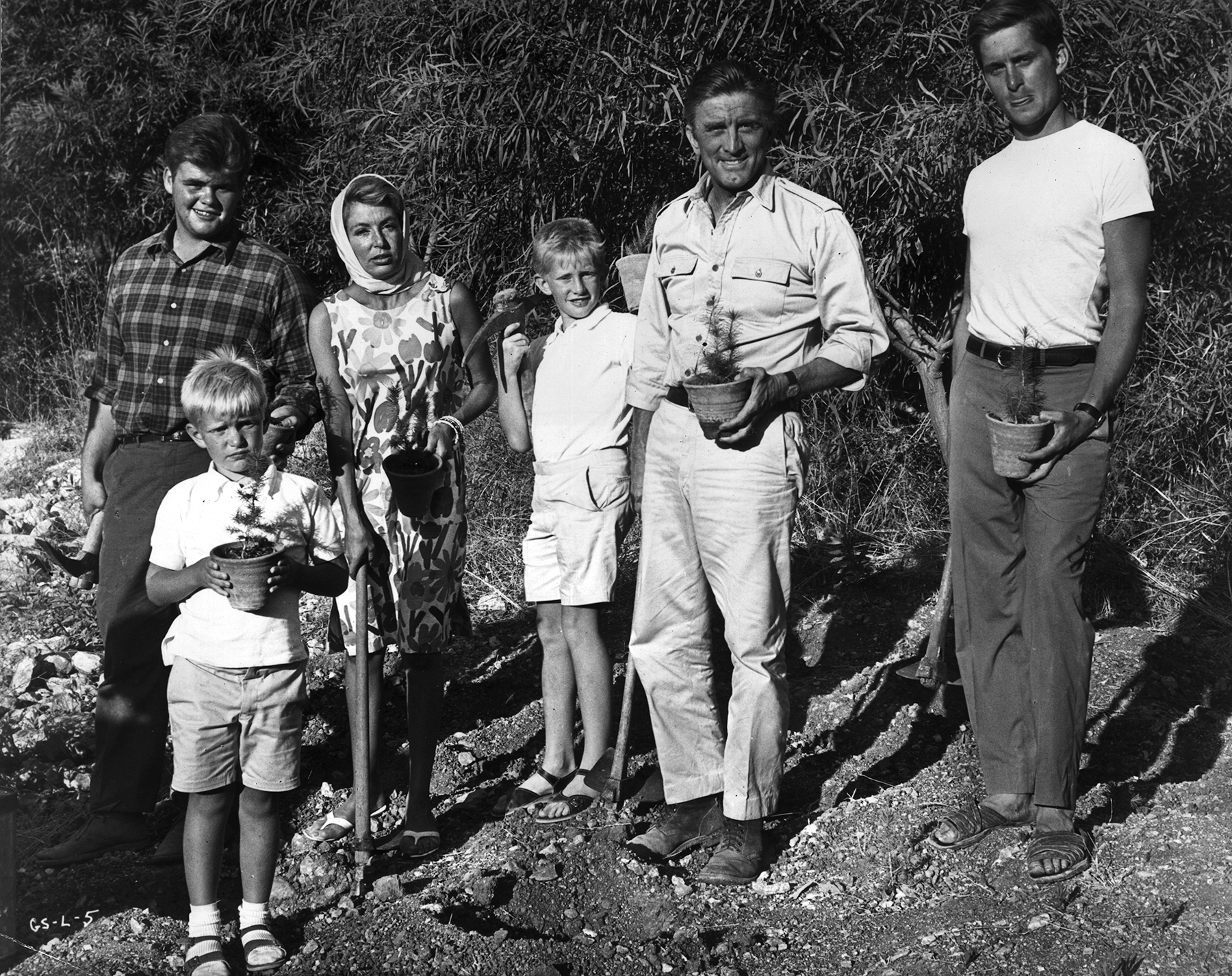
At times when he’s looking back during our talk, Douglas’ eyes well up. He’s an emotional guy, especially when discussing his family. Still, Douglas is unflinching in the book about how physically abusive and terrifying his dad was to him and his brother. How the divorce of his parents (his mother was the actress Diana Dill) was traumatic. In some ways, he was an original latch-key kid — except his parents’ apartments were on other sides of the country, and worlds away from each other.
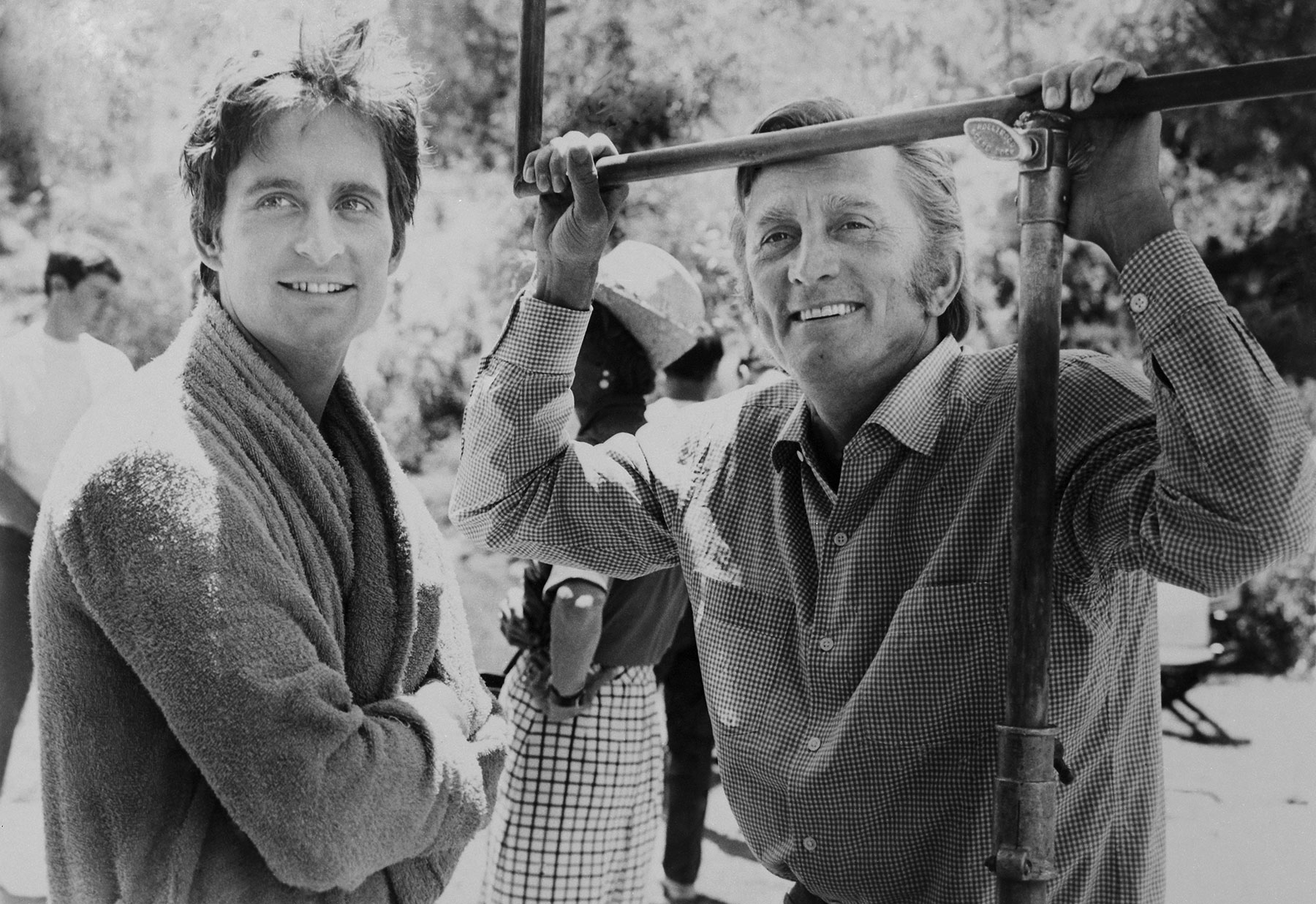
So much of the book is about that elemental relationship with his dad, and how escaping Kirk’s shadow was impossible given Douglas’ chosen career. Battles with addiction run throughout, too. They cost his father one of his sons, Michael’s half-brother Eric who died of a drug overdose in 2004, and almost cost Michael his oldest son Cameron, whose heroin problem led him to spend seven years in a federal penitentiary. (Cameron Douglas wrote his own book, Long Way Home: A Memoir of Fame, Family, and Redemption, in 2019.) Michael is open about his own stint in rehab, his battle with cancer, and his many, many affairs.
But above all he’s here, as he’s always been, to entertain, and the book is a nonstop romp through more than 80 years of showbiz. It’s a look inside one of the great lives of the late 20th century. He’s still got a few feuds and scores to settle (Brian De Palma and Joe Eszterhas, look out) but also a lot of thanks to give. The man has lived so much, and he’s ready to tell us all about it.
What inspired you to write the book?I said, “Well, Dad did a really great biography,†and he’d written other books. I had some time with the cancer to sort of take inventory and I said, “Fuck it, between my dad and I, we got 80 years in the business and 120 movies, and I really can’t think of anybody else quite…†I’m the first sort of super-nepo baby. It’s a real story of that legacy. And I realized memory and family is all you got left. So I began to enjoy being able to pick up information from the past, and said, “Let’s go.â€
You were pretty candid about your dad and growing up. Was that hard to tap into?The best part was knowing how it all turned out, which was a lot of love and tremendous respect. But I had to be honest about the abuse or just the fear factor that entered into going out to visit him, and understanding as you got older and then saw your own actions very similar to your father. [Douglas tears up.] Dad was overwhelmed and he was sort of caught between his father, who never gave him a pat on the back, ignored him. His father was an immigrant, didn’t speak English, Russian Jew, got over here in 1902.
He had seven kids. Dad had six sisters and his father was a rag man. So he said, “If I ever have kids, I’m going to be a father.†And lo and behold, he’s divorced from his wife. He’s got two kids. So when we go out to see him, he meant well, but he was so overwhelmed with work — those were the days when they were doing five movies a year.
It was so intense. There was a dynamism about him, a strength, a rage, and he didn’t know what to do. He wanted to be a good father, but also that was the generation of whacking. You whacked your kids. My mother had a hairbrush.
There’s also the tension in that marriage, too, of a first generation Jewish immigrant marrying this high WASP. That’s a bit of a culture clash, no?They were opposites attract. And my mother was 16 and she lied about her age entering the American Academy [of Dramatic Arts]. Dad was a Russian Ashkenazi Jew. And my mother was a Protestant, Church of England. Her father was the attorney general of Bermuda and all of that. [Points to his mantle.] That’s actually a Life magazine cover of my mom. She was a beautiful woman. This was when, after the academy, my dad had gone into the Navy. Mom’s cover came out and he told his friend, “I’m going to marry that woman.â€
And he did.Which he did, which was so weird because that’s exactly what I said to Catherine.
You really could have called this book “Fathers and Sons.†So much of it is about your relationship to your dad and then you and Cameron, too. You really feel it on the page. Especially with your own pain about being a dad.It’s hard. It’s hard. And I made a lot of mistakes. I fought Shane about starting [the story] so early, but I realized so much was a result of the combination of [my mother and father]. She was a diplomat and gentle and tried to make everything right and good, which I can tend to lean that way. And then also my father with that intensity and rage. To me, the magic was when they got divorced, because I remember the fighting and the yelling and screaming, but the first time he came back to see us in this apartment up at 85th Street we were so nervous, and he came in and he kissed my mother, “Hello, hi.â€
And I remember I just broke down crying because the tension was so much. I was blessed that the two of them mutually respected each other, got along. So I saw them both not making the kids take one side or the other. And then they went on and Dad married Anne [Buydens], who was a French woman who’d been a publicist on one of his pictures. And mom married Bill Darrid. And I had these great stepparents. There was no friction. I had a wonderful middle-class upbringing with mom and Bill, and Anne was lovely, too. And the four of them liked to have dinner together. So there was a comfort factor there.
Which was rare for that generation, though.Very rare, even for this [one]. I kind of preach that, about “please don’t drag the kids into these things.â€
Your book tells the sweep of the boomer generation. I mean, you guys accomplished so much, and some of it’s great, but then some of it’s pretty selfish and debauched.I had to be honest about the alcohol and drug abuse for those years. It didn’t help anybody. But the Sixties, Seventies, Eighties, it’s just a whole different period.
Well, Rolling Stone isn’t Rolling Stone without all that stuff too, right? One Flew Over the Cuckoo’s Nest and Ken Kesey or Hunter Thompson, none of that stuff happens without the substances. So do you look back on it and say, “This was part of the culture and we were making the culture�Yeah. But for me, again, I was growing up on the East Coast going to private schools here in New York, all boys. I went to Choate, very proper prep school. And looking back, my first big decision was when I decided to go to college and I realized my ass was so tight. The best decision I made at the time was going to the University of California at Santa Barbara, I guess for all the wrong reasons — there were girls. That was when the UC system had really taken off. I went there in 1963 and was introduced to the hippie culture. I just thought it was magical. First off, it wasn’t monetary. Everybody was really based on a familiar sense and sharing and giving. It was a spiritual and just a lovely, magical life.
One of the things that struck me in the book is, and forgive me, I just thought Kirk Douglas‘ kid, well, he’s going to be raised with privilege, but it really was middle class. They weren’t giving you that much, and you end up selling weed to pay for college.Yeah. The whole “Hollywood royalty†as if dad came down from heaven. He was struggling. And my mom was on a soap opera, and a play. My stepfather was an actor, and he produced a couple of plays on Broadway. It was a theatrical and artistic culture. But entertainers make for good dinner companions.
For sure.They have good stories. So I enjoyed, as a young kid, hanging out with them and their friends. Or when I was out with Dad and they’d have dinner parties and Don Rickles was there and Frank Sinatra and Cary Grant, Tony Curtis. And you just saw everybody with their own insecurities and foibles. You saw it as a job and what they had to do. So it took away a little of the imagination of what show business was like because you saw the hard work. I became a theater major because I had to declare a major, but I had no interest per se. And then I started trying to act and I was really bad. I had terrible stage fright. I hated going on stage.
Did the drugs help you overcome that?No. I don’t know. It was painful. I don’t know. I just wanted to get over it. I wanted to fight to get over my stage fright. I just hated standing in front of people. I was an introvert, kind of a shy kid growing up. I kept everything inside. I was wary of Dad and his [temper]. My brother Joel had a tougher time. His best friend was Billy Lancaster, Burt Lancaster’s son. They were talking one day and Billy said, “Joel, your father wants you to stand up to him. He wants you to be a man, right?†So Dad was upset one time and went at him and Joel said, “That’s not right, Dad.†He stood up. Dad looked at him and he smacked him across the room. I remember he was crying and called Billy back, “He hit me.â€
It really doesn’t sound easy being his son.I guess the most difficult part of being second generation [in Hollywood] is kids know or assume they know more about you. I don’t know who your father is or much about where you came from and this or that, but they, on [learning] one thing, Kirk Douglas’ son, said, “OK.†So then they make all these assumptions and some of them were mean and off. It took me a while to understand where that was coming from. Dad used to talk about it later in life. He said, “Michael, my story’s the classic rags to riches. It’s the whole big arc.†He said, “Yours, you don’t get that opportunity to really be able to explore or share.†It’s a much more narrow arc, but especially with the assumption that it’s a tremendous advantage. And it is and it isn’t. I remember when I first started acting, everyone would say, “You’re just like your dad, it’s amazing.†“Oh, look at that, just like your father.â€
Before all your success, you had a string of failures. Your first movies are disasters. Five in a row. Did you think about quitting?No. I didn’t put it in perspective. I had this one movie called Hail, Hero!, and the opening, it was being shown at Radio City Music Hall, which has got the Rockettes opening. I called a friend who’s in New York and he saw the picture, and I said, “What’d you think?†There’s this long pause. He said, “Michael, what can I say? There were more people onstage than there were in the theater.â€
I just was happy to have work, but then five turkeys in a row. I was doing Off-Broadway work. I just slid into television. I played a bank robber on The F.B.I. I remember when I had a scene inside the bank, they were holding me, the car pulling up in the bank, and I came into the bank and I yelled, “This is a holdup!†Everybody, all the actors looked fucking frightened, man. I was feeling so good. But the director came in and said, “Let’s just set it up again.†I said, “It was good, right?†They said, “Yeah, but look at your fly.†My fly had been wide open because I’d taken a pee right before the shot and I was nervous. All the people that were staring at me didn’t know whether I was a pervert or a bank robber.
You’ve been able to capture the zeitgeist multiple times: The China Syndrome, One Flew Over the Cuckoo’s Nest, Fatal Attraction, Basic Instinct. That doesn’t happen to a lot of people. Do you think you had an instinct for it or were you just lucky, or both?The really fortunate thing starting in my career was my last two summers at UC Santa Barbara, and the first summer after that, I worked at a place called the Eugene O’Neill Memorial Theater in Waterford, Connecticut. And they had a national playwrights conference there. And it was a list of great writers. I mean, John Guare, Israel Horovitz, Lanford Wilson. And so you sit there on the sidelines and you’d listen to these conversations about purpose and motivation and changing structure. So I knew much more about structure than I ever thought. I realized at an early age just how important it was. And then, I’m a news junkie. I have always been politically involved. But saying that, I thought China Syndrome was a great horror movie. I just thought, oh, my God, a nuclear power plant is the monster.
We had this incredible moment when the Three Mile Island meltdown happened 12 days after the picture opened, and it was like an epiphany. I’m not a religious guy, but it was like I found religion. I thought God is telling me this is that. And so I’ve been pursuing actively, since the early Seventies, the elimination of nuclear weapons.
Gordon Gekko’s Wall Street line: “Greed is good.†I don’t think a lot of folks got the message of that movie.Probably of all my movies, that’s the one I get more people from Wall Street coming up [to me about]. “You’re the man, you’re the reason I got involved in Wall Street.†I say, “Guys, I was the villain in that picture.†“No, no, no, no, no. You weren’t.â€
Do you think if you and Oliver Stone could go back, you’d rewrite it so Gekko suffers more?No. Well, I mean, that’s the devil. I don’t think we would’ve been better at making him more ugly. I mean, the devil is seductive. Evil isn’t so evil you would push it away. Evil is seductive. Evil creeps into you.
And you even based a little bit of it on Trump, right? I mean, Gekko is like that outer-borough striver in some ways.Yeah, but not really. [Trump] played a small part in the sequel, Money Never Sleeps. We didn’t use the scene, but then he was playing himself in a barbershop scene. I never saw it coming. I met him. I played golf with him. He was at my birthday years and years ago and had a good self-deprecating sense of humor. He pontificated, but had the ability to laugh at himself. But I never saw this side coming. I think he was deeply helped by the Heritage Foundation and Project 2025.
The other part of the story of America today is a bit of another character you played, William Foster, in Falling Down. Foster, a defense contractor who’s just lost his job, rages at the burdens of everyday life in America, and thinks the world is working against certain people. I think that guy anticipates the angry Trump voter. Especially when he has this moment of realization and says, “What, I’m the bad guy?â€Yeah. Right. Well, that was in post-Vietnam war and people forget that Southern California, besides the studios, is really the center of the military industrial complex of our country. And here’s a total patriot, who worked hard in his country making these weapons. And then they were so successful at it that he was fired and he has a bit of a breakdown. “How can I be… Why am I fired? I mean, I’ve done everything I should have.†I like that movie a lot, too.
Do you think, though, that it mimics some of the anger that’s out there today, or at least echoes it?Oh, yeah. It’s more about how a guy can be converted to a MAGA type. That anger about “it’s unfair.†“Other people who are not white are taking my job.â€
What did your son Cameron think of this memoir? I assume he’s read it.He hasn’t read it. No. I’m still waiting for him. Catherine just got it a couple of days ago. I’m sure it’s rough for him, but Cameron wrote a book about his whole existence, which was tough. Look, drug addiction is a nightmare and your heart goes out. My heart went out to my son, but it also affects a lot of people around [the addict]. I was just sharing the severity of it and the number of years that it caused me and my wife at the time, Diandra, a lot of pain and a lot of exhaustion. Yes, you love your son, but you’re angry at a certain point. I’ve lost a brother, Eric, in a drug overdose, and I used to watch the pains that my father went through. [Tears up again.]
I remember Dad going to group meetings at 82, 83 years old, where you’re told all the things that you did wrong as a father 60 years ago. And I remember watching this and saying, “I’m sorry, I’m not going that way. I know I made some mistakes. I’m not going to take the full brunt.†It’s tough for people to understand.
I weathered this for 30 years with [Cameron]. Thirty years, calls in the middle of the night and this and that. It’s OK for you to be angry. You can still love your son. He’s your blood. He and I are close. I love him dearly. He’s brought me two beautiful little grandchildren and he’s doing well. He’s out on the West Coast.
What do you think he’ll think of the book?Well, look, I mean, for all of them — all three [of my kids] are actors. Cameron’s an actor, Dylan, and Carys. They all are. And I know how hard it was for me early on, beginning, having the success that my father had. So now they have two generations looking at them. So I think he’ll be proud of me. I mean, he knows a lot of my own bad behavior back then. But I feel for them.
I was surprised that you had a real chip on your shoulder about acting. You had something to prove.Oh, there’s no doubt. I resented a lot of people who dismissed me early on. That was one thing. But then also, I was angry at the separation of television and film. When I was doing the television series The Streets of San Francisco with a lot of prestigious film directors and stuff, they treated you like shit. They really did not have much time for you. I’ve always felt that.
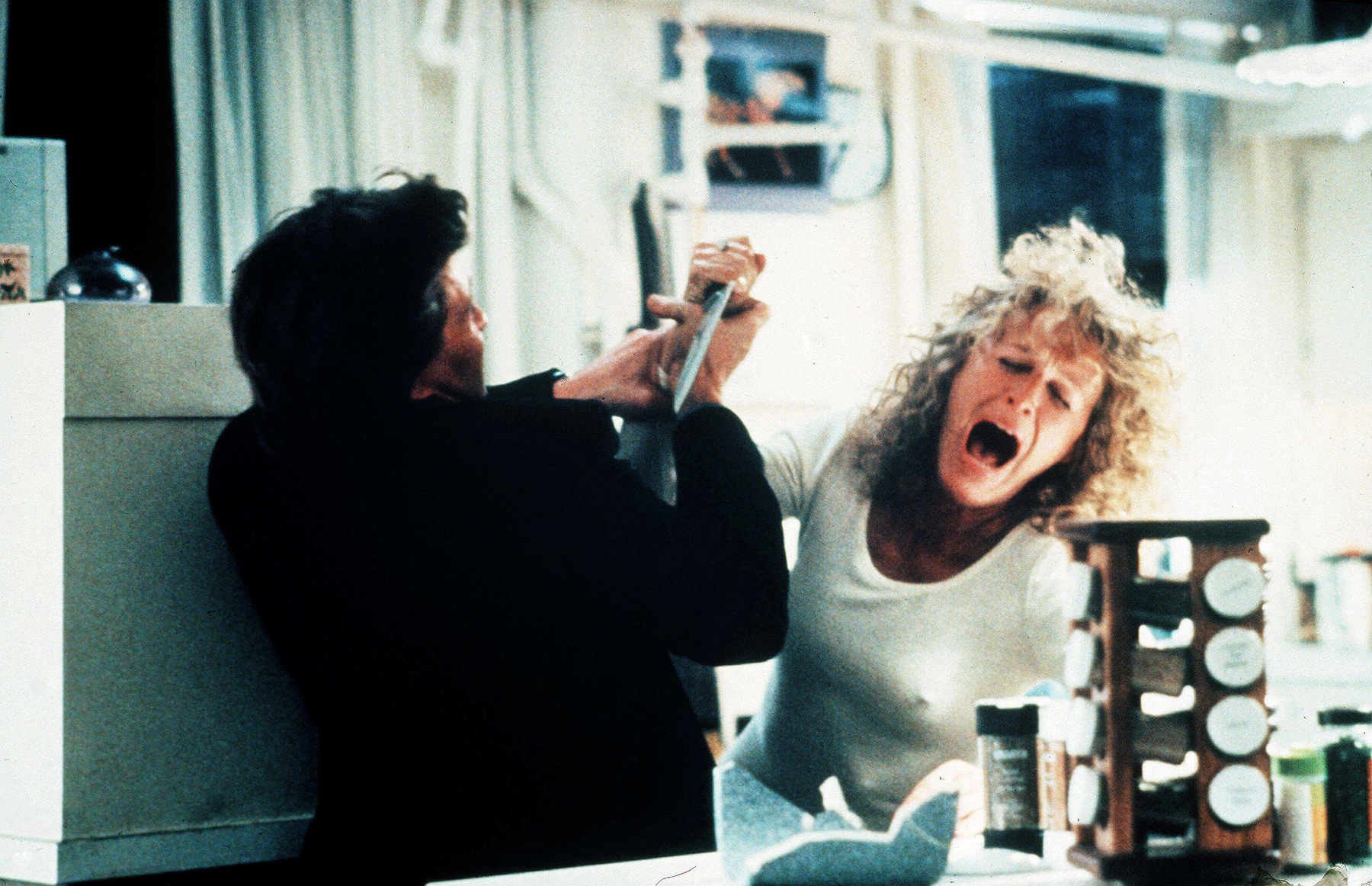
That reminds me of a great line in the book. Brian De Palma tried to have you fired from Fatal Attraction, before he was pushed off the project. A decade later, he apologizes to you and you reply, “That means nothing. Zero.†Yeah. Yeah. I have to admit that anger is a good false sense of energy sometimes that keeps you going. I’m fortunate in having so many people that I’ve been fond of and close friends with, but I have a short list of people that I look back on. Some of those first early movies I was lucky to get into because other people turned them down. Then finally for me was the year of Fatal Attraction and Wall Street, the two pictures being three months apart.
The Fatal Attraction stuff really jumped out at me. The studio wants to re-shoot the ending and you’re trying to convince Glenn Close and she’s balking at it.Absolutely.
And you go, “Babe, I’m a whore.†I just burst out laughing, but she wasn’t laughing.No, she wasn’t. But I guess I was saying by that, I meant I went to see the cut of the film, and it was fucking great. It was great, except the ending didn’t work. Her character committing hari-kari, it didn’t work. This is what I was talking about where I learned earlier from all the years earlier at O’Neill Theater. It was a beautiful moment for her character. I said, “But Glenn, you were so good in this film. The audience wants somebody to kill you. It’s blue balls for you to take your life out of them. Your character wins. The audience is not happy.â€
“So how are we serving our audience?â€Who are you serving, the artist or the audience? So I said, “Hey, I want to make the most successful movie possible. I’m a whore.†I mean, we’re all whores. I said, “It works for your character. It doesn’t work for the movie. What’s more important?â€
But you must have been having these arguments about art and commerce your entire career.Yeah. Well, especially because my pictures are not inherently commercial. I’m trying to make stories that do appeal to everybody. I mean, I’m kind of guilty about movies. They’re expensive, man. They’re expensive. And for just two hours of entertainment, well, OK. Yeah, that’s good. But I like to give a little food for thought. I love if you leave the theater and you’re a little haunted by the movie, then so much the better. It’s really affecting your psyche.
One of the revelations of the book is that you’ve been lying for 40 years about having an affair with Kathleen Turner.Kathleen, yeah.
I mean, I understand, certainly, not telling your wife for all those years, but just a few years ago, you said, “Nah, never happened.†Why now?We’ve always been good friends. I mean, not always. We went through a lawsuit, but she’s a good old broad. She’s a great gal. She had gotten married. We didn’t feel there was any reason to have her husband say “oh†or whatever. But when it came time to write the book, I knew in the spirit of making it an entertaining yarn, we needed a couple of surprises.
I asked her, she said, “Absolutely, Michael. No problem. I love you.†I love Kathleen. She’s a great, great gal. And those are memorable experiences that I will be eternally grateful for, because I really did not know any other actress who would’ve put up with the kind of situations — Romancing the Stone was such a tough production. It was the beginning of me getting to hate acting and pictures that I was producing and acting in.
In The American President, there’s a speech your character, President Andrew Shepherd, makes that I’m sure people throw at you: “We have serious problems and we need serious people.†I think that should be plastered over every billboard in America.Aaron Sorkin is just such a great writer. I mean, the sad thing about that speech is it’s so appropriate for today, 35 years later. It’s like we haven’t moved on.
You said you weren’t religious, but does faith play a role in your life? Your dad found religion toward the end, and you’ve survived cancer and you’re looking at more years in the past than in the future.After his helicopter crash [in 1991] — an 18-year-old student pilot died and Dad survived — he began to work formally on the Old Testament with a rabbi. Every week, he’d do a chapter in the Old Testament, and it played the crucial point where that was the beginning of his third act. Grandma said we got closer and closer because career was not as important anymore, certainly for him. And [he was] partially making amends, but partially finding a new purpose in life. [Douglas’ eyes well up again.]
I like the tribe. I consider myself a Jew because I believe in a lot. I guess one particular saying is an expression called tikkun olam, which means to make the world a better place, or to repair the world. I’m happy to accept that as my responsibility, to do it my own small way. That is my purpose in life.
Andrew Garfield and Yura Borisov in 'Artificial.'
Historians chronicling the decline and fall of humanity will have any number of key moments to point to as the beginning of the end. But a handful might single out an innocuous meeting at the University of Toronto in 2003. A 17-year-old named Ilya Sutskever — born in Russia, raised in Israel, and a citizen of Canada — walked into the office of Professor Geoffrey Hinton. The latter ran the college’s Computer Science department; the former is intrigued by the teacher’s lectures on neural networks. Impressed by the student’s hyper-intelligence and keen grasp of the concept, Hinton offers to take the teen prodigy to lunch. They will eventually create a network known as AlexNet, which will bring the pair and their partner Alex Krizhevsky to Silicon Valley. Remember the road paved with good intentions, and where it leads to?
Or they may be tempted to focus on a different fuse-lighting that occurs after Sutskever appears at a conference in Montreal, when he begins being courted by a charismatic Stanford dropout. This young entrepreneur thinks that the computer scientist with the thick accent and the inability to lie is on to something with this whole “artificial general intelligence†thing. They, too, will co-found their own tech-industry pet project, with help from an eccentric South African billionaire. The venture-capitalist hotshot is Sam Altman. The name of their business is OpenAI.
Both of these scenes show up in Artificial, director Luca Guadagnino and screenwriter Simon Rich’s recounting of the A.I. boom’s rise that plays like a series of downward-spiral snapshots. The first establishes the angel on Sutskever’s shoulder, a mentor who prioritizes safety in development and the sanctity of the human race. The second allows the devil to slide into his DMs, utilizing a seduce-and-destroy approach that will eventually lead to Sutskever becoming OpenAI’s resident Chicken Little and the tech industry’s conscientious objector. As played by Anora‘s breakout star Yura Borisov, the great Shakespearean actor Mark Rylance, and Andrew Garfield in full pinky-to-lip bad-guy mode, Sutskever, Hinton and Altman are the trinity at the center of this dark ensemble comedy doubling as a tragedy: the “Godfather of A.I.,†the son, and the holy terror. Two of them kept issuing warnings about slowing down and avoiding existential free-falls. One of them grabbed the wheel, hit the gas, and gleefully pointed the car right toward the cliff.
This is cinéma du doomscrolling at its funniest and its doomiest, generating the sort of laughs usually experienced by those strolling toward the gallows. A who’s who of pioneering engineers, Silicon Valley oligarchs, and simpering corporate toadies show up, some to be roasted and others to be pitied. The Studio‘s Ike Barinholtz plays Elon Musk as part Bond villain and part grimacing buffoon; Monica Barbaro lends OpenAI’s Chief Technology Officer Mira Murati an air of quiet dignity, then lets that quality deflate out of her like a sputtering balloon; Cooper Hoffman‘s take on board chair Greg Brockman is best described as one long, perpetual “Come at me, tech bro!†Zosia Mamet, Jason Schwartzman, Chris O’Dowd, Billie Lourd, and Will Price flit in and out of the picture, some trying to act of the voices of reason and others cheering on the madness. Who needs long-term caution when there are so many short-term riches to be had?
Artificial keys into that industry mantra and expands upon it, identifying this notion that tech billionaires feel they deserve to run the world — because if they aren’t so brilliant and deserving, how did they become tech billionaires? — as something that’s now toxified everything around us. Guadagnino only occasionally lays the style on thick, as when he borrows a slo-mo–celebration bit of business from The Wolf of Wall Street; mostly he lets the script and the performances do the talking, especially once the movie concentrates on the moral showdown between Sutskever and Altman. (To say that the filmmaker has got his groove back after the flaming trainwreck that was last year’s After the Hunt would be putting it mildly.)
You can imagine the consensus forming around Borisov not only being the heart and soul of the movie but also being the smartest get in terms of casting; as with Anora and the equally wonderful Compartment No. 6 (2021), he makes great use of a knack for channeling both woundedness and a sensitive-yet-steely demeanor. His Sutskever is socially awkward and childlike in his literalness, yet morally sound — the last dying beacon of hope for moderation among the “Feel the AGI!†fervor. “Prometheus was not afraid of fire,†one character informs him. “He didn’t have to make a deal with Microsoft to bring it to humanity,†the computer scientist replies.
I have no idea what folks will think of Garfield’s take on Sam Altman, a now-ubiquitous figure who often seems like a caricature of Silicon Valley nerd-regent in real life. It’s a wild swerve of a performance, opting for a simmering Machiavellian schemer hiding beneath a consistently polite surface at some moments and someone you might call “Campy Sam†at others. Daring, for sure. Damning? It’s an interpretation that falls just south of over-the-top, but still risks being a stereotype. Your mileage may vary. It’s certainly easy to see how the charm offensive and slippery approach to the truth that characterized Altman during his company’s ascent could be so beguiling for collaborators and investors, and how that same quality could be weaponized following a corporate coup organized by Sutskever. That entire ordeal is presented in detail, a backstage drama in miniature that treats the boardroom soap opera as the last chance to keep Pandora’s box shut. Altman is eventually reinstated as CEO. Sutskever is cast out of paradise. Cut to: that dire hand-wringing from less than a month ago.
Speaking of backstage drama: You might also recall that Artificial was supposed to come out under the patronage of a different Borgia, and that its original backers decided to help Guadagnino & co. find a new home for it. Thankfully, Neon stepped in, the movie was able to secure a last-minute world premiere at the New York Film Festival, and you can already hear the drums beating for a well-deserved awards-season campaign. There was a sense of urgency that informed all of the gratitude when the director and cast sat for a post-screening Q&A, with Guadagnino reminding folks that artificial intelligence is a human story as much as it is a tech parable, and Rich stating that he intended his script to be a warning. He prays someone will pay attention. The fear that we’re past the point of no return animates the movie’s sense of currency and its refusal to smooth over anxieties. It feels all too attuned to our desperation not to share in it. You’ll laugh, you’ll cry, you’ll scream into the void.
There was one extra gift that Guadagnino and the festival had in store, however, for those lucky enough to be at the very first public screening. A piano and a vibraphone were conspicuously loitering onstage. After bringing out the cast and crew members before the film, the director called out for composer Damon Albarn. The former Blur singer and current frontman for Gorillaz then stayed behind after everyone left and sat down behind the piano. A fellow musician stepped behind the vibraphone, and a children’s choir marched out. They then performed “The Saddest Song,†a gorgeous number about uncharted seas and “submarines in the dark†that Alabarn wrote for the film.
We were about to watch a movie about folks dedicated to making artificially intelligent, totally autonomous machines a reality, and what that might mean for our not-so-distant future. But this amuse-bouche of live music, performed by real people in real time and a real space, before a real crowd, felt reassuring in the most profound way. This is what human beings can do. We can engineer our own extinction. But we can also create magic out of thin air.
Lindsay Lohan on Nov. 18, 2024 in New York City.
Lindsay Lohan is currently spending the fall in Toronto, where the Mean Girls star is filming a new Netflix romantic comedy.
Lohan has been spotted shooting Return to You, a new film where she stars opposite Henry Golding that is expected to land on Netflix in 2027. Production began in Toronto in late September and is scheduled to continue through November 10. She was photographed filming outside an office building in Toronto earlier this month.
The film takes place in 2008 and follows a powerful but lonely attorney played by Lohan. After mistakenly receiving a DVD recorded by a terminally ill woman for her husband, the lawyer follows clues contained on the disc in an attempt to track down its intended recipient. Golding plays the woman’s husband.
The project also brings Lohan back together with director Mark Waters, who previously directed her in Freaky Friday and Mean Girls. Waters has since directed several Netflix films, including He’s All That, Mother of the Bride and La Dolce Villa. Lohan also serves as a producer for Return to You. The actress starred in Netflix’s Falling for Christmas, Irish Wish and Our Little Secret as well as Freakier Friday, the 2025 sequel to Freaky Friday.
The actress is no stranger to Toronto, as Mean Girls was famously filmed in and around the GTA. Netflix has not announced an exact premiere date for Return to You, but the film is currently expected to arrive sometime in 2027
A scene from 'Cameron Winter at Carnegie Hall.'
Most folks were not at Woodstock, Altamont, or Wattstax. Many of us were not a gleam in our parents’ eyes when Monterey Pop took place. We didn’t attend Bob Dylan’s numerous performances at the Newport Folk Festival in the 1960s, and we were not lucky enough to catch the Talking Heads do a four-night stand at the Pantages Theater in Hollywood in 1983. For every person that was at the Fillmore on Thanksgiving 1976, watching the Band give a massive farewell show, there are hundreds of thousands who have never set foot in the storied venue.
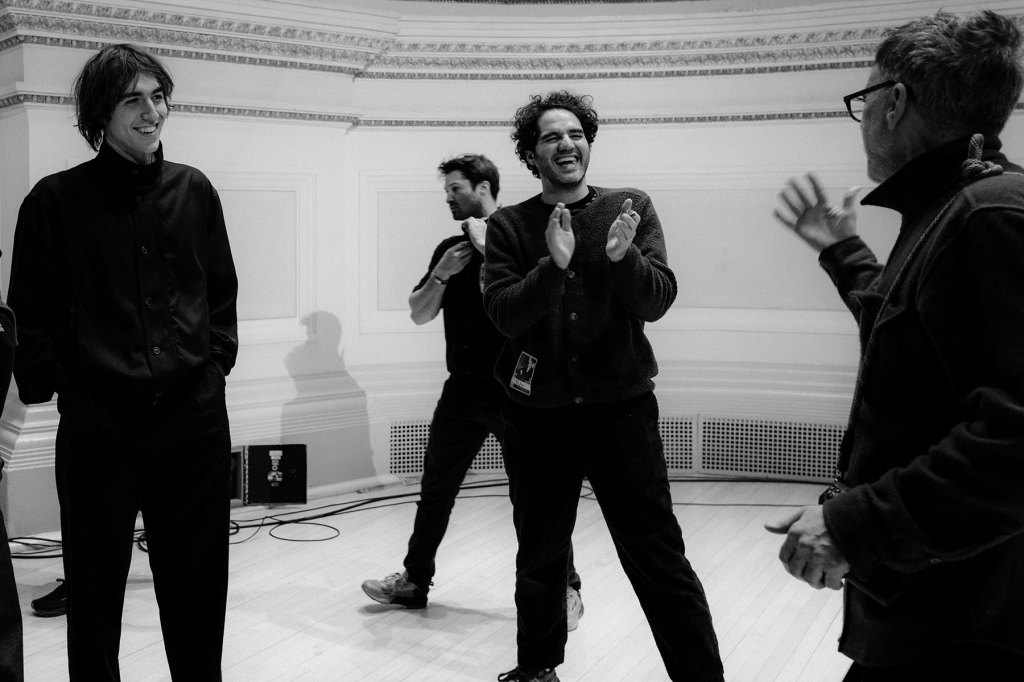
But we know these legendary events and performances like the back of our proverbial hands, thanks to the movies. Someone was smart enough, savvy enough, or simply lucky enough to have cameras rolling and boom mics at the ready when history was being made, one flaming Fender Stratocaster or boombox-accompanying “Psycho Killer†at a time. There were online comments galore about Paul Thomas Anderson and Benny Safdie sightings at Cameron Winter‘s show at Carnegie Hall in December of last year, and how both of these namebrand auteurs were running around with Panavision rigs on their shoulders. Thus, folks had a hunch that some sort of visual chronicle of a landmark show would make its way in to the world at some point. You figured it would be special. Even knowing who was pounding the keys and who was calling the shots, however, you might not have guessed it would be something so sublime as to make you so teary and euphoric.
Cameron Winter at Carnegie Hall is, in many ways, as simple and straightforward as its title, a document of the Geese frontman’s solo gig at a venue that’s played host to everyone from Benny Goodman to the Beatles, Lenny Bruce, and Robert Zimmerman. Anderson’s understanding of how to meld sound and vision in a way that’s ultra-cinematic is a given (we still think about that “Dirty Work†needledrop in One Battle After Another on a weekly basis), and he’s cut his teeth on enough short- to medium-form music videos for Radiohead, Joanna Newsom, Fiona Apple, and Haim to know how to use visual ideas to harmonize with a song. The filmmaker is also fluent in the language of Vintage Music Docs 101, which is why his movie kicks off with well-dressed patrons grinning into the camera, tickets being procured and scanned, and an establishing shot of a building that takes up a whole midtown Manhattan corner and requires practice, practice, practice to tread on its boards. There will be rapturous audience reaction shots.
Winter’s show was little — “little†— more than a man, a piano, and two-taped-together microphones. That’s what is in PTA & Co’s viewfinders. That’s what shows up onscreen. Songs like “It All Fell in the River,†“The Rolling Stones,†and the exquisitely titled “Cancer of the Skull†don’t require being goosed with high-concept ballyhoo, especially not in the stark presentations Winter gives them here. But like all great concert films, Anderson’s portrait understands both how to capture a performance and how to elevate it. And while Cameron Winter at Carnegie Hall does give you various best-seat-in-the-house viewpoints, it’s the cuts to wide shots that frame the singer in a lone spotlight and the intimate close-ups of the musician hunched over a Steinway, channeling poetry and pain, that makes it transcendental.
It’s not just a point-and-shoot affair. There’s a slightly jarring moment where viewers find themselves backstage, the doors open from the wings, and you ride shotgun as someone brings out a camera mid-song. Then you watch the rest of the number perched on the other side of the instrument, Winter deep into his own playing, eyes shut, his baritone occasionally breaking. A few shaky handheld moves suggests PTA, Safdie (who does double duty as cameraman and producer), and their cohorts have graduated from the D.A. Pennebaker School of Direct Cinema, Music Division, with honors. There’s one shot that puts you directly under Winter in medias yowl, as light flares stream from the ceiling and across his face, that will take your breath away. But showing off or gussying things up is the last thing on Anderson’s mind; high concepts aren’t listed on the program. The director knows what he’s got in Winter as a subject, a performer, a piano man who feels like a zero-dollar man. That’s more than enough to grace a 35mm strip of celluloid and a soundtrack.
So many people point to Stop Making Sense as the benchmark for how to transform a live performance into something more than an ephemeral moment happening in front of a lens. Anderson is a self-confessed Jonathan Demme superfan — as all cinephiles worth their salt should be — and can probably recite cut-for-cut sequences from that Talking Heads movie by memory. The real touchstone here, however, is a different Demme production: his music video for New Order’s “The Perfect Kiss.†Four people in a room, playing together, cameras catching all of their wordless communication, their concentration and their intensity in full focus. Some shots dwell on the band member’s hands working their instruments. Others are literally in their faces. It’s a celebration of the humans who are making this music.
Anderson, like his hero, is a humanist at heart, and you get the sense watching Cameron Winter at Carnegie Hall that he’s fascinated and slightly in awe of the 23-year-old human gracefully tickling ivories and singing stream-of-consciousness doggerel with a weariness beyond his tender young age. That act of baring himself is worthy of being preserved for posterity. As PTA himself might declare, it’s great music made by a great new artist. What the fuck else do you need, man?!
For the record, Mr. Anderson did not say that when he took the stage, along with Winter, to present the documentary’s world premiere at the New York Film Festival. Both he and his subject thanked the festival director Dennis Lim; Winter thanked “Andrew†(as in Carnegie). Neither of them felt the need to say much beyond expressing their gratitude, with Anderson wisecracking “You don’t talk so much†to his nearly silent partner staring up at the screen behind him. You could have heard a moth flap its wings during the movie itself, with the crowd greeting every song with hushed reverence. At one point, the audience tentatively started clapping then quickly quieted back down. There was a sense that we were being taken to church by this movie, as much as the attendees of that concert must have felt watching Winter play. Anderson’s collaboration with this gifted young man nails the one thing that every great concert movie tries gift to those who could not be their for the original moment. It does not just put you inside the theater. It makes you feel like you’re inside the music.
Images from the story





End of article