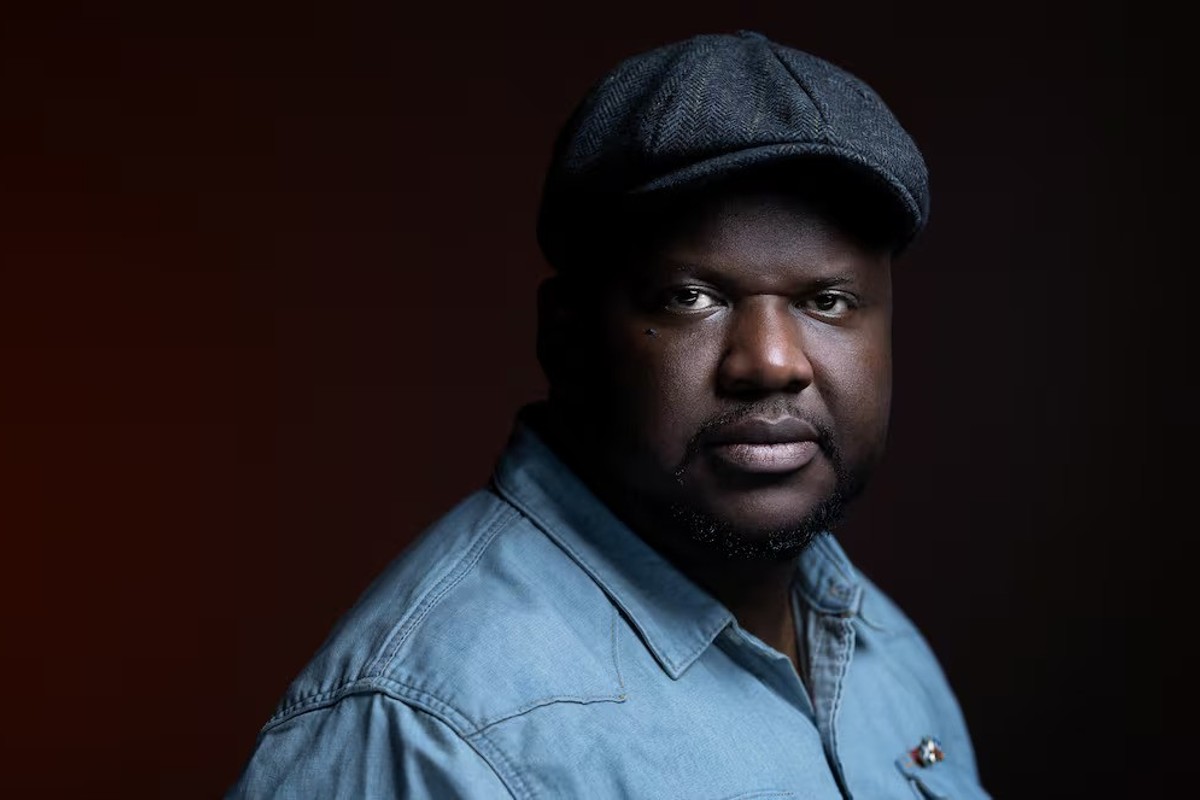
Thélyson Orélien Denies AI Use as Publisher Acknowledges Gaps in Manuscript History
Éditions du Boréal says it cannot trace the manuscript’s history as the Québec-Haitian author denies using AI and admits to past plagiarism. Billy Eff is the Content Director …
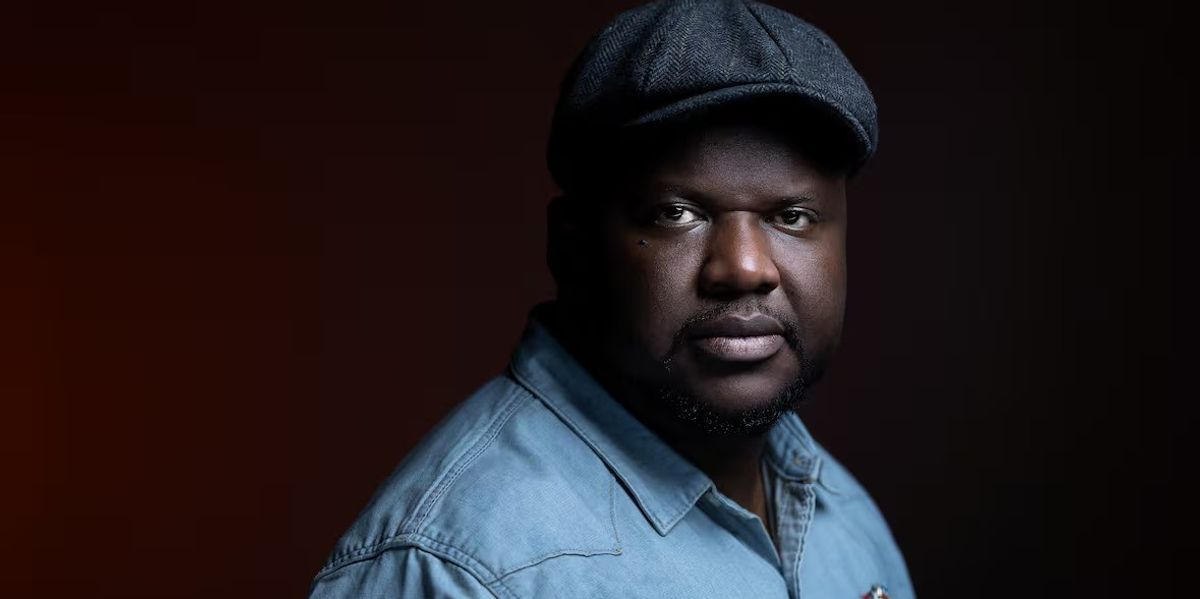
Éditions du Boréal says it cannot trace the manuscript’s history as the Québec-Haitian author denies using AI and admits to past plagiarism.
Billy Eff is the Content Director for Rolling Stone Canada. An award-winning journalist and columnist, he has previously contributed to outlets including VICE and Urbania. A passionate advocate for underground music and a musician himself, he has conducted several hundred interviews with artists and industry professionals across a wide range of styles and genres over the past 15 years. He is based in Montréal, Québec.
Québec publisher Éditions du Boréal says it cannot independently establish the origins of Thélyson Orélien’s manuscript for C’était ça ou mourir, leaving allegations that artificial intelligence was used to write the acclaimed novel unresolved.
In a statement shared today, the publisher said it had been unable to trace the manuscript’s history before September 12, 2025, when its team received the text. The novel remains available in bookstores and sales have kept climbing, despite the controversy surrounding its authorship.
“We would have liked to be able to provide definitive answers to the allegations against him,†the publisher said, according to a report by Agence QMI. It added that it had no evidence allowing it to reconstruct the manuscript’s earlier history.
The announcement follows a statement from Orélien on Tuesday, in which the Canadian-Haitian author denied using AI to generate any part of the novel while acknowledging plagiarism in two earlier works. “Not a single sentence of this book was created by a machine,†Orélien wrote in a statement. He said he began writing the novel in Québec in 2017 and completed a first draft of more than 300 pages in 2019.
Orélien also apologized for passages plagiarized in a 2012 short story and a 2013 opinion piece. He described the incidents as unacceptable mistakes made when he was younger.
The allegations against the novel first surfaced in September, when an account on X claimed that AI-detection software had identified extensive AI-generated text. The accusations prompted renewed scrutiny of the book and its place in France’s literary awards season. The novel was removed from the Prix Goncourt selection, while Boréal suspended promotional activities surrounding the book. It remains in contention for the Prix Renaudot, one of France's most prestigious prizes.
Pope Leo XIV greets faithful as he holds the Sunday Angelus prayer from his studio overlooking St. Peter’s Square on October 11, 2026 in Vatican City, Vatican.
Pope Leo XIV has been diagnosed with lung cancer, the Vatican said in a statement. The announcement was made following a surgery on Tuesday to remove the lower lobe of his right lung.
An examination confirmed a diagnosis of lung adenocarcinoma, which the statement said was “suspected by the pre-operative tests.†The pope was in the operating room for three hours and the surgery itself lasted about 90 minutes. “The operation was successful and there were no complications,†the statement said.
According to the Lung Cancer Foundation of America, lung adenocarcinoma is the most common type of lung cancer in the United States and makes up about 40 percent of all lung cancer cases.
The Vatican has not disclosed what stage the cancer was in or whether the pope will undergo further treatment.
On Sunday, the pope announced that he would be undergoing surgery. The pontiff made the announcement while addressing those gathered in St. Peter’s Square for the Angelus prayer, as subsequently on social media.
“Dear friends, during some recent medical examinations, the doctors found a small, localized nodule in my lung,†Pope Leo XIV wrote. “It was detected at a very early stage and is well-localized. The doctors believe that it is best to intervene, so, following their advice, I have decided to undergo surgery to remove it. The operation is already scheduled to take place in the coming days.â€
He added, “I thank you for your spiritual closeness and entrust myself to your prayers.†At the time, it wasn’t revealed whether or not the nodule was cancerous.
The Vatican said in a previous statement that Pope Leo XIV will spend an additional week spent recovering in the hospital, likely Rome’s Gemelli Hospital, which has a special apartment for the pope. The Vatican will function as usual during that time, but decisions needing the pope’s input or signature will be put on hold.
The pope is scheduled to embark on a trip to South America on Nov. 6, visiting Uruguay, Argentina, and Peru over the course of 11 days; it’s unclear whether the pope’s surgery and recovery will postpone that trip.
This article was updated on Oct. 13 at 10:26 p.m. ET to include news of Pope Leo XIV’s diagnoses.
Canadian poet, essayist and translator Anne Carson has won the 2026 Nobel Prize in Literature, becoming the first Canadian writer to receive the prestigious award since Alice Munro in 2013.
The Swedish Academy announced the 76-year-old Toronto-born writer as this year’s laureate on Thursday, recognizing what it called her “bold and inventive oeuvre†and her ability to create new forms of contemporary literature through a “playful dialogue with the classical tradition.â€
Carson’s work has long blurred the boundaries between poetry, fiction, translation, criticism and classical scholarship. Among her best-known books are Autobiography of Red, Eros the Bittersweet, Men in the Off Hours, Nox and Float. Her writing frequently reworks ancient Greek literature, bringing figures and stories from antiquity into distinctly contemporary settings.
Educated at the University of Toronto, Carson briefly taught at McGill University in Montréal. She was made a member of the Order of Canada in 2005, and won the Governor General's Literary Award for Norma Jeane Baker of Troy in 2020.
Carson was in Iceland when she received the news. According to Reuters, when asked how she felt about winning, she said: “Crazy, I think they're all crazy.†She then added, “I'll get a sticker on the front of my book.â€
The Nobel committee singled out Autobiography of Red, her 1998 verse novel inspired by fragments of the ancient Greek poet Stesichorus, as an example of her ability to make classical literature feel contemporary.
The award comes with a prize of roughly $1.2 million USD. Carson will receive the Nobel Prize at the annual ceremony in Stockholm on December 10.
Andrew Tate and his brother Tristan Tate talk to the media outside their residence on March 23, 2025 in Bucharest, Romania.
Andrew Tate, the embattled manosphere influencer currently in federal detention in Miami, is facing a litany of new allegations in the United Kingdom, according to a request for extradition filed in U.S. federal court this week.
Tate has been accused, among other allegations, of producing pornographic material in 2015 with a girl who was 17 years old at the time, which is illegal in both the U.S. and the U.K. The allegations in the court document, which had been previously unreported, detail the relationship, during which Tate apparently demanded that she learn to “fist†herself — insert her entire hand into her vagina — because he had a “rich guy†who was willing to pay $1,000 for each video of this sexual act. “I want your whole hand up to your wrist,†he wrote to her, according to the filing.
Tate has denied all allegations of wrongdoing. In response to a detailed list of questions, Tate’s lawyer, Joseph McBride, wrote in an email to Rolling Stone that, as is noted in the court filings, Tate denied that the devices on which evidence was allegedly found were used solely by him. “Those of us who see this despicable attack for what it is… recognize it as a good old-fashioned reputation assassination,†he wrote.
The 185-page extradition document was the latest development in the numerous cases against Tate, 39, and his brother Tristan, 38, who are dual American-British citizens. The brothers once ran a large online empire that included an online manosphere “university,†as well as a lucrative cam-girl business for which they allegedly trafficked women to Romania, where they had been living since 2017. (Tate has categorically denied the allegations of trafficking, saying that all the women who participated in his camming operation did so willingly.)
In 2022, Andrew and Tristan were detained in Romania on charges of human trafficking and put on house arrest as they awaited trial. Romanian authorities granted the U.K. an extradition request, but said they would not release them into British custody until their Romanian cases had been adjudicated. In April 2026, Romanian authorities lifted all travel restrictions, and the brothers flew to Miami. Though U.K. authorities previously dropped the charges against them in 2019, they reopened the case in 2026. In July, the brothers were arrested in Miami after 38 new charges were filed against them in the U.K., who requested the U.S.’s help in extradition. Though their legal team argues that their detention is unlawful, the documents filed this week list the allegations behind those new charges in graphic detail.
The first set of charges stem from alleged victims’ accusations of sex trafficking, assault, and rape, which allegedly took place between 2011 and 2017. The documents claim that they “incorporated features commonly associated with the ‘lover-boy’ model of exploitation†— love-bombing individuals before coercing them into performing online sex work for his profit. Though the charges vary, they allege a pattern of violence by Andrew, claiming that he was violent with his sexual partners — choking and slapping women during sex when they did not consent to such behavior — as well as engaging in vaginal, anal, and oral sex with women against their will.
McBride denies that there was any coercion. “Not one of these women went to the police while any relationship at issue was going on,†he says. “The first police report came in August 2022, years after the last event alleged, and three of the women did not come forward on their own: British police contacted them in 2025. Britain’s papers cite no rape kit, no medical record, and no forensic evidence of any assault. One of the women told police she realized she had been ‘trafficked’ only after Andrew became famous.â€
The other set of allegations against Andrew stem from images and videos found on devices confiscated from his home in 2015 after he was arrested for “separate matters,†according to the court documents. Two of the devices, a Samsung phone and a laptop, were found on the dining room table of his home; the other was an iPhone found on him when he was taken into custody.
On the laptop, authorities allegedly found images that depicted bestiality — the images involve people having sexual contact with an eel and horse — as well as disturbing, violent images of a man’s genitalia being mutilated using nails and a hammer.
Tate has said that these images did not come from him, and that the devices were not exclusively in his control, denials which are cited in the court documents and confirmed by his attorney. “British police seized those devices in July 2015 and questioned Andrew in August 2016,†McBride tells Rolling Stone. “He told them visitors used the devices in that house. He told them he had never downloaded, received, or viewed images of people with animals, and that images circulating in large group chats could have been saved to the devices automatically.â€
One of the devices also include exchanges that appear to be between Tate and a girl who was 17 at the time. According to the court documents, authorities found a copy of the girl’s passport, which indicated her age, as well as messages between Tate and the girl in which he acknowledged that she wasn’t yet 18 and that could cause issues if her parents didn’t consent to her visiting him. “If [your father] wants to bring direct heat on me it’ll be easy and I could get in legal trouble cause ur 17,†he allegedly wrote.
At the time, according to the documents, Tate denied that the device was exclusively his, saying that they were “freely available within the property and that all devices at the address were used by visitors.†However, authorities lay out evidence they claim prove the exchanges came from him, including its link to WhatsApp using his known telephone number and email address, and that the “user of the device refers to himself as Andrew Tate.â€
According to the extradition document, Tate exchanged more than 1,000 WhatsApp messages with the girl, including the direction in June 2015 to insert her entire hand into her vagina. “Told her I’d dump her if she didn’t fist herself so now she keeps sending me vids trying,†he allegedly wrote to another individual. The documents allege that the girl sent him multiple videos of her, in which she is laying on her side, naked, showing herself pushing her hand inside her vagina, changing positions so she can continue pressing it in deeper. “Does it make you smile daddy,†she allegedly wrote, to which documents claim he replied, “I’ll smile when your fist is inside.â€
In chat logs between him and the other individuals, Tate allegedly shared these videos, and bragged about his apparent control over her. “One guy said he would pay her 1,000 dollars every day if she could fist herself,†he allegedly wrote. “So I told her she had to do it.†He also shared a screenshot showing that someone sent him $2,000 via PayPal.
McBride, Tate’s lawyer, tells Rolling Stone that the timing of the charges are “dubious.†“Britain waited almost 10 years to charge any of it, authorizing these charges on July 10, 2026, eight days before Andrew was arrested in Miami,†he wrote in an email. “The United Kingdom has carried out a political kidnapping of two American citizens and is now defaming them before the world with the most lurid accusations it could assemble.
“The United Kingdom asks the United States to surrender two American citizens on the word of accusers it will not name, on stories told to police years after the fact, and on charges it waited a decade to bring, which is to say on nothing that has ever been tested [in court],†McBride wrote. “God bless Andrew and Tristan Tate.â€
According to a federal filing, both parties — U.K. authorities and Tate’s legal team — have until Oct. 8 to suggest dates for a final extradition hearing. On Wednesday, McBride filed a writ of habeus corpus, demanding the brothers’ immediate release on bond, arguing that their “detention is unlawful based on the deficiencies and errors in the detention proceedings.â€
Oct. 7, 7:40 p.m. ET: This story has been updated to include the writ of habeus corpus filed by the Tates’ legal team on Wednesday.
With the 2026-27 NHL season officially underway, the league is once again trying to grow its market size this year. From attempts to humanize its players through docuseries to letting the players compete in the Olympics again, Gary Bettman’s circuit is using seduction tactics- to mixed results.
After the wild and unexpected success of shows like Heated Rivalry and Off-Campus, hockey has by far become the biggest sport in the sports romance genre, on-screen and in books. For the NHL, that has translated to a new, largely female audience of first-time ticket buyers.To try to capitalize on that hype, the league has launched a campaign called Hot for Hockey, and people have questions.
The activation is a set of 60 to 90 second narrated short stories about real NHL players. Written and narrated by popular romance novel authors, including C.R. Jane, creator of the Pucking Wrong series. Among the announced titles, fans can listen to Jack of Hearts, a story about Las Vegas Golden Knights captain Jack Eichel, or The Storm Between Us, featuring Stanley Cup winner Sebastian Aho. It’s not just players, even mascots are getting their own audiobooks, like the hilariously named The Summer I Turned Gritty.
Obviously, do not expect steamy, homoerotic scenes from Hot for Hockey. While the short stories will play on the tropes of romance novels, they will not feature any actual love stories between players. Rather, the players and the action will serve to help advance the narrative of the stories.
“The hockey romance genre is extraordinarily popularâ€, league commissioner Gary Bettman said in a press conference. “Not all of it is suitable for every audience or every age group, but for the people who are connecting to it? They’re also connecting to hockey.â€
2026 seemed like a promising year for Haïti-born, Montréal-based author Thélyson Orélien. His debut novel, «C'était ça ou mourir» ('It was that or death'), tells the story of a Haitian history teacher who must flee Port-au-Prince amid the gang violence. His journey takes him over the border into the Dominican Republic, and then through large swaths of South America, before ending up in the United States and being met with Trump's ICE agents, to eventually end up in Canada. Captivating, poetic and heartwrenching, the novel is on the list of nearly every literary prize in France, including the Goncourt, the most prestigious of them all. Monday, it won the people's choixe award at the Prix FNAC, but that celebration was short-lived. On X (formerly Twitter), an account accused Orélien of having used artificial intelligence to write the best-seller. On both sides of the Atlantic, authors, journalists and public figures were quick to come to Orélien's defence, notably claiming that AI-verification tools, which themselves use AI, can hallucinate. The AFP submitted excerpts from the novel to several such AI agents, to wildly varying results, with some claiming that it was ''almost certainly written by a human''. Accusations of racism and jealousy were also brought up by the author's staunch defenders.
While we still don't have a clear answer as to whether or not Thélyson Orélien did use generative AI to write his novel (the author and his publisher, Grasset, vehemently deny the accusations), he is nonetheless being haunted by a history of plagiarism.
An investigation from Montréal newspaper La Presse found that short stories published by the author at the beginning of the 2010s contained word-for-word passages lifted from other authors and writers. «Où va le monde?», which Orélien published in 2012, was found to essentially be a rewriting of the preface to Louis Pauwel's 1964 novel The Morning of the Magicians. In 2013, an opinion piece published in La Presse itself lifted from sports writer Andy Bautista's article published in English in the Philippines five days earlier. Their investigation discovered a number of other instances where Orélien simply translated and adapted other writers' work and appropriated it as his own. Les Éditions du Boréal, the author's editor, told La Presse that it took the situation very seriously and was conducting its own investigation. “We continue to make every effort, both with the author and internally, to fully investigate the allegations that the author used generative AI to write C’était ça ou mourir,†said the editor.
As generative AI continues to gain ground in nearly every aspect of our lives, the arts, in particular, will be a big part of the conversation. Last May, Trinidadian writer Jamir Nazir won the Commonwealth Short Story Prize for the Caribbean region for "The Serpent in the Grove," a story he published in Granta magazine. Soon after, the author was accused of using artificial intelligence to write it. In the music world, artists such as Tyga and Fenix Flexin have admitted to using AI tools to craft songs on their latest projects.
Images from the story

End of article