‘Below’ Sets Netflix Record for a Canadian Original
Josh Hartnett’s Newfoundland-set thriller draws 17 million views in its first four days, becoming the platform’s most-viewed Canadian debut. Netflix’s Below has set a new rec…
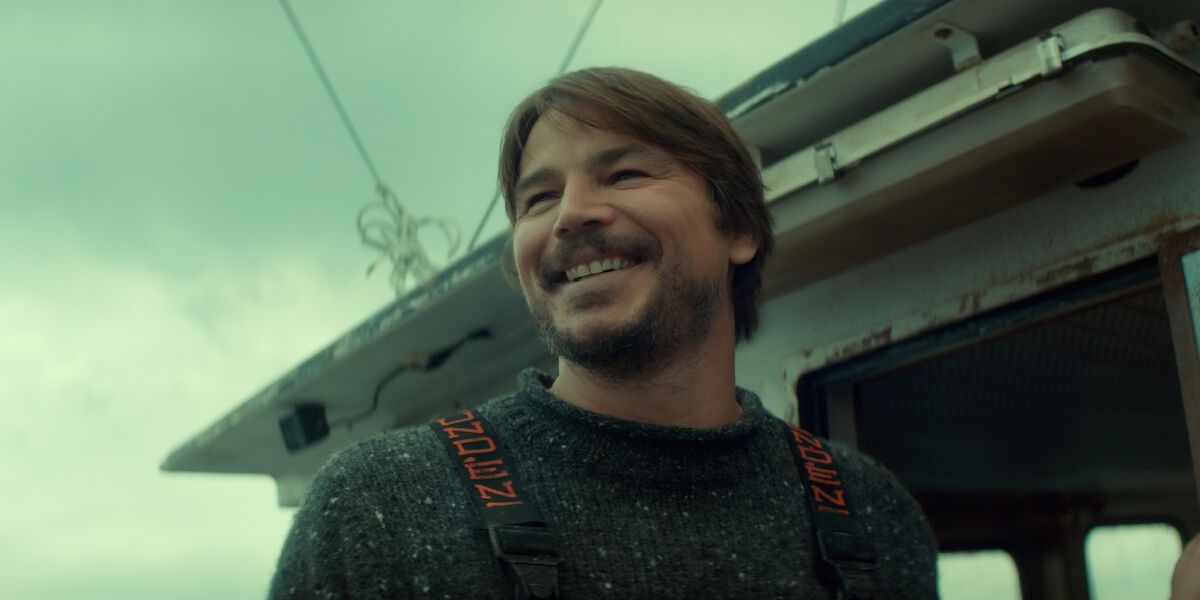
Josh Hartnett’s Newfoundland-set thriller draws 17 million views in its first four days, becoming the platform’s most-viewed Canadian debut.
Netflix’s Below has set a new record for a Canadian production on the streaming platform, drawing 17 million views worldwide in its first four days.
The Newfoundland-set thriller, starring Josh Hartnett, premiered Oct. 8 and debuted at No. 1 on Netflix’s Global Top 10 English-language TV chart. According to Netflix, it marks the most-viewed debut ever for a Canadian title on the platform. The series also reached No. 1 in 53 countries and landed in the Top 10 in 90 countries, according to Netflix.
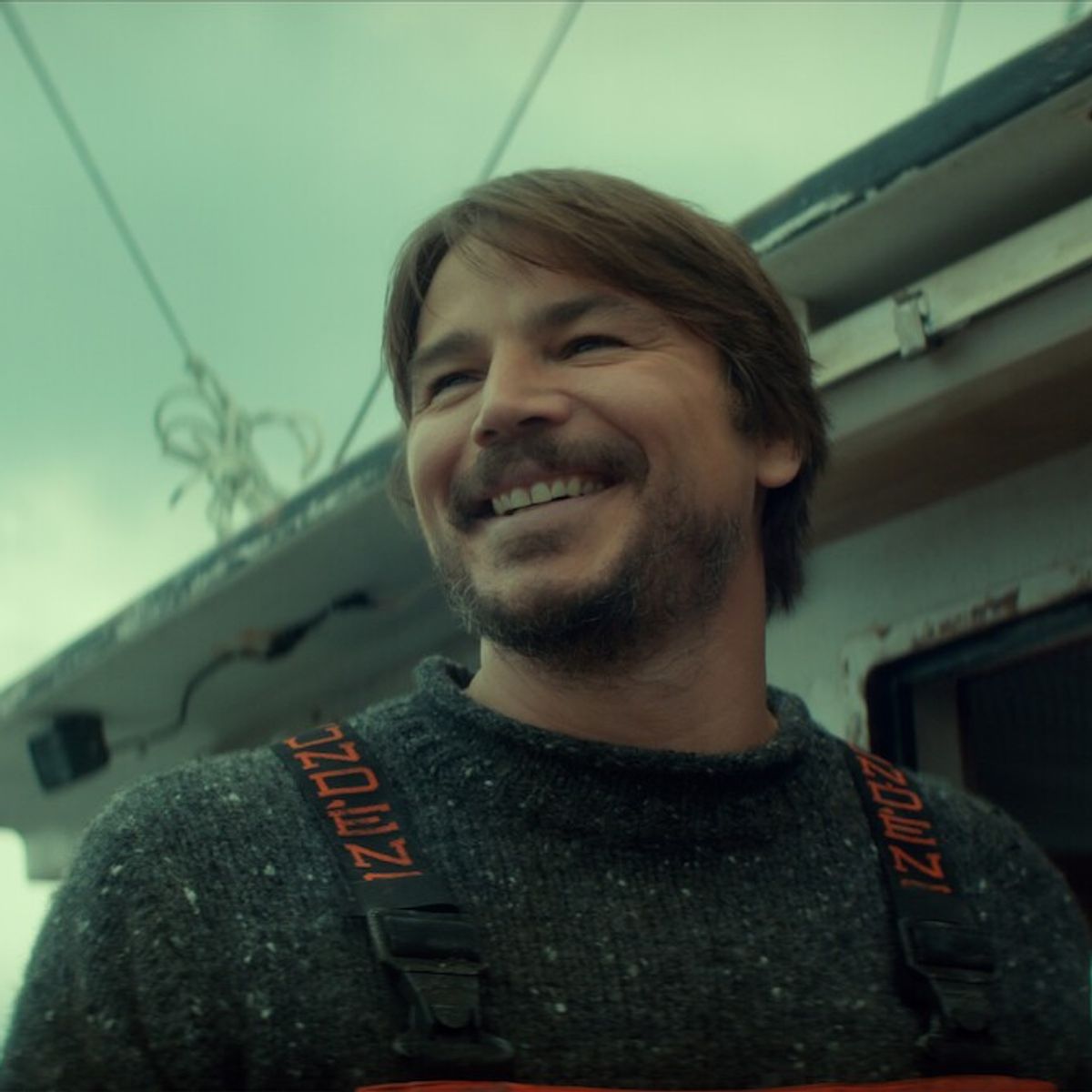
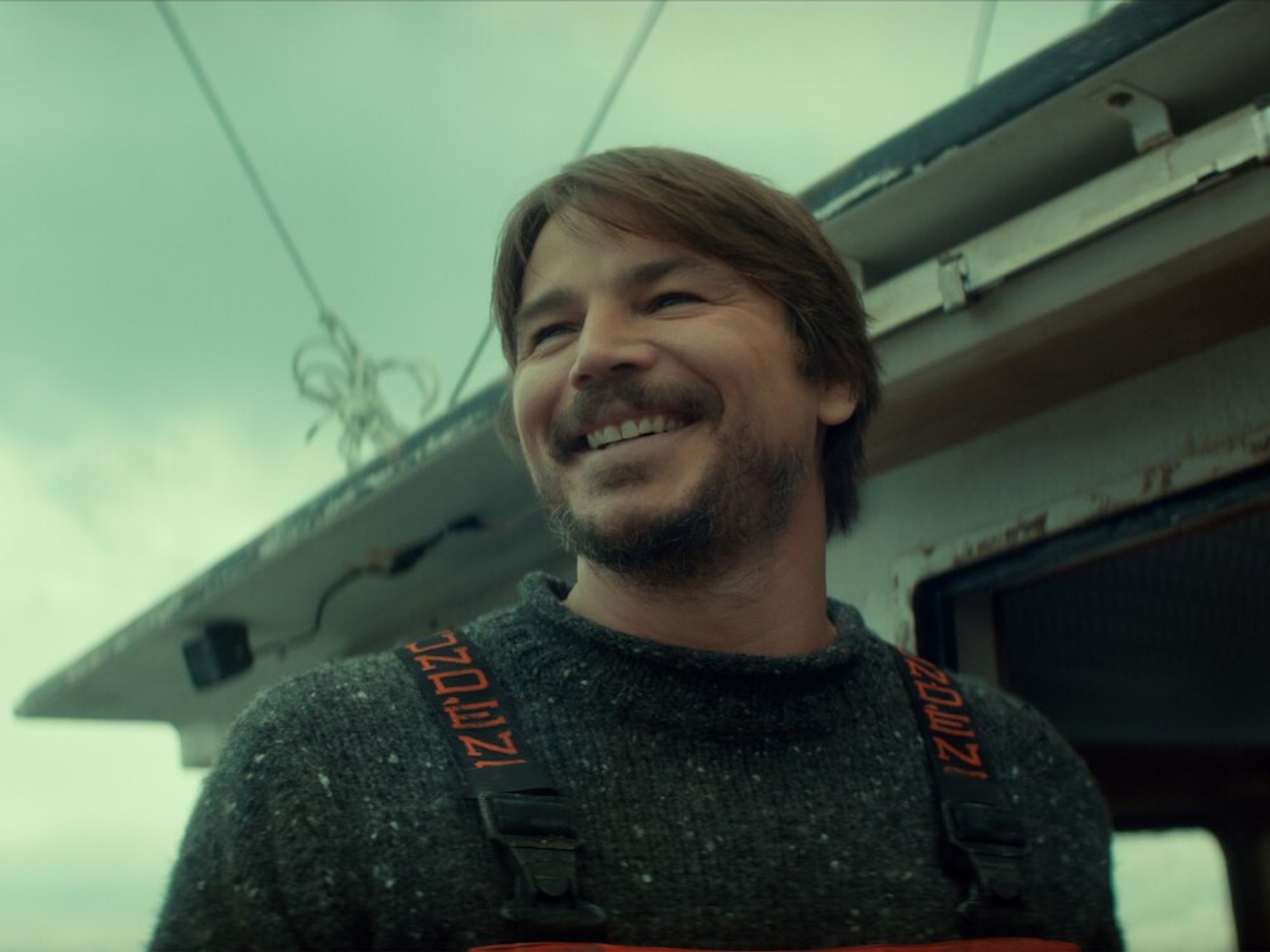
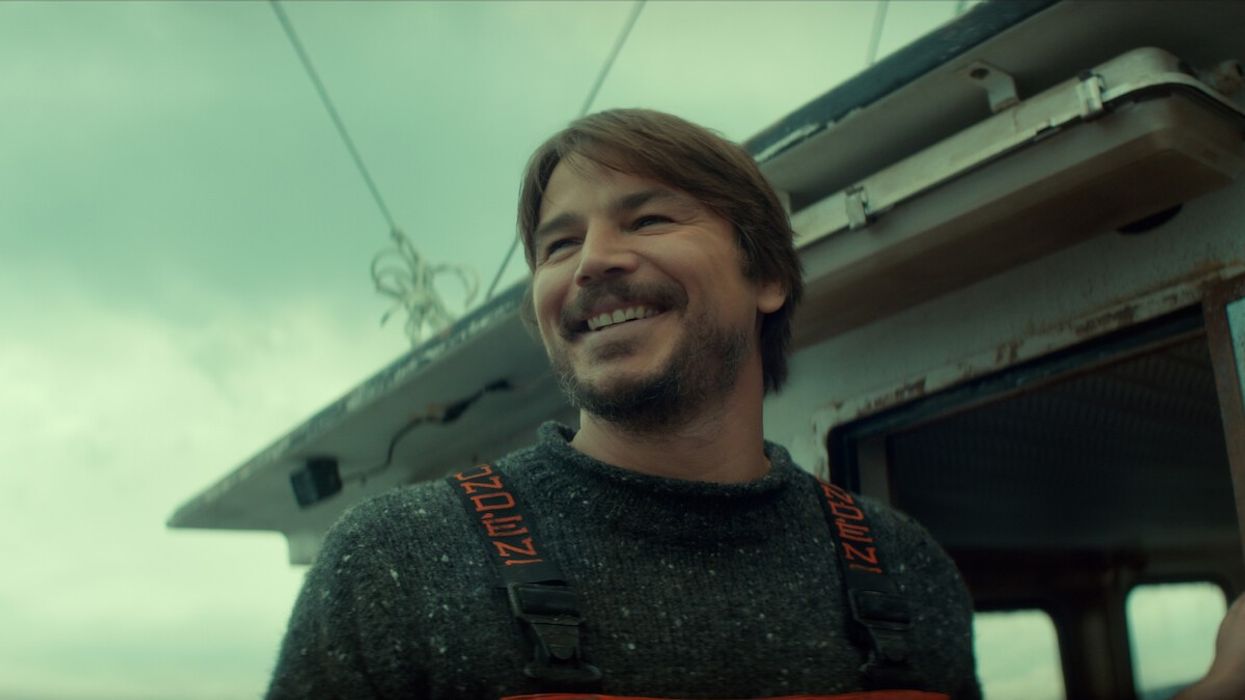
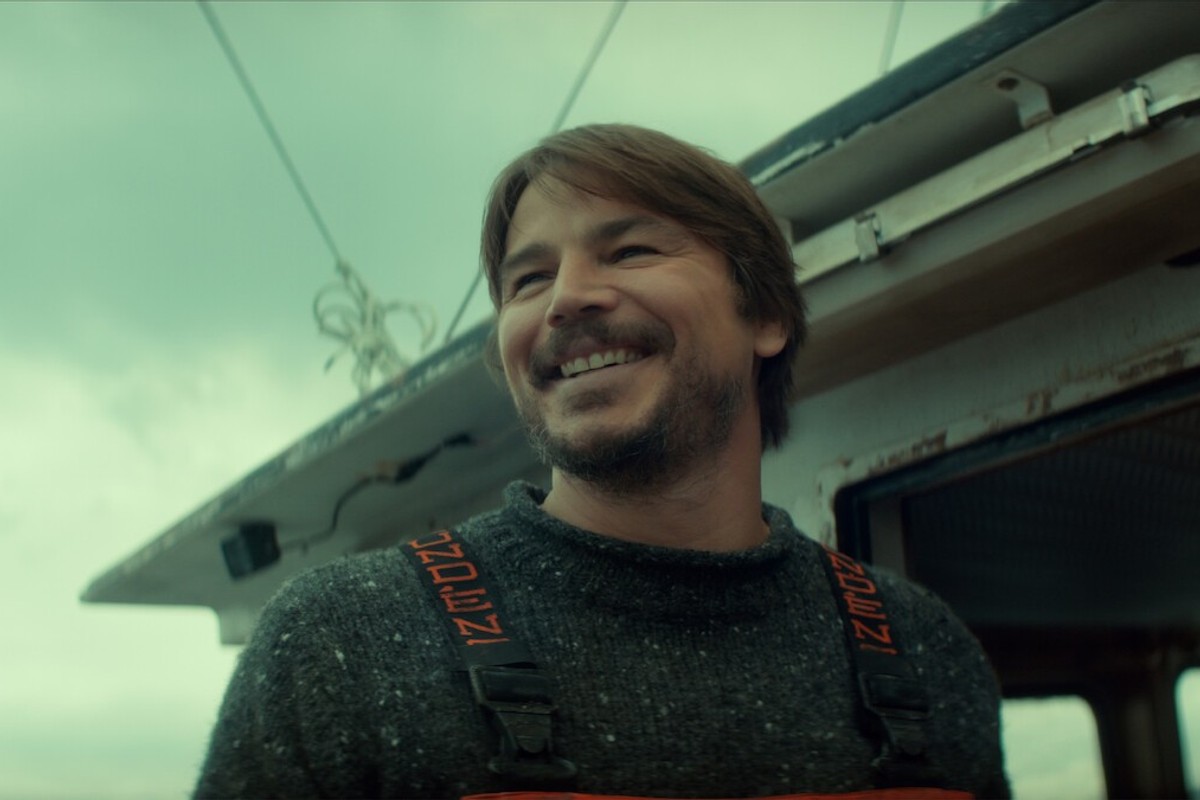
Created by Toronto-born filmmaker Jesse McKeown, the six-episode limited series follows Calvin Penney, played by Hartnett, a fisherman whose small Newfoundland community comes under attack from a mysterious sea creature. Calvin joins forces with marine researcher Dr. Fonda Howander, played by Mackenzie Davis, to investigate the threat while trying to protect his family and the town’s future.
For McKeown, the Newfoundland setting was central to the project. Speaking at the series’ TIFF premiere, he said he had wanted to make something set in the province for many years. “There are a number of reasons why I think I always wanted to make something there,†McKeown told the Canadian Press. “It was that kind of crazy contrast between how unforgiving and scary the landscape was, and just how warm and fun and inviting the people and the community were.â€
Production filmed across Newfoundland and Labrador over 75 days, including in St. John’s, Petty Harbour, Brigus South and Pouch Cove. Netflix says the production employed more than 700 primary cast and crew members and worked with more than 650 Canadian vendors.
Selma Blair at Variety Power of Women LA 2026 Presented by Lifetime held at The Beverly Hills Hotel on September 23, 2026 in Beverly Hills, California.
Selma Blair has been detained following the alleged assault of multiple flight attendants and additional erratic behavior exhibited on an inbound Delta Airlines flight from Los Angeles International Airport to John F. Kennedy airport on Sunday evening.
The Port Authority Police Department responded to reports about a physically abusive passenger on the flight following its gate arrival. Blair was taken into custody and transported to a local hospital. In a statement, representatives for Blair attributed the incident to a “medical emergency.â€
“Selma experienced a medical emergency that led to the alleged conduct,†a rep said in a statement to Rolling Stone. “Upon landing, she received immediate medical attention and is currently in stable condition.â€
During the altercation, which is currently being investigated by the Federal Bureau of Investigation, two flight attendants reported injuries, while another was transported to the hospital. Blair also reportedly attempted to open the aircraft door while aboard the flight and was subsequently restrained.
In a statement to Rolling Stone, a Delta spokesperson shared, “Delta has zero tolerance for unruly or unlawful behavior, as the safety of our customers and crew always comes first.†The airline confirmed the flight from LAX landed at JFK ahead of schedule with no additional impacts, at which time law enforcement responded to reports of the altercation.
Blair was last removed from a flight in 2016 after causing a disturbance she attributed at the time to having mixed alcohol with medication, which caused her to black out and behave erratically. “I take this very seriously, and I apologize to all of the passengers and crew that I disturbed and am thankful to all of the people who helped me in the aftermath,†she said. “I am a flawed human being who makes mistakes and am filled with shame over this incident. I am truly very sorry.â€
Maren Morris
Maren Morris responded to Shane Gillis‘ controversial Saturday Night Live monologue by giving the comedian the middle finger.
Gillis hosted the late-night sketch show on Saturday night and spent his monologue commenting on how women dress at the gym. “I haven’t been to the gym in so long I didn’t know women just dress like whores now?†Gillis said. “Look, I’m sorry, there’s no other way to describe it. Have you seen it? I’ve seen it. You’ve seen the shorts? They’re those neon, like, artificial bait-colored. And the wrinkles go around the cheeks and all combine at the butthole. And don’t look! You’re not allowed to look. For real, don’t look, because they are filming.â€
Morris didn’t waste words in her reply. Instead she posted a video of herself on Instagram with the text “me being a wh0re at the gym.†The video was accompanied by her song, “Be a Bitch,†which features the chorus: “Breaking my neck from turning my cheek/ Killing with kindness only killed me/ If the truth means I’m a little too mean/ Tried to fake nice, but it didn’t quite stick/ I’d rather be a bitch.â€
The singer captioned the video, which culminated with her giving the camera the middle finger, “leave my gym short wedgie out of it.â€
Several celebrities have responded to Gillis’ monologue, which caused an uproar on social media, with many describing him as a misogynist. Former SNL star Ego Nwodim posted a gym selfie to her Instagram Stories on Monday with the caption, “whore reporting for duty.†Meanwhile, Dan Levy shared an Instagram video saying he was “speechless that something like that can exist on live national television.â€
“Women wearing short shorts to the gym does not make them whores. It makes the men calling them whores, misogynists. There’s a difference there,†Levy said. “By the way, I’ve seen more men’s nipples in the gym than I’ve ever seen women showing their bodies off.â€
Gillis was fired from SNL in 2019 for racist and homophobic comments, but has been invited back to host three times since. During Saturday’s show, Gillis not only infuriated viewers but dropped a F-bomb during one of the sketches, a Dr. Seuss-themed bit titled “Green Eggs and Ham.†At the end of the sketch, Gillis apologized, saying, “Sorry about earlier.â€
RJ Mitte in Park City, Utah in 2015
RJ Mitte, the actor and advocate best known for playing Walter White Jr. on Breaking Bad, died on Monday in Brownsville, Texas, at 34.
A representative for Mitte confirmed his death in a statement to The New York Times. “It is with profound sadness that we share the tragic passing of beloved actor, philanthropist and passionate disability rights advocate RJ Mitte,†the representative said. The actor died of suicide, a rep confirmed to People.
Mitte, who was diagnosed with mild cerebral palsy when he was three years old, earned rave reviews for his performance as Walt Jr. The character had the same condition as Mitte, though more pronounced, and in a 2008 interview, the actor spoke about working hard to “blur†his speech and walk with crutches in a realistic way.
“I didn’t want to look like just another faker because I really have it,†he said. “If you’re going to do it, you have to do it the full way. No matter if you’re regressing or if you’re trying to make it look bad, you need to still try to do it right. It was hard at first, but after a while everybody would help me out.â€
Mitte was a key part of Breaking Bad throughout the show’s celebrated run between 2008 and 2013. With his casemates, he won the Screen Actors Guild Award for Outstanding Performance by an Ensemble in a Drama Series, and in 2013 he received the SAG-AFTRA Harold Russell Award, given out in honor of Russell, the first actor with a disability to win an Oscar.
Mitte was born in Jackson, Mississippi, and spent much of his childhood wearing leg braces, though he no longer needed them by the time he was a teenager. Around that time, too, Mitte’s adopted mother was partially paralyzed in a car accident, prompting him to pick up odd jobs to help support his family. In 2006, they moved out to Los Angeles and Mitte grew interested in acting. He secured an uncredited role in Hannah Montana before being cast as Walt Jr. in Breaking Bad. Mitte featured on the show until it ended in 2013.
After Breaking Bad ended, Mitte found regular work in film and TV. He had recurring roles on the ABC Family drama Switched at Birth and the Starz series, Now Apocalypse, and recently had a starring voice role on The Guardians of Justice, an animated superhero spoof series on Netflix.
His film work included the 2017 sci-fi horror film, The Horror, and 2021’s Triumph, a coming-of-age story in which Mitte starred alongside Terrence Howard. Over the past few weeks, Mitte was making the promotional rounds ahead of the release of another new film, Talking to Strangers.
Along with his acting, Mitte worked extensively as an advocate for people with disabilities and was an ambassador for various organizations, including United Cerebral Palsy and Shriner’s Children. He also headed up his own charity, the Mitte Foundation.
This article was updated on Oct. 12 at 11:13 p.m. ET to include RJ Mitte’s cause of death according to People.
If you or someone you know is struggling or in crisis, help is available. Dial 988 or chat at 988lifeline.org to reach the National Suicide Prevention Lifeline. The Trevor Project, which provides help and suicide-prevention resources for LGBTQ+ youth, can be reached at 1-866-488-7386. Find other international suicide helplines at Befrienders Worldwide (befrienders.org).
Sacha Baron Cohen, who makes his directorial debut in Ali G: Who Iz I?, has brought a few of his old characters, including Borat, back in the fold to promote his film for its second trailer.
Baron Cohen’s latest endeavor has received a call for a boycott by the AI-powered media monitoring platform Newscord, which accuses Baron Cohen of using satire as a “cover for enforcing racist stereotypes.â€
In the second trailer for Baron Cohen’s new mockumentary, which resurrects his famous poser character after 20 years, he also brings back Borat to address the pesky boycott accusations. It’s unclear that Borat is actually in the movie, but in the new clip, he appears to downplay some of the backlash. In a “Special Announcement†from Kazakhstan Ministry of Information, Borat appears to give a “grave warning†about the new Ali G film. “There have been reportings that this film is racist. We have seen it and sadly it is not,†he deadpans.
Borat is not the only former character to make an appearance in the new trailer: his Who Is America? features Israeli counterterrorism expert Colonel Erran Morad, who shows up to head up what looks like a training program for immigrant-fearing MAGA folks.
Ali G: Who Iz I? heads to theaters on Oct. 23. Over the summer, Baron Cohen teased the character’s return when he showed up to the Wimbledon finals in character, with the aim of selling as much weed as possible during the match.
Jeremy Allen White and Mikey Madison in 'The Social Reckoning.'
Social media is bad. The addictive nature of being on those apps falls somewhere between cigarettes and crack cocaine. The billionaires that run the companies behind these platforms do not have the public’s best interests at heart. 21st-century corporate culture is a combination of a cult and a crime syndicate. Profit trumps civic responsibility. The bottom line is more important than the truth, regardless of whether you can handle the truth or not.
Maybe you’ve heard all of these things before. It’s good to have occasional reminders, however, which is where Aaron Sorkin comes in. The screenwriter/director/showrunner has been here before, having crafted stories involving the failings of institutions, optimists tilting at windmills out of necessity, and Facebook in particular. The Social Network (2010) remains a stone-cold masterpiece, an origin story about how an idea born from an Ivy League misfit turned into a gamechanger. It was a David vs. Goliath story, with the main character — real-life nerd-king Mark Zuckerberg — playing both parts. David Fincher’s rigorous direction and Jesse Eisenberg’s performance deserved their flowers. Sorkin’s script deserved its Oscar.
A lot’s happened since then, and the idea of Sorkin returning to that piñata with bat in hand would ideally be cause for salivating. Especially since the politically outspoken cineaste, now doing double duty as both writer and director, has a hell of a subject teed up for hits: “The Facebook Files,†a series of 2021 Wall Street Journal articles that exposed negligence and malfeasance on the company’s part in regards to peddling misinformation, ignoring potential safety concerns, and giving hate groups a stage on which to recruit and rage.
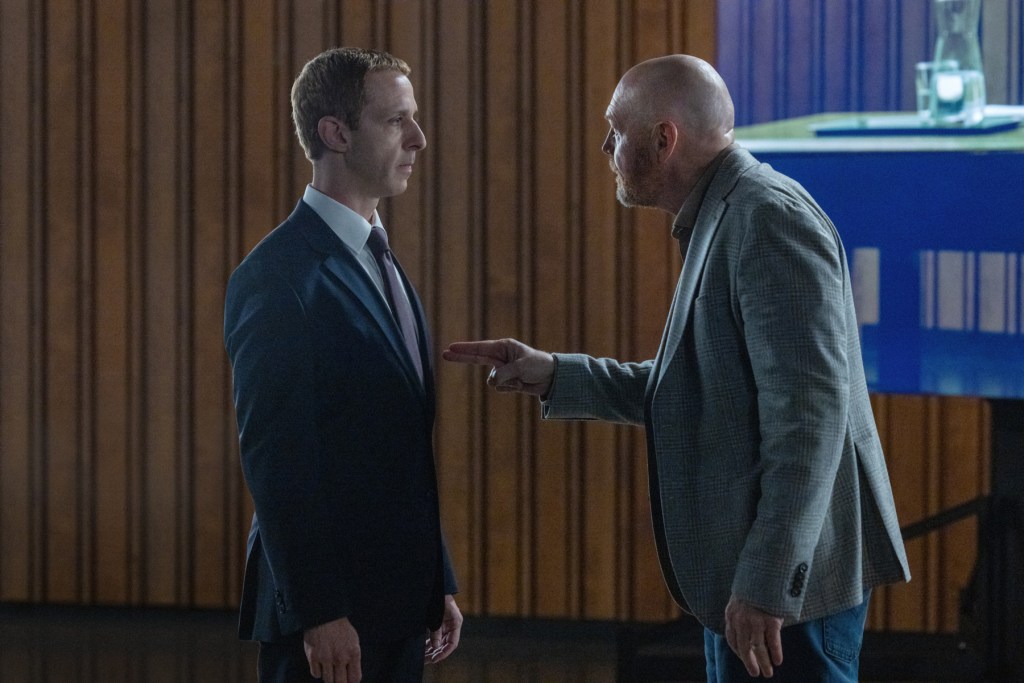
On one side, you had investigative journalist Jeffrey Horwitz (Jeffrey Allen White) and true believer-turned-whistleblower Frances Haugen (Mikey Madison), meeting in secret, chasing down leads, smuggling out classified intel. On the other, Zuckerberg (Jeremy Strong) as self-appointed tech-bro emperor, imperiously declaring he could do whatever he wanted while crouching behind the shield of free-speech advocacy. The result was a blow against the bad guys. You can’t make this shit up, because you don’t need to.
The Social Reckoning isn’t a sequel to Sorkin’s earlier work so much as a revisiting of old Silicon Valley battlegrounds and taking stock of the new casualties. It’s a drama about the importance of journalism and people being willing to speak out, now more than ever, as well as a showcase for Method-acting immersion and a 21st century screwball comedy dripping with that particular dialect known as Sorkinese. The man loves a rat-a-tat-tat rapport that echoes back to the days of cinematic dames, dopes, and swells, and as with his TV shows (Sports Night, The West Wing, The Newsroom), he’s locked and loaded this latest film with dialogue designed for volleying at high-speed velocity. Whether that fits with the rest of the story he’s trying to tell is irrelevant, because Sorkin’s gonna Sorkin. Therein lies both the feature and the bug.
Because the very thing that distinguishes his work — that gives it an old-school zip and the pleasurable sensation of witnessing righteous people doing righteous things, one verbose speech at a time — has a way of reducing heroes and villains to mouthpieces. There are times when you’re watching a compelling two-hander that dips and swerves into 1970s conspiracy-thriller territory, with White and Madison surfing the narrative’s forward momentum and playing off each other nicely. The duo pair surprisingly well, especially when The Bear star’s casual delivery offsets Madison’s ability to go from 0 to 60mph, and vice versa. You can see what the movie wants to be in those moments, a sort of All the Zuckerberg’s Men, and you feel yourself leaning in as they uncover one rancid statistic after another about Facebook’s less-than-rigid approach to civic integrity, its emphasis on Meaningful Social Interactions (MSI) that prioritizes “outrage-bait,†and its dismantling of guardrails. Hurwitz is technically a tech reporter, but he identifies covering Facebook as a “political beat.†He — and the movie — see the bigger picture from the outset.
And then there are moments when you feel like Sorkin is simply setting down a soapbox and making his characters deliver diatribes, conversational detours, trivia-night tidbits, snappy answers to stupid questions, and his own personal bloviating while standing on it. You can feel yourself recoiling. Actors love Sorkin scripts because the man loves language, as well as the spark that happens when patter allows performers go toe to toe. Yet the sudden swerves from shoe-leather cinema to “Say, Joe, whaddaya know?†back-and-forths and outright speechifying are jarring, to say the least. There are time-outs for rants and banter about Frank Capra movies and Golden Age MGM musicals. One retort in regards to mansplaining should have been left on the cutting room’s floor. These do not humanize the men and women doggedly pursuing truth and justice onscreen. They simply turn them into Sorkin-lite avatars. White and Madison do some graceful heavy lifting here. They also deserve better.
Meanwhile, who’s that over there, twiddling his mustache while tying damsels to railroad tracks? It’s Jeremy Strong, giving us a Zuckerberg that’s one part megalomaniacal villain and one part tech-billionaire automaton. The actor plays the Facebook founder like an alien — The Mark Who Fell to Earth — and while the intensity and mimicry is impressive (that voice!), you see the effort more than you see the engagement. Strong is no slouch when it comes to portraying IRL men of power driven by they less-than-better angels — his Roy Cohn in The Apprentice is a stunner — but he too becomes collateral damage in the tsunami of populist straw-man arguments that make up the bulk of Sorkin’s telling-snark-to-power. Not even some excellent foils, one cool and collected (Sinners‘ Wunmi Mosaku) and the other hot and sputtering (Bill Burr, a standout), give you the sense that the movie views its antagonist as anything more than an opportunity to shriek “Zuck you!â€
“Everyone deserves a voice,†Horwitz says. “Not everyone deserves a microphone.†Sorkin’s voice has been his recipe for success and his weapon of choice, raised in defense of the little man, compassion, and common sense. Those elements are all present in The Social Reckoning. So is an abundance of sentimentality, a handful of supporting characters that are little more than wisecrack bots, and a final shot that’s so cringeworthy it will haunt you for weeks. Don’t get us started about the Jan. 6 recreations. It’s a compilation of the best and the worst of Sorkin, bellowed into a microphone that’s giving off a tad too much feedback.
Images from the story

End of article