Bruno Mars Is Taking Over Vancouver’s SkyTrain Announcements
The initiative is a collaboration between TransLink and Warner Music Canada. Bruno Mars is making his presence in Vancouver felt on the city's public transit system, with the singe…
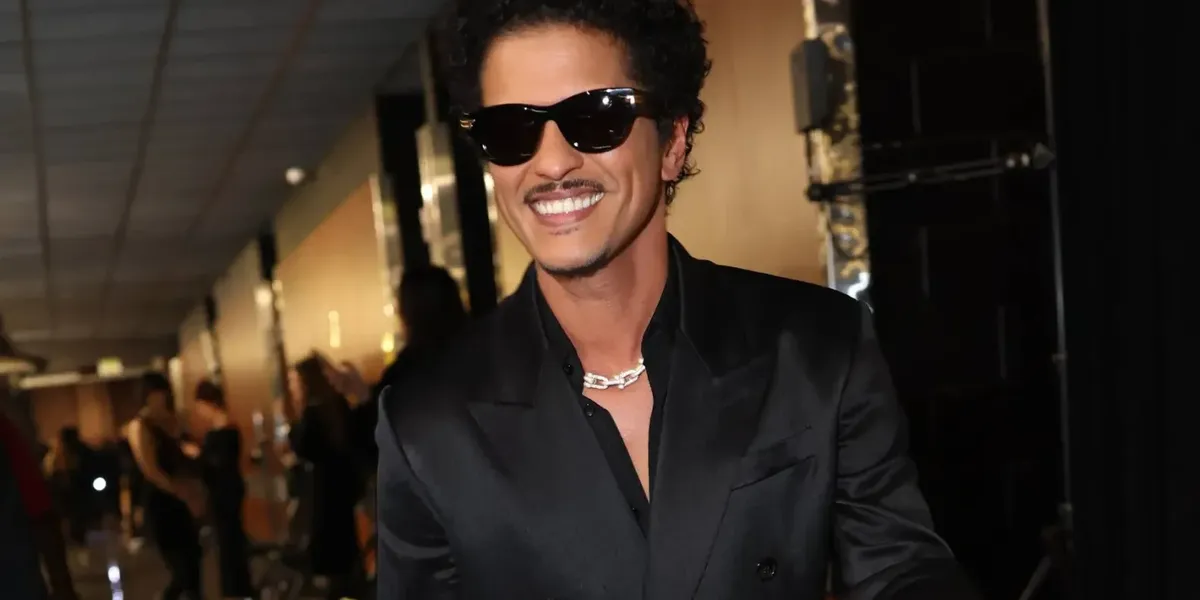
The initiative is a collaboration between TransLink and Warner Music Canada.
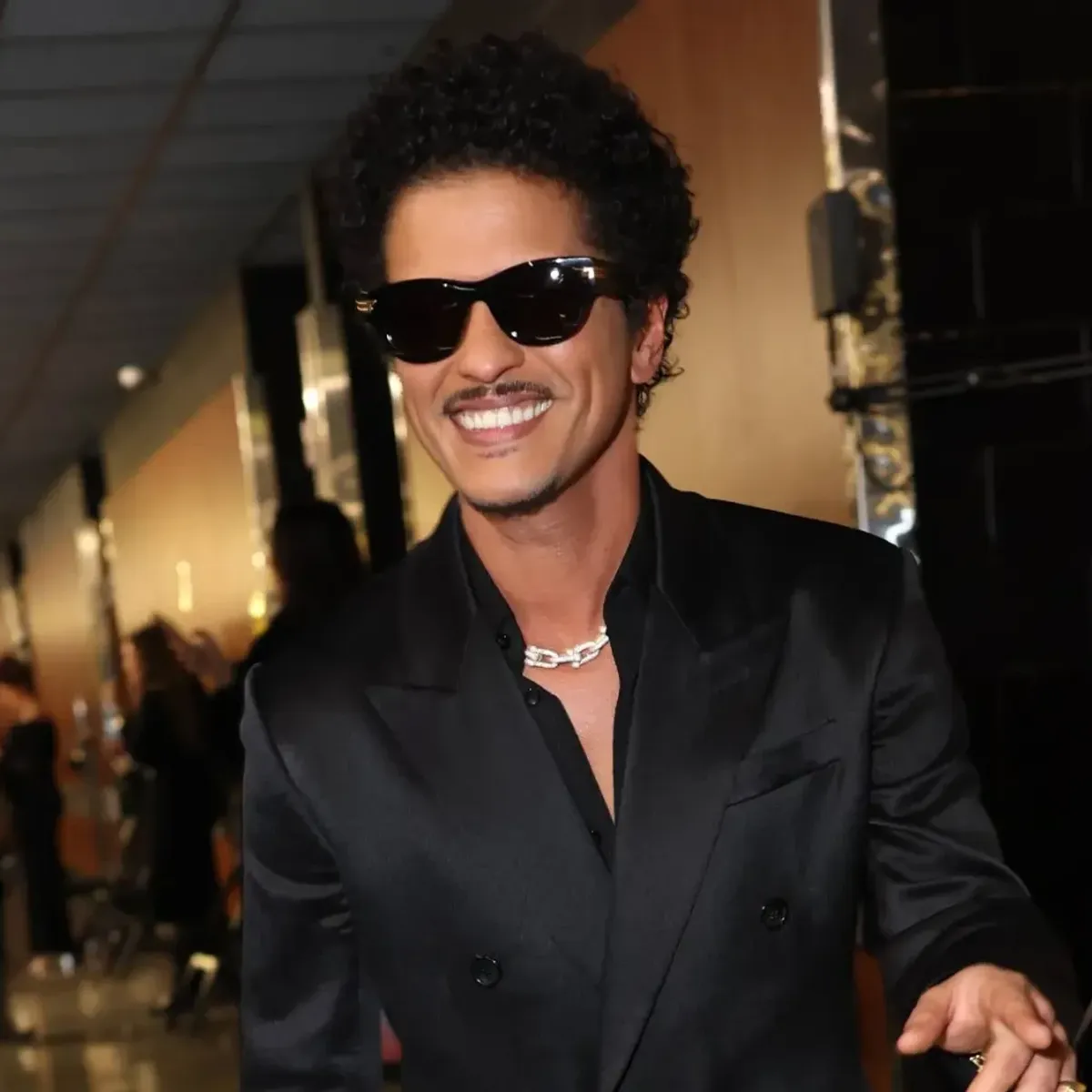
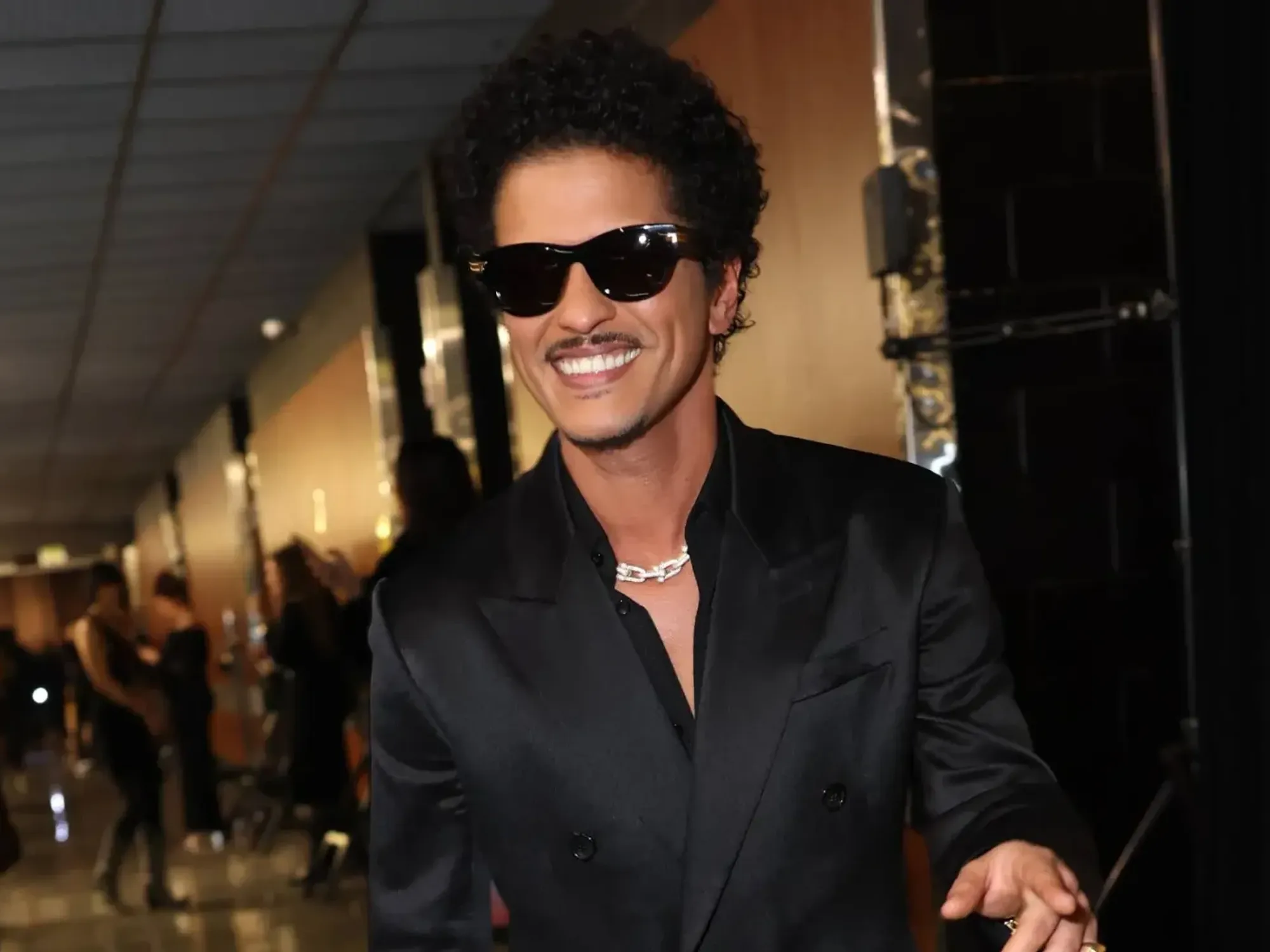
Bruno Mars is making his presence in Vancouver felt on the city's public transit system, with the singer lending his voice to SkyTrain announcements during his five-show run at BC Place.
Starting Oct. 14, passengers passing through Stadium–Chinatown Station will hear two prerecorded messages from Mars, timed to coincide with his concerts on Oct. 14, 16, 17, 20 and 21. The collaboration between TransLink and Warner Music Canada makes him the first musical artist to become a celebrity guest voice on SkyTrain.
“To everybody taking the train, it’s Bruno Mars. I can’t wait to see you all. It’s about to get real romantic tonight. I love you,†he says in one announcement.
The second message thanks fans for attending The Romantic Tour: “To everybody on the train, it’s Bruno Mars. Thank you so much for coming to The Romantic Tour. I hope to see you all very soon. I love you.â€
The messages will play periodically alongside the station’s regular announcements on concert days. TransLink says the Warner Music Canada partnership will generate additional advertising revenue to help fund transit services across Metro Vancouver.
Mars had done a similar activation in Toronto last May, when he kicked off the season at Rogers Centre.
The SkyTrain promotion follows a similar takeover of Toronto’s transit system during Mars’ five-show run at Rogers Stadium in May. In Toronto, his messages played at Downsview Park, Wilson and Sheppard West stations, which serve the concert venue.
The Vancouver engagement sets another stadium record for Mars: his five BC Place performances mark the most shows by an artist on a single tour in the venue’s history, surpassing Taylor Swift’s three-night run there during the Eras Tour in December 2024.
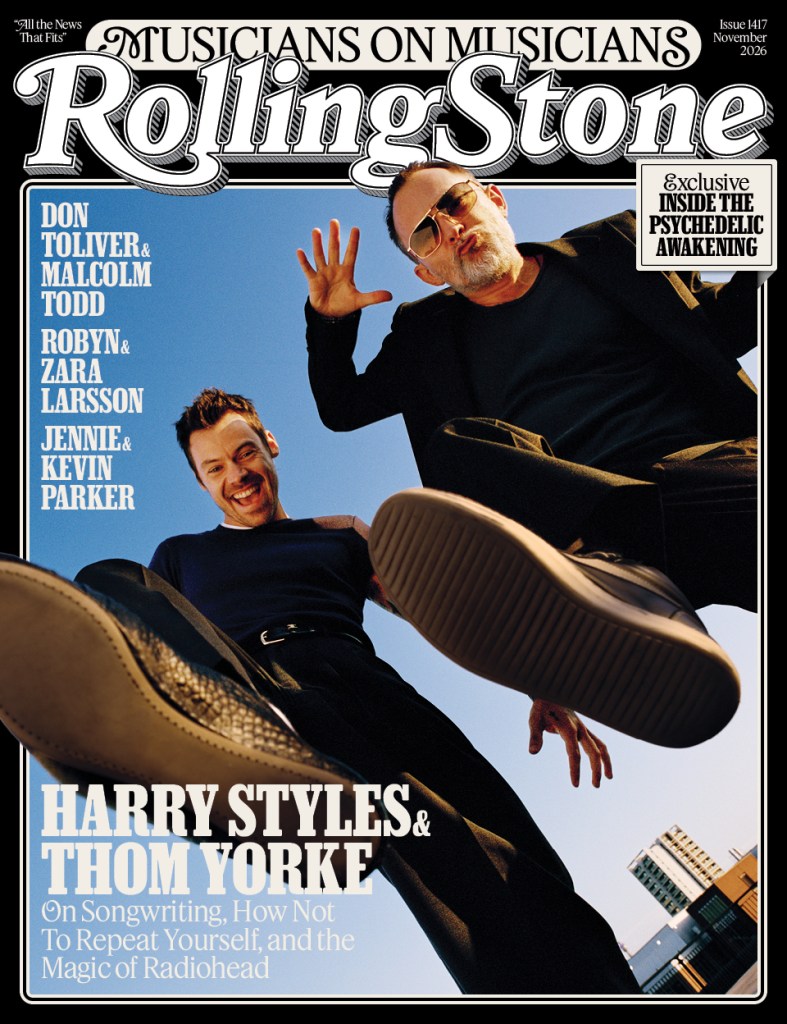
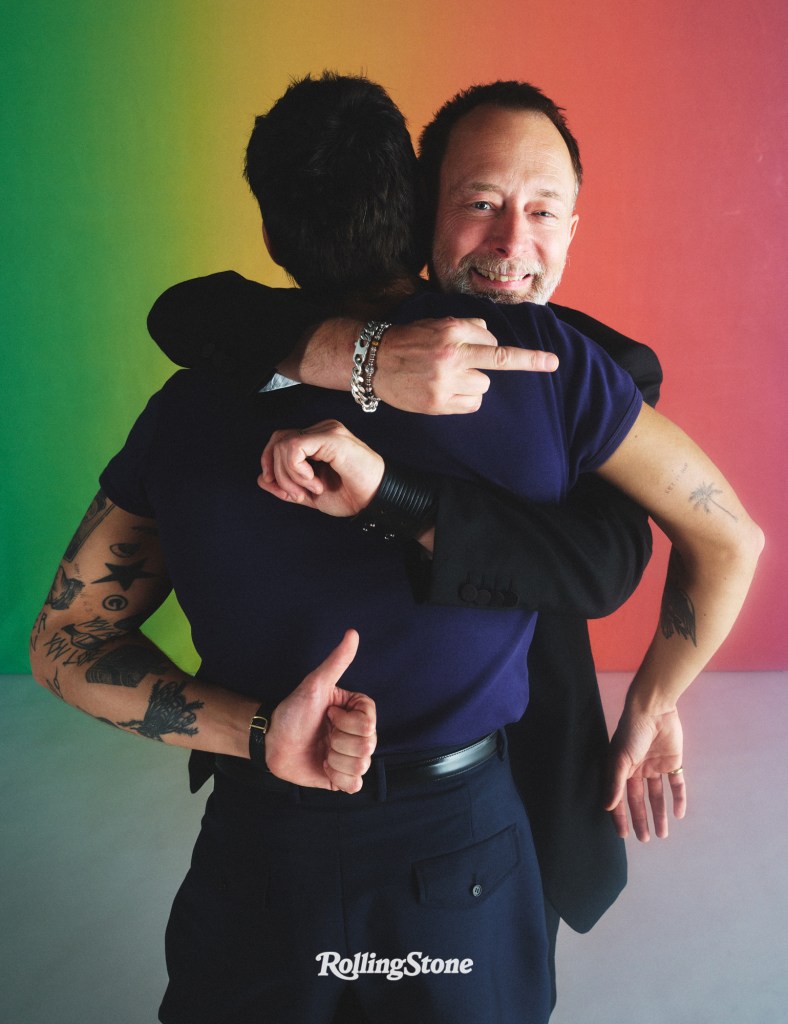
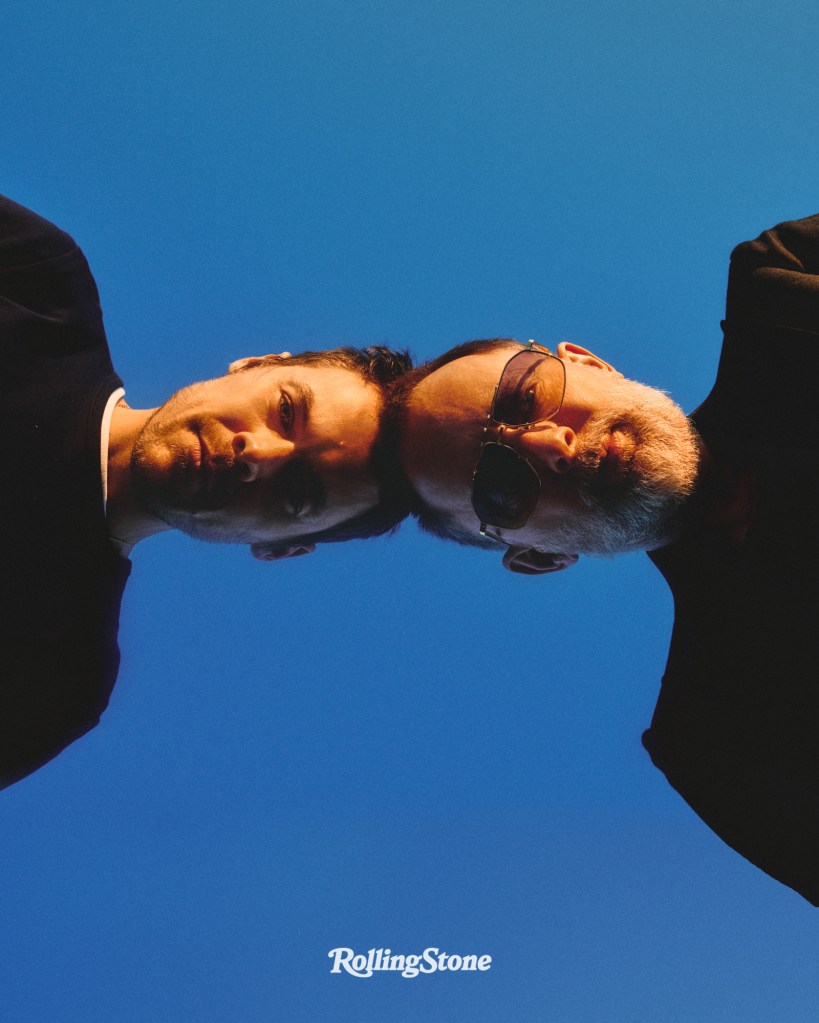
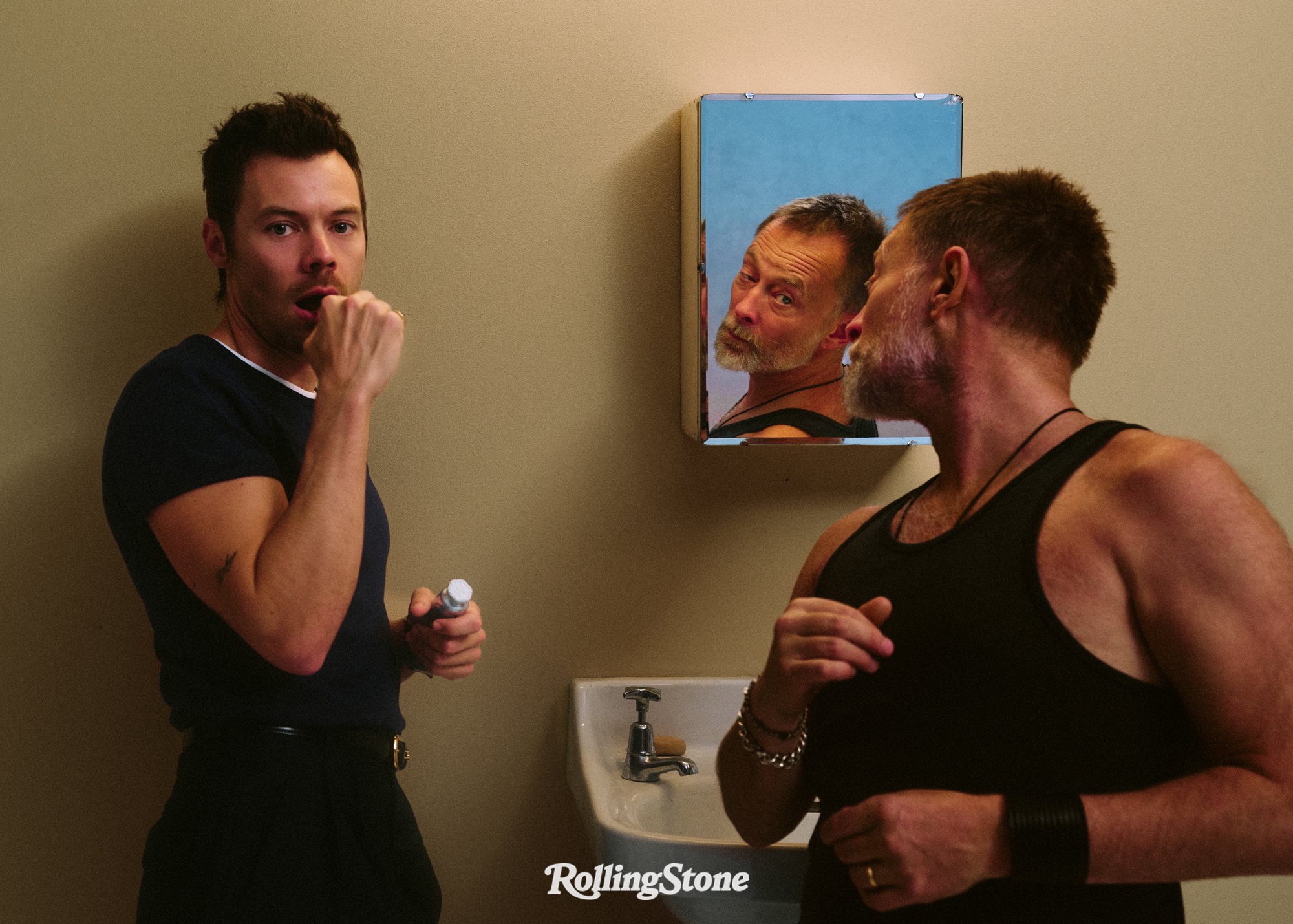
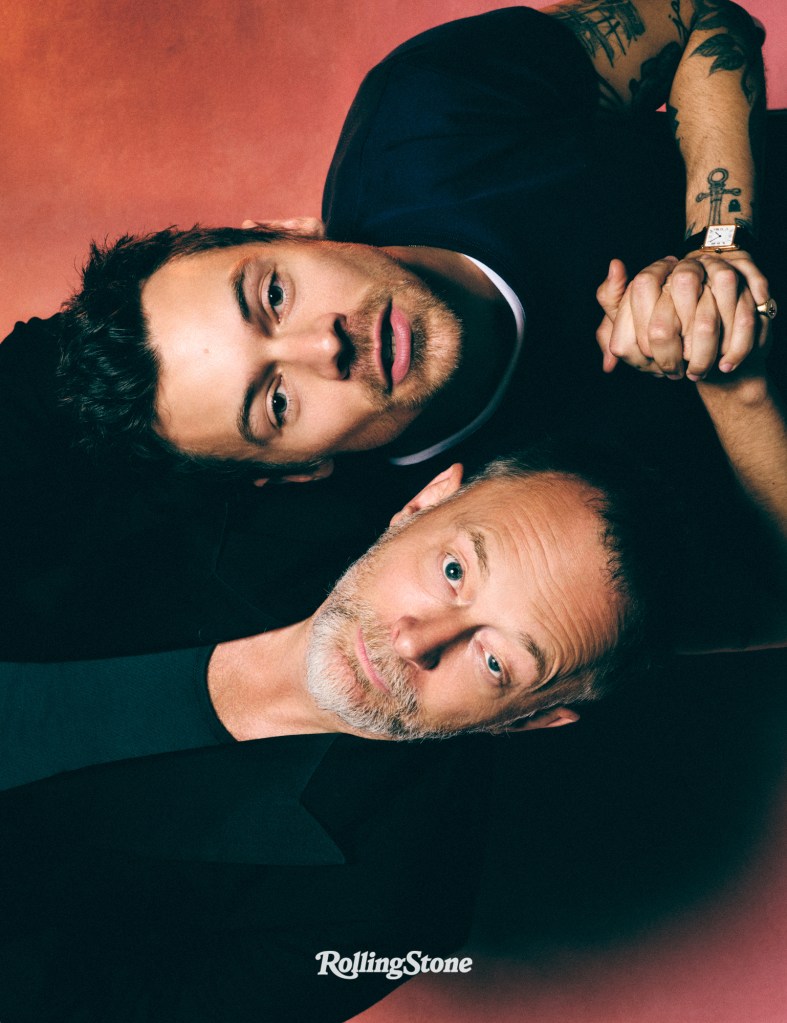
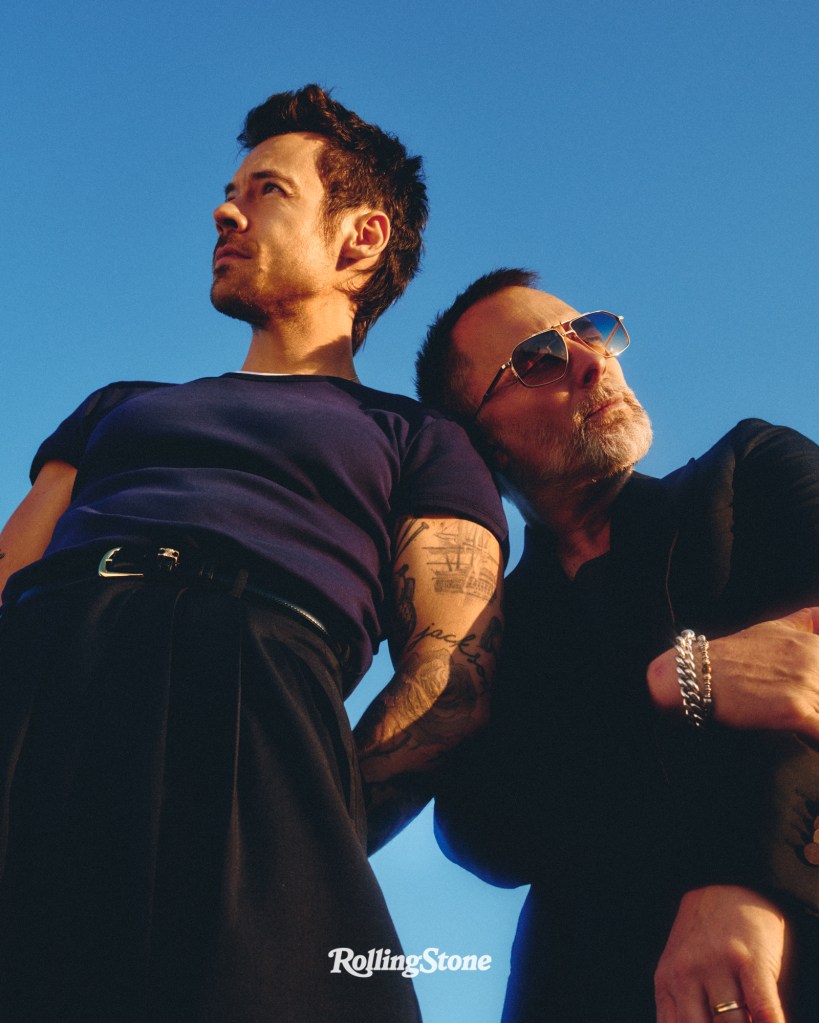
Two years ago, in the summer of 2024, Harry Styles was strolling down a small cobblestone side street in Rome, when he suddenly noticed a face he recognized. It was Radiohead’s Thom Yorke, one of his biggest musical heroes. He introduced himself — just two stars walking the streets incognito, with no entourage. As Styles confesses to Yorke now, with a shy grin, “You, to me, had always been that person that I was scared of meeting.â€
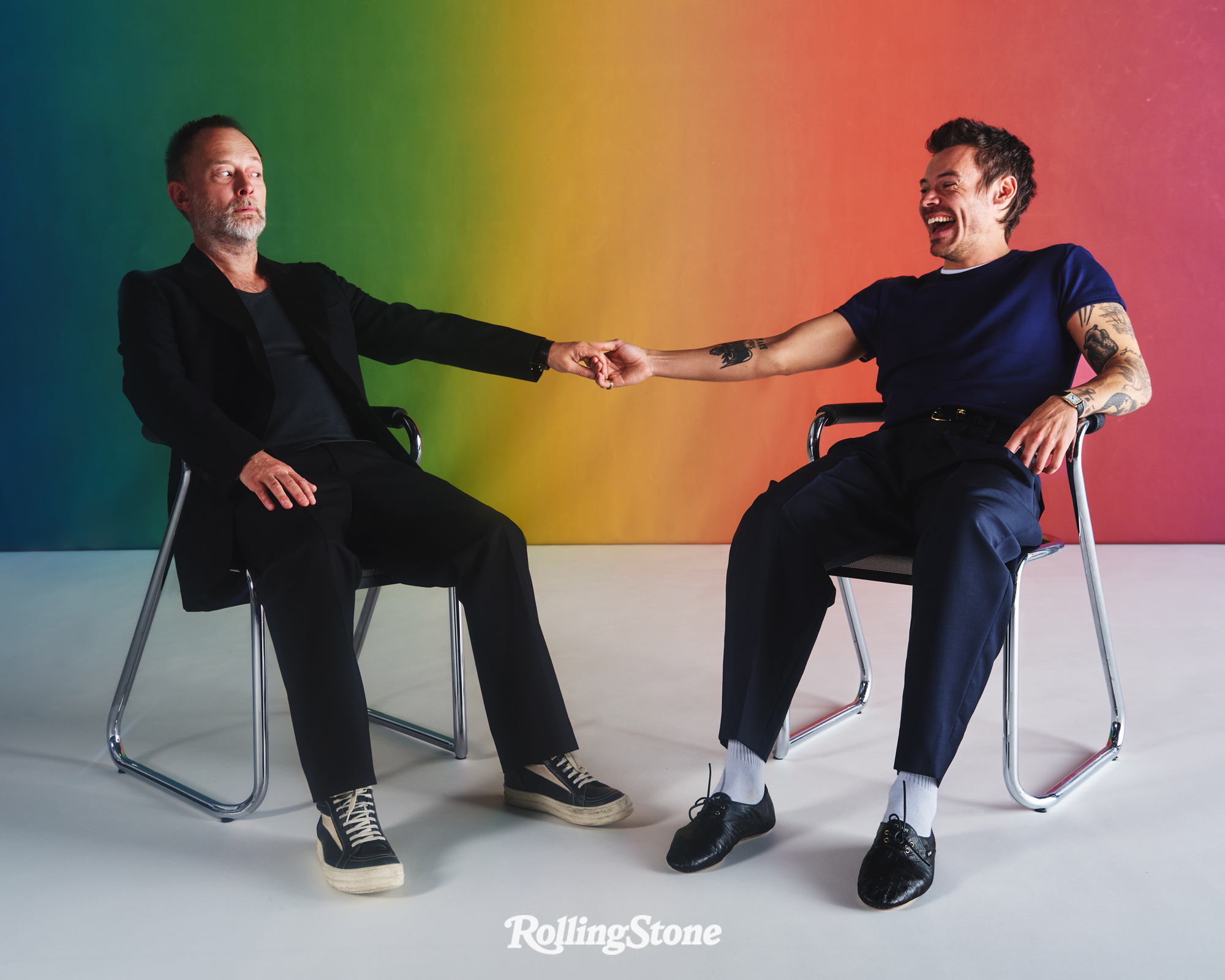
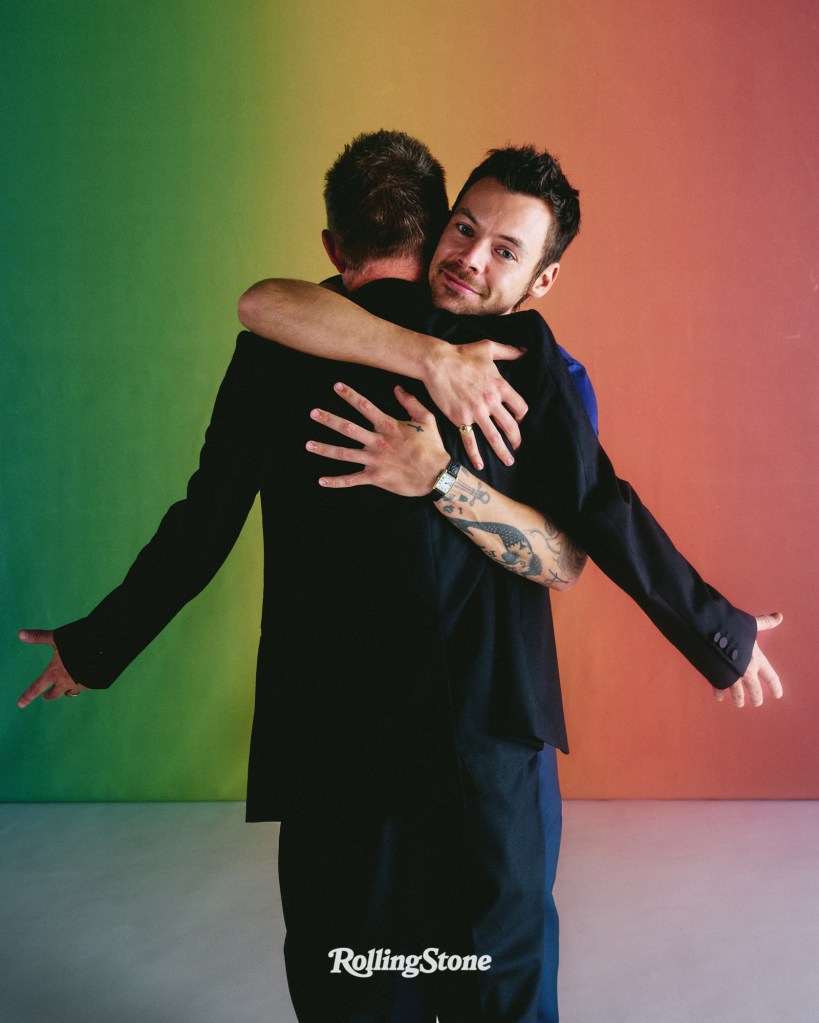
Yorke and Styles might seem like they’re from two different worlds — the planet’s most dazzling glam-pop prince versus the high priest of art-rock angst. But today, they’re busy making each other laugh on a sunny July afternoon in London, at a studio near Camden Town. Yorke has been known to be a thorny interview subject, ever since the early days of Radiohead. Yet today he lets down his guard, as he basks in the presence of the equally notorious charm of Harry Edward Styles. They crack each other up like mischievous schoolboys.
In May of this year, Yorke was honored at the U.K.’s prestigious Ivor Novello Awards, where Styles gave a heartfelt tribute, saying, “Radiohead is my favorite band.†He also made a surprise admission about one of the band’s B sides.
“I lost my virginity to ‘Talk Show Host,’†he declared, then corrected himself. “I lost my virginity to the intro of ‘Talk Show Host.’â€
Radiohead released their first album in 1993 — the year before Styles was born. But both have built their careers around defying expectations and refusing to repeat their successes. Styles could be said to be going through his own Kid A moment right now, with the experimental electro-pop of Kiss All the Time. Disco, Occasionally. This summer, when he did a record-breaking 12-night residency at London’s Wembley Stadium, Yorke came the very first night — he was up and dancing right from the opening song.
Yorke has been on a creative roll lately. In his conversation with Styles, he reveals that he’s working on an upcoming solo album, although it hasn’t been officially announced. He dropped two acclaimed 2024 albums with the Smile, his band with Radiohead guitarist Jonny Greenwood. Hamlet Hail to the Thief, a production of the Shakespeare play featuring music from Radiohead’s 2003 album, runs at the Barbican Theatre in London from Oct. 31 to Jan. 23. And Radiohead recently answered the world’s prayers with their first live shows in seven years. They return in mid-2027 for residencies in Australia and Japan.
Styles and Yorke are both famously magnetic performers, but famously private offstage — shy of giving anything away, wary of outsiders. Yet face-to-face for their Musicians on Musicians cover story today, they bring out different sides of each other that the world doesn’t always get to see. In this wide-ranging two-hour conversation, they go deep on fame, fandom, songwriting, suffering from impostor syndrome, the inspirational power of walking, and the emotional intensity of weeping onstage.
Styles: We met for the first time in Rome, on a small street. You were playing in Rome that week with the Smile. I was going to that show.
Yorke: Was it before the show?
Styles: It was before the show, yeah. A friend of mine had asked me if we’d ever met, and I had said that we hadn’t. So I was walking down the street, and I noticed you because you were wearing a hat that said “Acid†on it. I thought, “Oh, that’s a cool hat.†And then I was like, “Oh, it’s you.†I had A Moon Shaped Pool [the 2016 Radiohead album] playing in my headphones, and I stopped it. “Oh, hello—â€
Yorke: “Mr. Yorke.â€
Styles: “Mr. Yorke, hello.†You said, “Oh, hi.â€
Yorke: No, I said, “What the fuck [laughs] are you doing standing in the street?â€
Styles: Then I came to the show, and we met properly.
Yorke: I didn’t know you were living in Rome a lot. I had no idea. So I was doubly confused.
Styles: You, to me, had always been that person that I was scared of meeting.
Yorke: Oh, yeah. I’ve got a whole list.
Styles: Yeah, totally. And I remember feeling so light afterwards. “Oh, people are kind, and they’re nice.â€
Yorke: I was also impressed that you were just walking down the street. I was like, “Where’s his security?†Because I mean, I know I can do it, but I didn’t know you could do it. Is that a choice?
Styles: I think in the early days, when I was in the band [One Direction], so much of the hotel experience felt very locked-in. When I’d be home, it felt like, “Oh, it’s not safe for me to be out.†Then I had a girlfriend who was very outgoing, and she was coming to London and I was like, “Oh, if we just sit in my house for three days, she’s gonna think I’m nuts.†So we walked everywhere, and it was this realization for me: “Oh, it’s fine to be outside.†It kind of broke that thing. Now, it’s changed my life in such a big way, because it’s how you stay connected to the world.
Yorke: Yes, mate.
Styles: I read something about walking being the artist’s kind of perspective, because you’re at ground level and you see things that you just don’t see if you’re driving everywhere.
Yorke: It’s also a good way to write. I wrote “A Wolf at the Door†— I was going through a really bad moment and I walked for like two-and-a-half days, rain, didn’t matter. A notebook in my hand, and just wrote it all. I felt so much better at the end of it.
But also it’s not just the walking — it’s the walking past people. The simple thing of people-watching, playing that game of imagining as someone walks by — where they’re going, what they’re doing, all that stuff. It brings you out of yourself, brings you out of your troubles. I mean, without it, see, it’s really easy to get lost.
I remember when we were on tour with R.E.M. [in 1995] and Michael Stipe figuring out that I would just hide in the dressing room, and never went out anywhere. So he started dragging me out, and he gave me this trick. He said, “If you don’t care, they don’t care. If you’re not looking, they’re not looking.†And it works. I remember being in Stockholm going to some really busy club, and he said, “Try it.†And it worked. Nobody bothered us.
There are moments when you will feel vulnerable. There are moments when shit will happen, or The Sun will be printing your picture one too many times. I’ve had that. So it’s not easy. It’s not an easy decision to make, but it’s better than the alternative. I know people who got death threats, and then wouldn’t leave the house and had security patrolling their house. You don’t want that.
RS: You both have a history of leaving your comfort zones behind. That’s a pattern for you as artists — after you do something hugely successful, you say, “OK, I did that already. I’m not doing that again.†How do you avoid repeating yourself?
Yorke: I can’t, even if I wanted to. I couldn’t do it again. If you write “Everything in Its Right Place,†do you think, “Yeah, I’ll write another one of them� It doesn’t make sense. You can’t. I’ve tried.
I think if you have something that’s very successful, there’s a lot of pressure to repeat that, which I’m sure you’ll probably feel, or you do feel sometimes. Or you will feel. It doesn’t go anywhere, because that’s like working to commission.
Styles: “Paint that again.â€
Yorke: Yeah. It’s a commercial art form, so you’re always going to get people asking you to do that.
Styles: It’s an interesting cycle, I think. You make something that connects with people, because you’ve captured something about the human experience, whether it’s a vulnerability or a sensitivity that comes with being human. And then any kind of success around that thing makes it take on this life of its own. Then everything around you makes your experience incredibly not human.
Yorke: Yes. Artificial.
Styles. Yeah. The goal is how you shut that out when you’re making stuff, so you can still be making music about the human experience. I’ve always thought if I was to make music about being in a studio, and touring, and all of the shiny things that come with that—
Yorke: Shiny for you, mate. It’s not shiny for everyone.
Styles: That’s definitely not interesting to me, so it can’t possibly be interesting to anyone else.
What I love about your work, for example, so many people look at you in this kind of godlike status — to still be someone who looks at it like, “This is the gritty part of life.†I think that’s what’s so impressive about your work — for people to revere you and to still be looking at what’s under the fingernails.
Yorke: I think the reason for that was having to learn quite a difficult lesson. Around Kid A, Amnesiac, before that, I really struggled every time I had to try to do something new. I was explaining it to myself while I was doing it, literally. It’s like a form of madness, and I couldn’t get out of it. I felt I needed to justify it somehow — not apologize, but justify it in an intellectual way.
The reason for that was I needed to get out of it. I needed to just get out of the studio, and I needed to just walk. I used to just walk on the cliffs in Cornwall, for example. And a lot of that was down to the fact that nobody cares, man. Nobody cares that it’s difficult. If you’re bummed out that it’s difficult, fucking stop. Go and do something else — go dancing. Also, later on, as you have kids, the choice to carry on doing this kind of work, you have to enjoy it. And the enjoyment comes from having to start again from scratch every time. Whatever you learn, you’ve got to unlearn.
Also, songwriting is very odd. Going to the Ivor Novello thing — I don’t hang out with songwriters, but apparently I am one. And you realize that songwriting is quite a naive thing. You can’t be savvy about it. You can work really hard on it — but the good stuff just happens, and you don’t know why. And you’ve got to be honest with yourself that you don’t know why. When stuff forms that you like, you just grab onto it and you don’t let go. “Pyramid Song†— I mean, it’s three chords over and over again, and the same lyric. How does that make sense? But you like it, and you’re not bothered about if anyone else likes it.
Styles: I’ve always wondered if that’s part of why the impostor syndrome that can come with that commercial success exists.
Yorke: You have that?
Styles: If you write in that way, it almost feels like you’re not responsible for it. So then if people are like, “Oh, you’ve made this thing and that means that you’re this,†there’s something in there that feels like, “Oh, I can’t take credit for it. It just happened to me.†Like you were saying, the best things tend to just happen. I’ve always found the things that I end up liking the most, or have been the most special things to me, are the ones where you write it, and then as you’re listening back, you’re learning something about yourself. You’re realizing that you’ve said something, rather than, “I’m going to sit down — I’m going to say this.â€
Yorke. Yeah, and you might not realize. You might record it and track it and everything, and not realize until you’ve mastered it — and then you suddenly hear, “Oh, shit, that’s what I meant.â€
But it’s not divine intervention or anything like that. You’ve got to show up. You have to learn to accept the months of impostor syndrome, where you’re like, “I don’t have anything to justify all this amazing equipment in my studio.†And then you’ll pick up your notebook, and there’ll be one line in it that sets you off. But the point is, you showed up. Because it’s really easy not to show up.
Styles: Someone once described it to me as like surfing, where you can practice getting up on the board. Sometimes there’s no waves. If a wave comes but you haven’t practiced enough, you’re not going to be able to surf it. When they happen, it’s the combination that you’ve practiced being able to capture it, and something is happening at the right time.
Yorke: Yeah, you’re ready enough. Or if I’m surfing, you’re not ready, ever. You’re on the rock going, “Fuck!â€
Styles: I’ve had a big shift — I used to feel labor-focused about art in general. I felt like to justify it, I had to be in the studio months at a time.
Yorke: That’s your impostor syndrome speaking. I’m the same — sometimes it’s fun, but sometimes you’re doing it because you feel you should do it, because you need to stay ahead of the game. Or you need to keep proving that you are who you say you are, or other people say you are.
Styles: I feel like it’s a real line to ride with that. Because I still feel like I get it onstage sometimes. The sweet spot is where you’re relaxed, in that flow state where it feels like, “Oh, this feels really easy. It feels like it’s just happening, and this is great.†And then I click over to “Oh, it feels too easy. Am I not working hard enough?†When it feels most natural is when I think the show is at its best, but then I have this voice of “It shouldn’t be this easy.â€
Yorke: That’s completely normal. The joke with Radiohead is always, like, we’ll have moments in the show like, “Oh, my God, we’re so great!†And exactly that moment, someone fucks up. Every time, without fail.
Styles: How different is it for you in terms of how much you enjoy making music with the band, versus making stuff by yourself? Do you like what the friction can make in that scenario? Or do you tend to enjoy, like, “Oh, I’m going to have this idea, and I’m going to just see this all the way through.†Because it’s both, I’m sure.
Yorke: It’s both. There’s a kind of mad history to that. It wasn’t until after Kid A that I remember quietly saying to Nigel [Godrich], “I’ve got all these things. I just want to do them on my own with you, because it doesn’t make sense to try and include anybody else.†Up until that point, it was a really alien concept.
We’ve known each other a mind-boggling number of years now. [Radiohead met in 1985.] We all know each other’s musical strengths and musical weaknesses. So you’re spending a lot of the time working around that. I mean, we haven’t worked. We haven’t been in the studio together for a long time, so I don’t know how it would actually feel now.
With the Smile, it’s totally different because Jonny [Greenwood] just generates ideas all the time. [Drummer Tom] Skinner works faster than any human being I’ve ever met and can respond to literally, as you probably know, anything you throw at him. I’m in the middle going, “All right, why don’t you guys record this, because I don’t understand what’s going on?†My favorite experiences in the studio are something that’s good, and I don’t understand why it’s good, but I pick up a mic and respond to it. I will listen back to it like, “I have no idea who that was. Is that us?†Yeah, that’s us. And you only get that when you have other people.
Styles: Do you find it more vulnerable to be putting out your own stuff?
Yorke: It’s all vulnerable. But at the same time, I don’t know about you, but if I’m finishing a record, if I can’t sit down and listen to it and be comfortable with it and happy with it, it’s not going out. So the vulnerable bit happens …
Styles: When you’re writing it?
Yorke: Yeah. When you’re trying to finish the fucking lyrics. That’s when it’s the worst. Words, right? How do you do words?
Styles: I think what I’ve always found so exciting is that I’ve never found the one method. It’s never been like, “I’ll write a poem, and then I put it to music.†The good stuff tends to come from a few weeks or a couple months of “Oh, I’ve got nothing. I don’t have anything. It’s all gone.†Then all of a sudden you write something and you’re like, “I really like this. I don’t know why.†And that comes in lots of different ways — I have a line, or I have a piano thing, or a melody that’s mumbled. I’m building a song around these three words that sound great over this thing.
Yorke: That is the correct process, in my opinion. If you’ve got a few words that you hang everything off, and you don’t understand why, then that’s the most exciting. Even though it’s painful, because then you have to spend weeks trying to fill in the blanks.
Styles: Sometimes, with some of the best stuff, I think it’s more difficult to be concise. I know I like a melody when I overwrite the song — I’ll write a bunch of verses, a bunch of lyrics. Then I think, “Oh, you take these three verses, take these lines, and make them one verse — it’s actually much more powerful in what it’s saying.†It’s better than explaining everything.
Yorke: Honestly, the thing I’m most jealous of will always be people who can just free flow onto a mic, and put it out. All my hip-hop heroes freestyling. I wish I had that brain.
Styles: I listened to a podcast you were on. You said you think of your vocal as one of the instruments in the song, and that’s how you tend to approach composition now. Is that something you noticed, when that changed for you? Because you say you don’t so much sit and write a song, like, “I’m going to sit here, and this is a song and this is how it goes†— you think of how it sits in the production. But obviously, if you go back to The Bends, for example, like “High and Dry,†that is a song.
Yorke: Yeah, a guy with an acoustic guitar. Singing his song. That particular one I wish I hadn’t [winces in pain], but there’s nothing wrong with that.
I don’t listen to a lot of singer-songwriters. I listen to a lot of mad old folk music, or I listen to film music, or I listen to electronic music. The banging away on the guitar thing is sometimes when it really speaks to me, but not a lot. I’m not quite sure why that is — probably because we grew up when there was a real renaissance of that, and The Bends was that.
But by the time we got to Kid A, I was excited about what else you could do with your voice, really. Jonny and Nigel set up this thing where Jonny’s playing the Martenot [a vintage electronic keyboard] and I’m just picking out random lines from my top hat. And that became the vocal. I’m not singing that at all — I’m literally speaking it.
One of my favorite singers ever is Michael Stipe, who for the first two or three [R.E.M.] records didn’t even bother writing the lyrics. Or if he did, it was stream of consciousness. “I’m not going to make this explicit. I’m just the human sound in the middle of all these amazing jangling guitars.†Sometimes I don’t like the lyrics being the point. Sometimes it’s really exciting that there’s just this sound. [Yorke pulls out a notebook full of his questions.] I’ve got notes.
Styles: [In mock horror.] Homework!
Yorke: Do you travel with a laptop?
Styles: My laptop has been dead for about six years [laughs]. I don’t know where the charger is.
Yorke: We can help you with that. Where are your ideas? In your pocket?
Styles: On my phone.
Yorke: On your phone. You know your phone is basically a computer?
Styles: But just a phone. I use GarageBand a lot, and voice notes.
Yorke: Really? Wow. Fuck a duck.
Styles: Primitive.
Yorke: No, I mean in a way that’s good. I remember my MiniDisc. That was my best friend.
Styles: Yes, I remember being in primary school. [Both are laughing too hard to continue.]
Yorke: OK, let’s try it again.
Styles: The voice-note thing, I like something about it being its blankest version.
Yorke: Yeah. It’s the pencil drawing.
Styles: I think I like that. The thing that excites me the most is when I start a record, or before I’ve started something, and I have no idea how this is going to end up sounding.
Yorke: I’m surprised, because the last album [Kiss All the Time] very much sounds like it was developed in the studio. It doesn’t sound like it comes from voice notes.
Styles: That one was less from voice notes. There were a few moments — the orchestral thing [“Coming Up Rosesâ€], or the piano songs. There’s a couple of much more straightforward songs. There’s probably three or four moments that are the most down the middle like that.
Yorke: So the rest are worked up in the studio?
Styles: A lot of it, yeah. Probably two-thirds of this one. I think it was just where I felt like I was at in my life, and the music that I was experiencing. I wanted to meld the parts of my life together. I’d started going out dancing a lot more. I really didn’t want it to be like, “Oh, I’m listening to this music — this is where I’m at,†but then I go in the studio and say, “Well, I have to make this sort of music instead.â€
Yorke: I know that feeling. I know that feeling very well.
Styles: It was really like, “I’ve just come from this place. I want that beat to keep going. I want to be onstage feeling in the middle of it.†That was the kind of thing that informed the record.
Yorke: I think you did that. That’s my favorite part of the show, where you literally do that. There was a generosity to that, where I thought, “Yeah, that’s really cool. That is clearly someone who’s discovering this thing and wants to share it.†The honesty of it was very cool. I was really into that. I mean, it’s very difficult to take that kind of music into those places. It’s much easier to just make yourself totally deaf DJ’ing in a club in Berlin.
I was going to ask you: Where’s home? Because you have more than one.
Styles: I think when I’m in London, it feels the most like home. And I’m not from here.
Yorke: Where’s your stuff? Your important stuff?
Styles: London. Because I’ve lived in my house for 12 years or something. That’s the place where I feel like I’ve been through so many versions of myself, even in the same space. I feel like I really grew up in this house, in a big way. I remember moving in — right after my 19th birthday. It’s been through a lot of changes, but in there, in my kitchen, is the most like “This is where I live.â€
Yorke: Do you cook?
Styles: I do, yeah.
Yorke: You’re probably pretty good, aren’t you?
Styles: I’m all right.
Yorke: I’m fucking terrible.
Styles: To stay on you for a second, if I may. [Yorke snaps his fingers in disappointment.] I was curious about doing this interview, for example, or the Ivors thing — I think everyone communicated a surprise that you were willing to be celebrated. I’m curious about how your relationship with that has changed over time. In terms of someone who’s so innovative, how much of it has always been a need to reject any sort of nostalgia, to assure yourself that you’re moving forward?
To me, it feels like maybe just being in a happier place, to realize that you can do both: You can still innovate, and also allow people to celebrate things you’ve done, whether it be the Ivors, or touring and playing a deep selection from your catalog. To be able to play those songs and not feel “We’re living in the past right now,†but just be like, “We made something really beautiful. I’m going to play it, and that’s beautiful. And I can now also still be moving forward.â€
Yorke: You’re answering this better than I can do. You’re right, that I’m in a slightly better place nowadays, but I’d be lying if I didn’t say that something like getting an Ivor Novello fellowship was not deeply confusing for me. I admire a lot of the people that they’ve given those awards to. Some of these people are my heroes. But I have a very, very strange relationship to … God, this is really hard to explain. I have a very strange relationship to that element of my work.
Styles: Navel-gazing?
Yorke: I find it hard to believe in it. The moving-forward thing, that’s what I believe in. That’s easy to believe in, because it’s new. I don’t have to explain it, so I’m happy.
After the [2025 reunion] Radiohead tour — even though in the middle of it, it was really fun — my response to it afterwards was to crash, like massively crash, in terms of self-confidence. It took me months.… It took me starting on my own record again two months later to go, “Oh, OK. I’m good now. I’m fine.†I just have a really odd relationship with it. And I’ve just grown used to that.
The Ivors, to be honest, your speech was great, because it was really honest and personal, and I could relate to it. Whereas when it feels like a business, and you’re part of a business, and the cameras are running … I don’t know, man. I got this legacy feeling about all of it.
Styles: Something I’m curious about: I wonder if it’s something that maybe happens when you have children, then keep creating.
Yorke: It’s really important they all integrate, and keep informing who you are. You probably saw Agnes and Noah at the Ivors. They were very emotional about it, and Dajana, my wife, was as well. I do it for them, because if they’re emotional about it, OK, that’s why I’m here. Because for me, I feel quite numb about it.
One of the things I’m most proud of is, some of the attitude that I have has rubbed off on [Agnes and Noah] as they grow up. I can see they have that kind of attitude in what they’re doing. Quite fearless about being creative, and quite open. Not embarrassed. Because I mean, obviously, when your kid’s a teenager, they’re like, “Oh, God, my father’s blah, blah, blah.†But now it’s really nice. It’s a good thing. I feel super lucky about that, because it wasn’t easy, for a long time.
Styles: The “Karma Police†video — I remember watching that and thinking, “Oh, this is so brilliant.†I feel like so much of your music has that weight where you just remember hearing it. It’s so inspiring just to see someone be so consistently great, in so many different ways. I’ve always really been drawn to stuff like “Codex†or “True Love Waits.†“Everything in Its Right Place†is it for me.
Yorke: “Everything in Its Right Place†was my response to not being able to write. We had an empty house. We had a grand piano, and we had a mattress. And that’s the first thing I did when we moved into this house. I’d felt lost since the OK Computer thing. It was like a mantra. I wasn’t thinking, “Oh, I’m writing a song.†I was really enjoying playing piano in this empty house; I just had one CD, [minimalist composer] Arvo Pärt, and that’s it. It was during the winter, there were storms all the time, and it was so great — playing this riff over and over and over again to make myself feel better.
RS: Harry, you just finished your massive run at Wembley Stadium, and on the final night, people were so moved to see you in tears. For both of you, what’s it like to get emotional onstage?
Styles: For me, so much of the studio experience of making something is almost trying to block out the fact anyone’s going to listen to it. You have to be “What do I want to listen to at this time in my life? What is it that I feel like I want to do, say, make?†The fact people are going to hear it — that realization happens later. Playing live is the part where you’re embracing that people listen to it, that it’s connected with people.
The kind of emotion that happened at the end of the London shows — I think it was a realization that these shows felt like a culmination of so many people’s support. I felt supported, in a way that’s more than like, “We’re here because we want to hear this song that you’ve done.†It just felt like, “We’re here because we believe in what you’re doing.†That’s why I found it so emotional.
Yorke: Also, you have to give a lot of yourself, and that makes you very … what’s the word? Open. You’re exposed to all these people. It doesn’t bother me now. It did, it used to — it doesn’t bother me any more. But it makes you very open.
Styles: A lot of the time, when you’re making stuff, you’re trying to reject what’s coming back at you, to remain in a beginner’s mind. You’re always trying to get back to a sense of starting again. Those moments where you let go and open up and allow it all to come in, and you get to feel that — it’s a wave of something that you don’t live with every day.
Yorke: When we did the first Radiohead show, in Madrid last year, we did this thing where we had to walk through the audience. Never done that before. Then we had to stand on the stage getting prepped before we went up. It was the first time we did that [going onstage together], after I don’t know how many years. All of us, the whole band, were like, “OK, keep it together. Keep it together.†Because I wanted to burst into tears, and we hadn’t even played a note. I hadn’t been exposed to whatever that was for so long, and to walk through the middle of it … I mean, all of us, we were like, “Holy shit. Holy shit.â€
Styles: Which brings us back to walking — the artist’s perspective, where we began. There’s the bow. There’s the seal.
Led Zeppelin in 1971, before they began approximately 50 years of turning down requests to use "Stairway" onscreen.
The trailer for Greta Gerwig’s long-awaited Netflix movie Narnia: The Magician’s Nephew dropped earlier this week. Narnia fans were delighted to catch their first glimpse of child actors David McKenna and Beatrice Campbell as the characters Digory Kirke and Polly Plummer, along with a peek of author C.S. Lewis’ mythical land and its magical inhabitants. But classic rock fans were barely able to process any of that once “Stairway to Heaven†began playing.
Simply put, “Stairway to Heaven†is one of the most difficult works in music history to license for on-screen use. There have been several notable attempts over the years, but Jimmy Page and Robert Plant control their own publishing, and they hold onto this particular song quite tight for more than 50 years.
In order to secure the rights for the trailer, Gerwig had to appeal directly to them. “I talked to them about a lot of the themes of the film,†Gerwig told Stephen Colbert at the New York premiere of the movie. “They saw the heart and the story and the drama in it…. It’s an epic song. It’s about the two paths of good and evil…. It is a spiritual quest and a spiritual journey. So to me, this was a song that made sense to introduce the film to the world.â€
It’s unclear exactly why Page and Plant changed their tune after all these years of resistance. It’s possible they were genuinely wowed by Gerwig’s passion and vision for this project. It’s possible their views have softened now that Page is 82, Plant is 78, and they’ve proven their point about the uniqueness of “Stairway.†It’s possible they realized that many young people now learn about old music primarily through hit movies and TV shows, and saw this as a golden opportunity to create new fans. It’s possible they just love classic British fantasy novels (they did, after all, write several songs inspired by the work of Lewis’ friend and peer J.R.R. Tolkien back in the day). And it’s possible they were offered a massive pot of money they were simply unable to refuse.
This must be a bittersweet moment for all the television showrunners and feature film directors who have tried and failed over the years to get their hands on “Stairway to Heaven.†Here are five of the most memorable denials.
Midway through Wayne’s World, the title character wanders into a guitar store alongside girlfriend Cassandra, and comes across a 1964 white Fender Stratocaster that he dreams of owning one day. He removes it from a display case and plays a few notes of a song before a long-haired employe physically stops him and points to a sign on the wall that reads “No Stairway to Heaven.†“No Stairway,†Wayne says. “Denied.â€
When the movie originally hit theaters in 1992, Mike Myers actually played the opening notes of the song in that scene. But when Zeppelin blocked them from using even that tiny snippet of the song for broadcast, video, or foreign releases, they dubbed in some generic hard rock chords that don’t bear even a faint resemblance to “Stairway to Heaven.†For a generation of children only faintly aware of Led Zeppelin, but intimately aware of every second of Wayne’s World thanks to countless repeat viewings, this was extraordinarily confusing.
At the start of the classic season seven Simpsons episode “Bart Sells His Soul,†Bart Simpson passes out hymns to the congregants of the First Church of Springfield as they wander in for services. “Please rise for your opening hymn,†says Reverend Lovejoy. “‘In The Garden of Eden’ by I. Ron Butterfly.†The elderly organist then breaks into the 1968 psychedelic classic “In-A-Gadda-Da-Vida,†which stretches out to 17 minutes.
Like the best jokes, there’s a lot of truth in this amazing segment. First off, Iron Butterfly did indeed originally title their song “In The Garden of Eden,†but they were so drunk when they first worked it out that the words came out as “In-A-Gadda-Da-Vida.†And yes, the original version is actually slightly over 17 minutes long.
It’s one of the greatest musical jokes in Simpsons history, but it was originally supposed to be quite different since they wanted to use “Stairway to Heaven†instead. When they were denied, they turned to Iron Butterfly, who were much more amenable. “‘In-A-Gadda-Da-Vida’ by ‘I. Ron Butterfly’ ended up being so much funnier,†longtime Simpsons writer Josh Weinstein recently shared on X. “Sometimes budget concerns lead to extra creativity! Embrace that ethos.â€
Cameron Crowe has been tight with Jimmy Page and Robert Plant for decades, going all the way back to his days as a teenaged reporter at Rolling Stone. He even wrote their first cover story for the magazine. But when he turned that period of his life into the 2000 film Almost Famous, the band refused to let him use “Stairway to Heaven,†even though he’d already shot an extraordinary scene where William Miller (Patrick Fugit) plays the song to his mother (Frances McDormand) so she’ll understand the majesty of the rock music he loves so much. She patiently listens to the entire song, and then simply shrugs her shoulders. “What am I supposed to say?†she asks. “They sound like nice kids. Is it meant to elevate humanity? Sure. Let’s elevate humanity after we sell you drugs and sex.â€
Crowe showed the scene to Page and Plant and then took them to a wine bar to talk it over. “They said, ‘Well, “Stairway to Heaven,†we gotta say no to, ’cause it’s just too much. We just don’t do anything with “Stairway to Heaven,'†Crowe recalled to Rolling Stone in 2020. “We’re like, ‘Whomp, whomp, whomp.’ And Page goes, ‘But I would like to give you an extra song that’s more of an acoustic busking vibe. We’ll give that to you free.’ He replaced ‘Stairway to Heaven’ with ‘Bron-Yr-Aur.’ He gave that to us for free, just to have that texture in the movie, which was amazing. And we ran through the streets afterward. The rest of that meeting was spent talking about how much we all loved Jeff Buckley. Officially the coolest night ever, or the un-coolest night ever. I don’t know. That was a huge kind of buoy to swim to, because without Led Zeppelin, it’s just not the same movie.â€
On the very last episode of Stranger Things, a bomb is rigged to the gates of the Upside Down, triggered by a vinyl record spinning to the very end. This was a unique challenge for music supervisor Nora Felder since she had to find an famous album with an LP side that began and finished with iconic songs and could serve as the soundtrack to the climax of the series.
“And I’m not going to say Led Zeppelin didn’t come up,†she told Variety. “I tried Led Zeppelin, but it didn’t work because I was thinking ‘Stairway to Heaven’ and it wasn’t a first [song on album side] and a last situation. And I thought maybe Pink Floyd with The Wall, but I can’t remember if the right song was an ending or not. I don’t know how many times I went through this: One song would work and the other one wouldn’t.â€
She ultimately settled on Prince’s Purple Rain because the second side begins with “When Doves Cry†and ends with the title track. (In this case, unlike the previous ones, this wasn’t a a situation where Zeppelin actually denied the rights to the song. But it’s worth noting that Zeppelin IV could have worked, since the first side begins with “Black Dog†and ends with “Stairway to Heaven.†That’s a pretty great LP side. If a hardcore Stranger Things aficionado has time on their hands, we’d enjoy a fan edit of the final sequence using those songs.)
It’s deeply unfortunate that more Americans aren’t aware of SCTV. The Canadian sketch comedy show not only introduced the world to John Candy, Joe Flaherty, Eugene Levy, Andrea Martin, Harold Ramis, and Martin Short, but it was genuinely hilarious. For proof, check out this mock commercial for a record featuring 30 different covers of “Stairway to Heaven†by Al Stewart, REO Speedwagon, Devo, Buffy Sainte-Marie, Luciano Pavarotti, Barry White, Dolly Parton, and Slim Whitman, among others. (Many years later, Dolly Parton actually did cover the song.)
The sketch features note-perfect imitations of many of these singers, and they even play the master recording of the song, claiming it’s the work of impressionist Rich Little. They somehow got away with this on Canadian television, but when it came time for the DVD release, this sketch was excised. Thankfully, it lives forever in the world of YouTube, at least until Page and Plant file a takedown notice. Enjoy it while you can.
Drake has become the artist with the most No. 1 albums in the history of Billboard’s Top R&B/Hip-Hop Albums chart, claiming the record outright with his 18th chart-topper.
The Toronto rapper reached the milestone as HABIBTI returned to the top following the October 2 release of HABIBTI (FOMO), a deluxe edition featuring four additional tracks. The album climbed from No. 35 to No. 1 on the chart dated October 17, according to Billboard, earning 71,000 equivalent album units in the United States during the October 2-8 tracking week. That represented a 506 per cent increase over the previous week.
The achievement breaks a three-way tie between Drake, Future and the Temptations, who had each accumulated 17 No. 1 albums on the chart. The Temptations first reached that total in 1966, making their long-standing record one of the chart’s most enduring milestones.
The new ranking puts Drake ahead of JAY-Z, who has 14 No. 1 albums, followed by Ye, formerly known as Kanye West, with 13. R. Kelly has 12, while Eminem and Lil Wayne have 11 apiece.
HABIBTI originally debuted at No. 2 in May, behind Drake’s own ICEMAN. The deluxe edition’s four new songs are “Solar Eclipse,†featuring Don Toliver; “Quebecâ€; “Cold Shoulder,†featuring Don Toliver and Yebba; and “Classic Pt 2.â€
Billboard’s Top R&B/Hip-Hop Albums chart launched in January 1965. Its current methodology combines album sales, streaming activity and track sales to measure the most popular releases in the genre.
Charlotte Cardin will release her third studio album, Midnight, Mon Amour, on January 29, 2027. The Montréal-born, Paris-based singer announced the 17-track record on Tuesday, October 13, alongside a new music video for her latest single, “Memories.â€
The album follows Phoenix (2021) and 99 Nights (2023). Cardin has described the upcoming project as a “shadow album,†exploring private desires, vulnerability, shame and the contradictions people keep hidden.
The announcement comes days after Cardin released “Memories†in two versions: an English-language recording and a bilingual version titled “Memories (Souvenirs).†Both songs received their own music videos.
The new album continues a run of singles that began with “Tant pis pour elle†in 2025, followed by “The Way We Touch†in March 2026 and “Take Me Back†in June. All three tracks are expected to appear on Midnight, Mon Amour.“I really wanted to explore all of the inner duality that I’ve been feeling as a woman in the last few years and I wanted to use those oppositions and those contradictory feelings as something that’s empowering and liberating,†Cardin says of the album.
Cardin's latest release follows a busy year for the singer, who won Female Artist of the Year at France's 2026 Victoires de la Musique awards. The honour made her the first Québécoise to win the category since 2003.
The album, like its title, will be bilingual, something she shared was important to her.
Midnight, Mon Amour arrives January 29, 2027.
Joni Mitchell at the Grammy Awards in Los Angeles in February
Sixty-four years after she first arrived in the United States, Joni Mitchell has officially become a U.S. citizen.
Mitchell shared the news via Instagram, holding an American flag. She also posted a video of her receiving official documentation, paired with the caption “A journey that began 62 years ago.â€
The news arrives six years after Mitchell’s longtime Canadian pal Neil Young obtained his U.S. citizenship (his process was delayed because of the “good moral character†provision on the immigrant application, when he admitted to smoking weed).
See on Instagram
As Rolling Stone reported earlier this year, Cameron Crowe’s upcoming Mitchell biopic will star Meryl Streep as an older version of Joni. “It’s a movie that will be not from a distance,†Crowe said of the project. “This is from her perspective, her life, looking out.â€
Last spring, Mitchell was honored with the Lifetime Achievement Award at the 2026 Juno Awards, where she appeared onstage and performed alongside Sarah McLachlan and Allison Russell. “I had a [brain] aneurysm, which changed my life — oddly, for the better,†she said during her acceptance speech. “I went into a coma, which helped me to quit smoking. And my house filled up with the most wonderful nurses. I was on the road with men for years and years; now I live with a house full of women. So my life has changed for the better, out of a catastrophe, like a phoenix who grows a better life.â€Next month will mark the 50th anniversary of Mitchell’s landmark album Hejira, which appears on Rolling Stone’s new list of the 76 Best Albums of 1976.
Images from the story

End of article