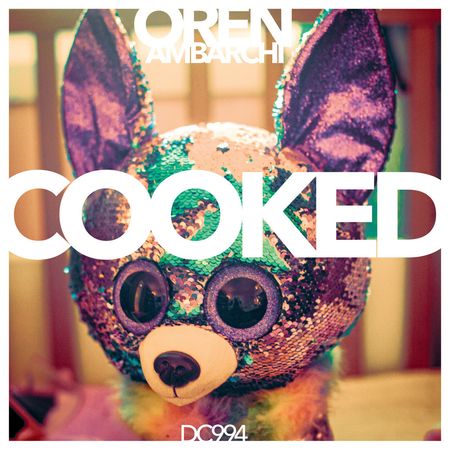
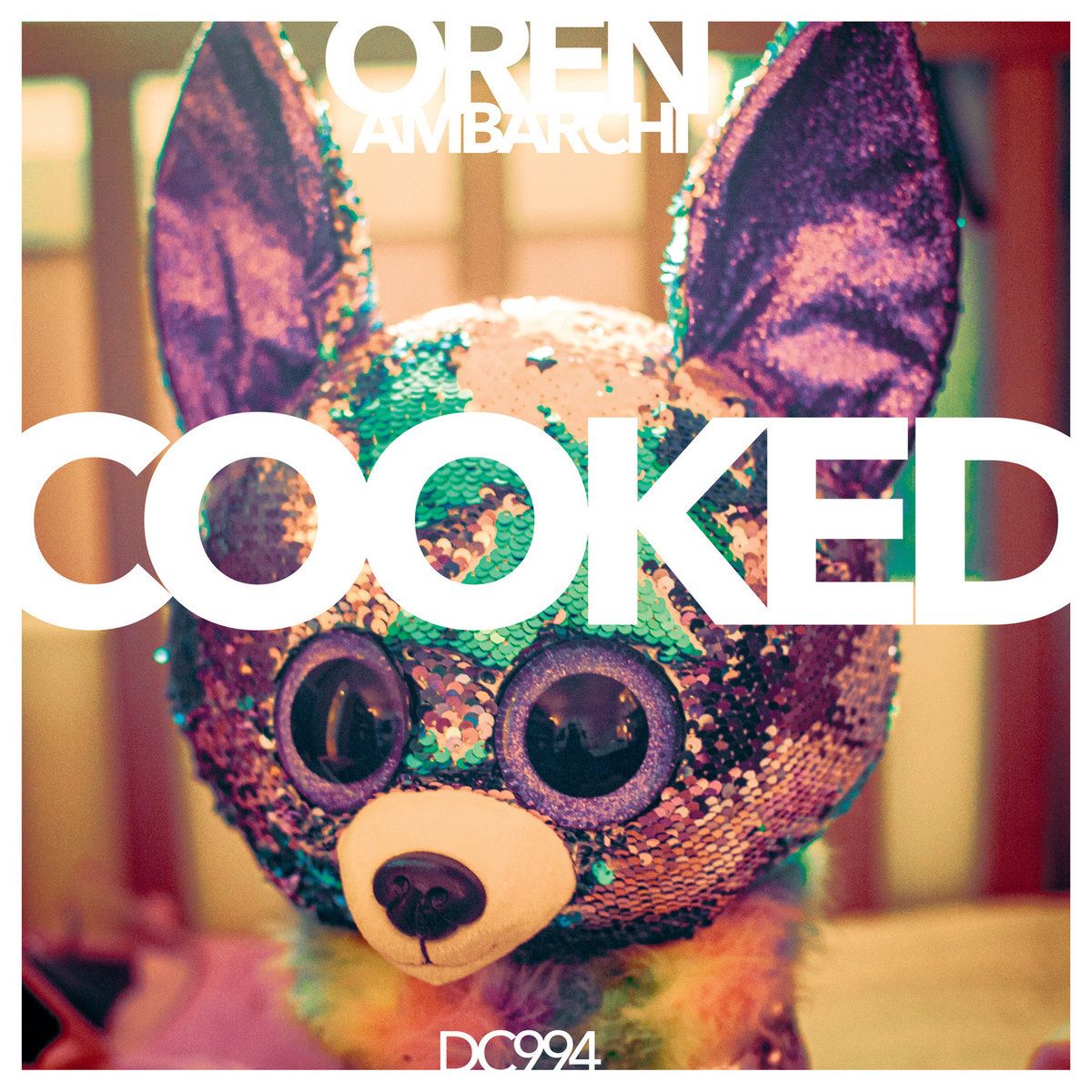
Oren Ambarchi: Cooked
0.0 0.0 Reader Score No score yet, be the first to add. 0.0 Genre: Experimental Label: Drag City Release Date: 2026 I am obsessed with the saxophone sound one second into Cooked, t…

0.0
0.0
Reader Score
No score yet, be the first to add.
0.0
Genre:
Experimental
Label:
Drag City
Release Date:
2026
I am obsessed with the saxophone sound one second into Cooked, the two-sided opus by Australian improviser and international instrumental impresario Oren Ambarchi. The first piece, “Hidden Tableau,” begins with Eiko Ishibashi’s beautiful piano, her elegant invocation suggesting the start of some new-age fantasy. But the saxophone that undercuts the chord before Ishibashi can even finish playing it is caught somewhere between a gasp and a moan, like its player is calling out for a kind of help they cannot yet name. This clash presages Cooked’s uncertain emotional terrain—anxious but exuberant, chaotic but controlled for almost all of its 43 minutes, making it one of the richest works in an extraordinary career spent synthesizing and advocating for experimental idioms from around the world. What’s more, that sound I love so much is not a saxophone; there are, in fact, no reed instruments at all on “Hidden Tableau.” It is probably an electronic voice fabricated by Berlin producer Konrad Sprenger to suggest something familiar but alien and altogether uncanny. That is the scope of Cooked itself.
It is a cliché to describe music as a playground, some open expanse where a dozen different simultaneous scenes cohere into a single pleasing diorama. Cooked, though, is like a film about said playground, each shot carefully captured and then edited into a strange and multivalent whole that could take a lifetime to parse. Ambarchi is the director who makes occasional cameos, hiding with his guitar in the shadows until stepping forward only when necessary. Coming from at least three continents, the cast comprises a dozen players, most of whom have collaborated with Ambarchi or appeared on his excellent label, Black Truffle. There are, for example, Ishibashi and longtime partner Jim O’Rourke on “Half Tableau,” and keyboardist and composer James Rushford and polyglot percussionist Will Guthrie on the flip, “Sleight of Hand.” Ambarchi’s solo albums have long pivoted between those where he’s played almost everything and ones where he’s gathered an all-star assortment of friends to contribute their specialty, all pieced together meticulously over a period of months or years. Cooked may be the most expansive example of the latter.
No score yet, be the first to add.
0.0
For the 15 minutes of “Hidden Tableau,” Ambarchi seems all but absent, as the rest of his ensemble creates a haze that is somehow menacing and inviting. O’Rourke and double bassist Johan Berthling shape a steady drone, while Ishibashi’s piano runs suggest time-lapse footage of ice crystals forming, ordinary little bits cohering into objects of wonder. But Sprenger is like Victor Frankenstein, his electronic voice and its warped utterances breathing an uneasiness into everything around it. Joe Talia’s drums amplify that ambiguity; he canters, but the sound is fried, like an MP3 scored on Napster in 1999 and salvaged for a sample. The band hovers in a razor-thin lacuna between heaven and hell, between ascension and purgatory, on the verge of going either way. When Ambarchi finally emerges from the recesses of this sound, he only reinforces that feeling, his rapid and bright guitar hinting at the finger-tapping rock heroics of, say, Eddie Van Halen but stuck in a labyrinth where the exits have been barred. The track simply stops rather than fades away—no easy answers, no resolution.
“Sleight of Hand” moves in the opposite direction. Ambarchi introduces the piece, his electric guitar conjuring a conversational Pat Metheny as Berthling and drummer Andreas Werliin (the Swedish rhythm section from Ambarchi’s recent and excellent Ghosted trilogy) join him stepwise. They seem to be having a lazy debate, perhaps less unsure of an answer than the question itself, each of them moving in and out of the meter while an organ sighs to the side. Ambarchi slowly recedes, leaving a vacuum filled across the next 15 minutes by various voices: the chattering electronics of Marcus Pal, which evoke climbing a rainbow; the whirling shō melody of Michiko Ogawa, which sounds like a particularly shocking saxophone solo; and, finally, the delightful whistles of clarinetist-cum-jazz whistler Isak Hedtjärn, which suggest pulling back the curtains on this intricate sound only to be surprised by actual humans behind it, smiling as they play their parts. “Sleight of Hand” is occasionally intense enough to be intimidating, especially in the way the rhythm section lumbers but lashes. Just before it all fades out, though, the band locks into a danceable groove, all the previous layers moving in subservience to the rhythm. It sounds like someone is clapping in the distance, but maybe that’s just me.
Every time I play Cooked, I notice some new sound or interaction—the bottomless pools of deep bass in the back half of “Hidden Tableau,” the aggressive interplay between synth and drums just before that, the way Ambarchi starts to worm his way into the track far earlier than I first realized. And every time I notice such a thing, I feel something new, too; the more I spot Ambarchi’s guitar in “Hidden Tableau,” for instance, the more the whole piece seems like trying to claw one’s way out of a depressive spell. But that’s just one amorphous reading, and it could well be wrong. That openness is the best thing about Cooked, a record that summons electric Miles and Popol Vuh and the Necks but mostly explores endless emotional ambiguity, offering a reminder that very few sensations are ever pure. I like to imagine some automated summary of how this music sounds and how listeners are meant to respond, what a tangled mess of joy and anxiety and delirium and contemplation it would be. At least a computer might know that’s not a saxophone, hiding like a serpent beneath the piano bench.
0.0
0.0
Images from the story

End of article