Olivia Rodrigo Taps Chappell Roan (and David Byrne) for Retro ‘Expectations’ Remix
Rodrigo's first-ever remix gets a delightfully campy video featuring the Talking Heads frontman Chappell Roan and Olivia Rodrigo perform at the Olivia Rodrigo "GUTS" World Tour on …

Rodrigo's first-ever remix gets a delightfully campy video featuring the Talking Heads frontman
Chappell Roan and Olivia Rodrigo perform at the Olivia Rodrigo "GUTS" World Tour on Aug. 20, 2024 in Los Angeles, CA.
It’s official: Olivia Rodrigo has dropped her first-ever remix, featuring Chappell Roan. The duo take us back to the Eighties for a vibrant rendition of “Expectations.â€
The video features a retro game show, as the two stars compete on “The Big Expectations Show. “Oh, Olivia does remixes now,†Roan says at the beginning of the video, which includes campy takes on Family Feud. Talking Heads frontman David Byrne makes a delightful cameo as the fictional host Johnny Johnson, while producer Dan Nigro features in the video as well.
Roan also adds an new verse to the song, slightly changing the lyrics to reference a mediocre female suitor alongside Rodrigo’s original lines.
Rodrigo and Roan both work with Nigro, and have collaborated together several times over the years. Roan opened for Rodrigo on the Sour Tour (2022) and Guts World Tour (2024), and performed Roan’s “Hot to Go!†onstage together in Los Angeles. Roan recently headlined Rodrigo’s inaugural Daisy Chain Fields Festival, and appeared on Rolling Stone‘s digital cover celebrating the occasion.
“I remember her walking into the studio one day and just flat-out saying ‘I don’t give a fuck about what people say anymore. If I like it, then it’s good,’ †Rodrigo said of Roan. “I could tell she actually meant it, too. That’s her magic.â€
Rodrigo released “Expectations†earlier this year, off her stellar new album You Seem Pretty Sad for a Girl So in Love. It marks her third album — after her 2021 debut Sour and 2024’s Guts — and her third LP to debut at Number One. Rodrigo held Daisy Chain on Aug. 29 in Great Park in Irvine, CA. The groundbreaking festival raised $10 million in donations benefitting women and girls, which was then doubled by philanthropist Melinda French Gates, making it $20 million.
“Music was the first medium where the way I felt was really accepted,†Rodrigo told us. “Growing up, that was my safe space. So if girls can come to Daisy Chain and feel a little sliver of that, that would be a dream.â€
Meanwhile, Roan will host her own event this month: the Super Graphic Spectacular, a two-night event in Los Angeles to raise money for trans youth and LGBTQ+ communities. It takes place on at the Shrine Auditorium in Los Angeles on Oct. 21 and 22, and features Roan, Lola Young, Caroline Polachek, Tinashe, Muna, and more.
Despite the ongoing controversy, Art of Play co-owner Adam Rubin says he would “absolutely†welcome Clarkson back to his store.
Three days after Kelly Clarkson started a public feud with the Brooklyn game shop Art of Play, the story is still ricocheting around the internet, with supporters on both sides weighing in on social media. But inside the tiny shop at the western end of Atlantic Avenue, just steps from an on-ramp for the Brooklyn-Queens Expressway, things are placid and drama-free.
As the door swings closed on a sunny Tuesday afternoon, muffling the sounds of traffic, the nook of curiosities comes alive. The theme pretty much boils down to: stuff that makes people stop and go, “Oooohhh!â€
Three small tables in the center of the store hold artisanal puzzles, toys, and magic-themed games, from a bowl of colored spinning tops that start at $30 to a $265 kinetic sculpture built out of chrome-finished sticks. Floor-to-ceiling shelves are stacked with fine hardcover books, wooden xylophones, ticking clocks, and high-tech speakers.
In fact, you have to really look to find the star of the moment, a six-inch-tall hand-carved animatronic bird affixed to the wall and attached to a box and crank with a delicate “Do not touch†tag. A manager makes an introduction: “There’s the world-famous Molly over there.â€
It was for want of Molly that Clarkson first called out Art of Play, claiming she was treated poorly after she inquired about purchasing the novelty artwork, which at the time boasted a $15,000 price tag. Clarkson alleged on X that an employee tried to direct her to a less expensive item, and likened her experience to the famed Pretty Woman scene where Julia Roberts’ sex worker Vivian is turned away from a Rodeo Drive boutique by snooty saleswomen. When the store responded that the bird wasn’t for sale, Clarkson doubled down, and her nearly 9 million followers jumped into the fray.
Co-owner Adam Rubin tells Rolling Stone the online attention has led to threatening messages over the phone, abusive DMs, review bombs, intrusive influencers filming in the store, and vitriol hurled at store employees and passersby — including one incident where the police had to be called. (The spat has also led to no shortage of media coverage, including a crush of reporters who had been awaiting Rubin as he arrived to open the shop earlier this same morning.) “Kelly Clarkson knew that she was lighting that fuse when she decided to use her fame and wealth on a public platform to try to destroy our business,†he says. “She chose to do it anyway.â€
But for now, the store is quiet. A family sits at a small table in the back of the shop doing crafts, while two separate women scour the shelves for birthday gifts. I ask one of the shoppers, who declined to give her name, about the Clarkson feud. “Who?†she replies. “What happened?â€
Rubin says community members and small business owners who work near the shop have been supportive in the wake of the furor. Many, he says, have dropped off gifts, pastries, and notes of encouragement since Clarkson’s posts.
And while Rubin told reporters he’s upped Molly’s price (sarcastically, we presume) to $15 million due to “popular demand,†he otherwise seems eager to take the temperature down on the feud. He says he’s focused on translating the outsize attention Clarkson has given Art of Play into more support for its initiatives (the store also operates as a nighttime performance space for magicians) and for the other small businesses that surround it.
“This is a place designed for wonder,†says Rubin, who’s also the author of the popular children’s book Dragons Love Tacos. “We work directly with artisans all around the world. People come in in a bad mood and leave in a better mood.†When I ask if he would ever welcome Clarkson — who famously left in a bad mood — back, he’s quick to respond: “Absolutely.â€
As I turn to leave, a woman in an olive dress and a gray-streaked crop of curls steps past me at the door, arms open wide and a sympathetic look on her face.
“I know!†Rubin exclaims as he goes to hug her. “Can you believe this shit?â€
The mother of rapper Drakeo the Ruler has reached a settlement with Live Nation over his fatal stabbing at a concert in 2021.
The mother of slain rapper Drakeo the Ruler has reached a settlement with Live Nation and several other companies over the fatal stabbing of her son backstage at the Once Upon a Time in L.A. music festival in December 2021.
The terms of the settlement were not disclosed in a notice filed with the court, but the agreement was described as conditional, with dismissal contingent on “the satisfactory completion of specified terms to be performed within 45 days.†The language suggests the deal involves obligations that have yet to be fulfilled, potentially including a financial payment. Lawyers for both sides did not respond to requests for comment from Rolling Stone.
Darrylene Corniel, who is the administrator of her son’s estate, sued with claims that her son died “at the hands of a violent mob that was allowed into what should have been a protected and secured area backstage at the music festival.†The other companies involved in her settlement include C3 Presents, Contemporary Services Corporation, Black Tide Events, Bobby Dee Presents, and Hollywood Elite Security.
Drakeo, whose legal name was Darrell Caldwell, was stabbed in the neck by an unidentified assailant shortly before he was scheduled to perform at the festival on Dec. 18, 2021, authorities previously said. He was backstage with his younger brother, Devante Caldwell, a rapper known as Ralfy the Plug, as well as a personal security guard and several members of his Stinc Team music collective.
Corniel previously told Rolling Stone that a crowd surrounded her son around the time that rival rapper YG arrived backstage. No arrests were made, and the investigation appeared to stall for years under the California Highway Patrol, which took the lead on the homicide because the stabbing occurred on state-owned property.
In July, CHP investigators executed a search warrant at a commercial property in Burbank in connection with the killing, a CHP source confirmed to Rolling Stone. The source said YG, whose legal name is Keenon Daequan Ray Jackson, was affiliated with the property and was detained during the search. Jackson was released, and there were no arrests, the source said.
Corniel’s new settlement does not resolve separate wrongful death claims brought on behalf of Drakeo’s young son, Caiden Caldwell, by the child’s guardian. It also doesn’t resolve the related negligence claims brought by his brother, his bodyguard Alrick David Cooper III, and his friends who were backstage that night. Those consolidated claims remain set for trial next month in Los Angeles.
In deposition testimony submitted in the civil case and first reported by the Los Angeles Times, Cooper claimed he saw Jackson “front and center†during the backstage brawl. Although the man he identified as Jackson was wearing a face mask, Cooper testified that he could see the man’s eyes and was confident of his identification.
“I was fighting YG and YG’s bodyguard. And then YG produced a knife from his left hand, like out of his left hand, like almost like a movie like it came out of his sleeve or something,†Cooper alleged in the deposition, according to a transcript obtained by Rolling Stone.
Attempts to reach representatives for Jackson were unsuccessful Wednesday. Jackson has not been identified by authorities as a suspect or person of the interest in the killing.
After nine years, Blondie have returned with their first collection of new music. Their album, High Noon, will be unveiled on Feb. 26, and the LP’s first single, “Spectral Eyes,†is out now.
The upcoming LP marks the final recording of Blondie co-founding drummer Clem Burke, who died in April 2025 at the age of 70. The Hall of Fame musician was the backbone of Blondie’s smash hits and kinetic live performances.
“This album is classic Blondie — an amalgamation of all our different influences and eras into something new,†frontwoman Debbie Harry said in a statement. “This music feels grounded in the present, shaped by who we are and how we’re living now.â€
The band describes High Noon as “a broad mix of sounds, ideas and collaborators†where “rock and roll and punk sit alongside dance music and Latin rhythms.†The new project features contributions from Johnny Marr, Glen Matlock, Zach Condon of Beirut, Jess Wolfe and Holly Laessig of Lucius and others. The album’s lead single, “Spectral Eyes,†was written by Marr, who also contributes guitar to the track.
Blondie began sessions for the LP in 2022 and recorded in New York City with producer John Congleton, who collaborated with the band on 2017’s Pollinator. David Wrench later joined for additional production and mixing on the new album.
High Noon spans 13 tracks and includes “Heartbreak Kid,†written by Blondie guitarist Chris Stein; “Sleepwalking,†penned by Matlock; and “Man Who Had No Face,†co-written by Stein and Harry. The band also revisits “Little Metal Drummer,†which was originally recorded by Blondie co-founding keyboardist Jimmy Destri for his solo debut, Heart On A Wall. Both Harry and Burke performed on the 1981 original recording.
When remarking on their return, Stein said, “It’s been a long, strange ride, and somehow here we are with another Blondie album.†He added, “I’m not sure what the fuck I’m supposed to say at this point, except that we’re incredibly grateful for all your support over the years.â€
High Noon Track List1. “Spectral Eyesâ€2. “Heartbreak Kidâ€3. “Come Back Homeâ€4. “Tambo Tamboâ€5. “Man Who Had No Faceâ€6. “The Endâ€7. “Little Metal Drummerâ€8. “Sleepwalkingâ€9. “Whistle Into The Windâ€10. “Antifreezeâ€11. “East of Edenâ€12. “Bad Underwearâ€13. “Ah, Sunflower, Weary of Timeâ€
Leading up to the Grammy nominations on Nov. 16, “Rolling Stone†is breaking down 11 different categories. For each, we’re predicting the nominees, as well as who will (and who should) win on Grammy night.
If there’s one through line for the likely 2027 Song of the Year nominees, it’s that it’s a wide-open field. “There isn’t something like a ‘Not Like Us,’ the song that everyone is anointing as the great song,†says Tony Gervino, editor-in-chief of Tidal, citing 2025’s big winner by Kendrick Lamar.
That lack of a consensus pick makes for an anyone’s-possible nomination process. “This is one of the most exciting batches of artists we’ve had in a while for these categories,†says Tiana Lewis, head of pop programming at Apple.
Both Gervino and Lewis do expect Song of the Year nominees to trend much younger this year. But don’t forget that this is a Big Four category prone to the utterly unpredictable (see Bonnie Raitt’s 2022 win). “It’s the Grammys,†says Gervino. “Predicting can be hazardous.â€
Brandi Carlile, “Returning to Myselfâ€Olivia Dean, “Man I Needâ€Ella Langley, “Choosin’ Texasâ€Bruno Mars, “I Just Mightâ€Raye, “Where Is My Husband!â€Olivia Rodrigo, “The Cureâ€Taylor Swift, “The Fate of Opheliaâ€Don Toliver, “E85â€
Olivia Dean, “Man I Needâ€It’s hard not to bet on a song this big by an artist this traditionally Grammy-friendly. For one, Dean’s song has been ubiquitous for the better part of two years. “It feels inevitable,†says Gervino. He’s not alone in that assertion. “She’s a historically Grammy-style artist, like H.E.R., Adele, and Alicia Keys,†Lewis says. “It’s always one of two ways with those types of artists: either you win everything or you go home empty-handed.†The former seems more likely.
Ella Langley, “Choosin’ Texasâ€It’s been 15 years since the Grammys awarded a country song either Record or Song of the Year (Lady A’s “Need You Now†won both!). A win for Langley — inarguably the most popular song of the year and, by some metrics, the biggest song of all time — would be a win not only for her but a nod to some of Nashville’s finest contemporary songwriters, Miranda Lambert and Luke Dick among them. That Langley’s song has resonated to this extent without hardly any remixes or chart-boosting gimmicks makes the classic-meets-contemporary song all the more impressive. “We shouldn’t be ignoring Ella Langley,†Lewis says. “It’s been so exciting to see her hold it down on her own. This is Ella’s year, or even decade.â€
The typical Grammy heavyweights (Taylor, Harry, and Bruno) all released work over the past year, so expect them to be nominated in at least the Record or Song of the Year categories. But this wasn’t the old guard’s year: “They’ve set the bar high for themselves and everything they released is measured against their best work,†Gervino says of Swift and Mars, in particular. “They’ve already had so much success.â€
Instead, look for the new guard of women to make a serious run at this category, whether that’s Langley, Raye, or either of the Olivias — Rodrigo has particular momentum with “The Cure.†“These songs really don’t have much in common aside from the majority of them being by young women,†says Lewis.
Lewis’ dark-horse pick is Don Toliver, whom she says could fill the type of slot that Clipse did last year when they shocked everyone with four nominations. Another perennial underdog is four-time Song of the Year nominee Brandi Carlile, even if “Returning to Myself†didn’t have the same type of commercial impact as most contenders in this category. Could Bruce Springsteen’s still-timely “Streets of Minneapolis†also secure a dark-horse nomination? Don’t count out the unpredictable.
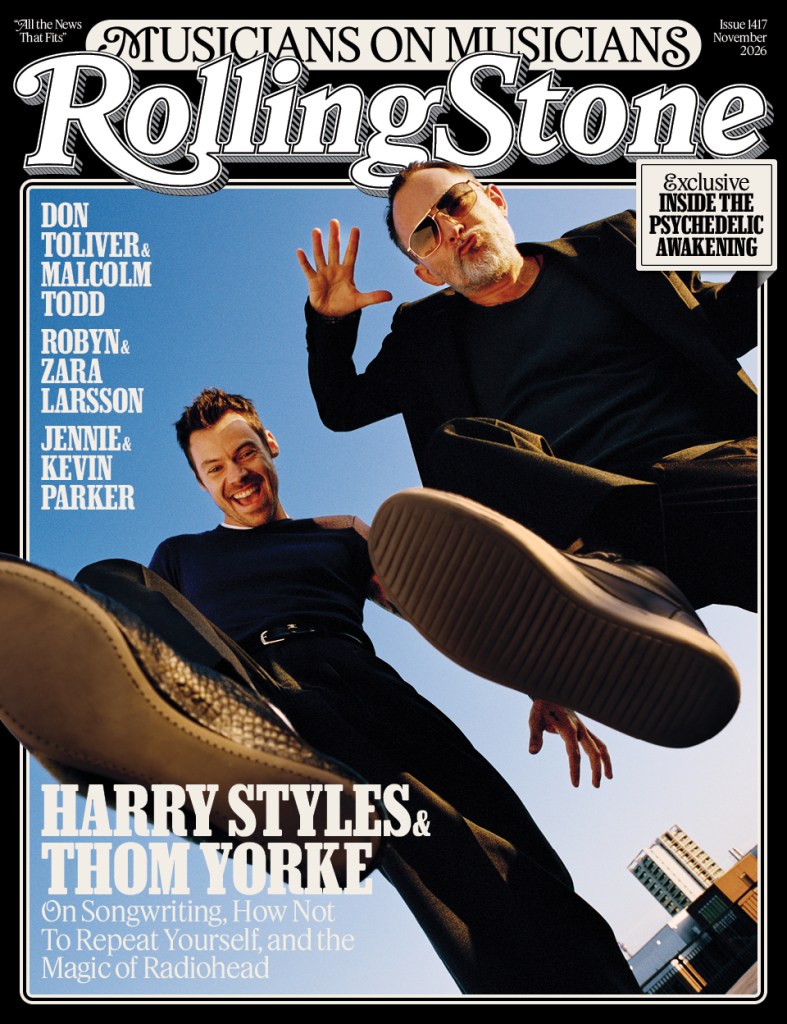
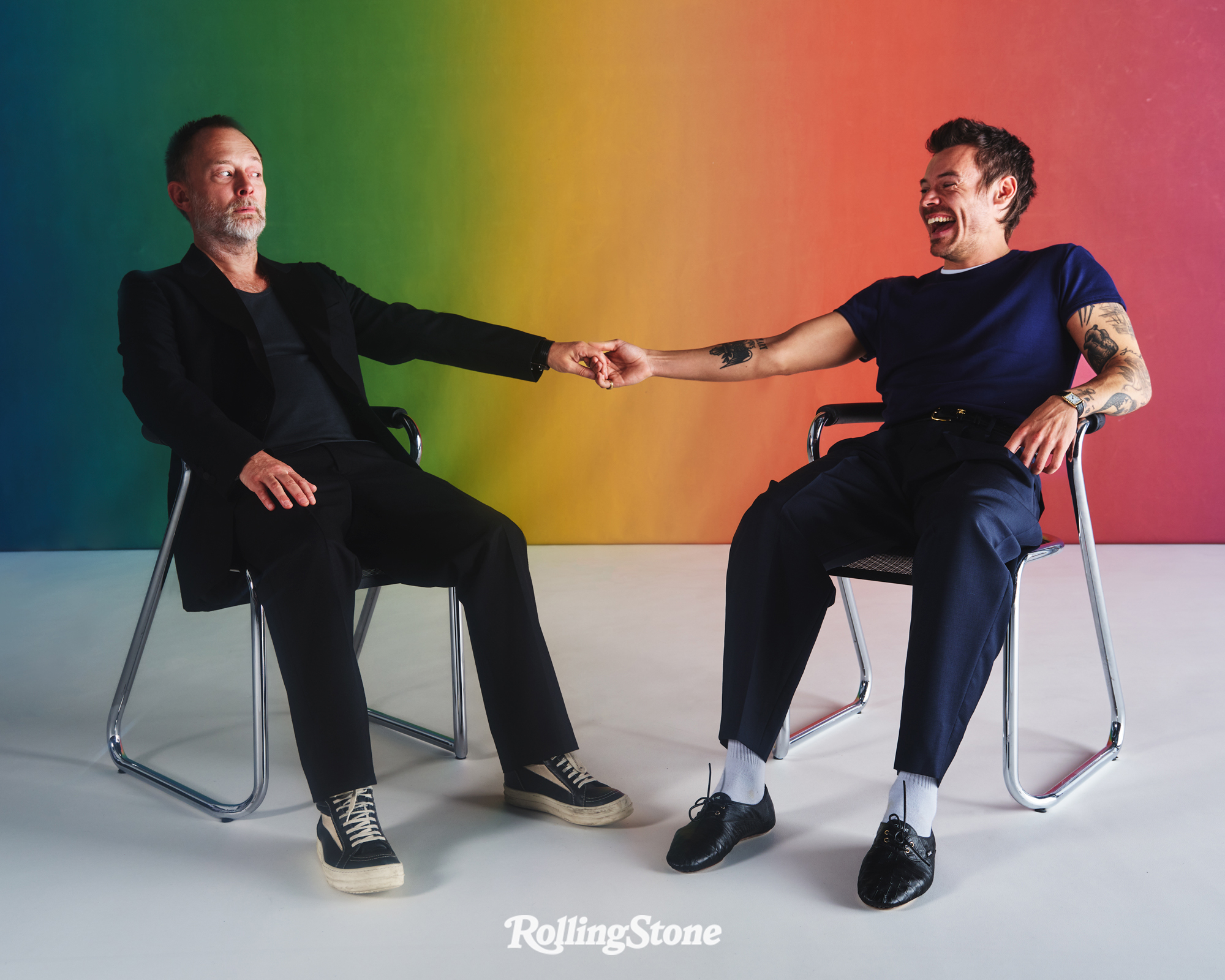
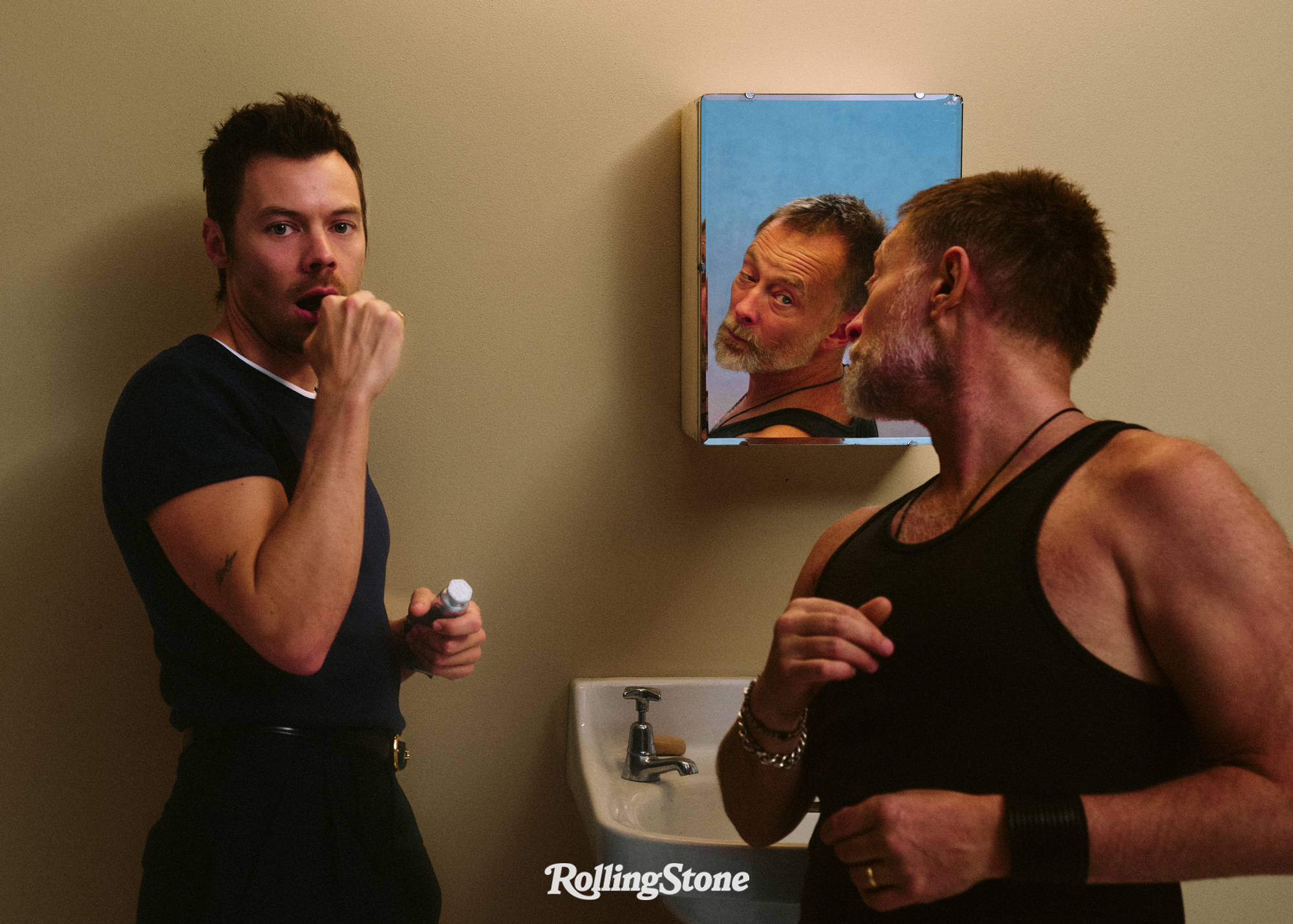
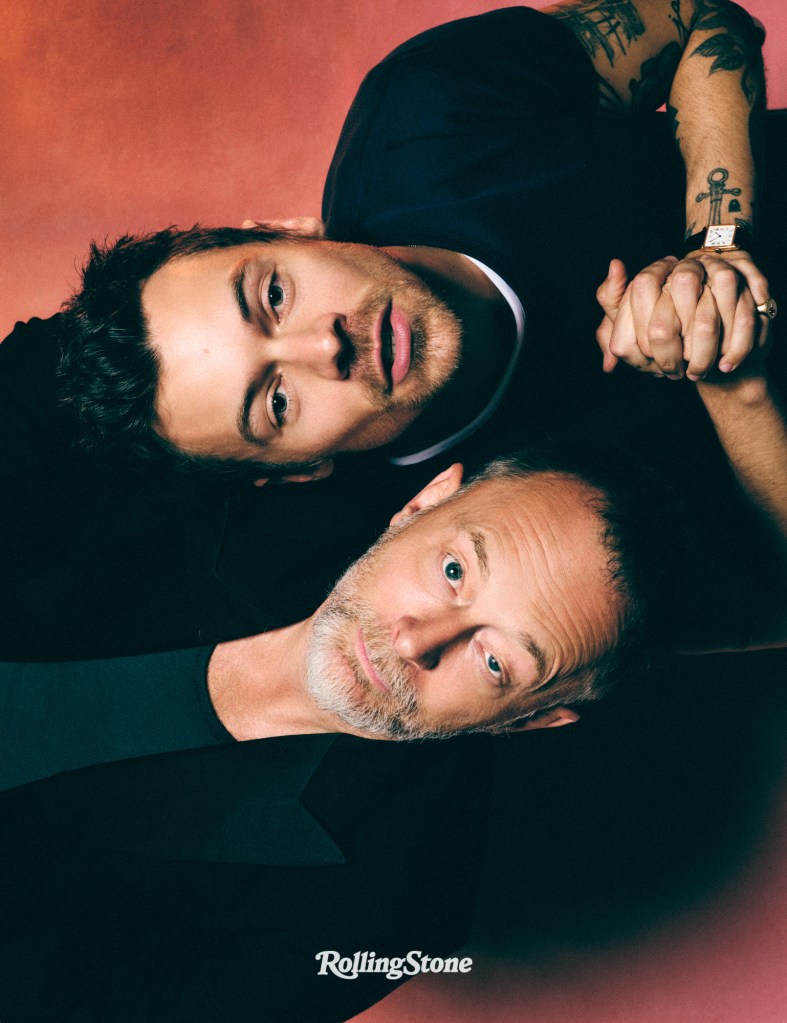
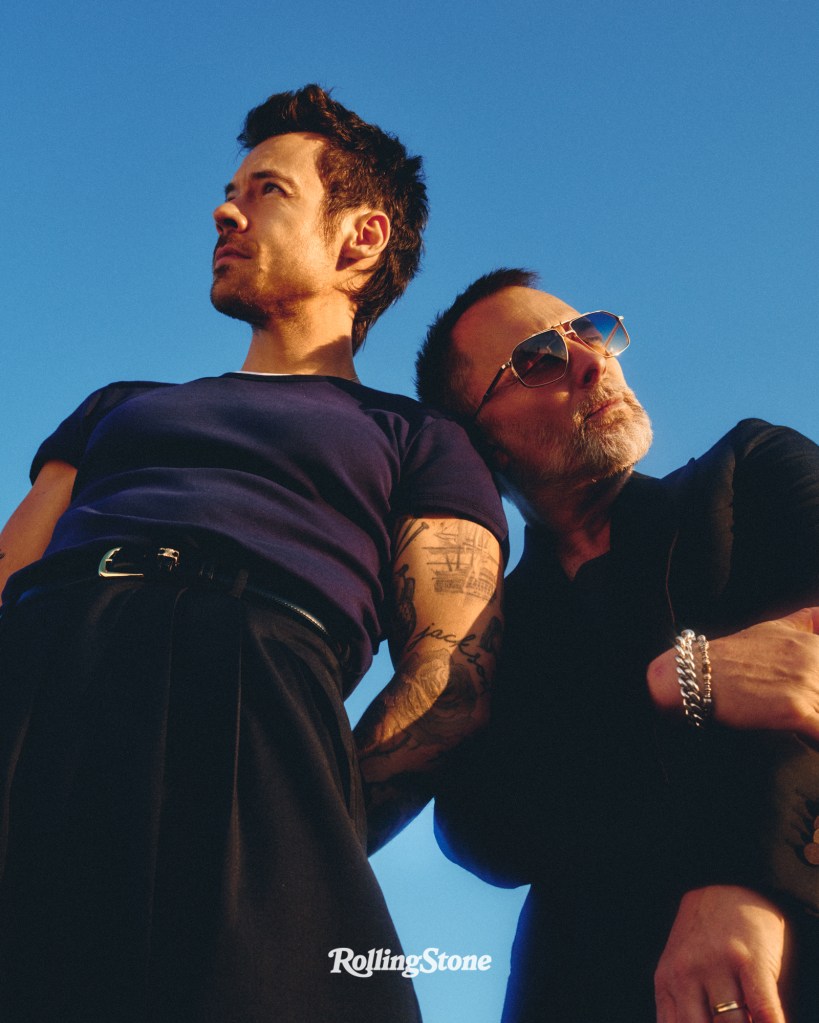
Two years ago, in the summer of 2024, Harry Styles was strolling down a small cobblestone side street in Rome, when he suddenly noticed a face he recognized. It was Radiohead’s Thom Yorke, one of his biggest musical heroes. He introduced himself — just two stars walking the streets incognito, with no entourage. As Styles confesses to Yorke now, with a shy grin, “You, to me, had always been that person that I was scared of meeting.â€
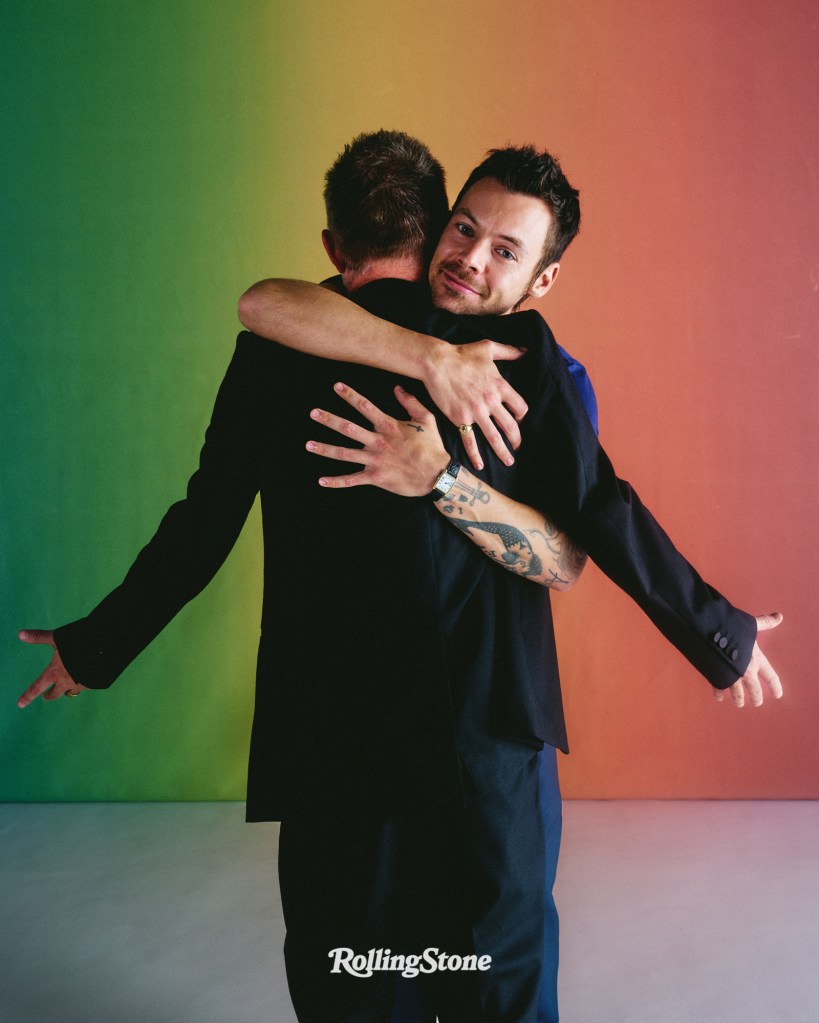
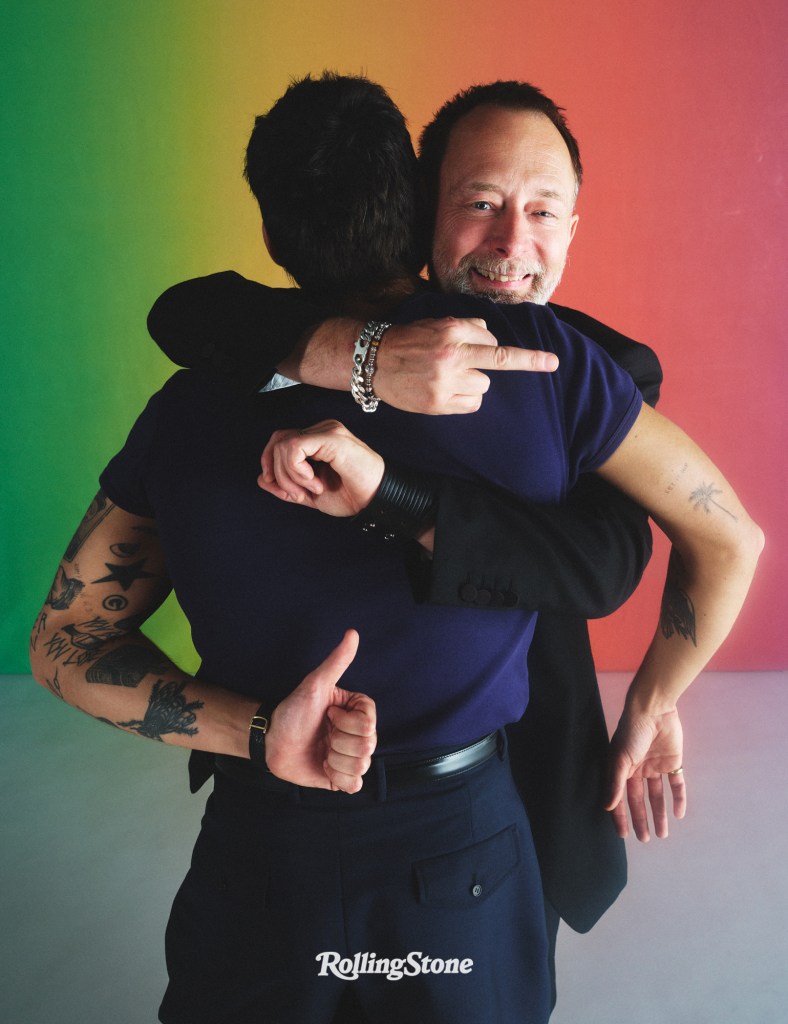
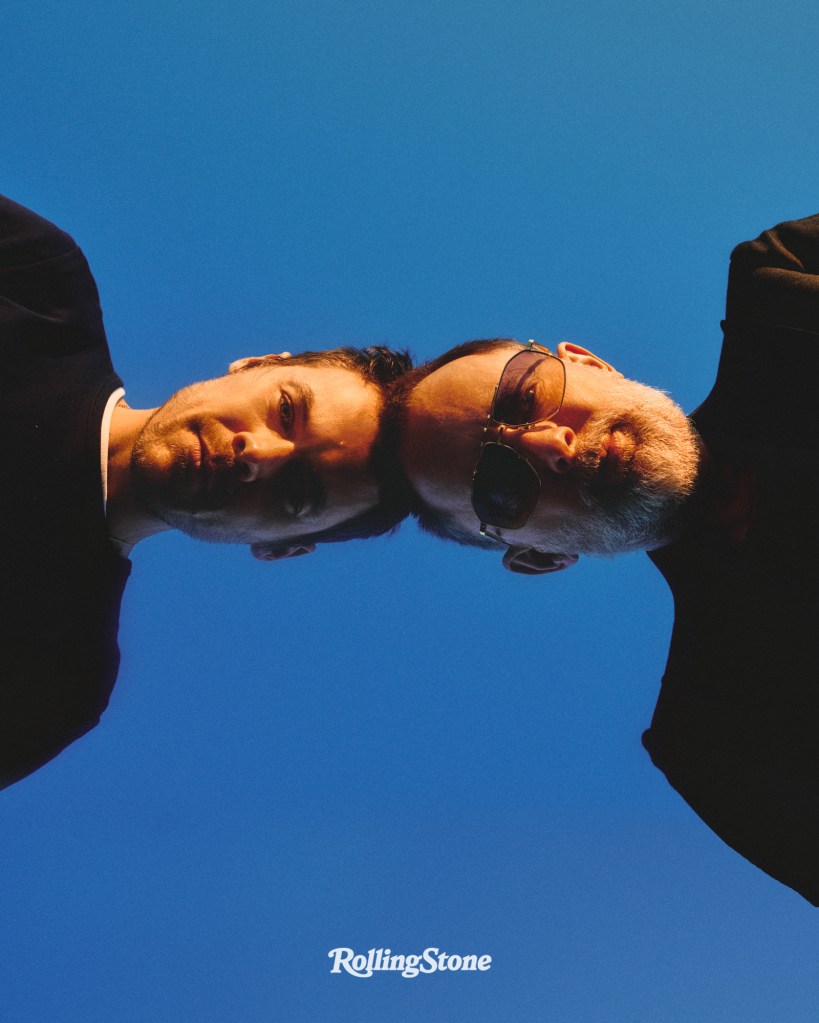
Yorke and Styles might seem like they’re from two different worlds — the planet’s most dazzling glam-pop prince versus the high priest of art-rock angst. But today, they’re busy making each other laugh on a sunny July afternoon in London, at a studio near Camden Town. Yorke has been known to be a thorny interview subject, ever since the early days of Radiohead. Yet today he lets down his guard, as he basks in the presence of the equally notorious charm of Harry Edward Styles. They crack each other up like mischievous schoolboys.
In May of this year, Yorke was honored at the U.K.’s prestigious Ivor Novello Awards, where Styles gave a heartfelt tribute, saying, “Radiohead is my favorite band.†He also made a surprise admission about one of the band’s B sides.
“I lost my virginity to ‘Talk Show Host,’†he declared, then corrected himself. “I lost my virginity to the intro of ‘Talk Show Host.’â€
Radiohead released their first album in 1993 — the year before Styles was born. But both have built their careers around defying expectations and refusing to repeat their successes. Styles could be said to be going through his own Kid A moment right now, with the experimental electro-pop of Kiss All the Time. Disco, Occasionally. This summer, when he did a record-breaking 12-night residency at London’s Wembley Stadium, Yorke came the very first night — he was up and dancing right from the opening song.
Yorke has been on a creative roll lately. In his conversation with Styles, he reveals that he’s working on an upcoming solo album, although it hasn’t been officially announced. He dropped two acclaimed 2024 albums with the Smile, his band with Radiohead guitarist Jonny Greenwood. Hamlet Hail to the Thief, a production of the Shakespeare play featuring music from Radiohead’s 2003 album, runs at the Barbican Theatre in London from Oct. 31 to Jan. 23. And Radiohead recently answered the world’s prayers with their first live shows in seven years. They return in mid-2027 for residencies in Australia and Japan.
Styles and Yorke are both famously magnetic performers, but famously private offstage — shy of giving anything away, wary of outsiders. Yet face-to-face for their Musicians on Musicians cover story today, they bring out different sides of each other that the world doesn’t always get to see. In this wide-ranging two-hour conversation, they go deep on fame, fandom, songwriting, suffering from impostor syndrome, the inspirational power of walking, and the emotional intensity of weeping onstage.
Styles: We met for the first time in Rome, on a small street. You were playing in Rome that week with the Smile. I was going to that show.
Yorke: Was it before the show?
Styles: It was before the show, yeah. A friend of mine had asked me if we’d ever met, and I had said that we hadn’t. So I was walking down the street, and I noticed you because you were wearing a hat that said “Acid†on it. I thought, “Oh, that’s a cool hat.†And then I was like, “Oh, it’s you.†I had A Moon Shaped Pool [the 2016 Radiohead album] playing in my headphones, and I stopped it. “Oh, hello—â€
Yorke: “Mr. Yorke.â€
Styles: “Mr. Yorke, hello.†You said, “Oh, hi.â€
Yorke: No, I said, “What the fuck [laughs] are you doing standing in the street?â€
Styles: Then I came to the show, and we met properly.
Yorke: I didn’t know you were living in Rome a lot. I had no idea. So I was doubly confused.
Styles: You, to me, had always been that person that I was scared of meeting.
Yorke: Oh, yeah. I’ve got a whole list.
Styles: Yeah, totally. And I remember feeling so light afterwards. “Oh, people are kind, and they’re nice.â€
Yorke: I was also impressed that you were just walking down the street. I was like, “Where’s his security?†Because I mean, I know I can do it, but I didn’t know you could do it. Is that a choice?
Styles: I think in the early days, when I was in the band [One Direction], so much of the hotel experience felt very locked-in. When I’d be home, it felt like, “Oh, it’s not safe for me to be out.†Then I had a girlfriend who was very outgoing, and she was coming to London and I was like, “Oh, if we just sit in my house for three days, she’s gonna think I’m nuts.†So we walked everywhere, and it was this realization for me: “Oh, it’s fine to be outside.†It kind of broke that thing. Now, it’s changed my life in such a big way, because it’s how you stay connected to the world.
Yorke: Yes, mate.
Styles: I read something about walking being the artist’s kind of perspective, because you’re at ground level and you see things that you just don’t see if you’re driving everywhere.
Yorke: It’s also a good way to write. I wrote “A Wolf at the Door†— I was going through a really bad moment and I walked for like two-and-a-half days, rain, didn’t matter. A notebook in my hand, and just wrote it all. I felt so much better at the end of it.
But also it’s not just the walking — it’s the walking past people. The simple thing of people-watching, playing that game of imagining as someone walks by — where they’re going, what they’re doing, all that stuff. It brings you out of yourself, brings you out of your troubles. I mean, without it, see, it’s really easy to get lost.
I remember when we were on tour with R.E.M. [in 1995] and Michael Stipe figuring out that I would just hide in the dressing room, and never went out anywhere. So he started dragging me out, and he gave me this trick. He said, “If you don’t care, they don’t care. If you’re not looking, they’re not looking.†And it works. I remember being in Stockholm going to some really busy club, and he said, “Try it.†And it worked. Nobody bothered us.
There are moments when you will feel vulnerable. There are moments when shit will happen, or The Sun will be printing your picture one too many times. I’ve had that. So it’s not easy. It’s not an easy decision to make, but it’s better than the alternative. I know people who got death threats, and then wouldn’t leave the house and had security patrolling their house. You don’t want that.
RS: You both have a history of leaving your comfort zones behind. That’s a pattern for you as artists — after you do something hugely successful, you say, “OK, I did that already. I’m not doing that again.†How do you avoid repeating yourself?
Yorke: I can’t, even if I wanted to. I couldn’t do it again. If you write “Everything in Its Right Place,†do you think, “Yeah, I’ll write another one of them� It doesn’t make sense. You can’t. I’ve tried.
I think if you have something that’s very successful, there’s a lot of pressure to repeat that, which I’m sure you’ll probably feel, or you do feel sometimes. Or you will feel. It doesn’t go anywhere, because that’s like working to commission.
Styles: “Paint that again.â€
Yorke: Yeah. It’s a commercial art form, so you’re always going to get people asking you to do that.
Styles: It’s an interesting cycle, I think. You make something that connects with people, because you’ve captured something about the human experience, whether it’s a vulnerability or a sensitivity that comes with being human. And then any kind of success around that thing makes it take on this life of its own. Then everything around you makes your experience incredibly not human.
Yorke: Yes. Artificial.
Styles. Yeah. The goal is how you shut that out when you’re making stuff, so you can still be making music about the human experience. I’ve always thought if I was to make music about being in a studio, and touring, and all of the shiny things that come with that—
Yorke: Shiny for you, mate. It’s not shiny for everyone.
Styles: That’s definitely not interesting to me, so it can’t possibly be interesting to anyone else.
What I love about your work, for example, so many people look at you in this kind of godlike status — to still be someone who looks at it like, “This is the gritty part of life.†I think that’s what’s so impressive about your work — for people to revere you and to still be looking at what’s under the fingernails.
Yorke: I think the reason for that was having to learn quite a difficult lesson. Around Kid A, Amnesiac, before that, I really struggled every time I had to try to do something new. I was explaining it to myself while I was doing it, literally. It’s like a form of madness, and I couldn’t get out of it. I felt I needed to justify it somehow — not apologize, but justify it in an intellectual way.
The reason for that was I needed to get out of it. I needed to just get out of the studio, and I needed to just walk. I used to just walk on the cliffs in Cornwall, for example. And a lot of that was down to the fact that nobody cares, man. Nobody cares that it’s difficult. If you’re bummed out that it’s difficult, fucking stop. Go and do something else — go dancing. Also, later on, as you have kids, the choice to carry on doing this kind of work, you have to enjoy it. And the enjoyment comes from having to start again from scratch every time. Whatever you learn, you’ve got to unlearn.
Also, songwriting is very odd. Going to the Ivor Novello thing — I don’t hang out with songwriters, but apparently I am one. And you realize that songwriting is quite a naive thing. You can’t be savvy about it. You can work really hard on it — but the good stuff just happens, and you don’t know why. And you’ve got to be honest with yourself that you don’t know why. When stuff forms that you like, you just grab onto it and you don’t let go. “Pyramid Song†— I mean, it’s three chords over and over again, and the same lyric. How does that make sense? But you like it, and you’re not bothered about if anyone else likes it.
Styles: I’ve always wondered if that’s part of why the impostor syndrome that can come with that commercial success exists.
Yorke: You have that?
Styles: If you write in that way, it almost feels like you’re not responsible for it. So then if people are like, “Oh, you’ve made this thing and that means that you’re this,†there’s something in there that feels like, “Oh, I can’t take credit for it. It just happened to me.†Like you were saying, the best things tend to just happen. I’ve always found the things that I end up liking the most, or have been the most special things to me, are the ones where you write it, and then as you’re listening back, you’re learning something about yourself. You’re realizing that you’ve said something, rather than, “I’m going to sit down — I’m going to say this.â€
Yorke. Yeah, and you might not realize. You might record it and track it and everything, and not realize until you’ve mastered it — and then you suddenly hear, “Oh, shit, that’s what I meant.â€
But it’s not divine intervention or anything like that. You’ve got to show up. You have to learn to accept the months of impostor syndrome, where you’re like, “I don’t have anything to justify all this amazing equipment in my studio.†And then you’ll pick up your notebook, and there’ll be one line in it that sets you off. But the point is, you showed up. Because it’s really easy not to show up.
Styles: Someone once described it to me as like surfing, where you can practice getting up on the board. Sometimes there’s no waves. If a wave comes but you haven’t practiced enough, you’re not going to be able to surf it. When they happen, it’s the combination that you’ve practiced being able to capture it, and something is happening at the right time.
Yorke: Yeah, you’re ready enough. Or if I’m surfing, you’re not ready, ever. You’re on the rock going, “Fuck!â€
Styles: I’ve had a big shift — I used to feel labor-focused about art in general. I felt like to justify it, I had to be in the studio months at a time.
Yorke: That’s your impostor syndrome speaking. I’m the same — sometimes it’s fun, but sometimes you’re doing it because you feel you should do it, because you need to stay ahead of the game. Or you need to keep proving that you are who you say you are, or other people say you are.
Styles: I feel like it’s a real line to ride with that. Because I still feel like I get it onstage sometimes. The sweet spot is where you’re relaxed, in that flow state where it feels like, “Oh, this feels really easy. It feels like it’s just happening, and this is great.†And then I click over to “Oh, it feels too easy. Am I not working hard enough?†When it feels most natural is when I think the show is at its best, but then I have this voice of “It shouldn’t be this easy.â€
Yorke: That’s completely normal. The joke with Radiohead is always, like, we’ll have moments in the show like, “Oh, my God, we’re so great!†And exactly that moment, someone fucks up. Every time, without fail.
Styles: How different is it for you in terms of how much you enjoy making music with the band, versus making stuff by yourself? Do you like what the friction can make in that scenario? Or do you tend to enjoy, like, “Oh, I’m going to have this idea, and I’m going to just see this all the way through.†Because it’s both, I’m sure.
Yorke: It’s both. There’s a kind of mad history to that. It wasn’t until after Kid A that I remember quietly saying to Nigel [Godrich], “I’ve got all these things. I just want to do them on my own with you, because it doesn’t make sense to try and include anybody else.†Up until that point, it was a really alien concept.
We’ve known each other a mind-boggling number of years now. [Radiohead met in 1985.] We all know each other’s musical strengths and musical weaknesses. So you’re spending a lot of the time working around that. I mean, we haven’t worked. We haven’t been in the studio together for a long time, so I don’t know how it would actually feel now.
With the Smile, it’s totally different because Jonny [Greenwood] just generates ideas all the time. [Drummer Tom] Skinner works faster than any human being I’ve ever met and can respond to literally, as you probably know, anything you throw at him. I’m in the middle going, “All right, why don’t you guys record this, because I don’t understand what’s going on?†My favorite experiences in the studio are something that’s good, and I don’t understand why it’s good, but I pick up a mic and respond to it. I will listen back to it like, “I have no idea who that was. Is that us?†Yeah, that’s us. And you only get that when you have other people.
Styles: Do you find it more vulnerable to be putting out your own stuff?
Yorke: It’s all vulnerable. But at the same time, I don’t know about you, but if I’m finishing a record, if I can’t sit down and listen to it and be comfortable with it and happy with it, it’s not going out. So the vulnerable bit happens …
Styles: When you’re writing it?
Yorke: Yeah. When you’re trying to finish the fucking lyrics. That’s when it’s the worst. Words, right? How do you do words?
Styles: I think what I’ve always found so exciting is that I’ve never found the one method. It’s never been like, “I’ll write a poem, and then I put it to music.†The good stuff tends to come from a few weeks or a couple months of “Oh, I’ve got nothing. I don’t have anything. It’s all gone.†Then all of a sudden you write something and you’re like, “I really like this. I don’t know why.†And that comes in lots of different ways — I have a line, or I have a piano thing, or a melody that’s mumbled. I’m building a song around these three words that sound great over this thing.
Yorke: That is the correct process, in my opinion. If you’ve got a few words that you hang everything off, and you don’t understand why, then that’s the most exciting. Even though it’s painful, because then you have to spend weeks trying to fill in the blanks.
Styles: Sometimes, with some of the best stuff, I think it’s more difficult to be concise. I know I like a melody when I overwrite the song — I’ll write a bunch of verses, a bunch of lyrics. Then I think, “Oh, you take these three verses, take these lines, and make them one verse — it’s actually much more powerful in what it’s saying.†It’s better than explaining everything.
Yorke: Honestly, the thing I’m most jealous of will always be people who can just free flow onto a mic, and put it out. All my hip-hop heroes freestyling. I wish I had that brain.
Styles: I listened to a podcast you were on. You said you think of your vocal as one of the instruments in the song, and that’s how you tend to approach composition now. Is that something you noticed, when that changed for you? Because you say you don’t so much sit and write a song, like, “I’m going to sit here, and this is a song and this is how it goes†— you think of how it sits in the production. But obviously, if you go back to The Bends, for example, like “High and Dry,†that is a song.
Yorke: Yeah, a guy with an acoustic guitar. Singing his song. That particular one I wish I hadn’t [winces in pain], but there’s nothing wrong with that.
I don’t listen to a lot of singer-songwriters. I listen to a lot of mad old folk music, or I listen to film music, or I listen to electronic music. The banging away on the guitar thing is sometimes when it really speaks to me, but not a lot. I’m not quite sure why that is — probably because we grew up when there was a real renaissance of that, and The Bends was that.
But by the time we got to Kid A, I was excited about what else you could do with your voice, really. Jonny and Nigel set up this thing where Jonny’s playing the Martenot [a vintage electronic keyboard] and I’m just picking out random lines from my top hat. And that became the vocal. I’m not singing that at all — I’m literally speaking it.
One of my favorite singers ever is Michael Stipe, who for the first two or three [R.E.M.] records didn’t even bother writing the lyrics. Or if he did, it was stream of consciousness. “I’m not going to make this explicit. I’m just the human sound in the middle of all these amazing jangling guitars.†Sometimes I don’t like the lyrics being the point. Sometimes it’s really exciting that there’s just this sound. [Yorke pulls out a notebook full of his questions.] I’ve got notes.
Styles: [In mock horror.] Homework!
Yorke: Do you travel with a laptop?
Styles: My laptop has been dead for about six years [laughs]. I don’t know where the charger is.
Yorke: We can help you with that. Where are your ideas? In your pocket?
Styles: On my phone.
Yorke: On your phone. You know your phone is basically a computer?
Styles: But just a phone. I use GarageBand a lot, and voice notes.
Yorke: Really? Wow. Fuck a duck.
Styles: Primitive.
Yorke: No, I mean in a way that’s good. I remember my MiniDisc. That was my best friend.
Styles: Yes, I remember being in primary school. [Both are laughing too hard to continue.]
Yorke: OK, let’s try it again.
Styles: The voice-note thing, I like something about it being its blankest version.
Yorke: Yeah. It’s the pencil drawing.
Styles: I think I like that. The thing that excites me the most is when I start a record, or before I’ve started something, and I have no idea how this is going to end up sounding.
Yorke: I’m surprised, because the last album [Kiss All the Time] very much sounds like it was developed in the studio. It doesn’t sound like it comes from voice notes.
Styles: That one was less from voice notes. There were a few moments — the orchestral thing [“Coming Up Rosesâ€], or the piano songs. There’s a couple of much more straightforward songs. There’s probably three or four moments that are the most down the middle like that.
Yorke: So the rest are worked up in the studio?
Styles: A lot of it, yeah. Probably two-thirds of this one. I think it was just where I felt like I was at in my life, and the music that I was experiencing. I wanted to meld the parts of my life together. I’d started going out dancing a lot more. I really didn’t want it to be like, “Oh, I’m listening to this music — this is where I’m at,†but then I go in the studio and say, “Well, I have to make this sort of music instead.â€
Yorke: I know that feeling. I know that feeling very well.
Styles: It was really like, “I’ve just come from this place. I want that beat to keep going. I want to be onstage feeling in the middle of it.†That was the kind of thing that informed the record.
Yorke: I think you did that. That’s my favorite part of the show, where you literally do that. There was a generosity to that, where I thought, “Yeah, that’s really cool. That is clearly someone who’s discovering this thing and wants to share it.†The honesty of it was very cool. I was really into that. I mean, it’s very difficult to take that kind of music into those places. It’s much easier to just make yourself totally deaf DJ’ing in a club in Berlin.
I was going to ask you: Where’s home? Because you have more than one.
Styles: I think when I’m in London, it feels the most like home. And I’m not from here.
Yorke: Where’s your stuff? Your important stuff?
Styles: London. Because I’ve lived in my house for 12 years or something. That’s the place where I feel like I’ve been through so many versions of myself, even in the same space. I feel like I really grew up in this house, in a big way. I remember moving in — right after my 19th birthday. It’s been through a lot of changes, but in there, in my kitchen, is the most like “This is where I live.â€
Yorke: Do you cook?
Styles: I do, yeah.
Yorke: You’re probably pretty good, aren’t you?
Styles: I’m all right.
Yorke: I’m fucking terrible.
Styles: To stay on you for a second, if I may. [Yorke snaps his fingers in disappointment.] I was curious about doing this interview, for example, or the Ivors thing — I think everyone communicated a surprise that you were willing to be celebrated. I’m curious about how your relationship with that has changed over time. In terms of someone who’s so innovative, how much of it has always been a need to reject any sort of nostalgia, to assure yourself that you’re moving forward?
To me, it feels like maybe just being in a happier place, to realize that you can do both: You can still innovate, and also allow people to celebrate things you’ve done, whether it be the Ivors, or touring and playing a deep selection from your catalog. To be able to play those songs and not feel “We’re living in the past right now,†but just be like, “We made something really beautiful. I’m going to play it, and that’s beautiful. And I can now also still be moving forward.â€
Yorke: You’re answering this better than I can do. You’re right, that I’m in a slightly better place nowadays, but I’d be lying if I didn’t say that something like getting an Ivor Novello fellowship was not deeply confusing for me. I admire a lot of the people that they’ve given those awards to. Some of these people are my heroes. But I have a very, very strange relationship to … God, this is really hard to explain. I have a very strange relationship to that element of my work.
Styles: Navel-gazing?
Yorke: I find it hard to believe in it. The moving-forward thing, that’s what I believe in. That’s easy to believe in, because it’s new. I don’t have to explain it, so I’m happy.
After the [2025 reunion] Radiohead tour — even though in the middle of it, it was really fun — my response to it afterwards was to crash, like massively crash, in terms of self-confidence. It took me months.… It took me starting on my own record again two months later to go, “Oh, OK. I’m good now. I’m fine.†I just have a really odd relationship with it. And I’ve just grown used to that.
The Ivors, to be honest, your speech was great, because it was really honest and personal, and I could relate to it. Whereas when it feels like a business, and you’re part of a business, and the cameras are running … I don’t know, man. I got this legacy feeling about all of it.
Styles: Something I’m curious about: I wonder if it’s something that maybe happens when you have children, then keep creating.
Yorke: It’s really important they all integrate, and keep informing who you are. You probably saw Agnes and Noah at the Ivors. They were very emotional about it, and Dajana, my wife, was as well. I do it for them, because if they’re emotional about it, OK, that’s why I’m here. Because for me, I feel quite numb about it.
One of the things I’m most proud of is, some of the attitude that I have has rubbed off on [Agnes and Noah] as they grow up. I can see they have that kind of attitude in what they’re doing. Quite fearless about being creative, and quite open. Not embarrassed. Because I mean, obviously, when your kid’s a teenager, they’re like, “Oh, God, my father’s blah, blah, blah.†But now it’s really nice. It’s a good thing. I feel super lucky about that, because it wasn’t easy, for a long time.
Styles: The “Karma Police†video — I remember watching that and thinking, “Oh, this is so brilliant.†I feel like so much of your music has that weight where you just remember hearing it. It’s so inspiring just to see someone be so consistently great, in so many different ways. I’ve always really been drawn to stuff like “Codex†or “True Love Waits.†“Everything in Its Right Place†is it for me.
Yorke: “Everything in Its Right Place†was my response to not being able to write. We had an empty house. We had a grand piano, and we had a mattress. And that’s the first thing I did when we moved into this house. I’d felt lost since the OK Computer thing. It was like a mantra. I wasn’t thinking, “Oh, I’m writing a song.†I was really enjoying playing piano in this empty house; I just had one CD, [minimalist composer] Arvo Pärt, and that’s it. It was during the winter, there were storms all the time, and it was so great — playing this riff over and over and over again to make myself feel better.
RS: Harry, you just finished your massive run at Wembley Stadium, and on the final night, people were so moved to see you in tears. For both of you, what’s it like to get emotional onstage?
Styles: For me, so much of the studio experience of making something is almost trying to block out the fact anyone’s going to listen to it. You have to be “What do I want to listen to at this time in my life? What is it that I feel like I want to do, say, make?†The fact people are going to hear it — that realization happens later. Playing live is the part where you’re embracing that people listen to it, that it’s connected with people.
The kind of emotion that happened at the end of the London shows — I think it was a realization that these shows felt like a culmination of so many people’s support. I felt supported, in a way that’s more than like, “We’re here because we want to hear this song that you’ve done.†It just felt like, “We’re here because we believe in what you’re doing.†That’s why I found it so emotional.
Yorke: Also, you have to give a lot of yourself, and that makes you very … what’s the word? Open. You’re exposed to all these people. It doesn’t bother me now. It did, it used to — it doesn’t bother me any more. But it makes you very open.
Styles: A lot of the time, when you’re making stuff, you’re trying to reject what’s coming back at you, to remain in a beginner’s mind. You’re always trying to get back to a sense of starting again. Those moments where you let go and open up and allow it all to come in, and you get to feel that — it’s a wave of something that you don’t live with every day.
Yorke: When we did the first Radiohead show, in Madrid last year, we did this thing where we had to walk through the audience. Never done that before. Then we had to stand on the stage getting prepped before we went up. It was the first time we did that [going onstage together], after I don’t know how many years. All of us, the whole band, were like, “OK, keep it together. Keep it together.†Because I wanted to burst into tears, and we hadn’t even played a note. I hadn’t been exposed to whatever that was for so long, and to walk through the middle of it … I mean, all of us, we were like, “Holy shit. Holy shit.â€
Styles: Which brings us back to walking — the artist’s perspective, where we began. There’s the bow. There’s the seal.
Images from the story







End of article