yahoo Press
Delta Spent $2 Billion More on Fuel Last Quarter and Still Beat Estimates
Images
1 / 5
2 / 5

3 / 5

4 / 5
5 / 5
Ed Bastian came to deliver good news on Wednesday, which is a weird thing to say about a quarter that included a $289 million net loss and a fuel bill that ballooned by $2 billion. And yet, here we are.

Here's the actual story: Delta beat Wall Street's earnings expectations (64 cents adjusted vs. 57 cents expected), guided Q2 revenue above consensus, and Bastian had the audacity to tell reporters that premium demand is holding up just fine, thank you very much. First class is full. Coach is back. Business travel wobbled during TSA's little government shutdown meltdown last month, but apparently recovered quickly enough that Bastian didn't lose any sleep over it. Delta shares were up more than 11% in premarket. The market loved it.

Now, the fuel situation. Jet fuel prices are up nearly 88% since late February, which is the kind of number that makes airline CFOs need a minute alone. The run-up traces back to the U.S. and Israel attacking Iran on Feb. 28, which tightened the Strait of Hormuz and sent oil markets into their feelings. Trump said Tuesday he'd cool it for two weeks, Iran agreed to reopen the strait, and crude dropped. Timing!

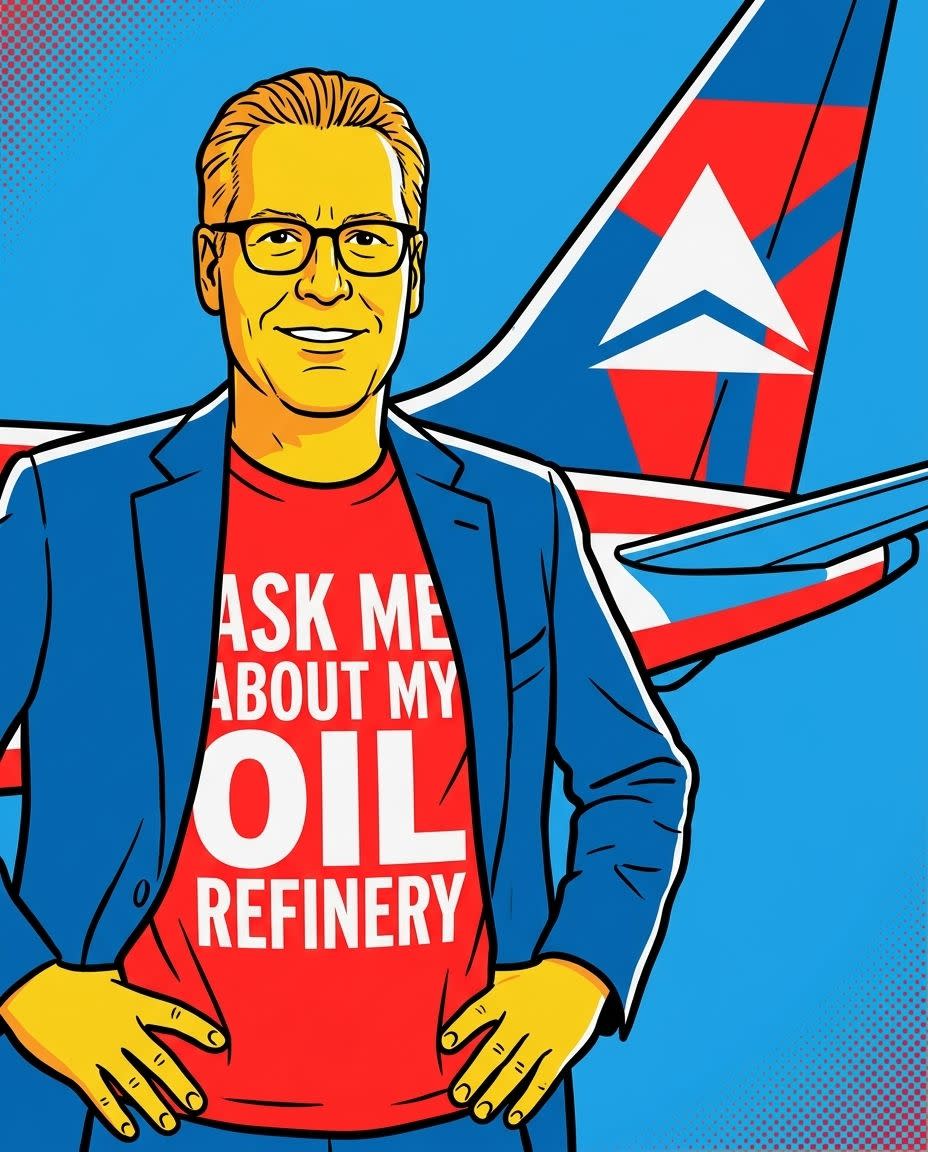
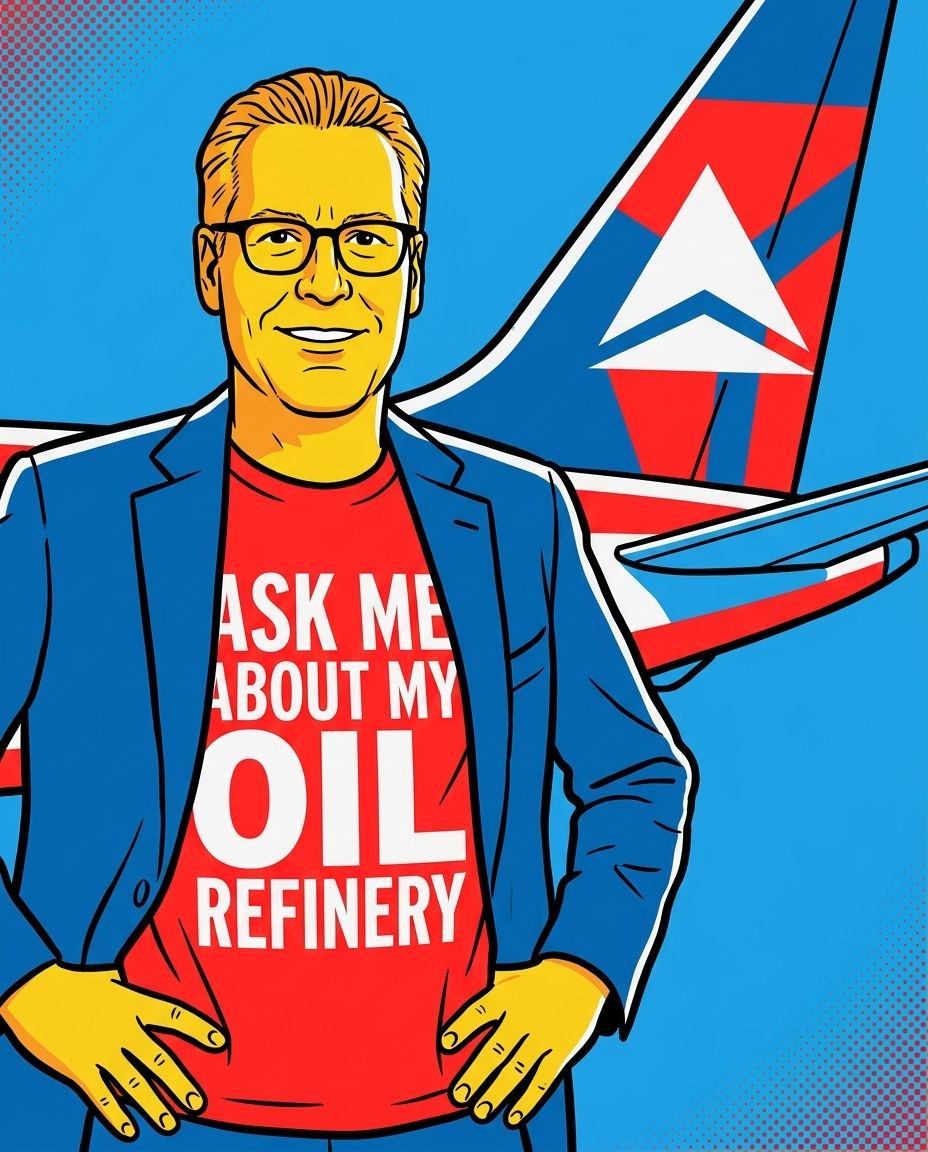
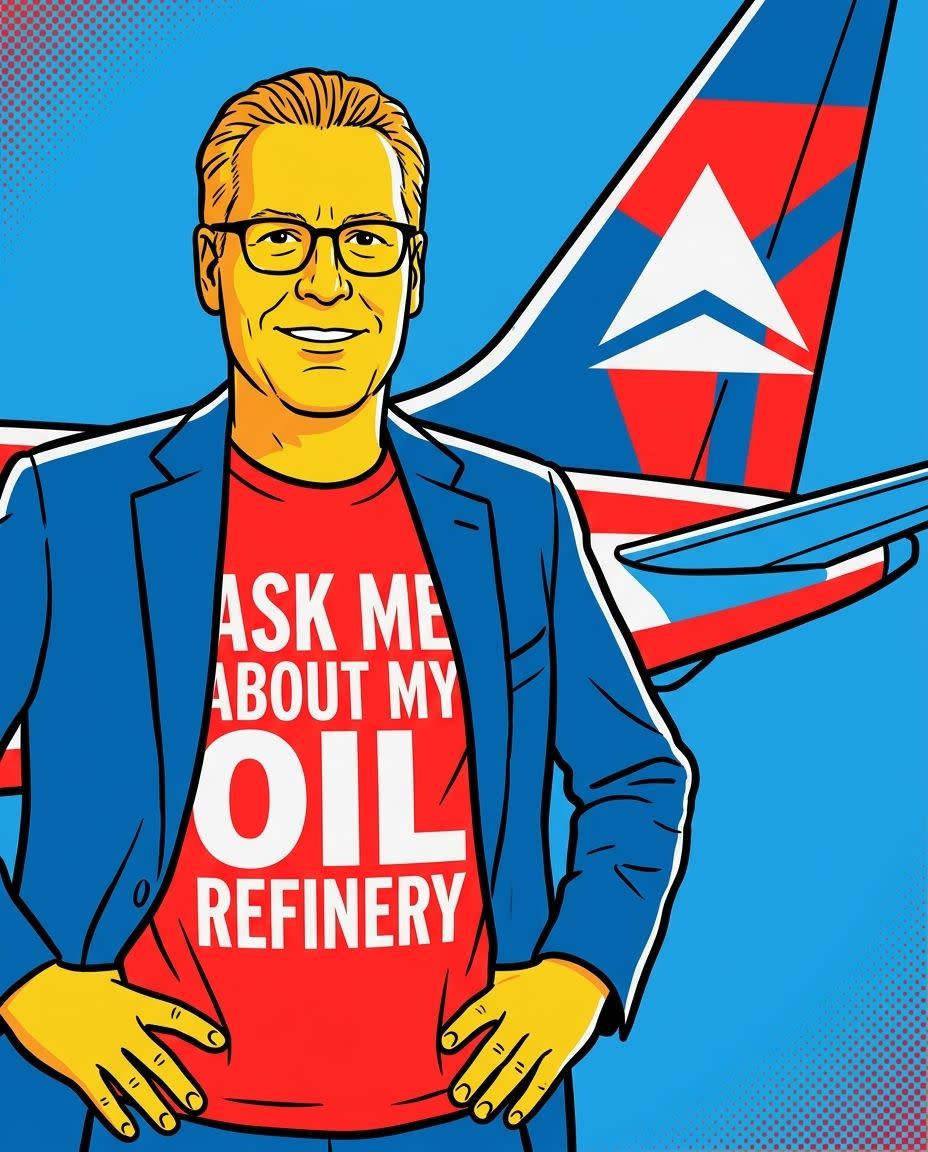
The genuinely interesting wrinkle here is Delta's refinery outside Philadelphia, a facility it hoovered up from Phillips 66 back in 2012 in what everyone thought was a completely unhinged idea that made Delta look like your weird neighbor who makes his own cheese. It turns out buying your own refinery so you can convert crude directly into jet fuel is less unhinged when fuel prices spike 88% in five weeks. Delta expects a $300 million benefit from that refinery in Q2 alone. Bastian's exact quote: "We don't know where fuel is going to go, but to the extent fuel stays elevated, that refinery will continue to help us." Translation: making our own doesn’t look so crazy now, does it?

Delta Air Lines (DAL) — Everyone else is getting crushed by fuel costs. Delta owns a refinery. That's a $300 million Q2 advantage over every competitor that didn't buy one, and suddenly the weirdest capital allocation decision in airline history looks like genius.

ExxonMobil (XOM), Chevron (CVX), Shell (SHEL) — Geopolitical chaos in the Strait of Hormuz was a free revenue event for integrated oil majors. Higher crude, fatter upstream margins, no operational downside.

Oil Refiners — When crude spikes, refining crack spreads tend to follow. The ability to convert expensive crude into even more expensive jet fuel is a good business to be in right now.

Phillips 66 (PSX) — Sold Delta its Philadelphia refinery in 2012 for what everyone assumed was a great deal for Phillips. Turns out it was still a great deal for Phillips. Sometimes the exit is the win.

United (UAL), American (AAL), Southwest (LUV) — An 88% spike in your single largest operating expense, with no refinery to soften the blow. Margin compression is coming, and higher ticket prices are how it ends up being your customers' problem too.

FedEx (FDX) and the Logistics Industry — Fuel is the hidden tax on everything that moves. Higher crude doesn't just hit airlines — it runs through the entire supply chain and shows up in shipping rates.

Travelers — Airlines will pass the pain along. Expect airfares to climb as carriers scramble to protect margins. Premium demand is holding, but coach is about to get more expensive.

The Strait of Hormuz as a Concept — One geopolitical flare-up sent jet fuel up 88% in five weeks. The world's critical oil chokepoints remain exactly as fragile as advertised, and markets will keep relearning this lesson.

Delta Air Lines (DAL) — The company is benefiting from strong premium demand, an earnings beat, and a significant $300 million Q2 benefit from its owned refinery, which mitigates high jet fuel costs.

ExxonMobil (XOM) — As a major integrated oil and gas producer, ExxonMobil benefits from higher crude oil prices, which were driven up by geopolitical tensions.

Chevron (CVX) — As a large oil and gas exploration and production company, Chevron benefits from the increase in crude oil prices.

Shell (SHEL) — As a global energy company with significant upstream operations, Shell benefits from elevated crude oil prices.

Oil & Gas Exploration & Production — Companies in this industry benefit from higher crude oil prices, leading to increased revenue and profitability.

Oil Refining — Refineries, particularly those with integrated operations or favorable crack spreads, can benefit from the ability to convert higher-priced crude into higher-priced refined products like jet fuel.

Crude Oil — The commodity itself experienced a significant price increase due to supply concerns related to geopolitical tensions, benefiting producers.

Our analysts just identified a stock with the potential to be the next Nvidia. Tell us how you invest and we'll show you why it's our #1 pick. Tap here.

Phillips 66 (PSX) — While Delta's refinery, originally acquired from Phillips 66, is now a significant asset for Delta, Phillips 66's direct impact from this specific news is neutral as the sale occurred in 2012.

U.S. — The U.S. experiences both the negative impact of higher fuel costs for consumers and industries, and the positive impact of increased revenue for domestic oil producers.

Iran — Geopolitical actions initially caused oil price spikes, but subsequent de-escalation and agreement to reopen the Strait of Hormuz led to price drops, resulting in a mixed and volatile impact.

United Airlines (UAL) — As a major airline, United Airlines faces significant headwinds from the 88% increase in jet fuel prices, leading to higher operating costs.

American Airlines (AAL) — American Airlines will experience increased operational expenses due to the substantial rise in jet fuel costs.

Southwest Airlines (LUV) — Like other carriers, Southwest Airlines will see its profitability pressured by the sharp increase in jet fuel expenses.

FedEx (FDX) — As a major logistics and shipping company, FedEx faces higher fuel surcharges and operating costs due to increased jet fuel and crude oil prices.

Airline Industry (excluding Delta's refinery benefit) — The industry as a whole faces severe pressure from the dramatic increase in jet fuel costs, impacting profitability and potentially leading to higher ticket prices.

Logistics & Shipping — Companies in this industry face increased operational costs due to higher fuel prices, which can erode margins or necessitate higher shipping rates.

Jet fuel — The commodity's price surge represents a significant cost increase for its primary consumers, particularly airlines.

Immediate Airline Profitability Divergence — Delta's unique refinery asset will likely create a significant profitability advantage over competitors in the short term, as it mitigates the impact of soaring jet fuel prices. This could lead to outperformance for Delta shares compared to other airline stocks. Confidence: High.

Short-term Increased Airfare Prices — The 88% surge in jet fuel costs for most airlines will inevitably lead to increased ticket prices across the industry to offset higher operating expenses. This could impact consumer demand for travel. Confidence: High.

Medium-term Strategic Re-evaluation of Airline Operations — Other major airlines may begin to explore or re-evaluate strategies to hedge against or directly control fuel costs, potentially including investments in refining capacity or long-term fuel contracts. This could lead to M&A or new capital expenditures. Confidence: Medium.

Short-term Volatility in Crude Oil Markets — Geopolitical events, particularly those affecting critical chokepoints like the Strait of Hormuz, will continue to introduce significant volatility and price spikes in crude oil markets. This impacts global energy costs and inflation. Confidence: High.

Long-term Shift in Investor Perception of Integrated Models — Delta's success with its refinery may lead investors to view integrated business models (e.g., airlines owning refineries) more favorably, especially in volatile commodity environments. This could influence valuation metrics for companies with similar vertical integration. Confidence: Medium.

↑ Crude Oil Prices — Geopolitical tensions and supply disruptions, even if temporary, directly increase crude oil futures prices.

↑ Jet Fuel Prices — Directly stated in the article as an 88% increase, this indicator reflects higher costs for airlines and consumers.

↑ Consumer Price Index (CPI) — Higher fuel costs for airlines and logistics companies will likely translate into increased prices for travel and goods, contributing to overall inflation.

↓ Airline Industry Profit Margins (excluding Delta) — Increased fuel costs will directly reduce the profit margins for airlines without their own refining capabilities.

→ Consumer Confidence — While premium demand is holding up, overall consumer confidence could be negatively impacted by rising travel costs and general inflation from higher energy prices, but the article doesn't provide enough to suggest a strong directional shift.

One stock. Nvidia-level potential. 30M+ investors trust Moby to find it first. Get the pick. Tap here.
Comments
You must be logged in to comment.