yahoo Press
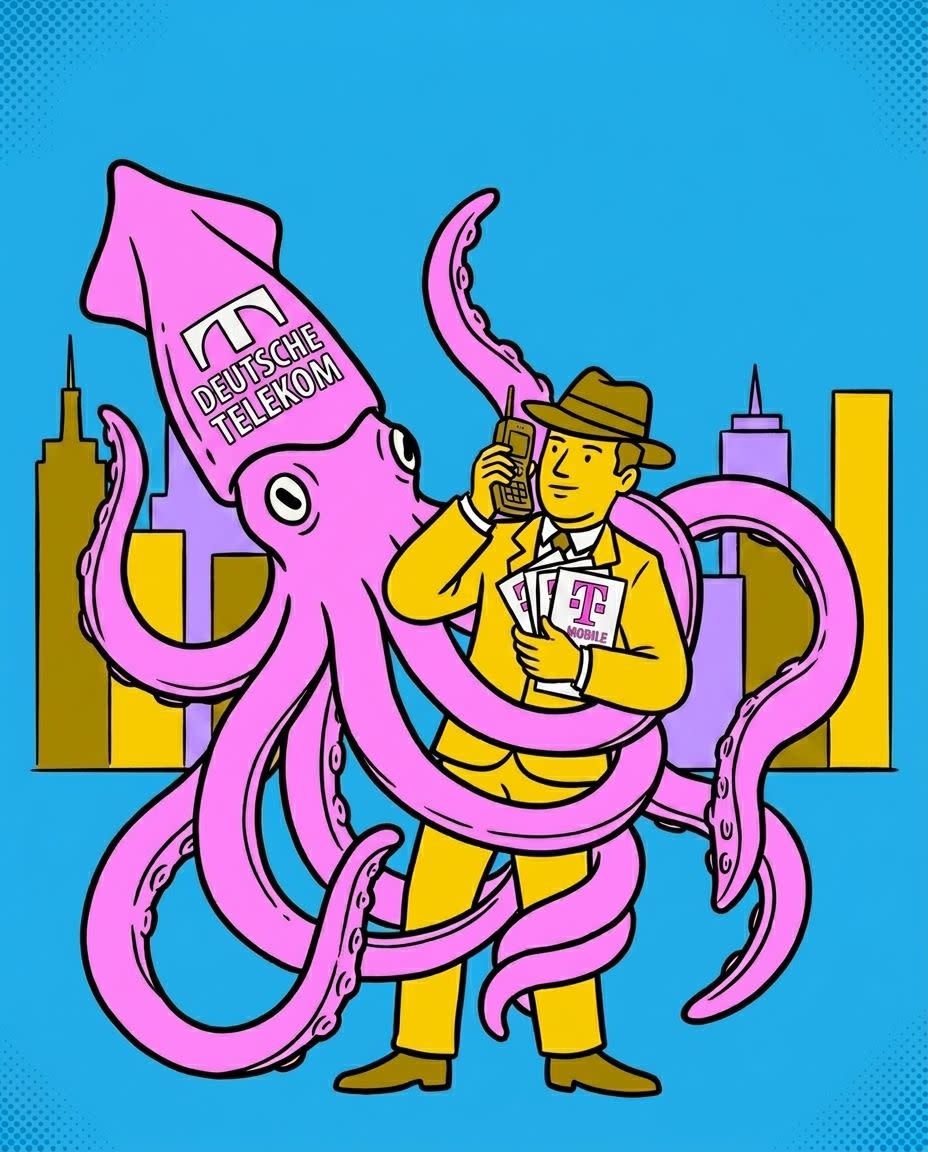
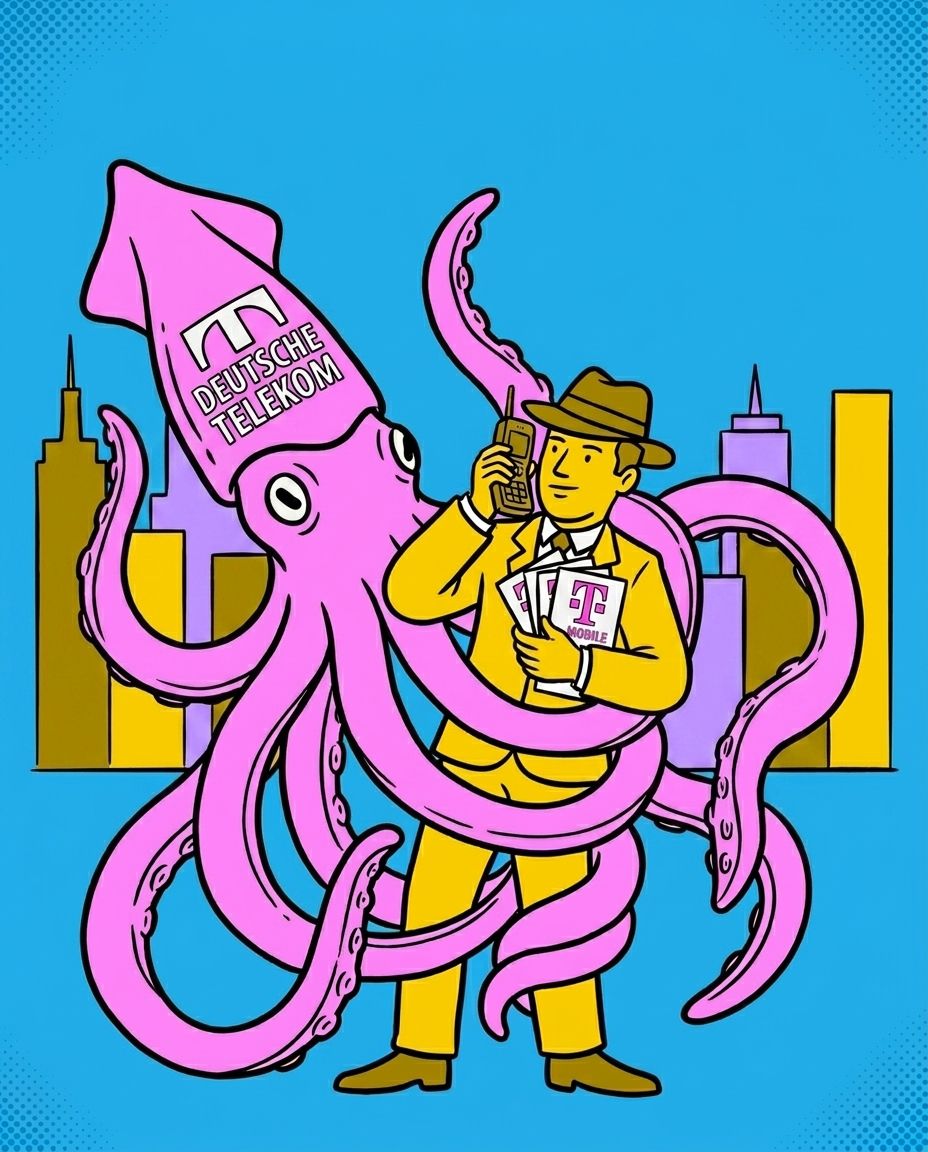
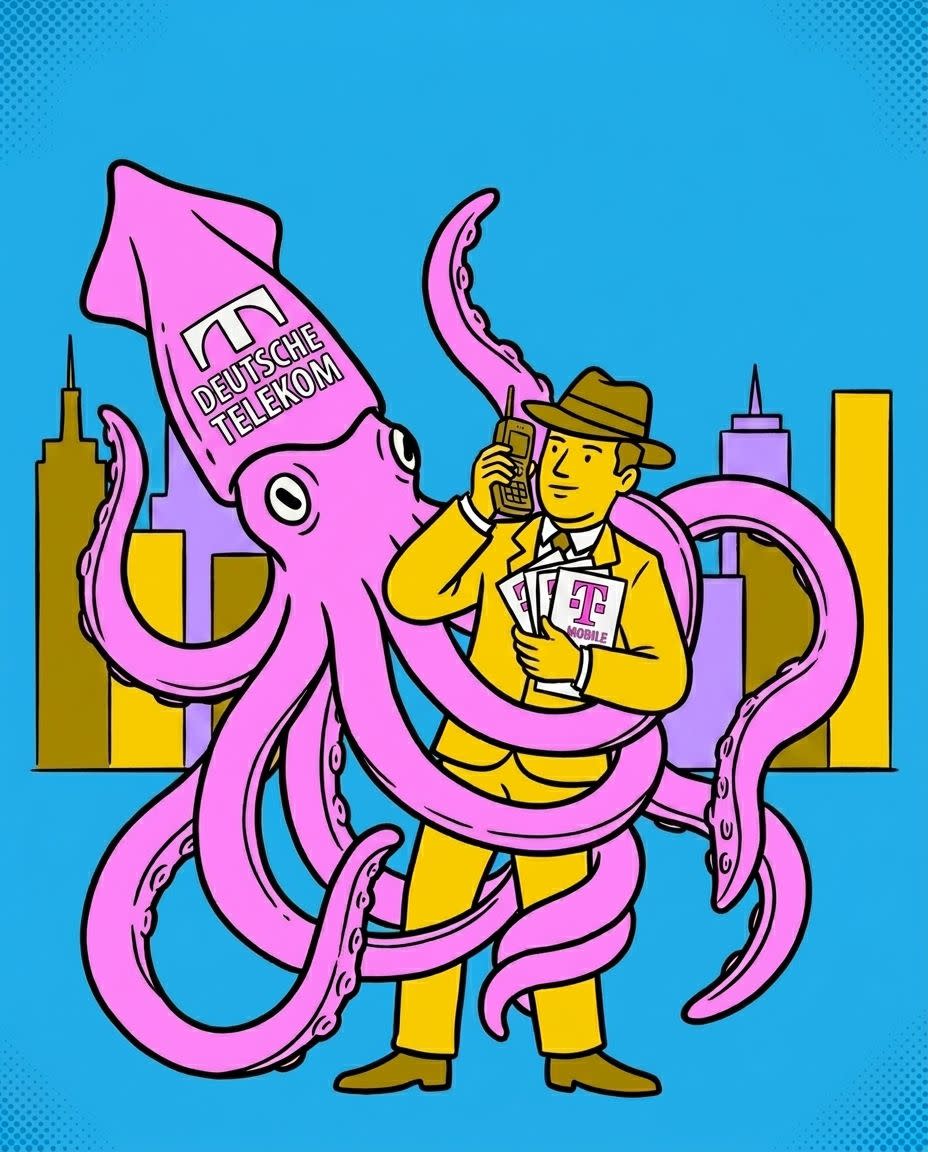
Deutsche Telekom Wants the Whole T-Mobile Story
Images
1 / 5
2 / 5

3 / 5

4 / 5
5 / 5
The above button links to Coinbase. Yahoo Finance is not a broker-dealer or investment adviser and does not offer securities or cryptocurrencies for sale or facilitate trading. Coinbase pays us for certain activity generated through this link. Prices displayed are informational.

Deutsche Telekom may finally be confronting its own reality: T-Mobile U.S. is the growth engine, and everything else is increasingly secondary. A full merger would simplify the structure, deepen U.S. exposure, and create a telecom giant, but it also risks political friction and investor pushback on both sides of the Atlantic.

Deutsche Telekom is reportedly exploring an early-stage plan to combine fully with T-Mobile U.S. through a new holding company that would bid for both firms in an all-stock deal. The structure would leave existing shareholders in both companies owning the combined entity, which could be listed in both the US and Europe.

This would effectively collapse the current arrangement, where Deutsche Telekom owns around 53% of T-Mobile, into a single corporate structure. Instead of a parent-subsidiary relationship, the business would operate as one unified group.

If completed, the deal would create a telecom company with a market value approaching $300 billion, potentially making it the most valuable in the world. It would also rank among the largest public mergers ever, surpassing historic deals like Vodafone’s takeover of Mannesmann.

Markets reacted cautiously. Deutsche Telekom shares fell following the reports, with T-Mobile also declining. That reflects typical investor skepticism toward large, complex deals, especially when details remain unclear.

The political dimension is significant. The German government and state lender KfW together hold roughly 28% of Deutsche Telekom, giving Berlin considerable influence over any major strategic decision. In the U.S., regulators would closely scrutinize any deal involving critical telecom infrastructure and a major wireless operator.

Despite these hurdles, the strategic logic rests on a clear reality: T-Mobile has become the dominant driver of Deutsche Telekom’s growth, valuation, and investor appeal.

At its core, this is about structure catching up with economics. Deutsche Telekom is nominally a European telecom leader, but much of its value comes from the US. T-Mobile has delivered stronger growth, better margins, and greater investor enthusiasm than the group’s European operations.

The US telecom market is structurally more attractive. It is more consolidated, pricing is stronger, and operators have more room to generate returns. Europe, by contrast, remains fragmented and heavily regulated, limiting profitability and scale.

A full merger would formalize this imbalance. It would simplify the group’s structure and potentially reduce the valuation discount applied to Deutsche Telekom, which partly reflects its complex ownership setup and weaker European exposure.

However, the deal raises difficult questions. T-Mobile investors may resist combining with a slower-growing European business. While Deutsche Telekom shareholders gain greater exposure to a high-performing asset, the reverse is less obviously attractive.

There are also political sensitivities. Telecom networks are seen as strategic infrastructure, meaning governments are unlikely to take a passive role. Germany may want to retain influence over a national champion, while U.S. authorities could scrutinize foreign involvement in a major operator.

Execution risk is another factor. Large cross-border mergers are complex, involving regulatory approvals, governance decisions, and integration challenges. Even if approved, the benefits may take years to materialize.

Still, the strategic rationale is compelling. Scale matters in telecom, and the ability to operate across markets, especially one as profitable as the U.S., offers long-term advantages. Deutsche Telekom has already leaned heavily into T-Mobile’s success. This move would simply take that logic further.

For now, discussions remain preliminary, and there is no certainty a deal will proceed. The idea has surfaced before, and the hurdles, political, regulatory, and financial, remain substantial.

If talks advance, attention will focus on three areas: political approval in Germany and the US, investor support (particularly from T-Mobile shareholders), and the precise structure of the transaction.

Ultimately, Deutsche Telekom is trying to align its corporate structure with where its growth actually comes from. The question is whether stakeholders on both sides of the Atlantic are willing to accept that shift, or whether the risks outweigh the strategic appeal.

Ericsson (ERIC) — A larger, more unified telecom giant like the proposed Deutsche Telekom/T-Mobile entity could increase investment in network infrastructure and technology, benefiting equipment suppliers.

Nokia (NOK) — As a major provider of telecommunications equipment, Nokia stands to benefit from increased capital expenditure on network upgrades and expansion by a combined, scaled-up telecom operator.

Our analysts just identified a stock with the potential to be the next Nvidia. Tell us how you invest and we'll show you why it's our #1 pick. Tap here.

Telecommunications Equipment Manufacturing — A potential merger creating a larger, more efficient telecom operator could lead to increased capital expenditure on network infrastructure and technology, benefiting suppliers.

U.S. — The U.S. telecom market is highlighted as more attractive with stronger pricing and returns, and a combined entity would deepen exposure to this growth engine, potentially attracting further investment.

Deutsche Telekom (DTEGY) — While shares fell initially due to deal complexity and political risks, the strategic rationale aims to simplify structure and reduce valuation discount, creating a mixed long-term outlook.

T-Mobile U.S. (TMUS) — Shares declined initially, and while the deal offers scale, T-Mobile investors may resist combining with a slower-growing European business, leading to an uncertain impact.

Vodafone (VOD) — Mentioned only as a historical comparison for large mergers, indicating no direct impact from this potential transaction on its operations or market position.

Global Telecommunications Industry — The proposed merger highlights structural differences between the U.S. and European markets but does not fundamentally alter the global competitive landscape or regulatory environment.

Germany — The German government and KfW hold significant stakes in Deutsche Telekom, creating political sensitivities regarding control and national champion status, leading to a mixed outcome depending on deal structure and government influence.

Verizon (VZ) — A larger, more unified T-Mobile U.S. could intensify competition in the U.S. wireless market, potentially impacting Verizon's market share or pricing power.

AT&T (T) — Increased scale and potential efficiencies from a combined T-Mobile U.S. could heighten competitive pressure for AT&T in the U.S. telecom sector.

European Telecommunications Industry — The article explicitly states Europe is "fragmented and heavily regulated, limiting profitability and scale," and this merger highlights its structural disadvantages compared to the U.S. market.

Europe — The article underscores Europe's fragmented and heavily regulated telecom market, which limits profitability and scale, contrasting negatively with the U.S. market's attractiveness and potentially drawing investment away.

[Immediate] Investor Skepticism and Volatility — Markets reacted cautiously with shares of both Deutsche Telekom and T-Mobile U.S. falling, reflecting typical investor apprehension towards large, complex cross-border deals with unclear details and significant execution risks. Confidence: High.

[Short-term] Increased Regulatory Scrutiny — Any advancement in merger talks will immediately trigger intense scrutiny from U.S. regulators and the German government, given the critical nature of telecom infrastructure and the significant market value of the combined entity. Confidence: High.

[Medium-term] Potential for U.S. Market Consolidation — If the merger proceeds, it would further consolidate the U.S. telecom market, potentially leading to increased pricing power for the remaining major players and heightened competitive pressure for rivals like AT&T and Verizon. Confidence: Medium.

[Long-term] Re-evaluation of European Telecom Strategy — The article highlights the structural disadvantages of the European telecom market (fragmentation, heavy regulation). A successful merger leveraging U.S. growth could prompt other European telecom players to reassess their own strategies and market exposures. Confidence: Medium.

[Long-term] Shift in Global Telecom Power Dynamics — The creation of a potentially $300 billion telecom giant, heavily reliant on U.S. growth, would signify a notable shift in global telecom power, emphasizing the U.S. market's strategic importance and potentially influencing future cross-border investments. Confidence: Medium.

↑ [Global Telecom Sector M&A Activity] — The strategic rationale for scale and simplification, despite hurdles, could inspire other large telecom players to explore consolidation or structural simplification, potentially leading to an increase in M&A discussions.

↓ [Deutsche Telekom Share Price (DTEGY)] — Initial market reaction was negative, and continued uncertainty or investor pushback could sustain downward pressure on Deutsche Telekom's stock.

↓ [T-Mobile U.S. Share Price (TMUS)] — Similar to Deutsche Telekom, T-Mobile U.S. shares declined post-report, and investor concerns about dilution or integration challenges could keep the stock under pressure.

→ [U.S. Telecommunications Industry Competition] — A potential merger could lead to a more consolidated U.S. market, but the immediate impact on overall competition levels remains to be seen, as regulators would weigh in.

→ [European Telecommunications Industry Profitability] — The article highlights the structural issues limiting European profitability; this merger does not directly address those, so the overall profitability trend for the sector remains largely unchanged.

One stock. Nvidia-level potential. 30M+ investors trust Moby to find it first. Get the pick. Tap here.
Comments
You must be logged in to comment.