yahoo Press
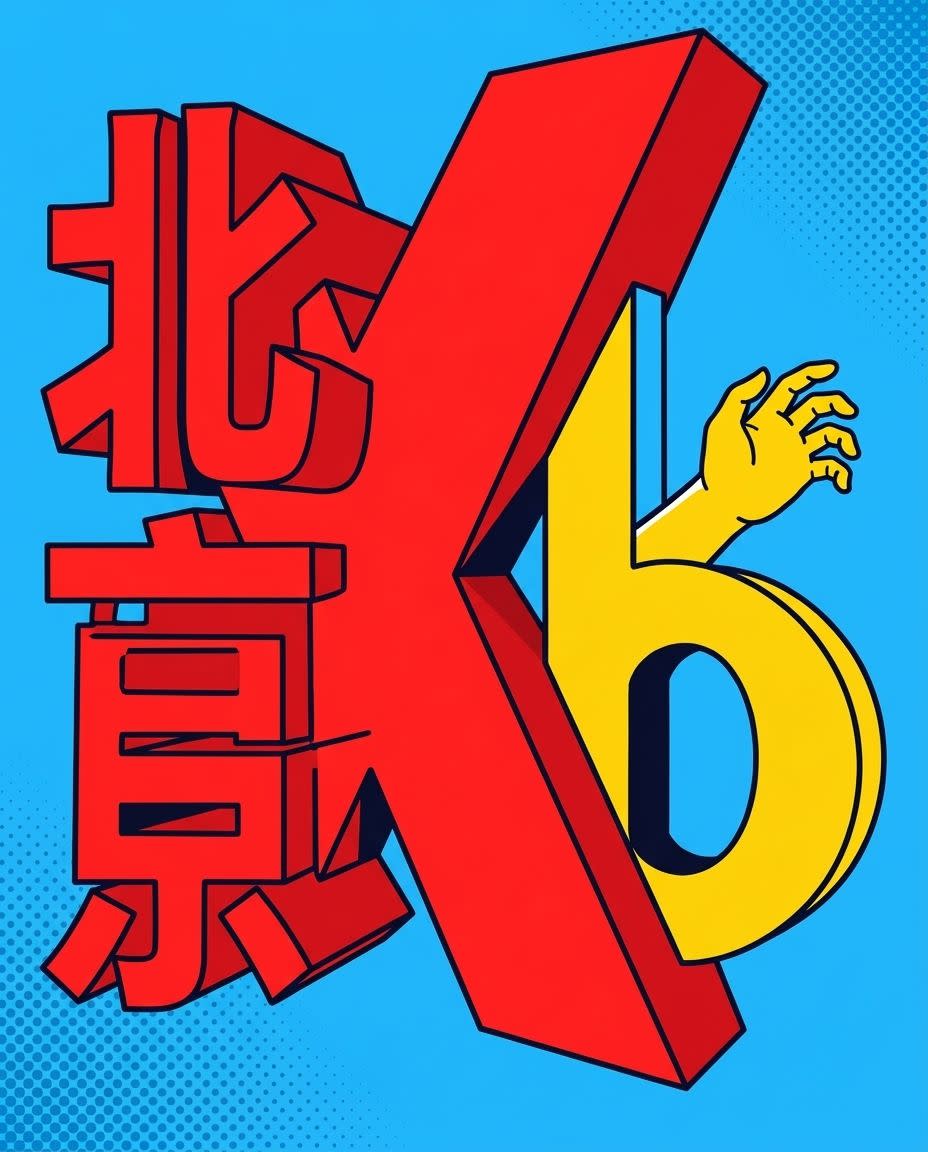
Beijing Moves to Block $2 Billion Meta-Manus Deal
Images
1 / 5
2 / 5

3 / 5

4 / 5
5 / 5
The above button links to Coinbase. Yahoo Finance is not a broker-dealer or investment adviser and does not offer securities or cryptocurrencies for sale or facilitate trading. Coinbase pays us for certain activity generated through this link. Prices displayed are informational.

China is guarding its intellectual property and tech prowess with steel armor. Beijing on Monday moved to block Meta's $2 billion acquisition of Manus, a Chinese-founded AI startup, in one of the sharpest assertions of state control yet.

The state’s message is clear: This Singapore-washing won’t be tolerated anymore.

China's state planner issued a brief statement Monday demanding Meta and Manus unwind the $2 billion acquisition, following a probe that Beijing launched into the acquisition earlier this year.

Manus was Beijing’s AI poster child. It was founded in China and made waves in the industry when it launched its AI agent — a system that can act autonomously on a user's behalf — in March last year. It’s a success story Beijing would otherwise celebrate: a frontier AI product with world-class performance built by Chinese engineers. Except, Manus ditched Beijing for Singapore, relocated its operations and then got acquired by Meta. Beijing can’t let it go. It promptly launched a probe into the acquisition in January, seeking to discourage other Chinese tech startups from pursuing a similar strategy.

It got so bad that China banned two co-founders of Manus, Xiao Hong and Ji Yichao, from leaving the country as it carried out the investigation.

This is just yet another tech company wrangled up in the age-old U.S.-China feud. Both parties have been holding years of mistrust, suspicion and bad faith, weaponizing technology as a national security threat.

Beijing is effectively drawing a red line: Chinese-origin AI talent and technology is a national asset, not a commodity to be acquired by American tech giants — regardless of where a company formally incorporates. But it’s all about the timing. Doing it right before president Trump’s visit to a summit to discuss tech and trade disputes is asserting those red lines.

Meta has given a carefully vague non-answer to the development. It said that the transaction complied with applicable law and that it anticipates "an appropriate resolution" and that a blocked acquisition is a missed opportunity etc.

The U.S. banned Huawei and ZTE from American networks in 2019, restricted semiconductor exports to China in 2022, finalized rules barring US investment in Chinese AI, semiconductor, and quantum firms in 2024, banned new foreign-made drones from the US market in 2025. And as of last month, moved to block TP-Link routers on national security grounds. Manus is yet another collateral damage in this feud.

There is a chance Beijing is just posturing to leverage its position ahead of the Trump meeting. Either way, Meta will have to negotiate some form of compromise, such as a partial licensing deal, perhaps, or a structured spinout.

But analysts have warned that a dramatic response from Beijing could achieve the opposite effect than one intended. Instead of encouraging and welcoming talent, it would dampen entrepreneurs with global ambitions and force them to start businesses abroad from the outset — the very brain drain Beijing says it wants to prevent.

By blocking this deal so publicly, China may have secured the technology while accelerating the flight of the people who create it.

Baidu (BIDU) — As a leading Chinese AI company, it benefits from Beijing's policy to protect domestic AI talent and technology, potentially reducing foreign competition for skilled personnel.

Alibaba (BABA) — This Chinese tech giant stands to benefit from increased government support and protection for domestic AI innovation, fostering a more robust local ecosystem.

Tencent (TCEHY) — As a major Chinese technology and AI player, it gains from policies that prevent Chinese AI assets from being acquired by foreign entities, strengthening its competitive position domestically.

Microsoft (MSFT) — As a leading US AI developer, it could see increased domestic investment and potentially become an alternative acquisition target for companies like Meta seeking AI capabilities within a less geopolitically fraught environment.

Google (GOOGL) — This US tech giant benefits from the US government's efforts to protect its own AI and semiconductor industries, reducing the risk of advanced Chinese technology being integrated into rival US platforms.

NVIDIA (NVDA) — As a dominant US AI chip manufacturer, it benefits from the broader US strategy to secure its technological leadership, potentially leading to increased demand for its products from domestic AI developers.

C3.ai (AI) — As a US-based enterprise AI software provider, it could benefit from increased focus and investment in domestic AI solutions by US companies, including potential M&A interest.

SMIC (00981.HK) — As a major Chinese semiconductor manufacturer, it benefits from Beijing's emphasis on domestic technological self-reliance and protection of its intellectual property.

Artificial Intelligence (China) — The industry benefits from strong government protection of its intellectual property and talent, fostering domestic development and reducing foreign acquisition.

Artificial Intelligence (United States) — The industry benefits from policies that protect US technological leadership and reduce the integration of Chinese-origin AI into rival US platforms, potentially increasing domestic investment.

Semiconductor (United States) — The industry continues to benefit from government policies aimed at securing its technological advantage and restricting access to advanced technology by geopolitical rivals.

Our analysts just identified a stock with the potential to be the next Nvidia. Tell us how you invest and we'll show you why it's our #1 pick. Tap here.

United States — Benefits from its government's assertive stance in protecting its national security interests and technological leadership against perceived threats from China.

China — While protecting its intellectual property and asserting state control, it risks accelerating a "brain drain" of entrepreneurial talent seeking less restrictive environments abroad.

Meta (META) — The company faces a significant setback with its $2 billion acquisition blocked, disrupting its AI strategy and forcing it to seek alternative, potentially more costly, avenues for AI development.

Manus — The AI startup's acquisition is blocked, its founders face travel bans, and its future is highly uncertain, likely leading to operational and financial distress.

Huawei — Although already subject to US bans, the article reinforces the ongoing geopolitical tensions that continue to restrict its global market access and growth opportunities.

ZTE (0763.HK) — Similar to Huawei, this Chinese telecommunications equipment provider remains negatively impacted by the persistent US-China tech feud and associated restrictions.

TP-Link — The company faces a block on its routers in the US market, indicating a broadening scope of US national security concerns impacting Chinese tech firms.

Mergers & Acquisitions (Global Tech) — The industry faces increased regulatory scrutiny and geopolitical risk, particularly for cross-border deals involving US and Chinese technology companies, leading to uncertainty and potential deal cancellations.

Venture Capital (China) — Chinese VC firms and startups with global ambitions face dampened exit opportunities through foreign acquisition, potentially reducing investment appeal for internationally focused ventures.

Social Media — Companies in this sector, particularly those with global ambitions like Meta, face increased geopolitical hurdles when attempting to expand or acquire technology across national borders.

Singapore — The country's reputation as a neutral hub for "washing" the origin of Chinese tech startups is negatively impacted, potentially leading to increased scrutiny of companies relocating there.

[Immediate] Increased Geopolitical Risk in Tech M&A — The explicit blocking of a $2 billion deal by China sends a clear signal that cross-border tech acquisitions, especially involving AI and Chinese-origin IP, will face heightened regulatory and political hurdles. This will immediately deter similar deals and increase due diligence costs for ongoing transactions. Confidence: High.

[Short-term] Shift in AI Investment Strategies — Meta and other major tech players will likely pivot their AI acquisition strategies away from Chinese-origin startups, focusing more on domestic or geopolitically neutral targets. This could lead to increased valuations for non-Chinese AI startups and a re-evaluation of internal AI development. Confidence: High.

[Medium-term] Acceleration of "Brain Drain" from China — Beijing's actions, including travel bans, are likely to discourage Chinese AI talent and entrepreneurs with global ambitions from staying in China, potentially accelerating their relocation to countries perceived as more welcoming for international business and less restrictive. This could impact China's long-term innovation capacity. Confidence: Medium.

[Long-term] Intensification of US-China Tech Decoupling — This incident further solidifies the trend of technological decoupling between the US and China, with both nations increasingly viewing advanced technology as a national asset to be protected. This will lead to parallel, distinct tech ecosystems and reduced interoperability, impacting global supply chains and standards. Confidence: High.

[Medium-term] Increased Scrutiny on "Origin-Washing" Practices — The explicit mention of "Singapore-washing" indicates that regulatory bodies will increase scrutiny on companies attempting to obscure their country of origin through relocation. This will make it harder for startups to use such strategies to bypass geopolitical restrictions. Confidence: Medium.

↓ Global Tech M&A Volume — Increased regulatory hurdles and geopolitical risks will likely reduce the number and value of cross-border tech acquisitions, particularly those involving US and Chinese entities.

↑ US AI Sector Investment — As US companies pivot away from Chinese targets, domestic AI startups and research initiatives may see increased investment and M&A activity.

↓ Chinese Tech Startup Valuations (Global Ambitions) — Startups in China aiming for international acquisition or global markets may see their valuations decrease due to reduced foreign buyer interest and increased exit uncertainty.

→ USD Index — While the immediate impact on the USD is likely neutral, continued US assertion of technological leadership could indirectly support the dollar as a safe-haven currency in times of geopolitical tension.

↑ Geopolitical Risk Premium — The ongoing US-China tech feud, highlighted by this event, will contribute to a higher geopolitical risk premium across global markets, particularly in technology and related sectors.

One stock. Nvidia-level potential. 30M+ investors trust Moby to find it first. Get the pick. Tap here.
Comments
You must be logged in to comment.