yahoo Press
SpaceX Will Pay Elon Musk To Conquer Mars — No, Really, It's In The Filing
Images
1 / 4
2 / 4

3 / 4

4 / 4
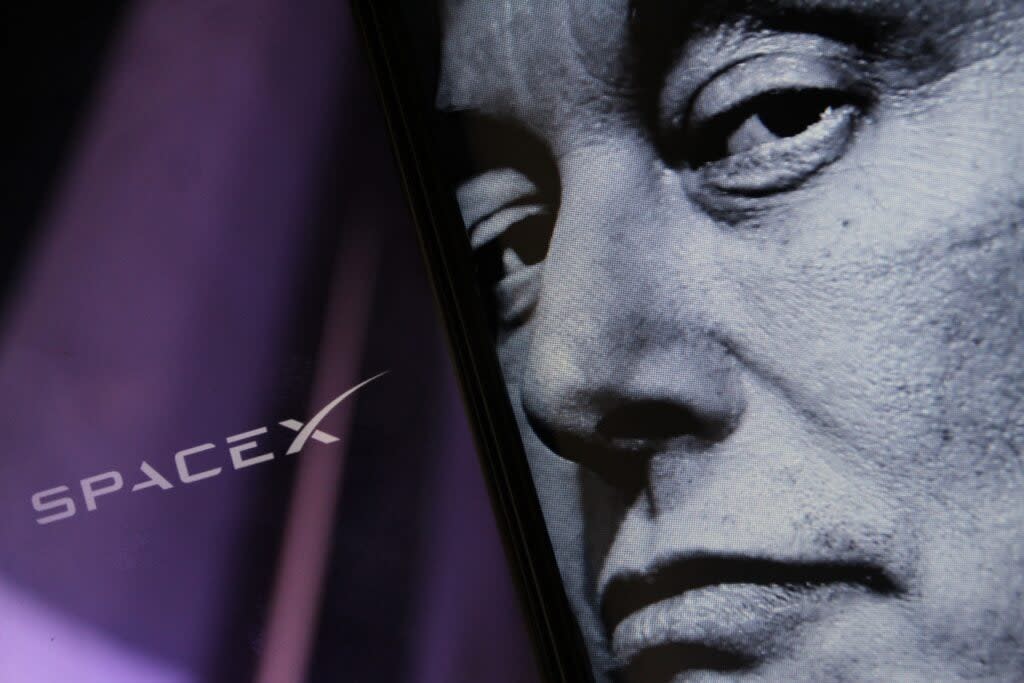
Buried inside the confidential paperwork SpaceX has handed regulators ahead of its planned public offering sits one of the strangest performance targets ever set for a corporate executive: build a city on Mars, and the company will hand its founder one of the largest stock awards in history.

According to a Reuters report Tuesday that reviewed excerpts of the rocket maker’s confidential SEC registration statement, the SpaceX board signed off on the plan in January. It clears Elon Musk to receive 200 million super-voting restricted shares — but only if SpaceX hits a $7.5 trillion valuation and helps establish a permanent human settlement on Mars with at least one million residents.

Don't Miss:

A single bad hire can set a startup back years. Here are the 5 hires founders most often misjudge — and why

Still Learning the Market? These 50 Must-Know Terms Can Help You Catch Up Fast

A second tranche of up to 60.4 million restricted shares, granted on March 23, kicks in if SpaceX clears separate valuation hurdles and runs orbital data centers capable of delivering 100 terawatts of computing power — an amount of energy roughly equivalent to 100,000 nuclear reactors running simultaneously.

The package has no calendar deadline. As long as Musk remains at the company, the awards stay open-ended. Miss the targets, and he gets nothing.

What makes the structure jaw-dropping isn’t the dollar value — SpaceX is private, so the package can’t be priced — but the milestones themselves.

Most CEOs are paid against revenue, profit margins, or share-price benchmarks. Musk, per the Reuters reporting, will be measured against humanity’s relocation to another planet.

That milestone is, by Musk’s own recent admission, a long way off.

Trending: Avoid the #1 Investing Mistake: How Your ‘Safe' Holdings Could Be Costing You Big Time

In February, he told audiences that SpaceX’s Mars timeline was slipping by “five to seven years” so the company could focus on lunar missions first.

Starship, the rocket built specifically to carry colonists, has not yet performed the orbital refueling demonstration that any Mars mission would require — a test now slated for later this year. And Musk’s own arithmetic for getting one million people to the surface relies on launching roughly 1,000 to 2,000 Starships every 26 months once the project hits full stride, a launch tempo that has never been attempted in the history of spaceflight.

NASA’s own timeline, by contrast, doesn’t have humans setting foot on Mars before the 2030s or 2040s, and most independent space scientists describe the one-million figure as decades beyond what’s plausible.

See Also: Skip the Regrets: The Essential Retirement Tips Experts Wish Everyone Knew Earlier.

The pay package lands as SpaceX moves toward what would be the largest IPO ever attempted on a U.S. exchange, with the listing targeted around Musk’s birthday on June 28 at a valuation of roughly $1.75 trillion — already more than double the value of every other private company on Earth. Reuters reported that Musk’s nominal SpaceX salary has stood at $54,080 a year since 2019, leaving his payday almost entirely dependent on hitting the new performance bar.

He is currently worth somewhere between $636 billion and $840 billion, depending on whose tally you trust. If SpaceX prices its IPO where its bankers want it, he becomes the first human worth a trillion dollars.

Still no Martians, though.

Image: Kemarrravv13 from Shutterstock

Read Next: Thinking about ETFs? See what investment risks you should be aware of before you buy.

Up Next: Transform your trading with Benzinga Edge's one-of-a-kind market trade ideas and tools. Click now to access unique insights that can set you ahead in today's competitive market.

Get the latest stock analysis from Benzinga:

APPLE (AAPL): Free Stock Analysis Report

TESLA (TSLA): Free Stock Analysis Report
Comments
You must be logged in to comment.