bbc Press
Trump tells Congress ceasefire means he does not need their approval for Iran war
Images
1 / 7

2 / 7
3 / 7

4 / 7

5 / 7

6 / 7

7 / 7
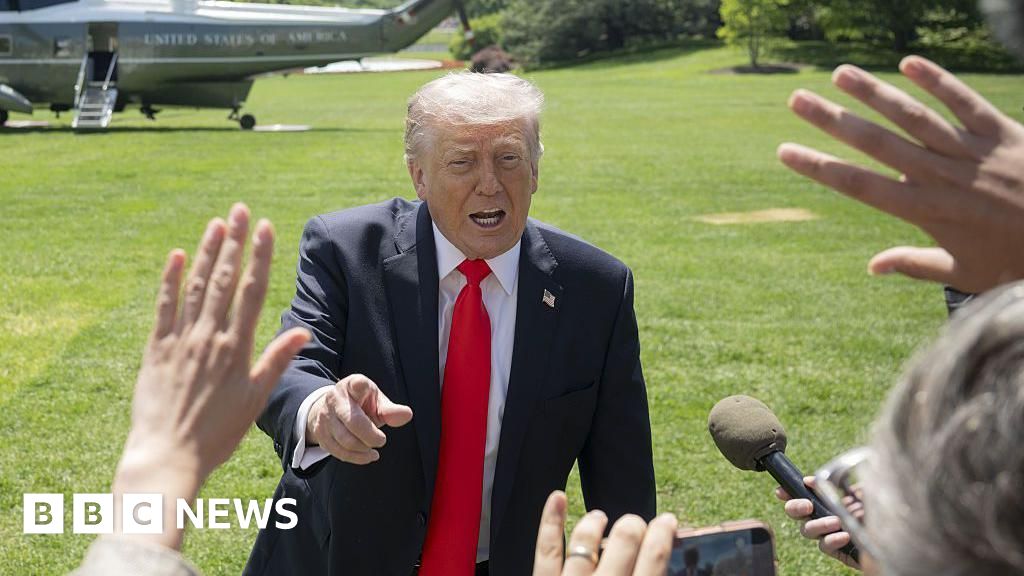
President Donald Trump has told Congress that US hostilities with Iran have "terminated" owing to an ongoing ceasefire as he argued that he did not need lawmakers' authorisation for the conflict.

"There has been no exchange of fire between the United States Forces and Iran since April 7, 2026," the president wrote to congressional leaders. "The hostilities that began on February 28, 2026 have terminated."

It came on the 60th day since he formally notified Congress of strikes against Iran.

US law requires him to "terminate any use of United States Armed Forces" within 60 days of such a notification - unless Congress allows a continuation.

"I have and will continue to direct United States Armed Forces consistent with my responsibilities and pursuant to my constitutional authority to conduct United States foreign relations and as Commander in Chief and Chief Executive," Trump wrote in Friday's letters.

The relevant piece of US law, the decades-old War Powers Resolution, makes certain requirements of a president "within sixty calendar days" of their use of US armed forces in combat.

It requires a president to end the use of those forces unless Congress makes a formal declaration of war or allows the president an extension, up to 30 days in length, for the "prompt removal" of troops.

US Defence Secretary Pete Hegseth also argued before a congressional hearing on Thursday that the clock had paused on the deadline to seek legislators' approval.

"We are in a ceasefire right now, which our understanding means the 60-day clock pauses or stops in a ceasefire," he said.

The questioner, Democratic Senator Tim Kaine, responded: "I do not believe the statute would support that."

The law was passed in 1973 to limit the ability of then-President Richard Nixon to continue waging war in Vietnam.

Lawmakers have faced mounting questions about whether they intend to schedule a vote in each chamber to decide whether the war should receive formal authorisation.

Trump administration officials have been in conversation with members of Congress about gaining congressional approval, the BBC's US partner CBS reported.

Democratic-led attempts in both chambers of Congress to constrain Trump in the case of Iran have repeatedly failed.

Most Republicans have opposed the Democratic efforts, though some have indicated they might reconsider their positions after the 60-day mark.

The private Christian summer camp had originally planned to host 800 girls to a different location which did not experience any fatalities last year.

Profit margins were "broadly unchanged" between February and March, the UK's competition watchdog says.

The former leader has not responded to US accusations that he is aiming to destabilise the government.

A shortage of fertiliser due to the Iran conflict could reduce crop yields and push prices higher, says the boss of Yara.

The BBC visited the Villages, the world’s largest retirement community and a key GOP stronghold, where a growing chorus of critics signals change ahead of President Trump’s visit.
Comments
You must be logged in to comment.