yahoo Press
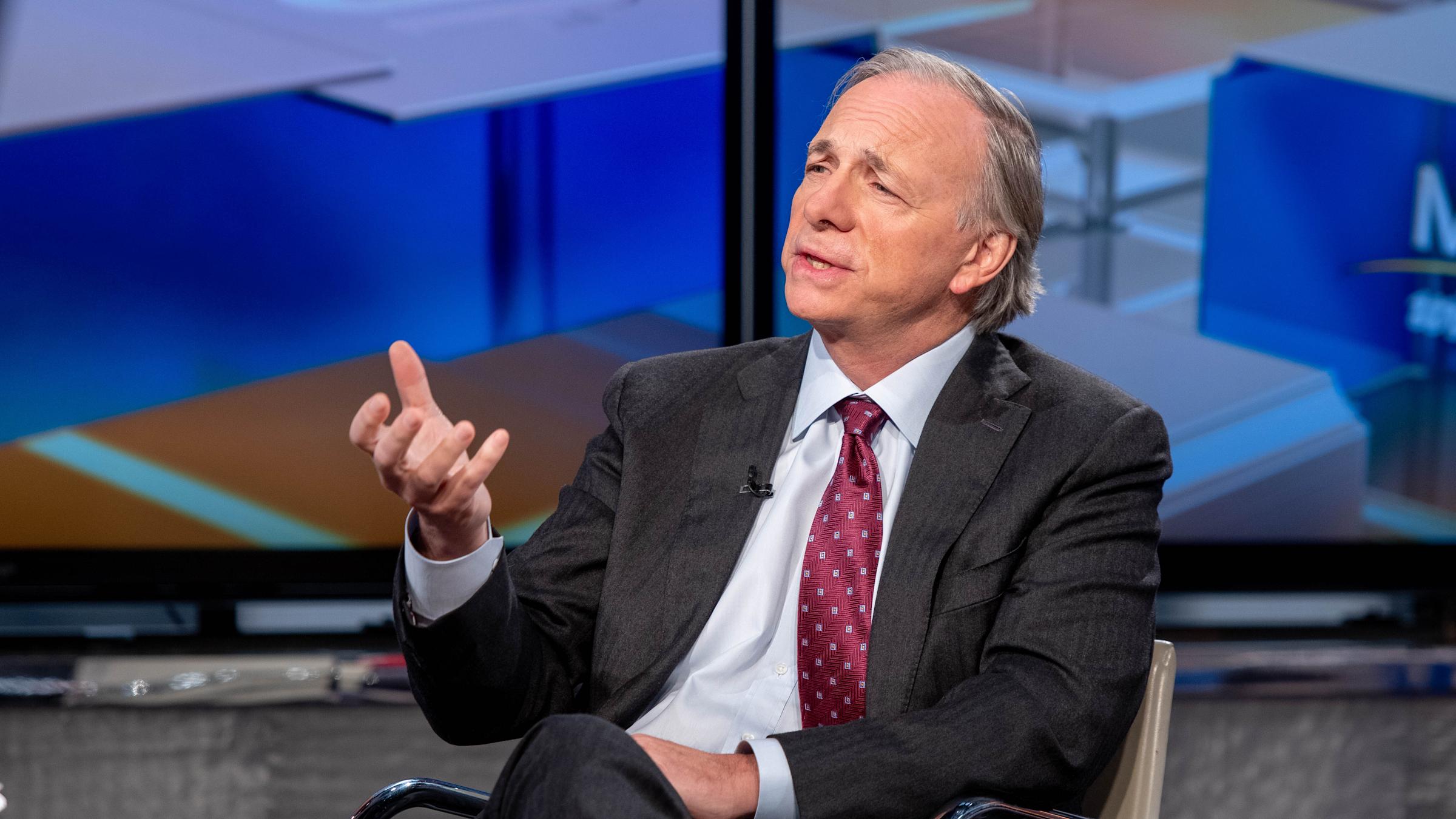
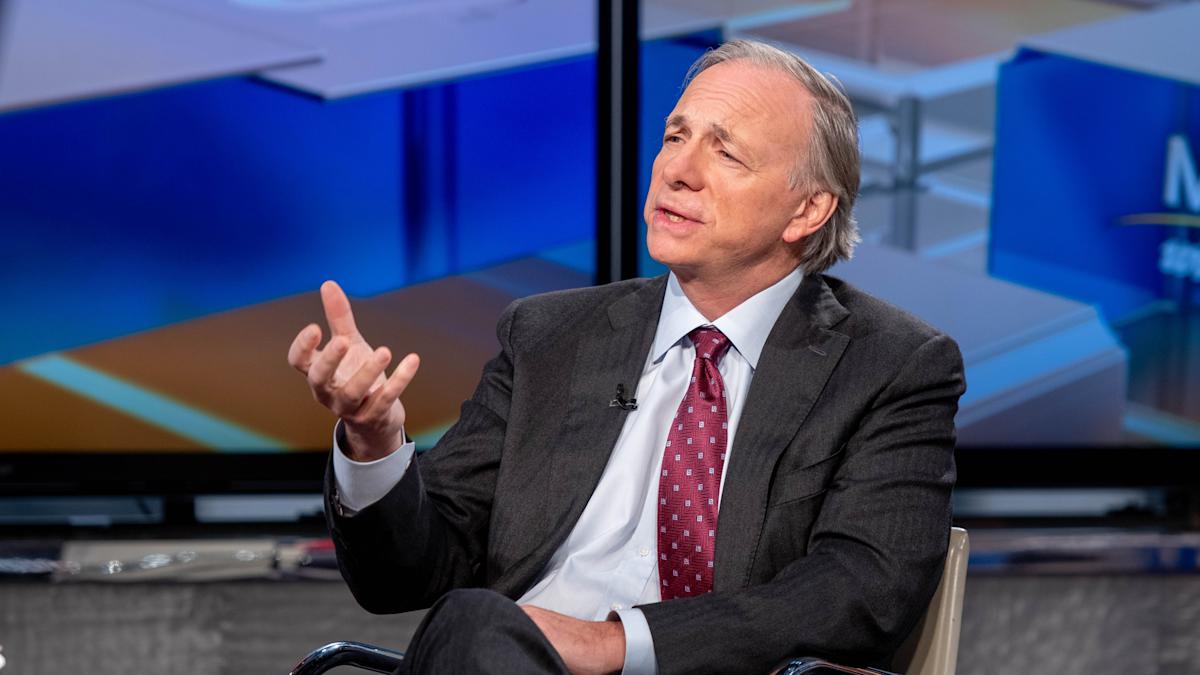
Ray Dalio was asked if he felt optimistic about the future of the US. His answer? ‘No.’
Images
1 / 4
2 / 4

3 / 4

4 / 4
Moneywise and Yahoo Finance LLC may earn commission or revenue through links in the content below.

America has long been the world’s dominant economic power. Yet, Ray Dalio — founder of the world’s largest hedge fund, Bridgewater Associates — is sounding an unmistakable alarm about the country’s future.

In an episode of The Diary of a CEO podcast, host Steven Bartlett asked Dalio if he felt optimistic about the future of the U.S. (1).

Thanks to Jeff Bezos, you can now become a landlord for as little as $100 — and no, you don't have to deal with tenants or fix freezers. Here's how

Dave Ramsey warns nearly 50% of Americans are making 1 big Social Security mistake — here’s how to fix it ASAP

The IRS usually taxes gold as a collectible — but this little-known strategy lets you hold physical bullion tax-free. Get your free guide from Priority Gold

“No,” was Dalio’s blunt reply.

To back up his response, he pointed first to America’s swelling national debt — hovering around $38.7 trillion and climbing, as of February 2026 (2). In fact, Dalio has long warned of a looming “debt death spiral,” where the government must borrow simply to service existing obligations — a dynamic that accelerates over time (3).

Recently, in an editorial for Time, Dalio reiterated his position, outlining the many reasons he believes we are on the brink of the next world war. (4).

“Virtually nobody is talking about the fact that we are in the early stages of a world war that isn’t going to end any time soon,” he wrote.

Dalio also outlined 13 indicators of the world’s powers preparing for war in the past and drew parallels between those past wars and today.

The indicators include weaponizing trade chokepoints, as witnessed in the Strait of Hormuz, economic wars in the form of sanctions and trade blockages, as the Trump administration’s tariffs have done, financial stress, deficits and debts — the U.S. is currently in more debt than ever before in history, standing at $38.6 trillion (5) — and powerful new technologies that can be used for war, as witnessed by the U.S. military’s new ‘AI-first’ approach to warfare (6).

And on the podcast, he also highlighted deepening internal rifts in the U.S. “There’s a fight between the left and the right due to wealth and value gaps and people not believing that the system will work for them,” Dalio said.

“Democracy is at risk.”

Geopolitics aside, his economic message appears to have struck a chord. The podcast — titled “Ray Dalio: We’re Heading Into Very, Very Dark Times! America & The UK’s Decline Is Coming!” — has racked up nearly 6 million views on YouTube, as of February 2026.

But is he right to be so gloomy? And are you at financial risk?

Here are a few ways to cut down on your risk profile — but still make some healthy financial gains.

For investors, Dalio’s outlook is sobering: mounting debt, widening political divides and a high-stakes rivalry with China. But he also offered a simple way to guard against those risks — the very principle that helped him build the world’s largest hedge fund.

“I learned how to diversify my bets so that I could dramatically reduce my risk without reducing my returns,” he said on the podcast. “Following those principles took me to the biggest hedge fund in the world, the most successful and so on.”

While he didn’t list specific assets in that interview, Dalio has elsewhere consistently emphasized the importance of diversification, singling out one classic hedge — gold.

“People don’t have, typically, an adequate amount of gold in their portfolio,” he told CNBC (3). “When bad times come, gold is a very effective diversifier.”

Long viewed as the ultimate safe haven, gold isn’t tied to any single country, currency or economy. It can’t be printed out of thin air like fiat money, and in times of economic turmoil or geopolitical uncertainty, investors tend to pile in — driving up its value.

Read More: Robert Kiyosaki warned of a 'Greater Depression' — with millions of Americans going poor. Was he right?

Gold hit an all-time high of $5,405 an ounce in late January 2026, and though the price has dropped slightly due to investor fears about the Iran war, Citibank is predicting the precious metal will hit $5,000 per ounce in the next three months — noting that even with the current slump, gold prices are up 42% year over year (7).

If you’re looking to cash in on gold, one way to invest in gold that also provides significant tax advantages is to open a gold IRA with the help of Priority Gold.

Gold IRAs allow investors to hold physical gold or gold-related assets within a retirement account, which combines the tax advantages of an IRA with the protective benefits of investing in gold, making it an attractive option for those looking to potentially hedge their retirement funds against economic uncertainties.

To learn more, you can get a free information guide that includes details on how to get up to $10,000 in free silver on qualifying purchases.

Gold isn’t the only asset seasoned investors look to as an alternative. Real estate has long been a cornerstone of diversification because it offers something different: a physical, income-producing asset that can keep working even when markets turn volatile.

Property values often rise with inflation, reflecting the increasing costs of land, labor and materials. Rental income typically climbs as well, providing a steady cash flow that isn’t tied to the daily swings of the stock market.

Real estate has also built fortunes for some of the world’s most prominent figures — including the current U.S. commander in chief, Donald Trump.

“I just notice that when you have that right piece of property, whatever it might be, including location, it tends to work well in good times and in bad times,” Trump told Steve Forbes back in 2011 (8).

Becoming a real estate mogul is easier than ever today. In fact, you don’t even need to buy a property outright anymore to benefit from real estate investing.

You can now tap into this market by investing in shares of vacation homes or rental properties through Arrived, which offers an easier way to get exposure to this income-generating asset class.

Backed by world-class investors like Jeff Bezos, Arrived allows you to invest in shares of rental homes with as little as $100, all without the hassle of mowing lawns, fixing leaky faucets or handling difficult tenants.

And getting in on the action is so easy. Just browse a curated selection of homes that have been vetted for their appreciation and income potential, and once you find a property you like, select the number of shares you’d like to purchase.

Then, sit back as you start receiving any positive rental income distributions from your investment.

Speaking of easy, there are more easy ways to tap into the real estate market through rental types like multifamily units.

And this is not a niche market: Multifamily buildings are now the most common type of rental housing in America, according to a 2026 Redfin report (9). In their survey, they found multifamily units now make up 33.1% of renter-occupied housing units in America, surpassing single-family units, which only account for 31%.

Accredited investors can now tap into this opportunity through platforms such as Lightstone DIRECT, which gives accredited investors access to single-asset multifamily and industrial deals.

Lightstone DIRECT’s direct-to-investor model ensures a high degree of alignment between individual investors and a vertically-integrated, institutional owner-operator — a sophisticated and streamlined option for individual investors looking to diversify into private-market real estate.

With Lightstone DIRECT, accredited individuals can access the same multifamily and industrial assets Lightstone pursues with its own capital, with minimum investments starting at $100,000.

Today’s investment landscape offers endless choices — from stocks and bonds to real estate, commodities and cryptocurrency.

While the sheer number of diversification options might be overwhelming, leaning into that variety can help hedge financial risk. Sometimes, that even means doing it the old-fashioned way and dipping your toes into the stock market.

And lately, Dalio seems to agree.

In fact, despite his gloomy forecasts about the U.S., he has recently doubled down on American stocks, with Bridgewater betting heavily on AI companies in Q4 2025. According to a recent 13F filing, the firm added $695 million in Nvidia stock, $487 million in Alphabet, $395 million in Microsoft and $388 million in Amazon stock (10).

But with so many moving parts, you might not find it easy to replicate Dalio’s strategy. It can be difficult to see how your portfolio is performing and exactly how much risk you’re carrying. Once you start diversifying, it might make sense to work with a financial advisor.

If you don’t have an advisor yet, you could consider finding one with platforms like WiserAdvisor, which can connect you with vetted professionals who specialize in portfolio risk assessment and long-term planning for individuals with investments totaling $250,000 or more.

Simply answer a few questions about your savings, retirement timeline and overall investment portfolio.

From there, WiserAdvisor reviews its network to match you — for free — with up to three vetted, reputable advisors aligned with your specific needs.

You can then schedule no-obligation consultations with your matches to determine who is the best fit for your long-term goals.

Note: WiserAdvisor is a matching service and does not provide financial advice directly. All matched advisors are third parties, and specific financial results are not guaranteed.

Robert Kiyosaki says this 1 asset will surge 400% in a year and begs investors not to miss this ‘explosion’

No time to lower your crippling car insurance rate? Here’s how to do it within minutes — you could end up paying $29/month without a single phone call

Millionaires under 43 are reshaping investing — just 25% of their portfolios are in stocks. Here’s where their money is going

Vanguard’s outlook on U.S. stocks is raising alarm bells for retirees. Here’s why and how to protect yourself

Join 250,000+ readers and get Moneywise’s best stories and exclusive interviews first — clear insights curated and delivered weekly. Subscribe now.

We rely only on vetted sources and credible third-party reporting. For details, see our *editorial ethics and guidelines.*

@TheDiaryOfACEO (1); Peter G. Peterson Foundation (2); CNBC (3), Time (4); U.S. Debt Clock (5); Defense.gov (6); The Street (7); @Forbes (8); Redfin News (9); The Globe and Mail (10)

This article provides information only and should not be construed as advice. It is provided without warranty of any kind.
Comments
You must be logged in to comment.