yahoo Press
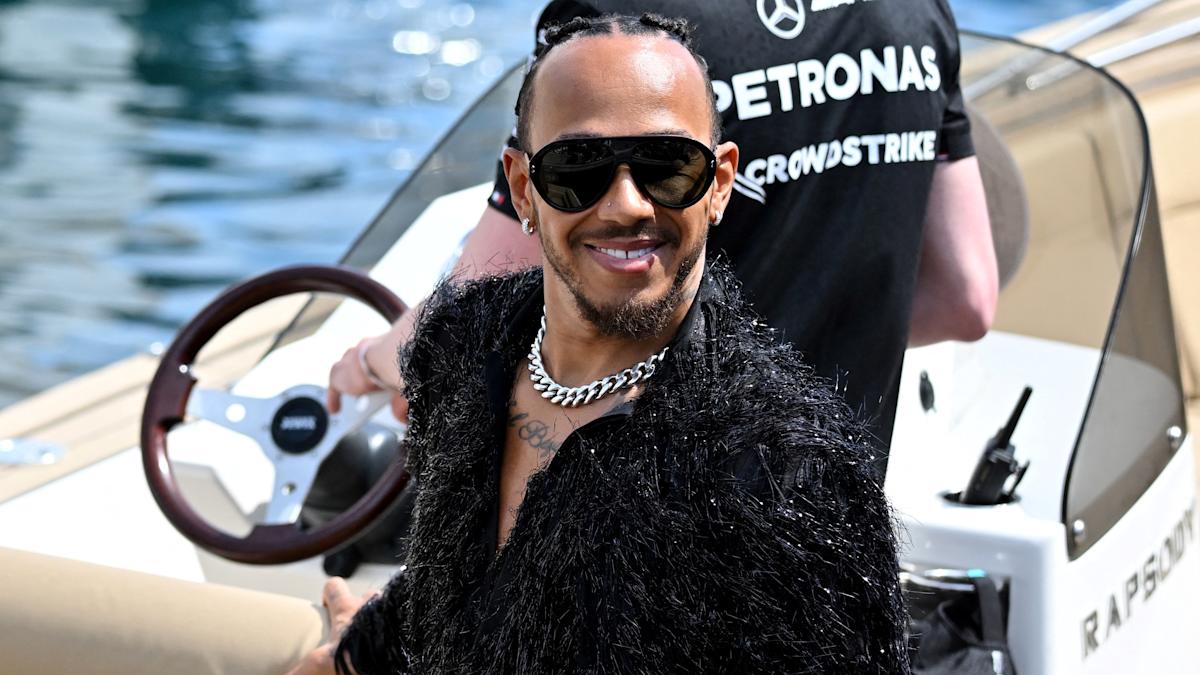
Lewis Hamilton blasted as hypocrite for wanting a wealth cap — critics call out $500M net worth, Monaco tax haven
Images

1 / 5
2 / 5

3 / 5
4 / 5

5 / 5
Moneywise and Yahoo Finance LLC may earn commission or revenue through links in the content below.

Lewis Hamilton is taking heat after saying no one should be allowed to have billions of dollars — a comment critics say rings hollow coming from one of the richest drivers in Formula 1.

In a viral clip, Hamilton was asked what law he would create if everyone in the world had to follow it. His answer: something to address the gap between the rich and the poor.

The ultra-rich use these 5 real estate strategies to build wealth while they sleep — you can start with just $100

The IRS usually taxes gold as a collectible — but this little-known strategy lets you hold physical bullion tax-free. Get your free guide from Priority Gold

Dave Ramsey warns nearly 50% of Americans are making 1 big Social Security mistake — here’s how to fix it ASAP

“One of the things that I struggle with every day, and it’s just how life is, and it’s been this way for thousands of years, is that there is such a disparity between the wealthy and the poor,” Hamilton said (1).

He pointed to the homelessness he sees in Los Angeles as an example.

“When you drive around LA there’s still so many people living on the streets,” he said. “You shouldn’t be able to have billions, right, I think there should be a limit to how much you can have because there’s enough to go around to everyone.”

Hamilton added that he did not know exactly how such a law should be implemented, but said the goal would be to create “more equality and equal access for everyone.”

The clip comes from Hamilton’s 2023 appearance on Jay Shetty’s On Purpose podcast, but it has resurfaced and exploded on X, where one post of the exchange has drawn more than 21 million views.

And the backlash has been swift.

Hamilton is not a billionaire. But he is one of the richest and highest-paid athletes in the world, with his fortune widely estimated to be in the ballpark of $500 million.

That made his comments an easy target for critics who argued that the seven-time F1 world champion is hardly speaking from the sidelines of the wealth divide.

Some pointed to his long-running status as one of Formula 1’s most marketable stars. Others highlighted his current ties to Ferrari, luxury brands and the ultra-wealthy ecosystem surrounding F1.

But the sharpest criticism focused on where Hamilton lives.

Hamilton has long been associated with Monaco, the tiny Mediterranean principality famous for its yacht-filled harbor, luxury real estate and favorable tax rules. Monaco does not collect personal income tax, capital gains tax or wealth or property tax from residents, making it one of the world’s best-known tax havens for the ultra-rich.

That detail gave critics a simple counterpunch: Hamilton may be calling for limits on extreme wealth, but he lives in a place famous for helping the wealthy keep more of it.

Community notes attached to the viral clip on X also pointed out that Hamilton has lived in Monaco and Switzerland, accusing him of doing so to “avoid tax.”

Meanwhile, his current personal life has added another layer to the criticism.

Hamilton has been dating Kim Kardashian (2), who Forbes lists as having a net worth of $1.9 billion thanks largely to her stake in Skims, a clothing company she co-founded.

For critics, that made the optics even sharper: Hamilton was calling for limits on extreme wealth while dating someone who is already in the billionaire class.

Read More: Thanks to Jeff Bezos, you can become a landlord for $100 — without the headache of actually being one

Hamilton is hardly alone in choosing Monaco as a home base.

The tiny principality has long been a magnet for Formula 1 drivers and other high-earning athletes. Hamilton, Max Verstappen, Lando Norris, George Russell and several other F1 stars have all been linked to Monaco residency (3).

It is not hard to see why. Wealthy individuals tend to think carefully about where they live, where their money is held, how it is invested and how much of it is exposed to taxes. After all, the more you make, the more the government tries to take.

But you don’t have to make a move to Monaco to think more strategically about taxes.

For decades, high-net-worth individuals have used proven strategies — and specific types of assets — to legally slash what they owe to the IRS. According to a report from ProPublica (4), some billionaires in the U.S. paid little or no income tax relative to the vast fortunes they’ve amassed.

That’s largely because billionaires build their wealth through assets — not wages. As the value of these assets rises, their net worth grows — and as NYC Mayor Zohran Mamdani’s pied-a-tierre tax points out, the U.S. tax system isn’t designed to fully capture those gains. Capital gains are typically taxed at lower rates than regular income, and taxes aren’t owed until the assets are sold.

In fact, as NYU Stern professor Scott Galloway once put it, if you’re trying to build wealth, you have “an obligation to pay as little tax as possible.”

One asset class America’s wealthy have relied on for decades is real estate — in part because of the generous tax treatment it receives.

When you earn rental income from an investment property, you can claim deductions for a wide range of expenses, such as mortgage interest, property taxes, insurance and ongoing maintenance and repairs.

Real estate investors also benefit from depreciation — a tax deduction that recognizes the gradual wear and tear of a property over time. Investors can also use tools like refinancing and 1031 exchanges to keep their capital compounding instead of cashing out.

Today, you don’t need to be a millionaire — or even to buy a single property outright — to invest in real estate. Mogul is a crowdfunding platform that offers an easier way to get exposure to this income-generating asset class.

As a real estate investment option offering fractional ownership in blue-chip rental properties, it gives investors monthly rental income, real-time appreciation and tax benefits — without the need for a hefty down payment or 3 a.m. tenant calls.

Founded by former Goldman Sachs real estate investors, the team hand-picks the top 1% of single-family rental homes nationwide for you. In other words, you gain access to institutional-quality offerings for a fraction of the usual cost.

Each property undergoes a rigorous vetting process, requiring a minimum 12% return even in downside scenarios. Across the board, the platform features an average annual IRR of 18.8%. Offerings often sell out in under three hours, with investments typically ranging between $15,000 and $40,000 per property.

Sign up for an account and browse available properties here to start investing today.

Another option is Lightstone DIRECT, which gives accredited investors access to single-asset multifamily and industrial deals.

Lightstone DIRECT’s direct-to-investor model ensures a high degree of alignment between individual investors and a vertically-integrated, institutional owner-operator — a sophisticated and streamlined option for individual investors looking to diversify into private-market real estate.

With Lightstone DIRECT, accredited individuals can access the same multifamily and industrial assets Lightstone pursues with its own capital, with minimum investments starting at $100,000.

But real estate is only the tip of the alternative asset iceberg that the ultra-rich are known for tapping into.

The wealthy don’t just focus on what they invest in — they also pay close attention to where those investments sit. Using tax-advantaged retirement accounts can be a powerful way to keep more capital compounding over time.

For instance, traditional IRAs and Roth IRAs allow investments to grow either tax-deferred or tax-free, depending on the account type. While many retirement accounts primarily hold stocks and mutual funds, some investors choose to diversify further.

Ray Dalio, founder of the world’s largest hedge fund, Bridgewater Associates, has repeatedly warned that many portfolios lack one key safe-haven asset: gold.

“People don’t have, typically, an adequate amount of gold in their portfolio,” he told CNBC last year. “When bad times come, gold is a very effective diversifier.”

Long seen as the ultimate safe haven, gold isn’t tied to any single country, currency or economy. It can’t be created at will by central banks like fiat money, and in times of economic turmoil, market turbulence or geopolitical uncertainty, investors tend to pile in — driving up its value.

Despite a recent pullback, gold prices are still up nearly 30% over the last 12 months.

One way to invest in gold that also provides significant tax advantages is to open a gold IRA with the help of Priority Gold.

Gold IRAs allow investors to hold physical gold or gold-related assets within a retirement account, thereby combining the tax advantages of an IRA with the protective benefits of investing in gold, making it an option for those looking to help shield their retirement funds against economic uncertainties.

When you make a qualifying purchase with Priority Gold, you can receive up to $10,000 in precious metals for free.

Of course, the ultra-rich rarely figure all of this out on their own.

Behind many wealthy families is a team of advisers — tax professionals, estate planners, accountants and financial advisers — helping them structure their money more efficiently.

That may be the real secret weapon of the wealthy: not just earning more, but getting better guidance on what to do with it.

A good financial adviser can help you look at your full picture — your income, investments, taxes, retirement goals and estate plans — and build a strategy designed to keep more of your money working for you.

That kind of guidance is not just for billionaires.

If you have a portfolio of $250,000 or more, platforms like WiserAdvisor can connect you with vetted professionals who specialize in this kind of planning.

Simply answer a few questions about your savings, retirement timeline and overall investment portfolio.

From there, WiserAdvisor reviews its network to match you — for free — with up to three vetted, reputable advisors aligned with your specific needs.

You can then schedule no-obligation consultations with your matches to determine who is the best fit for your long-term goals.

WiserAdvisor is a matching service and does not provide financial advice directly. All matched advisors are third parties, and specific financial results are not guaranteed.

No time to shop for cheaper car insurance? This 2-minute check could slash your bill today — no phone calls required

Robert Kiyosaki says this 1 asset will surge 400% in a year and begs investors not to miss this ‘explosion’

Millionaires under 43 are reshaping investing — just 25% of their portfolios are in stocks. Here’s where their money is going

Here are the 4 costs Americans (still) overpay for every single month. How many of these are sabotaging your budget?

Join 250,000+ readers and get Moneywise’s best stories and exclusive interviews first — clear insights curated and delivered weekly. Subscribe now.

Article Sources

We rely only on vetted sources and credible third-party reporting. For details, see our ethics and guidelines.

@Jackkk/ X (1); Forbes (2); F1 Salaries (3); ProPublica (4);

This article provides information only and should not be construed as advice. It is provided without warranty of any kind.
Comments
You must be logged in to comment.