yahoo Press
I Have $85,000 in Home Equity and My Roof Just Failed. Should I Use a HELOC to Fix It?
Images

1 / 5

2 / 5

3 / 5
4 / 5

5 / 5
Benzinga and Yahoo Finance LLC may earn commission or revenue on some items through the links below.

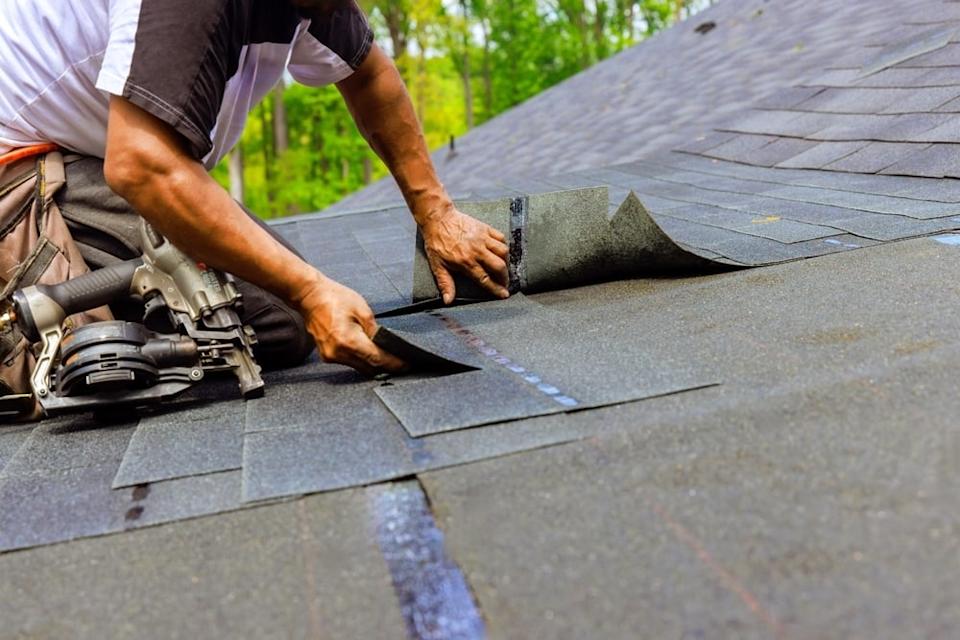
A failed roof is not a discretionary expense. Water intrusion causes structural damage, mold, and insurance complications that compound quickly if the repair is delayed. For a homeowner sitting on $85,000 in equity, a HELOC is one of the most practical ways to fund an urgent, high-cost repair without liquidating savings or reaching for a high-interest personal loan.

The question is not really whether to use the equity. It is whether a HELOC is the right structure for this specific situation, and what it will actually cost you.

A full roof replacement on an average American home runs between $9,000 and $22,000 depending on the size of the home, the materials used, and local labor costs. Metal roofing and slate run higher. A standard asphalt shingle replacement on a 2,000 square foot home typically falls between $11,000 and $16,000. If structural decking needs to be replaced due to water damage, add another $2,000 to $5,000.

Don't Miss:

He Had Plenty of Home Equity But Couldn’t Qualify for a HELOC. Here’s the Alternative He Found.

Small differences in withdrawal and tax strategy can significantly impact long-term retirement income — see where you stand today.

That cost range puts the project squarely within HELOC territory, large enough that putting it on a credit card is expensive, but small enough that you are drawing well within your available equity and leaving a significant cushion.

A personal loan for $15,000 at a typical rate of 12% to 16% over five years costs you between $4,000 and $5,500 in total interest. A HELOC at 8% to 9% on the same amount over the same period cuts that interest cost roughly in half. The savings are meaningful, and the HELOC has the additional advantage of being a revolving line, so if the repair uncovers additional damage mid-project, you have access to more funds without applying for a new loan.

The tradeoff is that a HELOC uses your home as collateral. Missing payments carries consequences that a personal loan default does not.

Trending: Your homeowner’s insurance won’t cover a broken HVAC — American Home Shield will, along with your plumbing, appliances, and more, starting at $19.99/month.

To qualify for a HELOC, your lender will order an appraisal to confirm your home’s current value, review your mortgage balance to calculate available equity, and assess your credit score and debt-to-income ratio. Most lenders allow you to borrow up to 80% to 85% of your home’s appraised value minus your outstanding mortgage.

If your home is worth $280,000 and you owe $195,000, your equity is $85,000 and a lender at 80% combined loan-to-value would allow a HELOC of up to $29,000. That is more than enough for a roof repair with room to spare.

The process typically takes two to six weeks from application to funding. If the roof is actively leaking, you may need a temporary tarp or emergency patching while the HELOC closes, which most roofing contractors can arrange.

See Also: One repair bill can cost more than a year of this — Choice Home Warranty covers your major home systems and appliances starting at around $49/month.

Before opening a HELOC for a roof repair, check your homeowner’s insurance policy. If the roof failed due to a covered event, such as storm damage or a falling tree, your insurer may cover a significant portion of the replacement cost. Filing a claim first and using a HELOC only for the uncovered remainder is always better than financing the full amount.

Not every homeowner wants to add another monthly payment. Companies like Point offer an alternative way to access home equity by providing cash upfront in exchange for a share of the home’s future appreciation, rather than charging monthly interest like a traditional loan. For homeowners facing major repair costs, comparing a HELOC against a home equity investment could help determine which option better fits their financial situation.

Read Next: Retirees With $1M+ In Savings Are Rethinking Their Tax Strategy — Here's Why Some Are Turning To Specialized Advisors

Building a resilient portfolio means thinking beyond a single asset or market trend. Economic cycles shift, sectors rise and fall, and no one investment performs well in every environment. That's why many investors look to diversify with platforms that provide access to real estate, fixed-income opportunities, precious metals, and even self-directed retirement accounts. By spreading exposure across multiple asset classes, it becomes easier to manage risk, capture steady returns, and create long-term wealth that isn't tied to the fortunes of just one company or industry.

Arrived

Backed by Jeff Bezos, Arrived Homes makes real estate investing accessible with a low barrier to entry. Investors can buy fractional shares of single-family rentals and vacation homes starting with as little as $100. This allows everyday investors to diversify into real estate, collect rental income, and build long-term wealth without needing to manage properties directly.

Immersed

Immersed is building technology for the future of work through spatial computing. Known for its AR/VR productivity platform that enables users to work across multiple virtual screens, the company has grown to more than 1.5 million users worldwide. Immersed is also developing Visor, a lightweight headset designed specifically for professional productivity, positioning the company at the intersection of remote work, extended reality (XR), and next-generation computing.

Vinovest

Fine wine and rare whiskey have historically moved independently of the stock market, making them a compelling alternative asset. Vinovest manages authenticated, insured portfolios of investment-grade wine and whiskey starting at $5,000 — sourcing, storage, and insurance all handled for you.

EnergyX

EnergyX is a clean energy technology company focused on direct lithium extraction and refinery technologies for the lithium-ion battery supply chain. Its proprietary DLE systems are designed to recover lithium from brine resources more efficiently and with less environmental impact, supporting efforts to expand lithium supply for electric vehicles, grid-scale storage, and other battery applications.

FarmTogether

Farmland has historically held its value through market volatility and delivered returns uncorrelated to stocks and bonds. For accredited investors, FarmTogether offers direct access to high-quality U.S. farmland starting at $15,000 — fully managed, with no landlord headaches.

EquityMultiple

For accredited investors looking beyond stocks and bonds, EquityMultiple provides access to vetted commercial real estate deals starting at $5,000, with only ~5% of opportunities passing their due diligence process.

Fundrise

Private real estate and private credit can add income and stability to a stock-heavy portfolio. Fundrise offers access to diversified private real estate and credit strategies through an easy-to-use platform, with professionally managed portfolios designed to generate passive income and long-term growth.

American Hartford Gold

American Hartford Gold is a precious metals dealer that helps clients buy physical gold and silver coins and bars, either for direct delivery or within self-directed precious metals IRAs. The company's services include gold and silver IRAs, IRA rollovers, and home delivery of bullion, giving investors a way to use tangible metals to diversify portfolios and seek protection against inflation and market volatility.

Mode Mobile

Mode Mobile is changing the way people interact with their phones by letting users earn money from the same apps and activities they already use every day. Instead of platforms keeping all the advertising revenue, Mode Mobile shares a portion back with users who engage with content, play games, and scroll on their devices. Named one of Deloitte's fastest-growing software companies in North America, the company has built a large beta user base and is scaling a model that turns everyday smartphone usage into a potential income stream.

Lightstone

Lightstone DIRECT gives accredited investors access to institutional-quality multifamily real estate opportunities backed by a vertically integrated operator with more than $12 billion in assets under management and a 40-year track record. With more than 25,000 multifamily units nationwide — including significant exposure to low-supply Midwest markets where rent growth has remained resilient — Lightstone is positioning investors to benefit from tightening housing supply, strong occupancy trends, and long-term rental demand.

Image: Shutterstock

This article I Have $85,000 in Home Equity and My Roof Just Failed. Should I Use a HELOC to Fix It? originally appeared on Benzinga.com

© 2026 Benzinga.com. Benzinga does not provide investment advice. All rights reserved.
Comments
You must be logged in to comment.