Stevie Wonder Surprise-Releases Four Previously Unheard ‘Songs in the Key of Life’
Artist, who'll be playing iconic album on tour this fall, recorded the EP's songs in the original 1976 album sessions Stevie Wonder, promoting 'Songs in the Key of Life' after its …
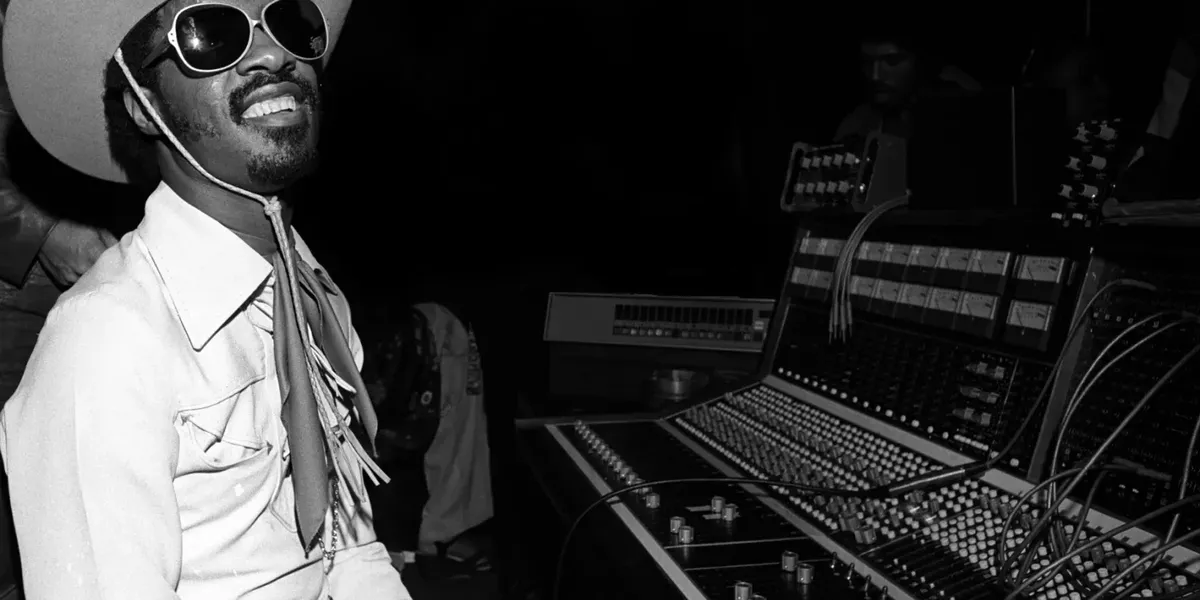
Artist, who'll be playing iconic album on tour this fall, recorded the EP's songs in the original 1976 album sessions
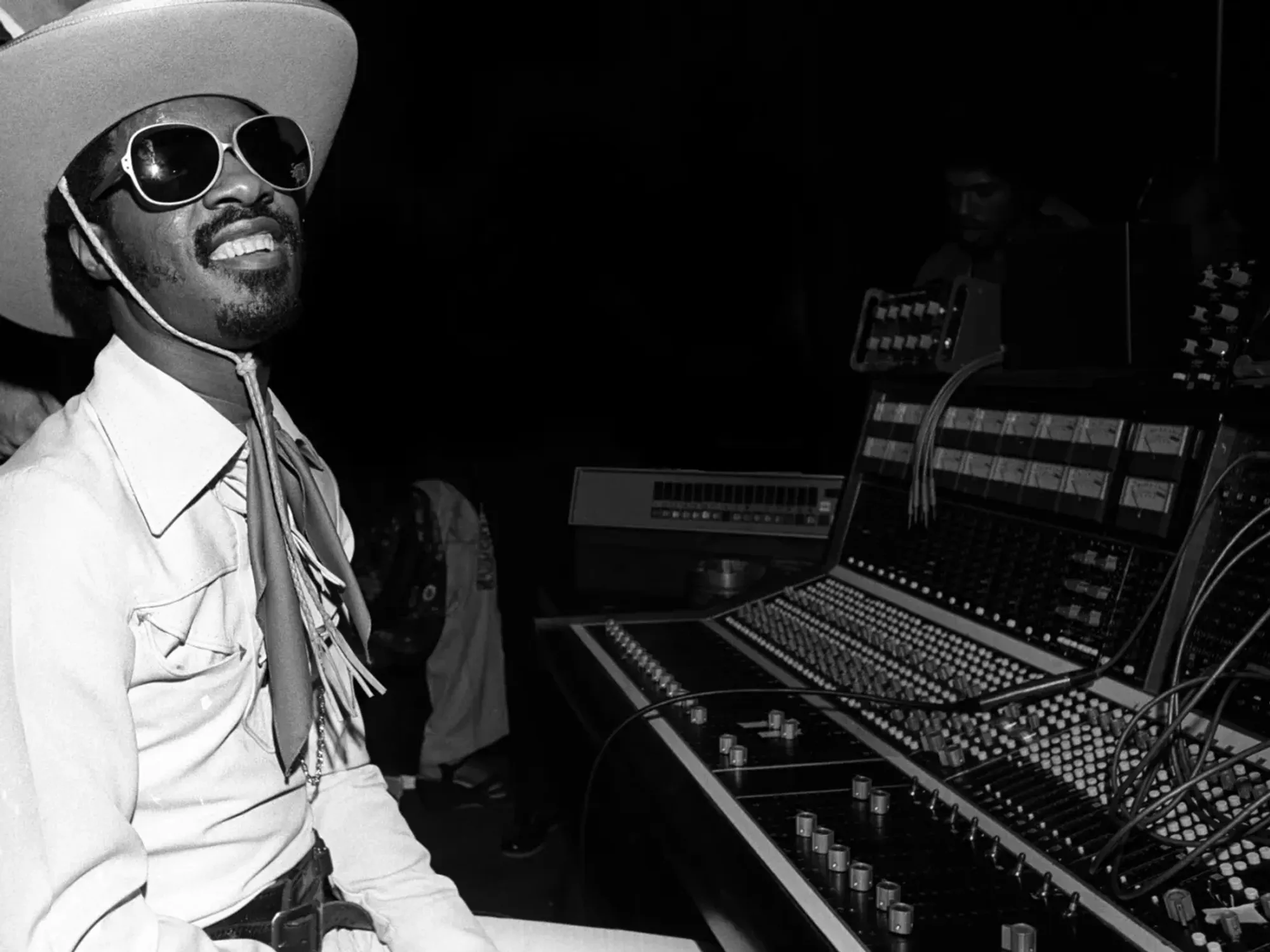
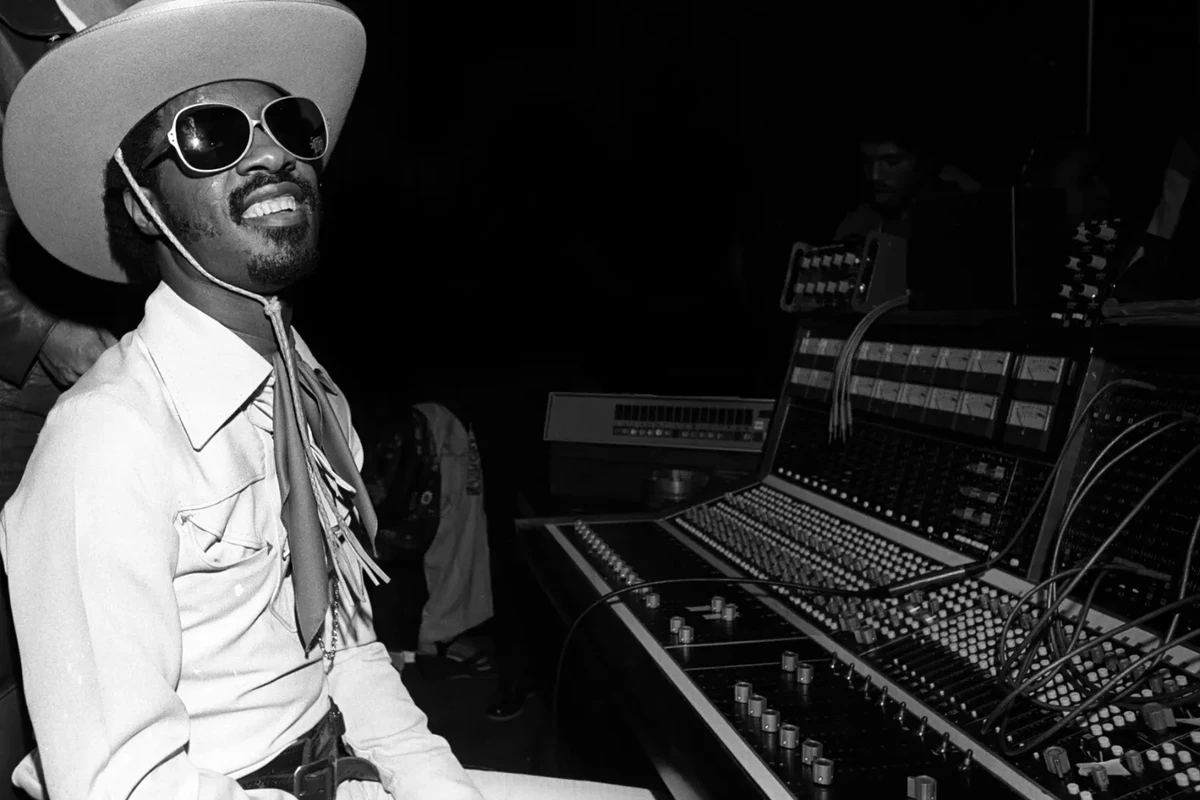
Stevie Wonder, promoting 'Songs in the Key of Life' after its original release.
Stevie Wonder surprise-released Songs in the Key of Life 50: The EP, which contains four previously unreleased studio recordings, on Monday. He recorded “It’s Easier,†“My Life Story of Love,†“I Can See the Sun in Late December,†and “I’m Into Livin'†during the sessions for his celebrated 1976 album but held onto them for the past half century. Now that he’s planning a tour commemorating the 50th anniversary of that album, he decided to finally issue them.
“We’ve lived with Songs in the Key of Life for 50 years, but there’s still more to hear,†Wonder said. “We didn’t add these songs to the album, but they were part of what I was feeling and discovering as we made it. They bring me back to that time in my life, and now they get to become part of yours.â€
The recording engineers who mixed the original album, John Fischbach and Gary O. Adante (credited as Gary Olazabal) mixed songs for the new EP. The songs further extend the legacy of the original album, which included another four-song EP, A Something’s Extra.
The tracks were timed to the 50th anniversary of the release of the diamond-certified album, which came out on Sept. 28, 1976. The EP arrived on streaming services at 4:54 a.m. PDT, the time the original Songs in the Key of Life sessions wrapped, at which time bassist Nathan Watts remarked, “Fo’FiftyFo’,†which became an in-joke Wonder and his musicians have used to mark the end of sessions ever since.
When Rolling Stone ranked the 500 Greatest Albums of All Time, Songs in the Key of Life placed at Number Four. “[The album] encompasses an incredible range of life experiences — from the giddy joy of a baby in the bathtub (‘Isn’t She Lovely,’ featuring the cries and giggles of Wonder’s infant daughter Aisha Morris) through tributes to his musical heroes (‘Sir Duke’) to dismay about the indifference of the wealthy (‘Village Ghetto Land’),†the magazine said. “Wonder pulled from every imaginable musical source — the ecstatic ‘Sir Duke’ references Duke Elington and Ella Fitzgerald, while ‘As’ featured Herbie Hancock on Fender Rhodes.â€
The four songs on the EP expound on the double album’s themes of acknowledging all life and love have to offer. It opens with “It’s Easier,†an upbeat breakup song with the message, “It’s easier to say, ‘Love, bye-bye’/Than to go around with a heart that wants to cry.†The similarly heartbroken “It’s My Life Story of Love†finds Wonder singing, “It’s my life story of love that never comes true,†though he sounds more hopeful than plaintive as he proclaims he’ll win his love back in lyrics he co-wrote with the Supremes’ Susaye Greene. “I Can See the Sun in Late December†is a slow-shuffling ballad about nostalgia for warmer times. And “I’m into Livin'†is an easy, jazzy funk ballad on which Wonder sings, “I’m into livin’ for your sweet, sweet love, L-O-V-E, love,†his voice rising and falling with the music.
As on the original album, Wonder plays most of the instruments on the EP’s songs, including drums, GX-1-Dream Machine, Bass-GX-1-Dream Machine, Fender Rhodes, and electric bass, variously, in addition to singing. Gregory Phillinganes played the Rhodes on “My Life Story of Love,†and Watts played bass on “It’s Easier†and “I Can See the Sun in Late December.†“I’m Into Livin'†features backup vocals by Shirley Brewer, who sang on the album’s “Ordinary Love,†Thelma Houston (who latter recorded the hit “Don’t Leave Me This Wayâ€) and longtime Wonder backup singer Deneice Williams.
Wonder will perform each of the 17 songs from the original double album on a world tour this fall. It kicks off Birmingham, England on Oct. 13 and wraps in L.A. on Dec. 19.
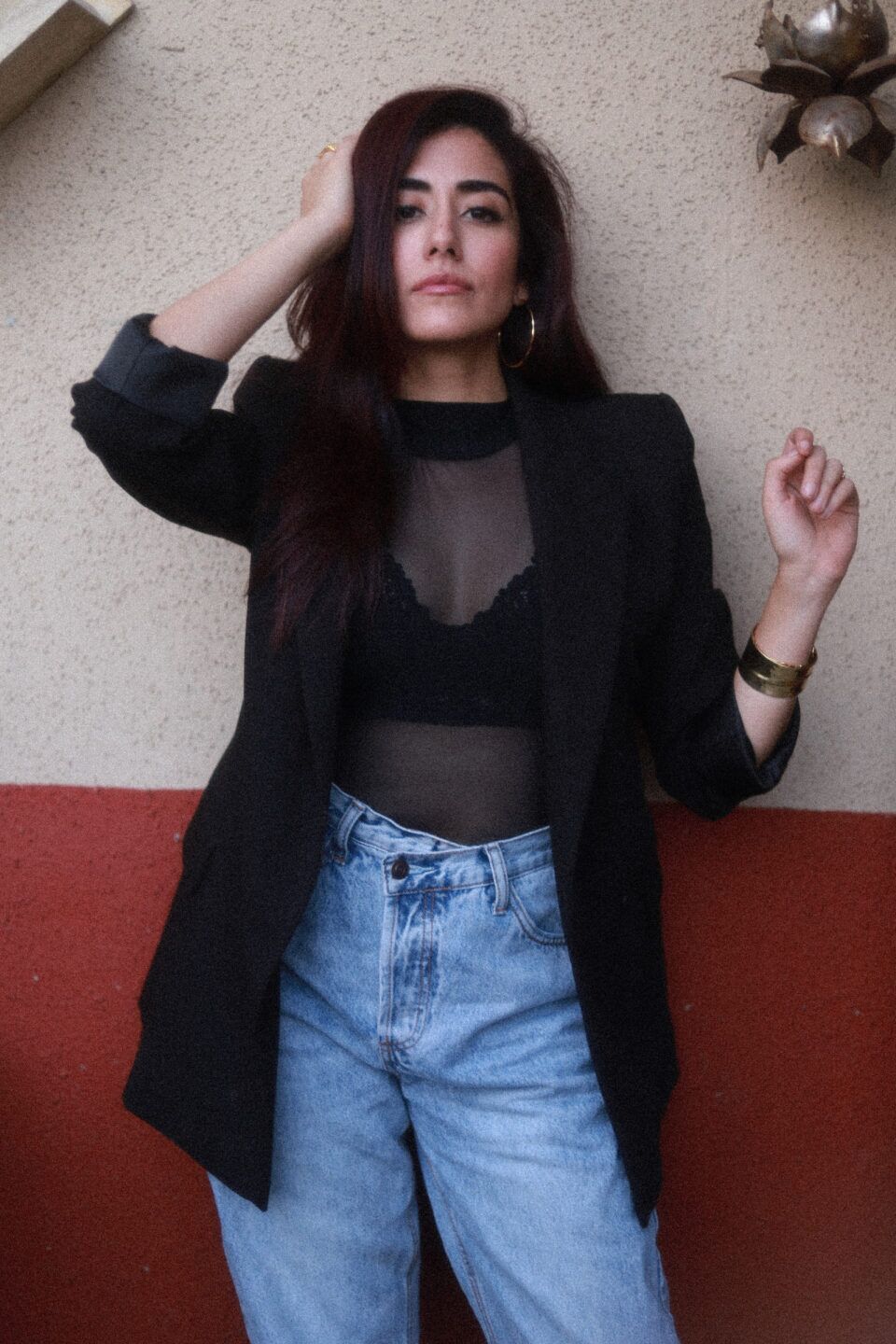
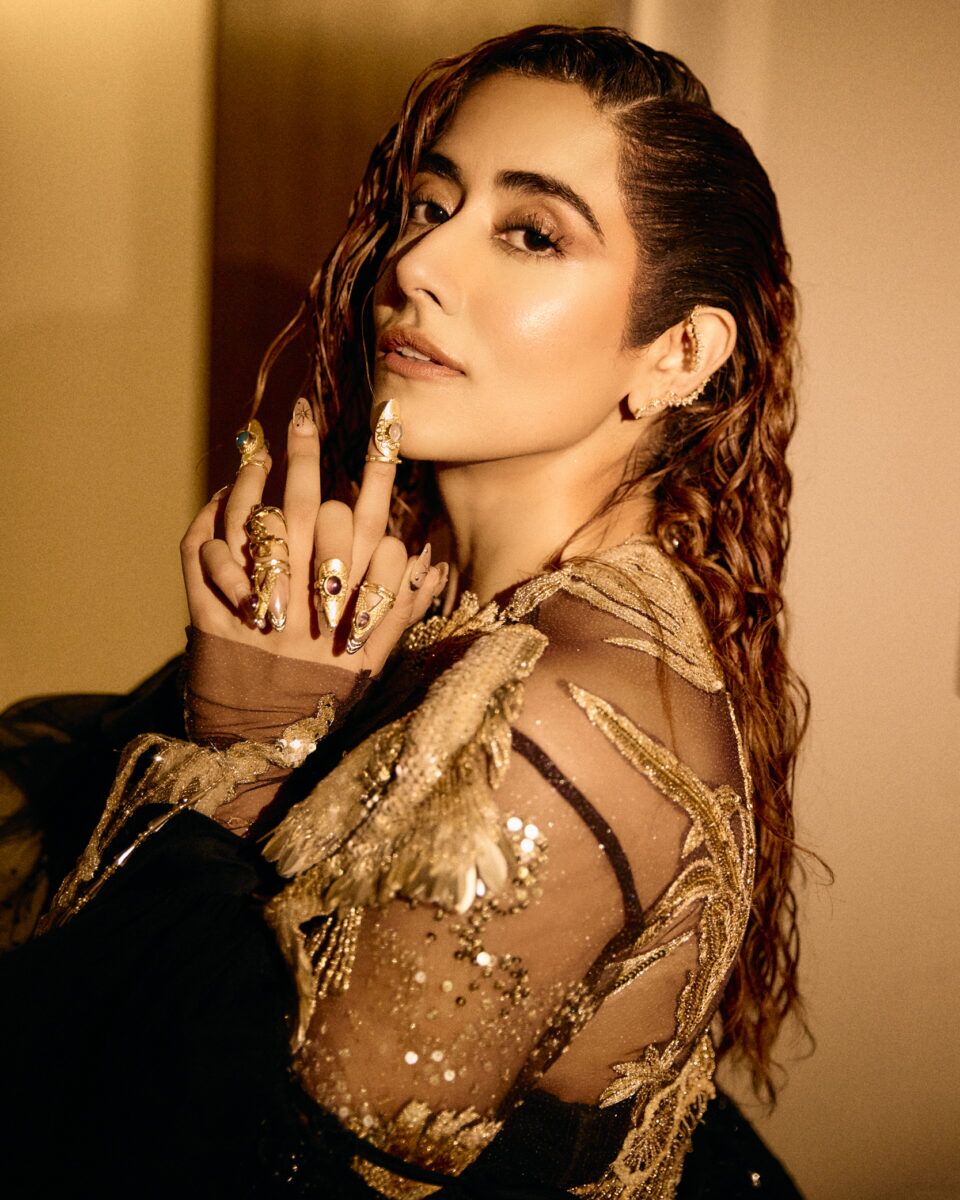
Pop artist Jonita.
India-born, Canada-raised and Mumbai-based pop artist and singer Jonita Gandhi has spent over a decade proving that language is no bar and in fact, her strength.
The Indo-Canadian singer, who’s lent her voice to hits in Hindi, Tamil, Punjabi, Telugu and beyond, recently added a new dimension with acting, making her debut as a schoolteacher in Aakash Baskaran’s romantic drama Idhayam Murali, alongside Atharvaa Murali and Fahadh Faasil.
On the music side, she’s just dropped “Broken Parts,†a tender, multilingual duet with Grammy-nominated Canadian singer-songwriter JP Saxe — a collaboration two years and one pandemic-viral moment in the making. We caught up with Jonita from Dallas — mid-tour with South Indian hitmaker Anirudh Ravichander and mid-scramble to learn an unreleased Telugu song for that night’s show — to talk about crossing over into acting, the pressure of singing in languages that aren’t her own, and why she’s not done being “unapologetically†herself just yet. Excerpts below:
Rolling Stone India: You’re in Dallas right now, and I hear you were up late learning a brand new song for tonight’s show. What’s that process usually like when it’s a language you don’t speak?
Jonita: Honestly, I feel like it’s luck at this point. Sometimes it feels so easy — it’s words I’ve sung before, I’m familiar with the pacing, so I have time to think and sing. But sometimes it’s so fast, and if you don’t already speak the language, it still feels like gibberish to a certain extent — it’s just sounds, you know what I mean? I just kind of assess it, song to song, and spend time accordingly. Some happen really fast, some take forever. I don’t think I have a really good hack, but the more I do it, it definitely gets easier. What I will say is singing in languages that are foreign is way easier than speaking or doing dialogue, because you have a melody to stick to — it programs your brain to remember how the vowels or words sound, because it’s glued to a melody. Even when someone’s trying to teach me how to say something normally, I’ll subconsciously end up putting a little melody to it. Otherwise, it’s impossible.
You’ve talked about the pressure of performing songs, sometimes not even your own, in front of massive audiences who know every word. What’s that like?
It’s a lot of work, especially on shows like this, where it’s massive audiences, big venues, and there are people there who know the song word for word. So I have to match that energy of knowing it too, even though for me it’s foreign — that’s their language. Everybody in the audience is ready to nitpick — not that they do, touch wood, so far so good — but I just don’t want to let them down. Even at A.R. Rahman concerts, when I have to sing his repertoire from the Nineties and early 2000s — songs that are ingrained in us — I’ll have to sing it in a different language, so I’m like, now I have to relearn or unlearn it the way I know it, and relearn the phonetics, the scanning, as they call it. That pressure is what motivates me to put in the extra time and effort beforehand that nobody sees.
When you get to make a song your own, through a cover, does it feel different?
Sometimes it’s very spontaneous, and it just flows out in a unique way — one of my friends, who’s actually from Dallas, calls it the “Jonita-fied†version, which is really funny. When that happens organically, great. But sometimes when I’m doing covers I remember intentionally thinking, “Okay, how do I make this my own?†On stage, though, I kind of let it happen spontaneously.
Let’s talk about your acting debut in Idhayam Murali. How did that come about?
It’s funny, because I’ve always been interested in acting, but I always felt singing was my forte — I’d had way more training in it. When I was younger, I used to do acting camps, and I always thought maybe I’d do musical theater, but that’s not really a big thing in India the way it is in the West. So I went hard on the singing, and I’m still going hard on it, but now opportunities are coming for acting, and I thought, maybe this is my chance to live out that dream, at least in small ways for now. I’ve done three acting workshops already — expensive ones, ten days, seven days — because I didn’t want to step on screen before I’d put in some work. Even though I’ve been on camera for years as a performer, acting is a very different skill, and I’m still new at it relative to how new I am at singing. If people know me to be of a certain caliber as a singer, I felt that pressure once this opportunity came my way.
Honestly, the director was more convinced than I was that I could do this. He was initially playing with the idea of casting me in a longer role, and I said no. I was nervous; I had shows, and I didn’t want to half-ass it. So that idea kind of fell away because it was too much of a commitment for where I was at. Then he came back with a much shorter part. Earlier in my career, I was mostly asked to audition for roles where singing was involved — playing a musician, or someone from the music world — but this had nothing to do with music. I play Geetha, a schoolteacher in Trichy. It’s a story within a story — most of my part is a flashback to when the hero is a child, and it’s about the first time he falls in love, which is with his teacher. That’s so relatable — it’s never going to materialize when you’re a kid in love with your teacher — and I thought it was such a sweet story, written in a way that really resonated with me.
- YouTube youtu.be
Are more acting offers coming in now? How are you thinking about them?
Right now, honestly, I’m just training. I’d love to do something meaningful — let’s see, it’s tough. It’s a whole other world when it comes to choosing acting projects versus music projects. It feels a little heavier, and it’s more of a time commitment, because when you’re shooting, you’re out for a stretch, and that’s a different calculation than deciding whether to sing a playback song or write a track.
You had “Broken Parts†with JP Saxe come out recently. How did that collaboration happen?
I first discovered him during the pandemic, when his song “If The World Was Ending†[2019] — the one that goes “you come over, you stay the night†— went crazy viral. It was everywhere, and I was obsessed. I used to do this thing called Sunday Singstagrams, little singing clips every week, and I think I did two of them for that one song because I loved it so much and resonated with the lyrics. Then I looked him up and realized what a good songwriter he is, and what a beautiful voice. From then on I kept an ear out subconsciously. His name came up again about two years back — he was performing in the Middle East, and a mutual friend from the music world was with him. I said, “If you’re with JP, tell him I love him.†He sent me this really sweet video message through his phone. We started following each other, and then he was working on his new album and sent me one or two songs, saying, ‘Let me know if I wanted to jump on any of them.’ Both were beautiful, but “Broken Parts†especially.
I resonated with it and felt it would sound so beautiful as a multilingual duet. The melody of the existing version, the way it was arranged, so acoustic — it lent itself so well to some Hindi. The second verse was completely bare, so I composed a new melody for it, brought in Shayra, a lyricist I work with, to help fill in the words, and sent it back. He loved it. The song’s been “done†— the writing, at least — for almost a year now, maybe half a year at minimum. I kept pushing to know when we’d put it out, and we finally found the right moment. I also met up with him in Toronto a couple of months ago to record a live version, which we shot and put out on YouTube as well.
You’re both from Toronto — did that shared background make the collaboration easier?
I feel like you can resonate with fellow Canadians a hundred percent. I don’t know what it is, but Canadians get on really well with other Canadians, especially when we’re both traveling a lot, which we both do. When we first met in person, I realized how easy and fun it was to be around him. It’s like, we can just WhatsApp each other and decide things. But in person, in the studio, there was a new kind of magic, because we’d done everything remotely up to that point — he’d recorded his bits, I’d recorded mine. In person, I realized there was a bridge section I wanted to extend so I could add another part, and he loved the idea — but said I had to sing it with him. So the same day we shot the live version, I taught him four lines of the Hindi bridge and made him sing it. He sounds so good — he has a real knack for languages, he does a lot of cross-collabs with Spanish artists too, so I felt like he’d be a natural, and he was.
I think it comes from growing up in Toronto, in that melting pot of cultures — we’re both used to having friends from everywhere, experiencing food from everywhere. So it’s normal for us to want to incorporate that into the music, because that’s what we grew up around.
We’re seeing a lot more of this — Indian languages crossing over globally, whether it’s Punjabi meeting English, or artists like Ed Sheeran incorporating Indian adaptations of their songs, which you’ve been part of. What’s your take on that wave?
For me, the number one priority in any of these opportunities is authenticity — you should never have to manufacture that. It’s cool that it’s happening, but the best way for it to happen is organically; you shouldn’t force it, because it sounds forced otherwise. There’s actually a song I can’t even remember the name of because it never came out — they wanted me to sing Punjabi on an otherwise English ballad, and I just felt it’s not how I think. I think in English, but I speak more fluent Hindi than Punjabi. If I’m the one co-writing, unless we start completely from scratch on the lyric, it’s not going to feel natural to me specifically — not that it would sound bad, but it wouldn’t be authentic for me. It just needs to feel authentic and not forced, and then you have something magical. On “Broken Parts,†I preferred doing Hindi because it flowed with the melody and I could contribute more, since I speak it. But the possibilities are endless — it all depends on what the song represents for you.
Where are you at right now in terms of saying yes or no to things — whether that’s film song offers or your own music?
I’m in a place right now where I’m trying to do more things led by where I want to go, versus waiting for opportunities to fall in my lap and running with those. I’m trying to be more actively involved in creating opportunities for myself, and I want to focus on the projects that genuinely excite me. I’ve been here over ten years now — how did time fly? I’ve gotten a lot of great experience, and I feel like people can tell the difference — when I’m promoting something I really love versus something I’m just putting up a customary post about. I put out a song called “Beparwai†that’s about being unapologetically yourself as a woman, not having to define yourself by being in love with a man. That’s a topic I really believe in — I’m a Punjabi girl with roots in Delhi, raised in Canada, and everything about that song felt very me. We even shot it with me doing full choreography, which I love — dancing is my favorite thing.
The way I promoted that song, I felt so happy, so unbothered about spamming people with it, because I was proud of it. That feeling was addictive, and I want to be that excited about everything I do — which doesn’t really happen when people just hand you a finished song, and you’re only there to sing it.
- YouTube youtu.be
You played Lollapalooza too — what was that experience like?
That was the most stressful, but also the most rewarding show of my life.
There’s this idea now of artists moving through “eras†— do you feel pressure to constantly reinvent, especially in this attention-deficit age?
Every time you say “era,†I think of Taylor Swift, because of her Eras Tour. But I do think it makes sense. As humans, forget artists, we go through phases. It’s normal to feel something really strongly, like in relationships — you think this is right for you, and if you break up two years later, people ask what’s wrong with you, but perspective changes. I guess an era is just a way of categorizing the phases of your life. My problem is my eras change fast. They’re very short-lived sometimes, but I do think it’s a good way to take your audience on the journey with you. After my EP Love Like That, I put out two or three back-to-back songs — “Channa,†“Noorie†— that were a softer, more feminine visual era, so I’m guilty of doing it too, I just never called it that.
I must’ve been in my “baddie era†when I put out “Beparwai,†and honestly, I still think I’m in that “baddie era.†All my new singles, other than the JP one, fit that — though the JP song was actually written before that phase started, which is the funny thing: when you write and make a song isn’t always in line with the era you release it in. You have to accept that, and that everyone has different sides coexisting at once. I can’t fully commit to just one era, especially when I’m collaborating with someone else whose schedule doesn’t follow my “baddie era†timeline. But I do like the idea of taking the audience with you through a phase, letting them in, staying consistent in it — I think it helps people understand who you are a little better.
What can we expect next from this “baddie era�
I’m still being picky right now, but there are a few songs I’m really excited to put out. It’s hard to define what “baddie era†even is, but I mean a little more bold, and dancing is a big part of it for me — I’m hoping to put out music that makes people dance in the coming days. I’m still finalizing things, and we’ll be shooting videos very soon — lots of singles in store. But you never know with me — I might throw in a sad song too. Life’s full of sharp turns. You’ve just got to roll with them.
Madonna and Charli XCX released "Danceteria Afterhours."
Madonna and Charli XCX guide us through nightclub lore on their collaborative new single, a reworked rendition of the acclaimed Confessions II track “Danceteria.â€
Produced by Madonna, Andrew Watt, Cirkut, and Stuart Price, “Danceteria Afterhours†delves into Madonna’s nights in New York City at the legendary club Danceteria, which opened its doors in midtown Manhattan before settling at its 21st Street location in 1982. (Madonna is said to have handed DJ Mark Kamin her “Everybody†demo at Danceteria, who played the single for the first time to a packed crowd; the club is also where she gave her first live performance.)
Alongside Madonna’s verses name-dropping her fellow clubmates like Fab 5 Freddy, Basquiat, Rock Steady Crew, and more are Charli’s own club recollections. In “Danceteria Afterhours,†Charli looks back at being “sweet 15 in a weird outfit†and performing in London before fast-forwarding to hanging out with with A.G. Cook and Sophie in Los Angeles, where she finds “different DJs, flavored cocaine.â€
The result is a collaboration that spans nearly 50 decades — with each verse simultaneously nostalgic and timeless.
Madonna is slated to take centerstage for her first performance at the MTV Video Music Awards in 23 years on Sunday, Sept. 27. The icon leads the night with 11 nominations, thanks largely to the short film she crafted for Confessions II — the film is up for Video of the Year, as well as a swath of other categories including Best Direction, Cinematography, and Choreography.
Phoebe Bridgers has released “On Video,†her excellent contribution to the Primetime soundtrack.
The song, a chilling rocker with dense guitar riffs that lurk in the distance, serves as the end title to Lance Oppenheim’s crime thriller. The Primetime soundtrack features an original score by Oppenheim’s longtime collaborator Ari Balouzian, including the recently-released “Savior.â€
During a press conference at the Venice International Film Festival, where Primetime made its world premiere, Bridgers spoke about being a part of the project. “It was certainly super intimidating and when Lance asked me, I was like, ‘No way,’†she said. “But it turns out, working with incredible people actually makes it way easier. I thought I was going to wither with all of these guys. Instead, it was so fun and free.â€
Bridgers is currently on tour in support of her new solo album Lost Weekend (like her pop-up shows earlier this summer, which included an evening at New York’s Madison Square Garden, the trek is phone-free). She enlisted her Primetime family for the “Lost Boys†video, recruiting Oppenheim to direct and Gisondo to play a gas station cashier-turned-knight in shining armor. The film hits theaters on Friday.
The Jane Doe who accused Jay-Z of sexual assault has fully recanted.
The Jane Doe who accused Jay-Z of sexual assault in a startling lawsuit two years ago has now fully recanted her allegations, saying in a new court declaration that her claims were false, that she never met the Roc Nation mogul, and that she had disclosed certain “mental health conditions†to her legal team before they publicly named the Grammy-winning rapper in her lawsuit in December 2024.
“Shawn ‘Jay-Z’ Carter never raped me. I have never met or spoken to Mr. Carter. Mr. Carter never engaged in any inappropriate conduct toward me whatsoever,†the woman wrote in the 12-page declaration filed in Manhattan federal court and obtained by Rolling Stone.
“There is no truth to any of my claims against Mr. Carter,†she continued under penalty of perjury. “I understand my false accusations have caused Mr. Carter immense pain, suffering, and damage that can never be fully undone.â€
The lengthy declaration was filed Thursday along with a notice that Carter was voluntarily dismissing the woman as a defendant in his ongoing malicious-prosecution lawsuit against prominent lawyer Tony Buzbee and his Texas-based law firm. The Jane Doe said she was not promised and did not receive any compensation for the declaration.
“Our client maintains that she was a victim of sexual assault, but she was entirely mistaken in her allegations identifying Mr. Carter, and those allegations were false,†Jane Doe’s new lawyer in the malicious prosecution case, James Blair Newman, Jr., said in a statement. “Mr. Carter did not rape her, sexually assault her, engage in any inappropriate conduct towards her, and she has never met him. She sincerely and unconditionally apologizes to Mr. Carter and his family.â€
The new declaration and dismissal filings came more than a year after Carter first sued the woman and her lawyers in federal court. He accused them of conspiring to pressure him into a secret financial settlement “under the threat of devastating harm to his reputation.â€
Carter’s federal court lawsuit was a response to a different lawsuit first filed by the woman in October 2024 that accused Sean “Diddy†Combs of raping her when she was 13 and alleged that an unidentified “male celebrity†also sexually assaulted her. In his filings, Carter has claimed Buzbee sent him an “extortionate demand letter†in November 2024, and, after he refused to pay, amended the lawsuit in December 2024 to identify Carter as the previously unnamed celebrity defendant.
Carter vehemently denied the rape allegation when it became public and revealed he already had sued Buzbee for extortion in California state court in November 2024 using a John Doe pseudonym. In a sworn declaration, he said the demand letter felt like an “existential threat.â€
“I felt that Mr. Buzbee was placing a gun to my head that I either bow to his demands or endure personal and financial ruin. His actions caused me mental anguish about the ticking time bomb and what it would do to me, my family, and my hard-earned reputation,†Carter wrote.
Jane Doe went on to voluntarily dismiss her entire complaint against Carter and Combs in early 2025, admitting there were inconsistencies in her story. A judge later dismissed Carter’s Caliifornia-based extortion lawsuit. An appeals court recently upheld that dismissal, finding that Buzbee’s demand letter was protected because it was sent in anticipation of filing a lawsuit.
“The record contains no evidence Buzbee accused Carter of raping Jane Doe while knowing those statements to be false or with reckless disregard as to whether they were true. To the contrary, Buzbee submitted declarations showing his firm’s and [a referral firm’s] investigations led him to subjectively believe in the truth of the accusations,†Associate Justice Anne Richardson wrote in the unanimous ruling from California’s Second Appellate District earlier this month.
The California ruling leaves Carter’s malicious-prosecution lawsuit in New York as his remaining case against Buzbee and his firm. Carter alleges they should have known before filing the Jane Doe lawsuit that her claims “were contradicted by publicly available information, internally inconsistent, and unsupported by any credible story or investigation.â€
Reached by email late Thursday, Buzbee said he had not seen Jane Doe’s new declaration. “We have multiple lawyers (at least four) who dealt with Ms. Doe long before she met me. She gave the exact same story to each. If for some reason now she is claiming she lied to us and the court, that’s new information,†he wrote. He previously told Rolling Stone that “sending a basic demand letter prior to filing suit is not and will never be ‘extortion.’â€
In her new declaration, the Jane Doe said her legal claim started when she responded to a Facebook ad in late September or early October 2024 looking for people with sexual assault claims against Sean Combs.
“The ad triggered memories of being raped when I was 13 years old,†she claimed in the new filing. She said she clicked on the ad, filled out a form, and received a call asking for more information. She recalled stating during the call that she was a model who attended an afterparty following the Teen Choice Awards in 2000 in New York City. Her lawsuit later claimed the show was the MTV Video Music Awards.
The woman said that her initial October 2024 lawsuit against Combs was filed without her knowledge and without her lawyers “conducting any independent investigation, background inquiry, or due diligence.†She further alleged she was given $1,200 in cash by her lawyers when she traveled to Houston in December 2024 for an interview with NBC News. She said her lawyers asked her to take a polygraph test after the news interview due to discrepancies in her story. She never received the results of the test, she claimed
“In January 2025, I began to doubt my claims against Mr. Carter. I also began doubting that I ever went to a party with celebrities,†she wrote. After she expressed the doubts to her lawyers, they let her know they were dismissing her lawsuit, she claimed.
In his email to Rolling Stone, Buzbee said he believed Jane Doe received “some petty cash†for meals and travel expenses. “With respect to court filings, each was explained in detail to Ms. Doe, to include the original demand letter. She has previously acknowledged that,†he wrote.
In a Sept. 1 motion to dismiss Carter’s malicious-prosecution claims, Buzbee and his co-counsel called the lawsuit “improper†and “abusive.†They argued that filing a civil complaint on behalf of a Jane Doe alleging sexual assault did not amount to misconduct and that inconsistencies in the woman’s recollection were not necessarily suspicious, particularly given her claim that she had been drugged and raped more than two decades earlier, when she was 13.
“This case is itself a malicious prosecution,†they argued, referring to Carter’s lawsuit.
Combs’ lawyers separately denied the woman’s allegations, saying he “never sexually assaulted or trafficked anyone — man or woman, adult or minor.†Buzbee, meanwhile, continues to represent other plaintiffs pursuing civil claims against Combs.
Red Hot Chili Peppers and A Tribe Called Quest in 1991
This week in 1991, 35 years ago, was one of those moments that changed music history. On Sept. 24, four classic albums dropped on the same day: Nirvana’s Nevermind, the Red Hot Chili Peppers’ Blood Sugar Sex Magik, A Tribe Called Quest’s The Low End Theory, and the Pixies’ Trompe Le Monde. All four were instant sensations, to the shock of the industry, transforming how everything would sound for the next decade. The revolution happened fast — August of 1991 was one era, but then by October, it was a whole new ballgame.
If you’re looking for symbolic reasons why music was overdue for a revolution, look no further than the year’s biggest pop group, C&C Music Factory. Just a few weeks earlier, on Aug. 23, the Factory (as nobody ever called them) were doing a live show in Tucson, Arizona, as part of the Club MTV Tour. Other acts on the bill: Color Me Badd, Gerardo, of “Rico Suave†fame, and Bell Biv DeVoe. But the C&C rapper Freedom Williams passed out cold onstage, falling flat on his face, with the whole crowd watching. The official explanation was the usual “dehydration†and “exhaustion.†(Maybe he also made the mistake of trusting a big butt and a smile?)
Funny thing, though — while Williams lay there unconscious, his voice kept booming over the speakers. Whoops! It was every lipsyncing hustler’s worst nightmare. But it was also a tombstone for a whole era of pop glitz. The music factory that made Eighties radio such a kick — with all its hype, tinsel, hairspray, and shameless artifice — was finally out of gas. It was official: Not even the dude from C&C Music Factory could stay awake through his own hits. As Williams himself would say, it was just one of those Things That Make You Go Hmmmmm.
Suddenly, for fans, this was all no longer good enough. The audience response was loud and clear: Here we are now. Entertain us.
Change was in the air. And that’s why the world was so ready for these albums as soon as they dropped, wrapping yellow tape around everything safe and predictable and boring. None of these rebels were supposed to hit big — if you were betting on albums that came out on Sept. 24, the smart money was on Bryan Adams, who released Waking Up the Neighbors, featuring the summer’s biggest hit, “(Everything I Do) I Do It For You.†A perfectly nice little Bryan A record, if you’re keeping score. But not exactly the kind of thing that fires up the pheromones 35 years (or even weeks) down the line.
The fall of 1991 was a fantastic moment for music, because change was happening so fast, week to week. The SoundScan era was just starting, forcing the charts to reflect what people were actually buying, so you had country and rap and metal albums debuting in the Top Ten for the first time. (Hell, even Rush debuted at Number Three that September, with Roll the Bones.) Perry Farrell began the Lollapalooza Tour that summer, proving there was a hungry young audience of alternateen kids fiending for upstarts like Nine Inch Nails, Rage Against the Machine, and Perry’s band Jane’s Addiction.
September 1991 also had one of the best MTV Video Music Awards in history, the year R.E.M. won everything for “Losing My Religion,†a passing of the generational torch. Prince rocked his assless chaps in his live “Gett Off.†But the show got stolen by the surprise opener: Pee-wee Herman, just a few weeks after getting busted in a porn theater. Pee-wee kicked off the show by asking, “Heard any good jokes lately?†After a thunderously affectionate standing ovation, he replied, “So funny I forgot to laugh!â€
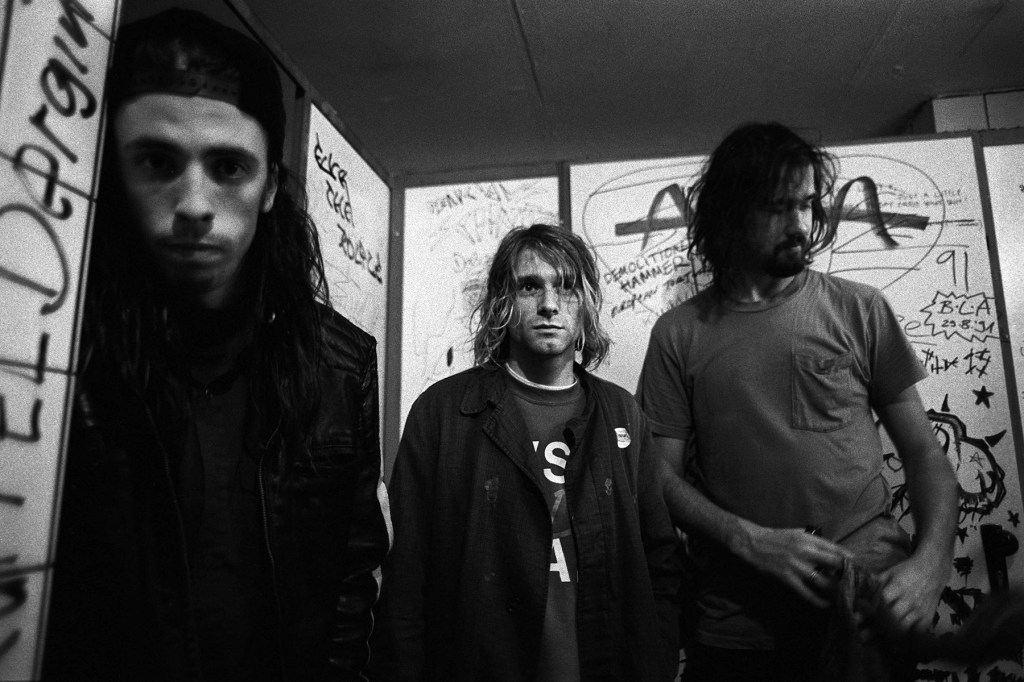
Nirvana hit this moment like manna falling in the desert — these three Seattle brats were everything the new Nineties kids were craving. “Smells Like Teen Spirit†blew up on the radio and MTV, with Kurt Cobain’s passionate yowls and that stupid-and-contagious air-guitar riff. And because of SoundScan, nobody could ignore how many mall rats were out there buying it. (Like, in stores. For actual money.) Suddenly 1991 was the grunge era, led by three hits that came out within a few weeks of each other: Pearl Jam’s Ten on Aug. 27, Soundgarden’s Badmotorfinger on Oct. 8, Nirvana in between. As Sonic Youth famously proclaimed, it was The Year Punk Broke.
Nevermind made a modest debut on the chart that week, at Number 144, just four notches behind Warrant’s year-old Cherry Pie — proof that the gods of rock & roll irony have a sick sense of humor. It was the last week in history that more customers went for Warrant than Nirvana. All those hair-metal clones got wiped out overnight. Damn, it was a pleasure to mosh on the graves of dog-vomit bands like Tesla, who made Warrant sound like Motörhead, or Firehouse, who made Mr. Big sound like Voivoid.
That first week, Nevermind was surrounded by quintessential 1991 chart fodder by the Judds, Phil Collins, Ziggy Marley, Sting, and the Pretty Woman soundtrack. But a few weeks later, Nevermind was at Number One. This wasn’t supposed to happen. Somehow, as a great philosopher named Vanilla Ice was about to say, in his October film classic Cool As Ice, the audience decided to drop that zero and get with the hero.
Sept. 24 came just a week after Guns N’ Roses released two albums the same night, Use Your Illusion I and II. Those albums came out at midnight on Sept. 17 — like so many of my friends, I waited in line outside Plan 9 Records to buy it at midnight, on vinyl. (Hey, what else could you do in Charlottesville, Virginia, on a Monday night?) The full-page ad in Billboard proclaimed “Guns N’ Roses Will Release No Album Before Its Time. It’s Time.†Both Illusions were a trip, especially Side Two of Disc One of Illusion II, with “Get in the Ring,†“Shotgun Blues,†and the underrated “Breakdown†— now that’s a flawless vinyl side.
The Chili Peppers were widely seen as just a local L.A. thing until Blood Sugar Sex Magik, with “Give It Away†and “Under the Bridge†proving they were just learning how to write songs, with help from new guitar whiz John Frusciante. The Pixies’ Trompe Le Monde was a different kind of rock statement, since the band was a known quantity (plus Cobain faves who helped inspire Nevermind). But after the polish of Doolittle and Bossanova, it was abrasive, fresh, and pop at the same time, with the surge of “U-Mass†and “Subbacultcha,†just for kicks and giggles.
The Low End Theory was a wildly innovative romp through the paths of rhythm between jazz and hip-hop, with A Tribe Called Quest updating the Native Tongues aesthetic in jams like “Check the Rhime.†It proved hip-hop’s creative diversity, after a year when some thought gangsta was the only game in town. (Especially with the disastrous legal anti-sampling crackdowns against De La Soul and Biz Markie.) A week later, Public Enemy went hard on Apocalypse ’91 … The Enemy Strikes Black, joining Michael Jordan and Spike Lee on one of the best SNL episodes ever. On the West Coast, Cypress Hill were blowing minds with the “Latin Lingo†of their super-stoned August debut. KMD made the underground experimental gem Mr. Hood — the first time many heads heard the genius of MF Doom.
The spirit of innovation was all over the map, in the U.K. dance sounds of Primal Scream’s Screamadelica, Orbital’s self-titled debut, and Massive Attack’s Blue Lines (an April release just hitting stateside). The fall of 1991 also had the legendary rave episode of Beverly Hills, 90210 on Nov. 14 — yes, the one where the gang hits an illegal warehouse party where you need an egg to get in. Stay away from the U4EA, Brandon!
The Top 40 was insane that fall — a glorious blast of one-hit wonders, flukes, scams, dance crazes, novelty goofs that came out of nowhere to crash the radio. Rap bangers like Naughty By Nature’s “O.P.P.†or Salt N Pepa’s “Let’s Talk About Sex†were blowing up. Freestyle was booming, with classics by Lisette Melendez (“A Day in My Life Without Youâ€) and Corina (“Temptationâ€). Metallica had a bona fide hit with “Enter Sandman,†so great that not even Metallica purists could find a way to hate it. Siouxsie had a bona fide hit with “Kiss Them for Me,†sampling Schoolly D. So many smooth R&B New Jack Swing boy bands rose up — light a candle for Hi-Five, with their magnificent slow jam “I Can’t Wait Another Minute,†or Mint Condition with “Breakin’ My Heart (Pretty Young Eyes).â€
The Number One hit that week was a real puddle of pastel kitten puke: Color Me Badd’s “I Adore Mi Amor.†But there were goodies bubbling in the Top 10, like Boyz II Men (“Motownphillyâ€), or Marky Mark and the Funky Bunch (“Good Vibrations,†which I will defend as an Actual Good Song). Martika’s “Love … Thy Will Be Done†was the autumn’s finest Prince hit (he actually wrote it), until the Purple One himself came back to hit Number One with “Cream.†But nobody could outsleaze Natural Selection, a one-shot duo who scored the most shamelessly ridiculous faux-Prince rip-off of all time, “Do Anything.†The Divinyls kept lingering on the radio with their sticky-fingered autoerotic sex jam “I Touch Myself.†(“I honestly doooo!â€) The Geto Boys’ “Mind Playing Tricks On Me†was just starting to give people nightmares — just in time for Halloween.
Everybody’s favorite new pop stars that fall were the New Jersey duo P.M. Dawn, who mixed up Native Tongues-style rap, New Romantic synth-pop, and goth melodrama into their own weird sound, sampling Spandau Ballet in their Number One smash “Set Adrift on Memory Bliss.†They’re strangely forgotten now, which is a shame — when Prince Be died 10 years ago, he didn’t even make the Grammy “In Memoriam†montage. The Midwest rap duo K.M.C. KRU scored a hit with “The Devil Came Up to Michigan,†updating the country classic with a guest shot from Charlie Daniels. It was that kind of year.
In the wake of Nevermind, punk rock went from a niche thing to a mass youth language — Nirvana were merely the gateway. “Indie rock,†a two-word idiom just a couple of years old, was now a trope you could mock and celebrate at the same time, as Sebadoh did in their hilarious summer single “Gimme Indie Rock!†(Sample verse: “Milk that sound, blow your load/Soon it’s further than you ever said it’d go/Four stars in the Rolling Stone!â€)
Bikini Kill set off the riot grrrl alarm with their hugely influential 1991 cassette Revolution Girl Style Now!, with anthems like “Feels Blind.†The summer was packed with genius DIY indie broadsides: Superchunk’s “Cool,†Unrest’s “Cherry Cherry†and “Yes She Is My Skinhead Girl,†Pavement’s “Summer Babe†and the Perfect Sound Forever EP, the Silver Jews’ “Canada,†Lois’ Highlights, Slint’s Spiderland, L7’s Smell the Magic, Fugazi’s Steady Diet of Nothing. In the Pacific Northwest, K Records’ International Pop Underground convention in August inspired countless cardigan-clad bands. Hot on the heels of Nevermind came left-field hits from Matthew Sweet’s Girlfriend to Swervedriver’s Raise to Teenage Fanclub’s Bandwagonesque. And just in time for December, My Bloody Valentine dropped Loveless, an industrial ear-bleeder romance that has kept the world reeling ever since.
The rest of the year was stuffed with blockbusters aimed at Christmas shoppers: U2’s Achtung Baby (an artistic breakthrough initially reviled as a commercial flop), Michael Jackson’s Dangerous, Richard Marx’s Rush Street (his edgy album — as the TV ads proclaimed, “the dark side of Richard Marx!â€), Ice Cube’s Death Certificate. But everything was different now. Poor Genesis waited just a little too long to release We Can’t Dance, which came out in November — it would have sounded a lot less craven a couple of months earlier. After these albums dropped on Sept. 24, the stakes were suddenly higher, and the possibilities were suddenly wide open. That’s why all of these years later, these albums are still challenging everybody else to try harder.
Images from the story

End of article