yahoo Press
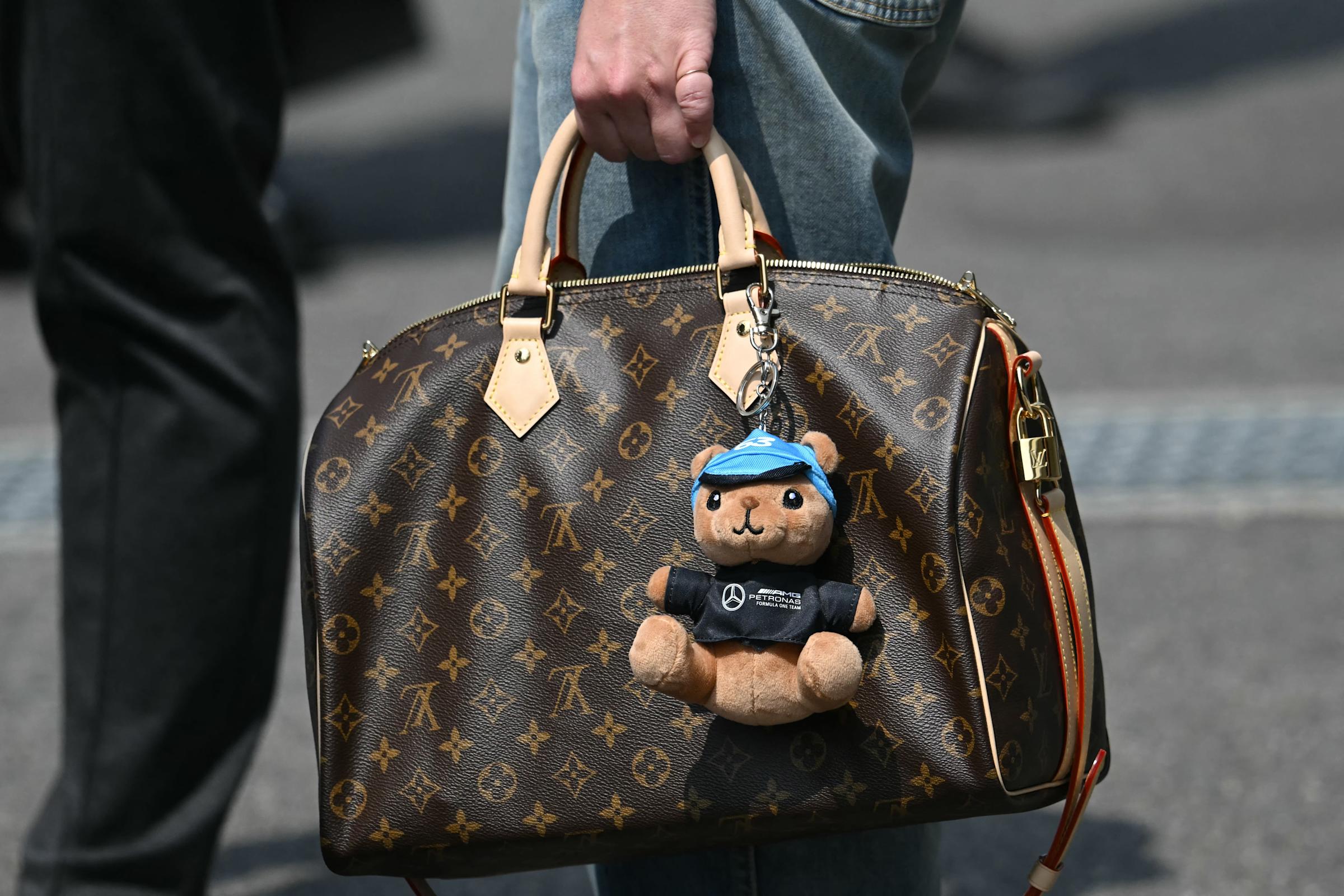
Louis Vuitton, Gucci, Hermes luxury sales decline as Iran war hits crucial Middle East demand
Images
1 / 6
2 / 6

3 / 6

4 / 6

5 / 6
6 / 6
The US-Israeli war with Iran is having knock-on effects everywhere — from energy markets, materials, and travel. One usually immune sector is getting hit hard too — luxury.

The war, which started in late February, has put a big dent in the $400 billion luxury goods sector. All the big luxury houses are suffering from loss of business from the growing and high-spending Middle East markets, the lucrative travel and aspirational-based clients who spend heavily on vacation, and of course, increased costs due to  logistics and materials spending.

It all started with LVMH (MC.PA), the world’s largest luxury conglomerate — behind brands like Louis Vuitton, Christian Dior, Loewe, Bulgari, and Tiffany & Co.

LVMH reported Q1 revenue of €19.1 billion, a 6% decline, missing analyst expectations of a 1.5% increase, reflecting the toll of the war.

“The quarter was impacted by the ongoing conflict in Middle East, which had a tangible incidence on demand in the region in March after a good start of the year, and this accounting for a negative one percentage point on the growth of the quarter. So excluding this impact, organic growth would have been plus 2%,” CFO Cécile Cabanis said on the earnings call on Monday.

Fashion and leather goods (-9%), perfumes and cosmetics (-6%), followed by selective retailing (Sephora, DFS travel retail, and Le Bon Marché department stores) took the biggest hits.

Kering (KER.PA), behind brands like Gucci, Bottega Veneta, and Balenciaga - also felt the impact.

Kering’s exposure to the Middle East represents approximately 5% of its retail revenue, and retail revenue in the region tumbled by 11% in the first quarter, the company said on Tuesday, despite growth in the first two months. In response, the group activated a crisis unit to monitor its 1,100 employees and 79 regional stores in real-time.

Across its segments globally, fashion and leather goods (-9%), and the Gucci brand (-14%) saw the biggest drops in sales.

“Beyond the local impact, the key consideration going forward relates to potential effects on global tourism flows and the broader macroeconomic environment, which we continue to monitor closely. Overall, we are operating in a still uncertain geopolitical and macroeconomic context,” Kering CEO Armelle Poulou said on the Kering earnings call regarding the war’s impact.

Even Hermes (RMS.PA), one of the most durable luxury operators in the industry, with its highly desirable Birkin bags, has taken some lumps.

On Wednesday the company reported revenue of 4.07 billion euros, up 6% on an organic basis but down 1% on a reported basis due to 290 million euros in negative currency effects. The 6% growth fell short of the 7.1% consensus estimate, as a result shares slid 9%

The Middle East, which comprises 4.3% of the company’s business, is slipping.

"What you need to bear in mind is that for January and February, we had great double-digit growth, which was very homogeneous across these two months. It's only in March that the revenue started to go down,” Hermes EVP of finance Eric du Halgouët said on Wednesday.

Much of that was due to store closures. “We had to close some of the stores, at the beginning of March, mainly in Dubai and then in Bahrain and Kuwait, because of the airports that closed and for security purposes. Our revenue dropped by 20%-30% depending on the day and on the stores that we operate directly."

Another big segment that Middle East based buyers partake in is luxury automobiles. While the big luxury houses spoke about the Middle East effect during their earnings reports, luxury automakers have not had that the chance quite yet.

Hermes’s du Halgouët added that if you add up sales from Middle East clients that travel to other regions of Europe, like the UK, Italy, Switzerland, and France, Middle East customers make up a big share of the revenue there.

Rolls-Royce Motor Cars (BMW.DE) does not break out its geographic sales, but analysts believe the automaker derives around 10% of its business from the Middle East.

The British luxury marque won’t release global Q1 sales figures for at least several weeks, but the company says it's already adjusting for impact.

“We are very much focused upon what is going on there and our primary thoughts are with the impact the situation's having on the people of that area,” Rolls-Royce CEO Chris Brownridge said to Yahoo Finance this week. “What we are doing is working with our team out there, and also our dealer partners to make sure that we are optimizing the logistics so that we can continue to supply Rolls Royces, because our clients still want them to be delivered.”

Brownridge added, “It's hard to say what that situation may bring in the future.”

Fellow luxury brand Ferrari (RACE) will speak to the effect when it reports in early May, though the company paused shipments in March to the Middle East due the Strait of Hormuz de facto closure. Ferrari has subsequently rerouted shipments through different sea freight routes, as well as air transport.

A brief two week ceasefire, which brought some relief to the region is about to expire, however President Trump’s latest missive on Truth Social suggests a bigger deal may be oncoming.

For luxury brands, and the rest of the world dealing with the massive spillover effects, and sheer destruction from the war, a resolution can’t come soon enough.

Pras Subramanian is the lead autos and wealth reporter for Yahoo Finance. You can follow him on X and on Instagram.

Click here for in-depth analysis of the latest stock market news and events moving stock prices

Read the latest financial and business news from Yahoo Finance
Comments
You must be logged in to comment.