yahoo Press
Legendary trader says investors are watching the wrong Fed lever: Chart of the Day
Images
1 / 6

2 / 6

3 / 6

4 / 6
5 / 6

6 / 6
The AI rally has turned semiconductors and megacap tech into the market's pressure point — and legendary trader Victor Sperandeo said investors may be watching the wrong Fed lever.

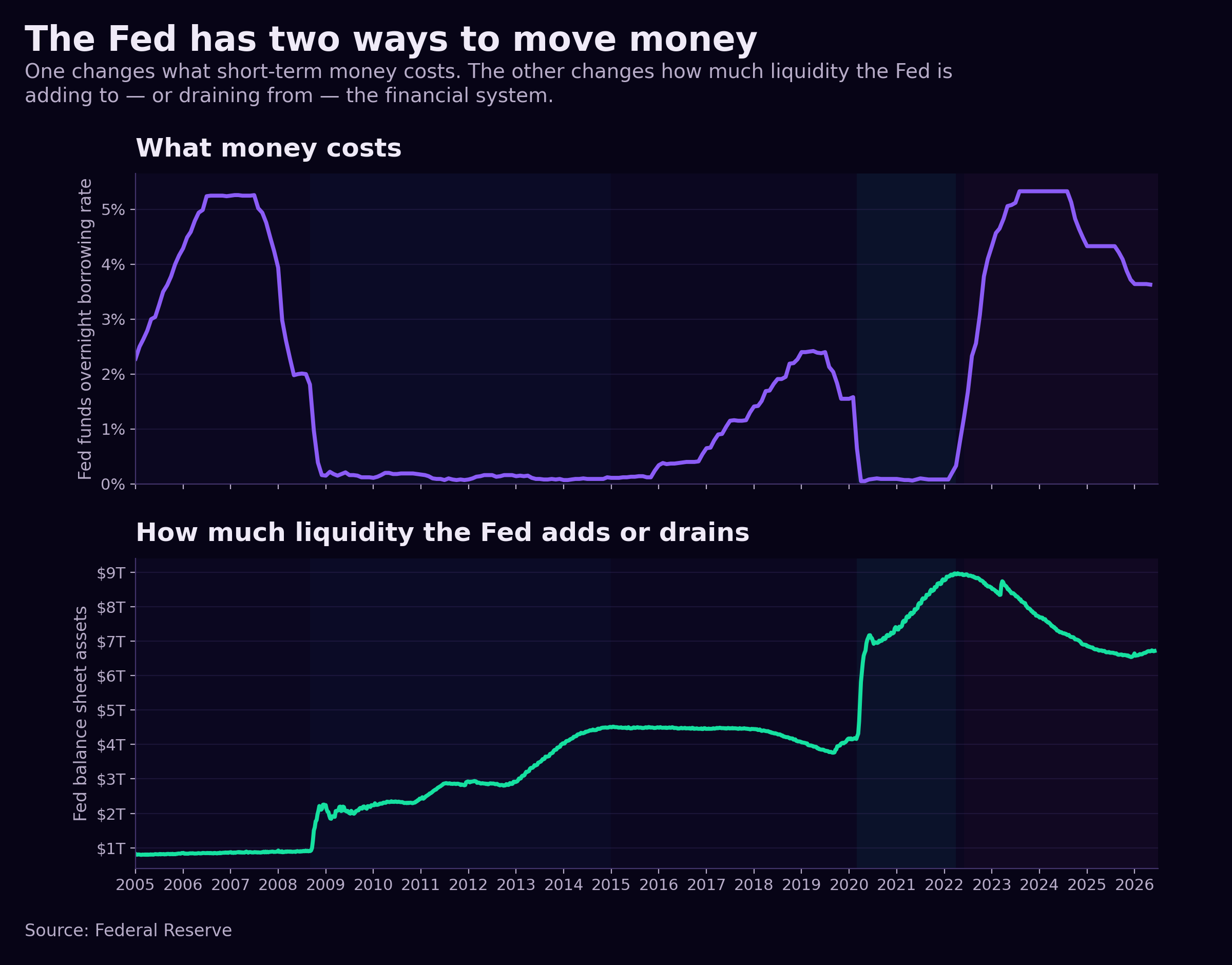
Sperandeo, the veteran options market trader known as "Trader Vic," said investors are too focused on whether the Federal Reserve cuts the fed funds rate — the overnight borrowing rate that anchors short-term money — and not focused enough on what happens to the Fed's balance sheet, the pile of assets the central bank holds.

His point is simple: Lower rates can make money cheaper. They do not necessarily make money easier to get.

That matters most where the market is most crowded. Right now, that is AI — chip stocks, data center plays, and the megacap tech names that have pulled in much of the market's capital.

"Lowering rates if you reduce the money supply does not produce inflation," Sperandeo told Yahoo Finance at the June ETP Forum hosted by ETFGlobal. "Now he's got to convince the other members of this."

The "he" is incoming Fed Chair Kevin Warsh, who Sperandeo believes would favor lower rates while also shrinking the Fed's balance sheet. Sperandeo's timing is conditional. He said the market could top around the Fed's June meeting if Warsh convinces policymakers to pair "a small cut" with a "reduction of the balance sheet."

Markets are not pricing in a June cut, but Sperandeo's broader warning is about what investors count as easing.

Rate cuts are the price lever. The balance sheet is the liquidity lever — and that is the part of monetary policy Sperandeo thinks markets routinely underprice.

If the Fed lowers rates while shrinking its balance sheet, money can be cheaper on the surface while liquidity still tightens underneath.

Sperandeo learned that lesson as an options market maker during the Fed's Volcker era. As the Fed squeezed money growth, he got a margin call from Chemical Bank.

"Chemical said, look, we want the money back," Sperandeo said. "So I had to liquidate a bulk of my inventory, about 80% of my inventory, which meant that spreads widened because I had less of stuff to offer at better prices."

In plain English, when Chemical wanted its money back, Sperandeo had to sell inventory, and the market he traded became less liquid. Scale that across markets, and tighter credit can force investors to cut risk even if rates are falling — or merely holding steady.

That is the underappreciated risk in today's AI trade: Crowded trades become harder to hold when liquidity thins out.

Asked about the surge in chip stocks and the narrowness of the market rally, Sperandeo said a tighter-money setup would "greatly affect these stocks," because AI and data center names are "making a bulk of the money" and attracting heavy demand.

For the AI rally to crack, the story does not need to break. It may only need less liquidity to hold it up.

Jared Blikre is the global markets and data editor for Yahoo Finance. Follow him on X at @SPYJared or email him at jaredblikre@yahooinc.com.

Click here for in-depth analysis of the latest stock market news and events moving stock prices

Read the latest financial and business news from Yahoo Finance
Comments
You must be logged in to comment.