yahoo Press
Ron Paul warns the US can't 'print money and lie' to Americans forever. Protect yourself and your nest egg now
Images
1 / 5
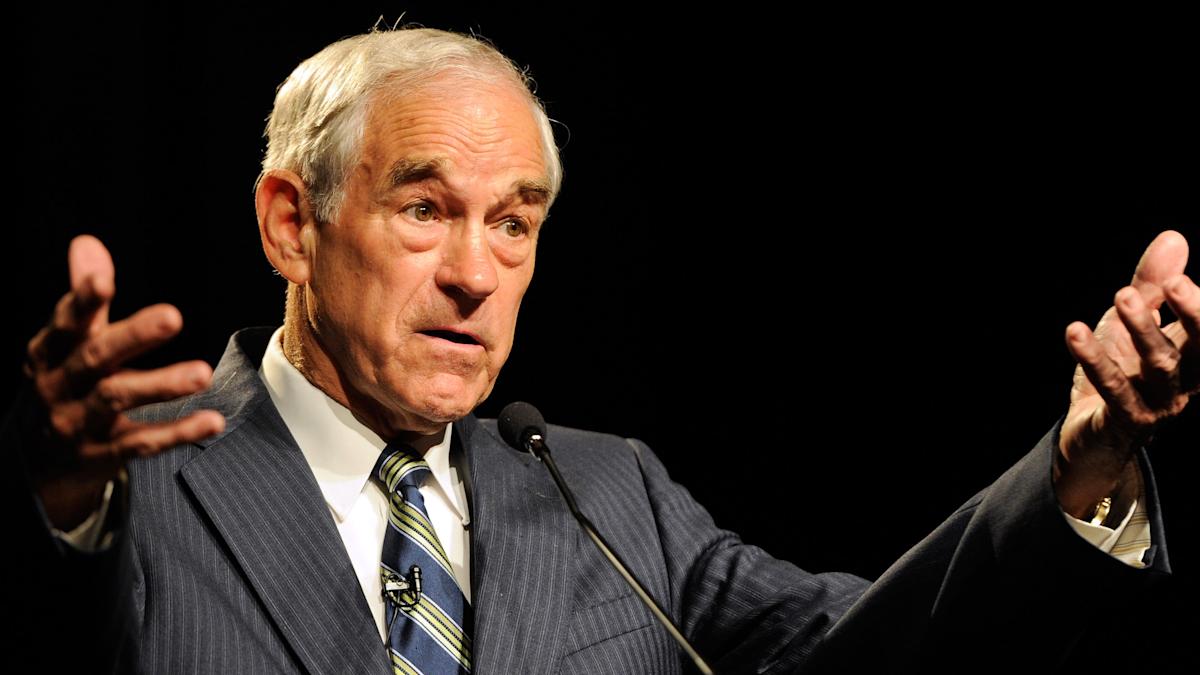
2 / 5

3 / 5
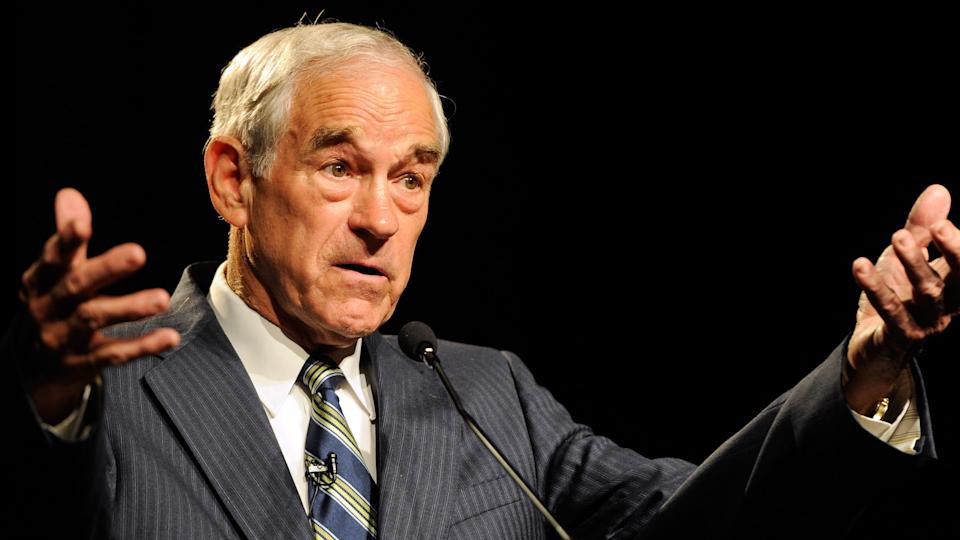
4 / 5

5 / 5
Moneywise and Yahoo Finance LLC may earn commission or revenue through links in the content below.

It’s been more than five decades since President Richard Nixon took the U.S. dollar off the gold standard. Yet former U.S. Congressman Ron Paul says he remembers that moment vividly — and is now issuing a fresh warning.

“I can remember it precisely,” Paul said in a recent interview with Tucker Carlson, referring to August 15, 1971 (1). “One Sunday night I was sitting in front of the television watching the news come in and oh, a special news clip. And they put up President Nixon and all of a sudden, boy, did my eyes open.”

The ultra-rich use these 5 real estate strategies to build wealth while they sleep — you can start with just $100

The IRS usually taxes gold as a collectible — but this little-known strategy lets you hold physical bullion tax-free. Get your free guide from Priority Gold

Dave Ramsey warns nearly 50% of Americans are making 1 big Social Security mistake — here’s how to fix it ASAP

In that televised address, Nixon announced he had directed then-Treasury Secretary John Connally to suspend the dollar’s convertibility into gold — a move that effectively ended the Bretton Woods system.

“And I said, ‘This is a big deal ... It might be one of the biggest things that ever happened in monetary history,’” Paul recalled.

In hindsight, the decision marked a turning point. Since 1971, the U.S. dollar has operated as a fiat currency, meaning it is not backed by a physical commodity like gold. And because the Federal Reserve can essentially print money in unlimited quantities, Paul believes the system is fundamentally flawed and warns that serious consequences now lie ahead.

“We’re approaching that time when bad stuff will really be happening to us because you just can’t print money and lie to the people forever. It’s all based on a lie and it’s fraud, it’s counterfeit money,” he said.

Paul argued that when a central bank creates excessive amounts of currency, the value of that currency inevitably declines — a dynamic economists associate with inflation. Americans have already felt that impact firsthand; according to the Federal Reserve Bank of Minneapolis, $100 in 2025 has the same purchasing power as just $12.58 did in 1971 (2).

The good news? Throughout history, savvy investors have long found ways to protect their money from inflation’s bite.

When it comes to preserving wealth and fighting inflation, few assets have stood the test of time like gold.

Its appeal is simple: unlike fiat currencies, this yellow metal can’t be printed at will by central banks. Gold is also considered the ultimate safe haven; it’s not tied to any one country, currency or economy, and in times of economic turmoil or geopolitical uncertainty, investors often flock to it, driving prices higher.

Paul has long been a staunch advocate of gold.

“I don’t see gold so much in short-term because I see it in over a 100-year period,” he famously shared with CNBC (3). “Long-term, it will always go up so long as we have a Fed printing money.”

He’s not alone in his thinking, either. Other prominent voices see further potential, with JPMorgan CEO Jamie Dimon noting that in this environment, gold can “easily” rise to $10,000 an ounce (4).

Taken together, this means that having at least some gold in your portfolio can give you resiliency against both shifts in the stock market and geopolitical instability.

One way to invest in gold that also provides significant tax advantages is to open a gold IRA with the help of Priority Gold.

Gold IRAs allow investors to hold physical gold or gold-related assets within a retirement account, thereby combining the tax advantages of an IRA with the protective benefits of investing in gold, making it an option for those looking to help shield their retirement funds against economic uncertainties.

When you make a qualifying purchase with Priority Gold, you can receive up to $10,000 in precious metals for free. And if you’re uncertain about Paul’s take on gold, you could instead pick up a free information guide to see if gold is right for you. Just keep in mind that gold is often best used as one part of a well-diversified portfolio.

Read More: Thanks to Jeff Bezos, you can become a landlord for $100 — without the headache of actually being one

Gold isn’t the only asset investors turn to during inflationary times, as real estate has also proven to be a powerful hedge.

When inflation rises, property values often increase as well, reflecting the higher costs of materials, labor and land. At the same time, rental income tends to go up, providing landlords with a revenue stream that adjusts for inflation.

Over the past five years, the S&P Cotality Case-Shiller U.S. National Home Price NSA Index has jumped by 41%, reflecting strong demand and limited housing supply (5).

Of course, high home prices can make buying a home more challenging, especially with mortgage rates still elevated. And being a landlord isn’t exactly hands-off work — managing tenants, maintenance and repairs can quickly eat into your time (and returns).

And, to Paul’s point about fiat currency, rental income can provide a steady cash flow that adjusts to inflationary pressures. The good news? You don’t need to buy a property outright — or deal with leaky faucets — to in invest in real estate today.

You can tap into this market by investing in shares of vacation homes or rental properties through Arrived.

Backed by world-class investors, including Jeff Bezos, Arrived allows you to invest in shares of vacation and rental properties, earning a passive income stream without the extra work that comes with being a landlord of your own rental property.

To get started, simply browse through their selection of vetted properties, each picked for its potential appreciation and income generation. Once you choose a property, you can start investing with as little as $100, potentially earning monthly dividends.

Even better, for a limited time, when you open an account and add $1,000 or more, Arrived will credit your account with a 1% match.

But rental and vacation homes are only one part of this investment vertical. Other choices include commercial, industrial and multifamily real estate.

Accredited investors can now tap into this opportunity through platforms such as Lightstone DIRECT, which gives accredited investors access to single-asset multifamily and industrial deals.

Lightstone DIRECT’s direct-to-investor model ensures a high degree of alignment between individual investors and a vertically-integrated, institutional owner-operator — a sophisticated and streamlined option for individual investors looking to diversify into private-market real estate.

With Lightstone DIRECT, accredited individuals can access the same multifamily and industrial assets Lightstone pursues with its own capital, with minimum investments starting at $100,000.

To hedge against a devaluing dollar, many investors are increasingly turning to alternative assets. These can include everything from real estate and precious metals to private equity and collectibles.

But there’s one store of value that routinely flies under the radar. It’s scarce by design, coveted worldwide and frequently locked away by institutions. We’re talking about post-war and contemporary art, a category that has outpaced the S&P 500 with low correlation since 1995.

It’s easy to see why great works of art tend to appreciate over time. Supply is limited and many famous pieces have already been snatched up by museums and collectors. That scarcity can also make art an attractive option for investors looking to diversify and preserve wealth during periods of high inflation.

In 2022, a collection of art owned by the late Microsoft co-founder Paul Allen sold for $1.5 billion at Christie’s New York, making it the most valuable collection in auction history (6).

Investing in art was traditionally a privilege reserved for the ultra-wealthy. Now, that’s changed with Masterworks — a platform for investing in shares of blue-chip artwork by renowned artists, including Pablo Picasso, Jean-Michel Basquiat and Banksy. It’s easy to use, and with 27 successful exits to date, Masterworks has distributed more than $65 million in total proceeds (including principal).

Simply browse their impressive portfolio of paintings and choose how many shares you’d like to buy. Masterworks can handle all the details, making high-end art investments both accessible and effortless.

New offerings have sold out in minutes, but you can skip their waitlist here.

Note that past performance is not indicative of future returns. Investing involves risk. See Reg A disclosures at masterworks.com/cd.

No time to shop for cheaper car insurance? This 2-minute check could slash your bill today — no phone calls required

Robert Kiyosaki says this 1 asset will surge 400% in a year and begs investors not to miss this ‘explosion’

Millionaires under 43 are reshaping investing — just 25% of their portfolios are in stocks. Here’s where their money is going

Here are the 4 costs Americans (still) overpay for every single month. How many of these are sabotaging your budget?

Join 250,000+ readers and get Moneywise’s best stories and exclusive interviews first — clear insights curated and delivered weekly. Subscribe now.

We rely only on vetted sources and credible third-party reporting. For details, see our editorial ethics and guidelines.

Tucker Carlson/YouTube (1); Federal Reserve Bank of Minneapolis (2); CNBC (3); Fortune (4); S&P Global (5); Christie’s (6)

This article provides information only and should not be construed as advice. It is provided without warranty of any kind.
Comments
You must be logged in to comment.